
She was born in 1862 in Holly Springs, Mississippi, enslaved at birth and freed as a child by the Emancipation Proclamation and the Union Army.
She grew up in the turbulent Reconstruction era — a time full of hopes for freedom, but also brutal backlash against Black citizenship and rights.
Her early life was shaped by both the reality of oppression and a family that deeply valued education. Her father served on the board of trustees at Rust College, a historically Black college, and her parents instilled in her a belief in learning and equality.
At just 16, after both parents died during a yellow fever epidemic, Ida became the head of her household—raising her siblings while working as a schoolteacher.
At 25, Ida B. Wells was already a newspaper editor and co-owner — The Memphis Free Speech and Headlight – when a white mob destroyed her newspaper’s office in Memphis for exposing the lies behind lynching.
The true catalyst for her lifelong crusade came in 1892, when three of her close friends — Thomas Moss, Calvin McDowell, and Henry Stewart — were lynched by a white mob.
Refusing to accept the “justified crime” narratives of her time, Wells launched meticulous investigations into lynching across the South. She documented lynchings with data and truth, sparking a global anti-lynching crusade that laid the groundwork for modern investigative reporting.
She was forced to carry a pistol for protection while exposing racial terror.
They burned her press.
She sharpened her pen.
Wells became a leading anti-lynching crusader, traveling across the United States and Europe to expose lynching’s brutality, publish groundbreaking pamphlets like Southern Horrors and The Red Record, and call the nation to account for its violence.
Wells also stood at the intersection of civil rights and women’s rights. After moving to Chicago and marrying attorney Ferdinand L. Barnett in 1895 — yet keeping her own name — she continued her activism by organizing
She also stood and co-founded important organizations such as the Alpha Suffrage Club (the first Black women’s suffrage group in Chicago), the Negro Fellowship League, the National Association of Colored Women, and helping shape the early movement that became the NAACP.
Wells refused to be sidelined — famously refusing to march at the back of a segregated women’s suffrage parade in Washington, D.C., instead slipping into the front ranks under the Illinois banner.
She continued writing, organizing, and speaking for justice until her death in Chicago at age 68 — and in 2020 was posthumously awarded a Pulitzer Prize for her fearless reporting that birthed many of the core practices of modern investigative journalism.
“Speak up for those who cannot speak for themselves… defend the rights of the poor and needy.” (Proverbs 31:8–9)
BEFORE YOU MOVE ON
What truth have you learned to soften so others can stay comfortable?
BREADCRUMB
Truth backed by courage and facts becomes dangerous to systems built on silence.
We see you, Ida B. Wells — for telling the truth when lies were law.
Bread Crumbs — for those coming after us.
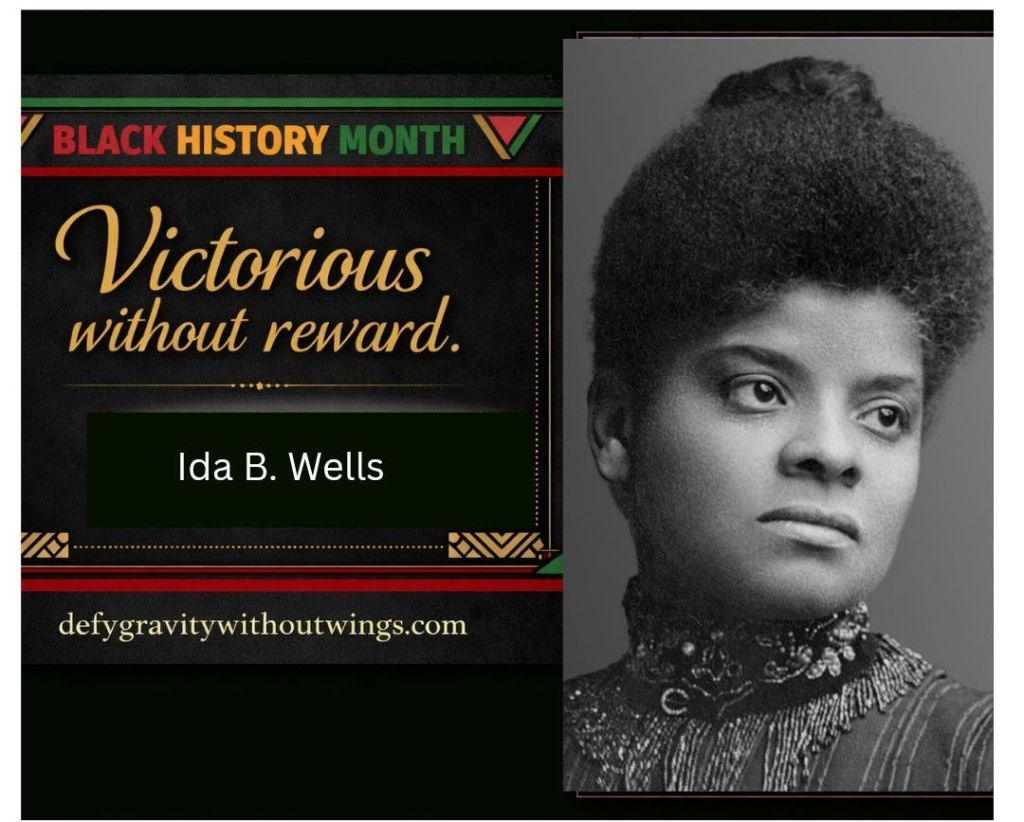
Victorious without reward. Still here.

 defygravitywithoutwings.com