Image

LEWIS LATIMER: HE MADE THE LIGHT

Black history is not only about who struck the match.
It is also about who made sure the light did not go out.
Lewis Howard Latimer understood that.
Born in 1848 to parents who had escaped enslavement, he taught himself to read, draw, and engineer in a world that did not expect brilliance from him—and was not structured to reward it.
History remembers the spark.
Latimer worked on the endurance.
In 1884, he joined the Edison Electric Light Company as a draftsman.
He was not hired to be the face of innovation.
He was brought in to make the work hold.
While others are credited with inventing the light bulb, Lewis Latimer improved it.
He developed a carbon filament that made electric light durable, affordable, and practical—light that could last in ordinary homes, not just demonstrations.
Without his work, the light would have remained fragile.
Exclusive.
Unreliable.
And the light was not his only contribution.
Latimer also:
– drafted critical technical drawings for early telephone technology
– designed an evaporative air-conditioning system
– improved safety and sanitation systems for railroad cars
– trained others, documented processes, and quietly strengthened industries that carried other people’s names
Important work.
Essential work.
Weight-bearing work.


Lewis Latimer lived long enough to see the world changed by the light he helped sustain.
He died in 1928—not wealthy, not widely celebrated—but respected by those who understood the work.
His legacy lived on in homes lit safely, cities made brighter, systems made usable.
If you have ever been the one who made something work instead of making it visible—
If you have refined what others rushed through—
If you have strengthened what others started—
If you have stayed faithful long after the applause moved on—
This story stands with you.
“Let your light so shine before others…” — Matthew 5:16


Lewis Latimer did not create the first light.
He made sure it endured.
Some people are called to begin things.
Others are called to make them last.
This, too, is history.
This, too, is weight-bearing work.


Lewis Latimer stands with you.
God sees the work that makes light reliable — not just remarkable.


We see you, Lewis.
We honor the way you made the light last.


Bread Crumbs — for those coming after us.
Victorious without reward. Still here.
Image

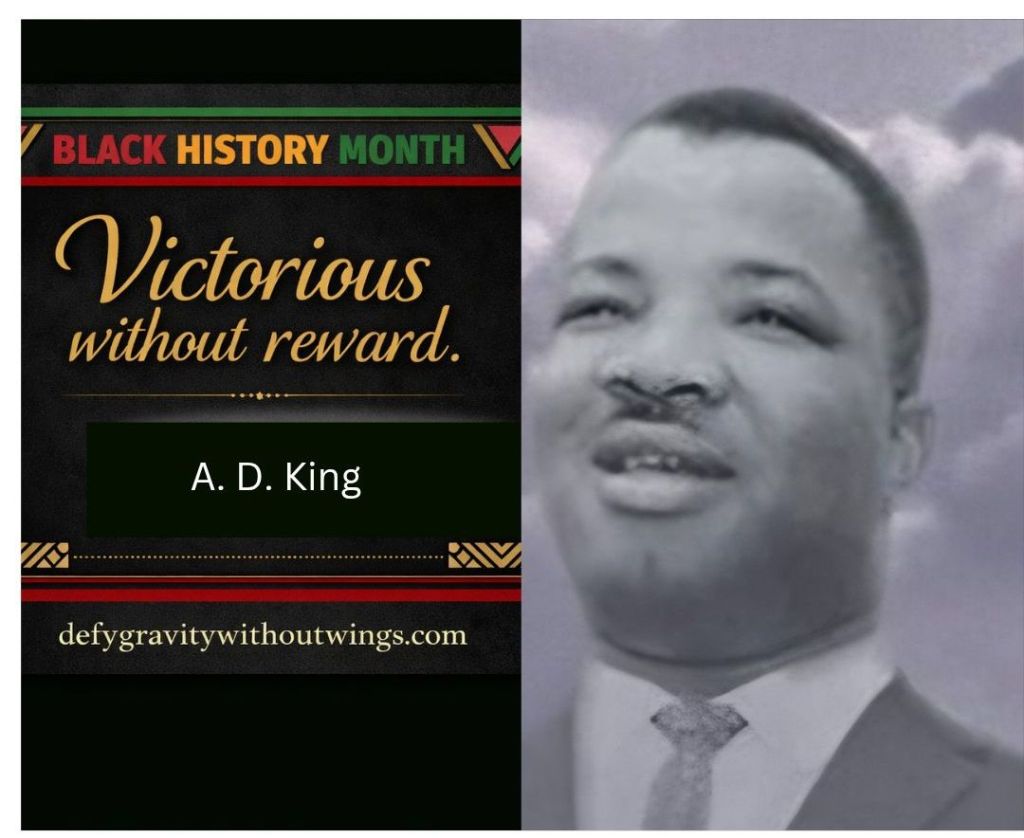
Fannie Lou Hamer: She Was Sick and Tired

Fannie Lou Hamer did not come to the movement polished, protected, or prepared.

She came poor.
She came uneducated by the world’s standards.
She came with a body already worn down by hard labor and injustice.

And still — she came.

Born in rural Mississippi in 1917, the youngest of twenty children, Fannie Lou Hamer spent her life working land she did not own, under a system designed to keep her dependent, invisible, and quiet. She began picking cotton as a child. Not for character. For survival.

When she attempted to register to vote in 1962 — after attending a voter education meeting — she failed the literacy test that was never meant to be passed. For that attempt alone, she was fired from the plantation where she had lived and worked for nearly two decades. Her family was later threatened at gunpoint for her decision to try again.

All for trying to do what should have been ordinary.

In 1963, while jailed in Winona, Mississippi, law enforcement ordered inmates to beat her. She was left with permanent injuries, chronic pain, and internal damage that followed her for the rest of her life.

She was not famous when she began.
She was not invited.
She was not protected.

But she was awake.

She helped form the Mississippi Freedom Democratic Party because the state’s official party was all white — and called America to account for segregation hiding inside democracy itself. At the 1964 Democratic National Convention, she testified on national television about voter suppression and racial violence so plainly that the President of the United States attempted to interrupt the broadcast.

It didn’t work.

“I’m sick and tired of being sick and tired.”

Those words didn’t come from anger alone.
They came from truth-telling — the kind that costs something.

She refused token representation. She rejected symbolic seats. She demanded full dignity, not crumbs dressed up as compromise.

And when the nation listened, it did not immediately change.

She was heard, but not always heeded.
She was visible, but rarely protected.
She was victorious without reward.

Still, she kept going — organizing, feeding families, helping build Freedom Farms so people could eat, vote, and live with dignity. Her fight was never only about ballots. It was about daily bread.

“Let justice roll down like waters, and righteousness like a mighty stream.” — Amos 5:24

She didn’t control the stream.
She didn’t shape the river.

She stood in it anyway.

Faith sometimes looks like prayer.
Sometimes it looks like protest.
And sometimes it looks like telling the truth even when your body is already tired.

If you have ever spoken up and paid a price,
felt worn down by doing the right thing,
told the truth without being spared the consequences,
or wondered if faithfulness was worth the cost —

Fannie Lou Hamer stands with you.

She reminds us that God often chooses voices the world underestimates — and uses them to shake foundations.

We see you, Fannie.
We honor your truth.

Bread Crumbs — for those coming after us.
Victorious without reward. Still here.


Love, Chelle

Image

Charles Hamilton Houston: He Built the Road

Charles Hamilton Houston believed something radical for his time:

That the law — when disciplined, prepared, and forced to tell the truth — could be used to dismantle injustice.

He was not a march leader.
He was not a headline.
He was a builder.

Born in 1895, Houston became a lawyer and educator who saw segregation not just as wrong, but as structural. He believed it had to be taken apart piece by piece, case by case, classroom by classroom.

So he did the slow work.

As a professor at Howard University School of Law, Houston trained a generation of Black lawyers to be precise, relentless, and morally clear. Among them was a young man named Thurgood Marshall.

Houston taught his students that excellence was not optional — because lives depended on it.

“A lawyer is either a social engineer or a parasite on society.”

Houston chose to be a social engineer.

Long before Brown v. Board of Education reached the Supreme Court, Charles Hamilton Houston was already laying the groundwork.

He challenged unequal pay for Black teachers.
He dismantled segregation in graduate and professional schools.
He forced courts to confront the lie of “separate but equal.”

Case by case, brick by brick, he weakened the foundation of legalized segregation.

Others would stand in front of the nation when the walls finally fell.

Houston would not.

His health deteriorated under the strain of the work.
He died young.
And when history celebrated the victory, his name was often missing from the story.

He was victorious without reward.

Charles Hamilton Houston reminds us that some people are called to prepare the way, not walk through the door themselves.

“Prepare the way of the Lord; make straight paths for Him.” — Isaiah 40:3

Houston prepared paths others would walk — paths that led to justice, dignity, and opportunity for generations he would never meet.

If you have ever done work that made someone else visible,
labored behind the scenes while others stood at the microphone,
poured yourself into something you knew you might not live to see finished,
or believed faithfulness mattered more than credit,

Charles Hamilton Houston stands with you.

He built the road.
Others crossed it.

And God saw every stone he laid.

We see you, Charles.
We honor the work you did quietly.

Bread Crumbs — for those coming after us.
Victorious without reward. Still here.

Love, Chelle

Image

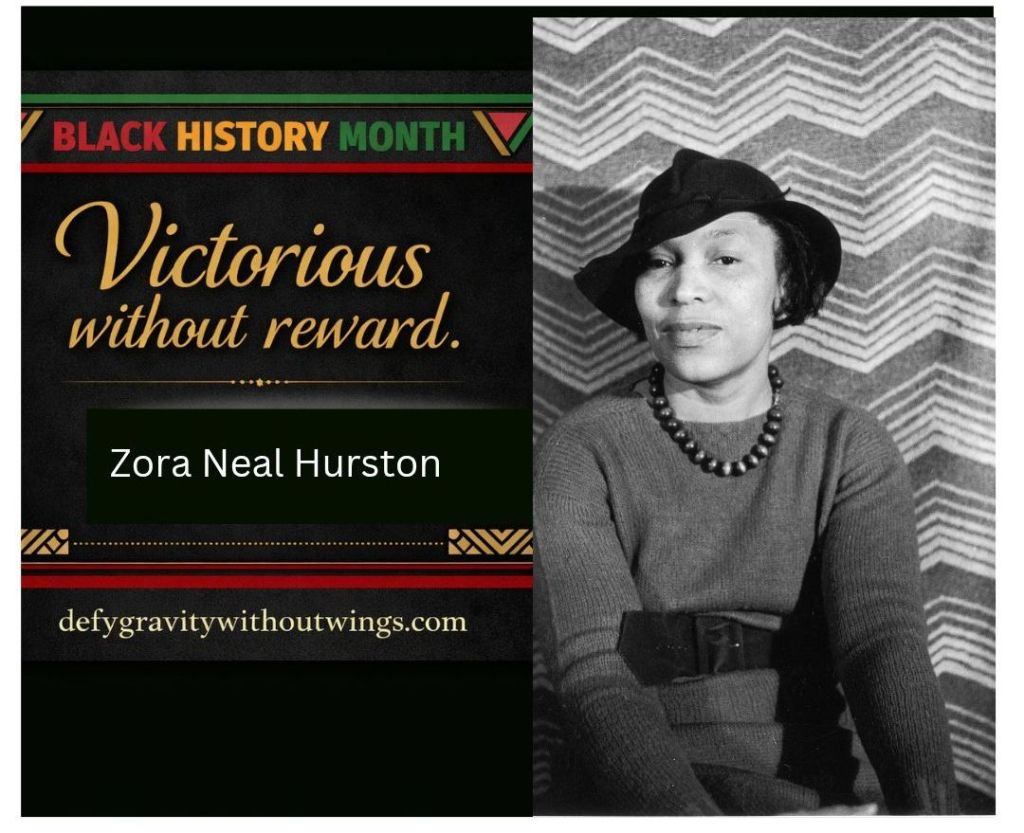
Claudette Colvin: Nine Months Before History Was Ready


Claudette Colvin, who died recently on January 13, 2026, was one of the last remaining living catalysts of the Montgomery Bus Boycott.


This must be said plainly:
Nine months before Rosa Parks,
a fifteen-year-old girl named Claudette Colvin refused to give up her seat on a segregated Montgomery bus.
Nine months before the cameras.
Nine months before the speeches.
Nine months before it was considered “safe.”
She was early — and she was right.


When police dragged her off the bus and arrested her, Claudette did not yet know she would be asked to step back from public view. But she would be.


Not because her courage was insufficient —
but because the movement decided she was not the face America would accept.
She was:
– a poor Black girl
– from a working-class family
– and soon after, pregnant
– struggling emotionally after trauma and arrest


Movement leaders made a strategic decision.
They chose respectability.
They chose optics.
And Claudette was quietly sidelined.
Yet her courage did not disappear.


She became one of the plaintiffs in Browder v. Gayle — the federal court case that ended bus segregation in Montgomery. The law changed because of the stand she took first, even though her name was not lifted alongside the victory.
She was victorious without reward.


Claudette Colvin teaches us a truth history often resists:
Being first does not mean being credited.
Being right does not mean being chosen.
And being faithful does not guarantee being celebrated.
A poor Black girl,
a pregnant teenager,
a traumatized child —
said no to injustice nine months before the nation was ready to listen.


That is not a footnote.
That is a foundation.
“For God chose what the world considers foolish to shame the wise.” — 1 Corinthians 1:27


If you have ever stood up too early,
told the truth before it was popular,
been asked to step aside so the story could be cleaner,
or watched others be celebrated for a door you opened,
hear this clearly:
Your timing was not wrong.
Your courage was not wasted.
And your obedience still counts.


Claudette Colvin stood first.
History followed later.
We see you, Claudette.
We tell it right now.
We honor you fully.


Bread Crumbs — for those coming after us.
Victorious without reward. Still here.

Love, Chelle

Image

Reframing The Heart

Somewhere along the way, many of us learned a quiet lie —
not from God, but from human interpretation.

We learned it from what was modeled, praised, or rewarded.
From homes, churches, systems, and relationships that mistook endurance for faithfulness and exhaustion for virtue.


Most people were doing the best they could with what they knew — but they were still human.
And without realizing it, we carried those lessons into our understanding of God.

I know this because I have done it myself.

I confused being loved with doing to be loved.
I mixed up belief with performance.
And I carried that misunderstanding into my faith and called it obedience.

But that is not God’s heart.

God does not delight in depletion.
He delights in wholeness.

Jesus did not invite people to follow Him so they could replace Him.
He did not ask them to become saviors, fixers, or endless wells.
He asked them to come — as they were — and to unlearn what fear had taught them about love.

Scripture never praises burnout.
It praises obedience rooted in love, not fear.
It honors service that flows from being seen — not from trying to be noticed.

When Jesus said, “Come to Me, all who are weary and burdened, and I will give you rest,”
He was not offering a reward for those who gave the most.
He was correcting what people had been taught about God.

If your kindness comes from feeling unseen,
if your faith feels like constant output,
if your love has slowly turned into self-erasure —
that may be something you learned, but it is not something God requires.

God does not need you emptied to be faithful.
He desires you rooted, restored, and whole.

Being needed is not the same as being loved.
And God’s love has never required you to disappear.

God, help me separate Your voice from the voices that shaped me.
Heal what I learned in survival mode.
Teach me Your heart — not a human version of it.

Love, Chelle
DefyGravityWithoutWings.com

Image

Let Peace Come (Even When the World Says “What’s the Point

As I write this, Tibetan monks are walking the East Coast on a pilgrimage for peace. Step by step. Mile by mile. No microphones. No arguments. Just feet on pavement and the quiet conviction that peace is still worth walking toward.
When I shared a simple prayer online — yes, let peace come — another believer replied,
“What’s the point? The Bible says the bad things must happen.”
It stopped me for a moment.
Yes, Scripture tells us the world will groan. It speaks honestly about deception, division, and heartbreak. The Bible doesn’t deny the mess we’re living in.
But it also never tells us to stop praying.
It never tells us to stop loving.
And it never tells us to stop showing up.
Through the prophet Isaiah, God gives us a picture that still steadies me:
“How beautiful on the mountains are the feet of those who bring good news, who proclaim peace.” (Isaiah 52:7)
Isaiah praises feet — not arguments, not timelines, not predictions.
Peace, in Scripture, is not passive.
It walks.
Somewhere along the way, religion replaced relationship and politics fractured fellowship. Both young and old are left confused — unsure what to believe or whether prayer still matters.
Here’s what I still believe:
Hope is not denial.
Hope is obedience.
Jesus never told us to love only when it fixes everything. He told us to love because that is who we are — even while we wait, even while the world aches.
So when someone asks, “What’s the point?”
This is my quiet answer:
Love still matters.
Prayer still matters.
Peace is never pointless.
Waiting for Jesus does not mean standing still.
It means walking faithfully — even now.
And if monks can walk for peace knowing the world is broken,
surely we can still pray for it.
Yes, Lord.
Let peace come.


Love, Chelle

Image

The Woman At The Table

Sometimes I miss the house in the middle of the corn fields with no indoor plumbing.
The pot-belly stove that decided when we were warm enough.
The way night fell heavy and close, and everyone settled where they could—sharing rooms, beds, blankets, breath.

I say my room, but that’s a loose word.
Privacy was a luxury we didn’t own.
Still, there was one place that felt like mine:
the narrow view through the keyhole.

Almost every night, after the fires were dampened and the house full of children finally stilled, I would watch my grandmother at her writing table. Her hands folded. Her Bible open. A pen moving slowly, deliberately.

Women of the Bible were her favorite.
Deborah. Ruth. Esther. Mary.
Women who listened closely and lived bravely.

She wrote sermons—real ones. Thoughtful. Scripturally sound. Insightful in ways people did not expect from a woman in those days. Especially a woman who cleaned other people’s houses for a living.

But it was her prayer ritual that marked me.

She prayed in whispers—not because God was quiet, but because love was.
She didn’t want to wake a house full of children.
Except, apparently, the little girl at the keyhole.

I couldn’t hear the words.
But I could see her face.

Sometimes she smiled.
Sometimes she laughed—like she and God shared a private joke.
Sometimes she cried. The kind of crying that doesn’t fall apart, just falls down.

And as I watched—hidden, still, unnoticed—I was learning.
Learning how faith looks when no one is applauding.
Learning that prayer does not need volume to have weight.
Learning that God listens closely to whispers.

When she finished praying, she always reached for the same thing.

A small plastic bread loaf.
One of those coin banks from organizations that fed “poor kids in Africa.”

She would slip a coin inside.
Sometimes a dollar.
Hard-earned. Scrubbed-for. Long-hours-standing money.

Money from a woman the world might have called poor—
but who never believed she was exempt from generosity.

I didn’t understand it then.
But I do now.

That table was a pulpit.
That whispering was power.
That plastic loaf was faith that refused to shrink.
And that keyhole?
It was my first seminary.

And that little girl at the keyhole?
She’s still watching.
Still learning how to pray without performing.
Still believing a few faithful offerings can touch a wide world.

“She opens her mouth with wisdom, and the teaching of kindness is on her tongue.” — Proverbs 31:26
“Your Father, who sees what is done in secret, will reward you.” — Matthew 6:6

Some of the strongest sermons are whispered after bedtime, preached without microphones, and learned by children watching through keyholes.

Love, Chelle


Image

Stone Soup For A Restless World

(Inspired by the traditional folktale “Stone Soup”)
There is an old folktale—often called Stone Soup—with roots in European oral tradition, passed from voice to voice long before it ever lived on a printed page. No single author can claim it, because it belongs to the people. To grandmothers. To kitchens. To cold evenings and tired hearts.
My grandma told me this story when I was a child.
In it, strangers arrive in a village with nothing but a pot, water, and a stone. The villagers insist they have nothing to give. Nothing extra. Nothing to spare. But as the pot begins to simmer, curiosity loosens fists. A carrot appears. Then an onion. A potato. A handful of herbs. What begins as nothing becomes a feast—not because of the stone, but because everyone adds what they already had.
“All the believers were together and had everything in common.”
— Acts 2:44
What my grandmother made sure I understood wasn’t cleverness or trickery.
It was this: waste nothing, because even the smallest thing can become enough.
That lesson followed me into adulthood and straight into my freezer.
I freeze the little bits.
The half cup of vegetables left after dinner.
The last spoonful of beans.
The scraps that don’t look like a meal on their own.
And on nights like this—when the world feels heavy, when the news is loud, when unrest simmers hotter than any stove—I pull out those frozen fragments. I drop my own version of a stone into broth. I add spices. I stir. And somehow, once again, there is soup.
Scripture reminds us that when we bring what we have—no matter how small—God knows how to make it enough.
“Each of you should use whatever gift you have received to serve others.”
— 1 Peter 4:10
Nothing fancy.
Nothing wasteful.
Nothing done alone.
Wouldn’t it be lovely—
in a world so divided, so guarded, so afraid of scarcity—
if we could remember how to do this together?
Not fix everything.
Not agree on everything.
Just show up with what we have.
A carrot. A story. A pot. A willingness.
Stone Soup reminds us that abundance doesn’t start with excess.
It starts with shared heat.
With open hands.
With the quiet decision to believe that together is still possible.
Tonight, I’ll keep stirring.
And I’ll keep believing.
Love, Chelle
DefyGravityWithoutWings.com

Image

Numbers and Neighbors (and Why You May See Me Writing Quietly for a While)

Numbers and neighbors matter.
I’ve spent most of my life thinking numbers were for accountants, engineers, and people who enjoy spreadsheets far more than I ever will. But lately—especially in this season of writing—I’m learning that numbers aren’t really about math.


They’re about order.


Numbers tell you where something belongs.
They tell you what comes before and what comes after.
They keep things from floating around unfinished and untethered.


And then there are neighbors.
Neighbors are what give numbers meaning.
Nothing meaningful stands alone—not stories, not seasons, not faith, and not writing. What sits beside something shapes how it’s understood. Context matters. Timing matters. Placement matters.


Right now, my writing life looks a little different. Instead of posting every thought as soon as it forms, I’m learning to sit with them. To ask where they belong. What needs to come before. What needs to follow.
It turns out this is how a book is being built.


Isaiah reminds us:
“The Lord will guide you always… You will be like a well-watered garden.” (Isaiah 58:11)
Gardens grow by placement.
By timing.
By knowing what belongs next to what.


So if my writing shows up a little differently for a while, know this:
Nothing is disappearing.
It’s being ordered.
Numbers and neighbors matter.


Love, Chelle

Image

On The Subject Of Pink Polka-Dotted Elephants


Pink polka‑dotted elephants.
That’s what I call the thoughts that show up uninvited — loud, ridiculous, and determined to distract you from what is right, true, and good.
Scripture tells us to think on things that are lovely.
Pure.
Worthy.
Aligned with God’s Word.
It reminds us that God has a plan for our good and our welfare — not our harm.
But tonight, after my usual bedtime routine of potions, pills, injections, and all the other expensive stuff designed to keep me breathing…
along came that stupid elephant in the room.
No — I wasn’t high off anything. 😂
That elephant showed up because someone had casually asked earlier, “Are you afraid of dying young?”
I didn’t answer them.
Apparently, however, some inquiring devils wanted a response.
I tried.
I really did.
I quoted scripture after scripture in my head:
“Jesus bore my sickness and carried my diseases.
By His stripes I am healed.
I shall live and not die and declare the works of the Lord.”
But the little imp was determined.
Sleep was cancelled.
So I finally answered — not the human who asked, but the thought itself.
No.
I am not afraid of dying young.
What I am afraid of…
are people who will watch me grow old,
yet insist I live like I’m dying.
They mean well. I know that.
But do they really need to remind me how bad I look every time they see me?
Yes, I know what the doctors said.
But I also know what Jesus died for.
My symptoms are just that — symptoms.
Not verdicts.
Not identity.
Not destiny.
They are lying vanities compared to what I already know to be true.
Whether healing manifests in a way that satisfies you is not my responsibility — or God’s.
Could you please just rejoice in the hope and testimony I am aiming for?
And no — I am not putting down my microphone.
I’m pretty sure my head won’t explode while hitting a high note.
And yes, I laugh because it’s funny you don’t know me well enough to realize I have zero intention of laying myself away and quietly accepting anything.
So listen up, pink polka‑dotted elephants in the room —
beware.
The Overcomer has arrived.
You may not always be able to ignore the silly thoughts the enemy sends.
But remember this: he already knows he has lost.
(Big dummy.)
All he can do now is try to trick you into focusing on lies and nonsense.
The only way he wins
is if you let your imagination run in his direction.
So address those contradicting thoughts with what you know to be true about God’s Word.
Think thoughts of healing.
Prosperity.
Love.
Dreams.
And the good things God desires for you — a life more abundant.
And as for the elephants?
Enough already.
Back to hell’s zoo they go.
For good this time.

Seven years later, I can read these words with tears and gratitude.
I am a breast cancer survivor.
The elephants didn’t win.
Fear didn’t get the final word.
And God proved — again — that truth, when held onto long enough, becomes testimony.
Completion with scars turned sacred.

Love, Chelle


Catalog Note:
This post is archived for future inclusion in the book project Whistle While He Works.
Originally written years earlier and revisited at the seven‑year survivor mark.