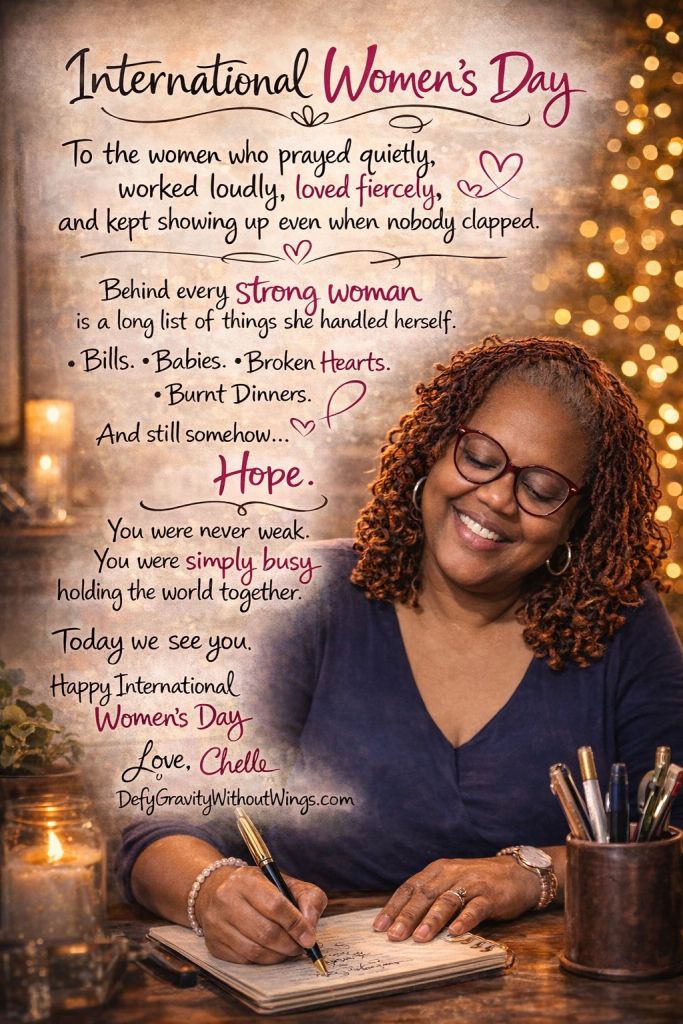
Happy International Women’s Day.


She carried many lives before the world called her a poet.
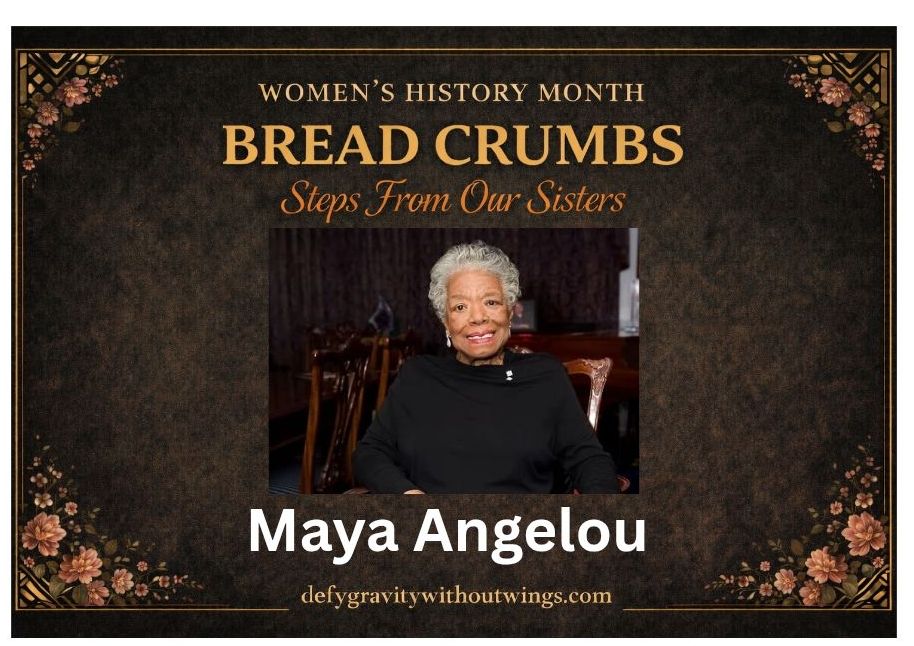
Maya Angelou was born in St. Louis, April 4, 1928 as Marguerite Annie Johnson. The name Maya was derived from her brother Bailey who just could not pronounce her name and would call her “My Sister” . It morphed into Maya which stuck. Angelou came from her first husband, Enistasios Angelos, a Greek sailor. She adapted the surname slightly to Angelou when she began performing as a dancer and singer so it would sound more lyrical on stage.
She was raised in the segregated South where dignity was often denied but never fully destroyed. Her childhood held both silence and survival, experiences that would later shape the voice the world came to know.
She refused to stay one thing. Angelou worked as a streetcar conductor, dancer, singer, journalist, and organizer long before the world recognized her literary voice. Her life moved through many stages, but each experience added depth to the perspective she would later bring to her writing.
Her voice extended beyond stages and books. During the Civil Rights Movement she worked alongside Martin Luther King Jr. and Malcolm X, helping organize, write, and advocate for justice. In 1964, after years living and working in Africa, Angelou returned to the United States at the invitation of Malcolm X to help him build a new civil rights organization focused on global Black unity.
Before that work could fully take shape, Malcolm X was assassinated.
The loss shook her deeply, but Angelou continued writing, speaking, and advocating for dignity and equality. Only a few years later the movement suffered another devastating loss when Dr. King was assassinated on April 4, Angelou’s own birthday.
Still she wrote.
In 1969, I Know Why the Caged Bird Sings gave voice to stories the world rarely allowed Black women to tell out loud. Stories of trauma, identity, and the quiet power of rising again. Her words did not whisper. They lifted.
As she once wrote: “Still I rise.” Three simple words that carried generations.
But the voice the world came to love was not always easy for her to use.
As a young girl Maya Angelou endured a violent assault. When she spoke the truth about what had happened, the man responsible was later killed. In her young mind she believed her words had caused it.
So she stopped speaking.
For years she lived in silence, afraid that her voice carried too much power. It was a teacher, Mrs. Bertha Flowers, who slowly led her back to language through books, poetry, and the music of words.
The voice that would one day move a nation had to be reclaimed first.
In 1993 she stood at the inauguration of President Bill Clinton and read On the Pulse of Morning, becoming only the second poet in American history to deliver a poem at a presidential inauguration.
But her greatest legacy was simpler.
She gave language to survival.
Her life echoes a truth older than any poem:
“We are hard pressed on every side, but not crushed; perplexed, but not in despair.” — 2 Corinthians 4:8
I once saw Maya Angelou in concert. In a packed 1000 plus seat theater she sang “God Sent a Rainbow” without a microphone. The room fell completely silent as her voice carried to every corner. It felt as if the walls themselves were listening.
In that moment I understood something about courage. Voices like Maya Angelou’s do more than speak. They remind us that we are not meant to stay silent either. Somewhere in our own lives there is a truth waiting to be spoken, a kindness waiting to be offered, a step waiting to be taken.
And that is how Bread Crumbs are made.
Poet. Witness. Voice for generations.
We see you, Maya Angelou — for giving language to survival and wings to truth.
Bread Crumbs — from those still marching forward.
Steps From Our Sisters. Still here.
What step might be waiting for you?

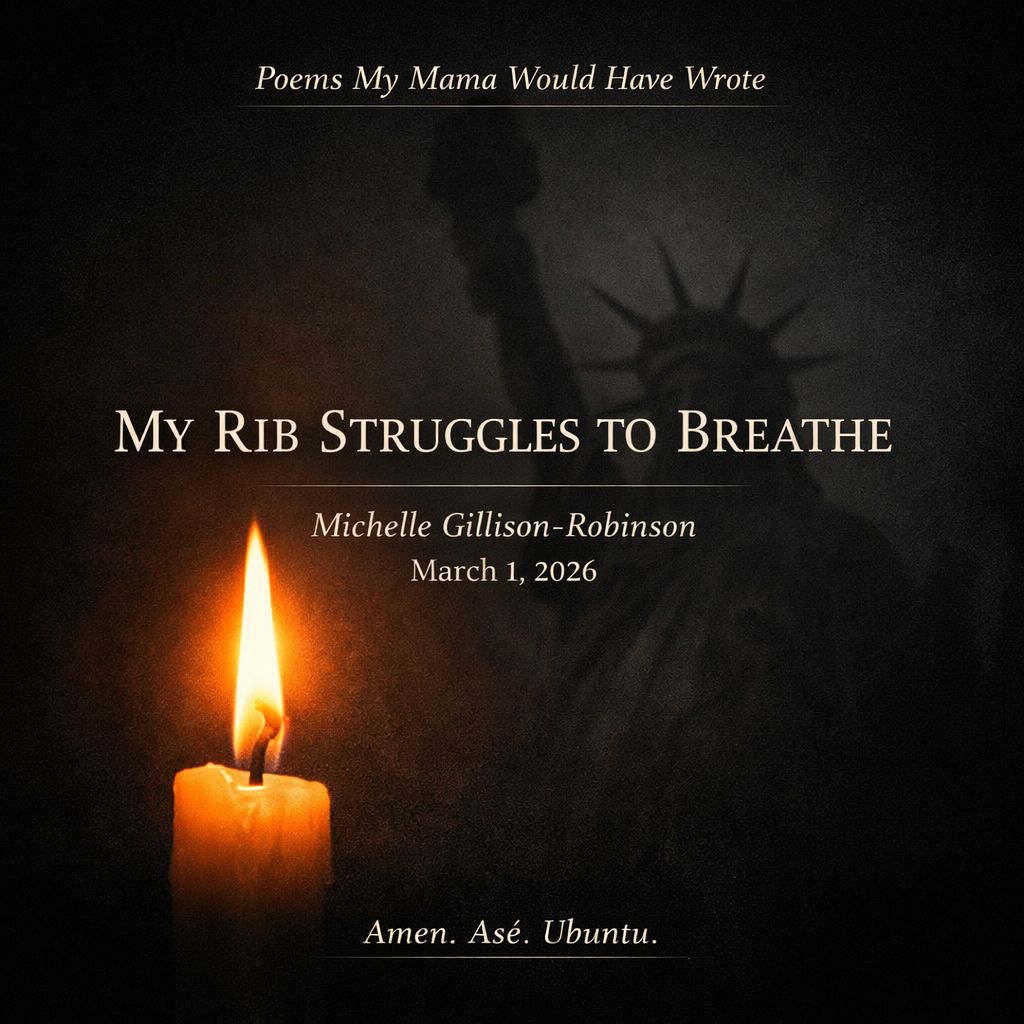
March 1, 2026
God of dirt under fingernails, of headlines and heartbeats, of babies born into chaos
and mamas who don’t sleep.
Lord hear our prayer
Sit with us in sackcloth and ash.
Hear the Latina scream for her familia.
Hear the Black mama beat her chest
from the weight of knees and crushed souls
Hear the confused person of no color
whisper, “Am I next?”
See my father’s shadow.
The brown father working double shifts
with documents that feel like paper shields.
The Black father teaching his son
how to survive a traffic stop.
The father from somewhere else
trying to sound less foreign
so his children sound more safe.
The one who has never been taught how to weep, but learns that privileged skin
offers no protection.
Watch how they swallow fear so their families can eat.
Watch how they stand tall while history presses down.
Do not turn Your face from the trembling.
Is Abraham’s argument still valid?
Is there still one worth saving?
If there are fifty…
If there are forty…
If there are ten…
Will mercy outrun destruction?
Because we be something else.
We invent vaccines and vendettas.
We cure disease and cultivate grudges.
We build greenhouses and graveyards
in the same generation.
We scream “save the babies” while demanding their mothers bleed in parking lots outside buildings bearing neon crosses and snakes on stakes.
And if that little bundle of hope
takes breath….. we ration mercy.
We starve truth. We feed them fear.
We hand them a system and call it destiny.
Forgive us for mistaking loud for strong,
revenge for justice,
power for wisdom,
money for mattering.
Slow the hands hovering over buttons.
Cool the tongues that set nations on fire.
Remind the mighty that bleeding does not discriminate.
When leaders puff up,
deflate egos with a firm hand.
When citizens rage-scroll at 3:33 a.m.,
tuck them back into cradles of mercy.
Teach us that being right is not the same thing as being righteous.
And teach us this, Lord –
That Holy is set apart, not divided asunder.
Set apart does not mean split down the middle.
It does not mean camps or corners
or color-coded salvation.
Holy is not red. Holy is not blue. Holy is not loud.
Holy is careful. Holy is weighty.
Holy is handled like heirloom glass passed from trembling hands.
Do not let us carve You up to fit our arguments.
Do not let us drape Your name over fear and call it faith.
If we must be set apart, let it be in compassion.
If we must be different, let it be in mercy.
Separate us from cruelty.
Separate us from arrogance.
Separate us from the need to win
at the cost of one another.
But do not divide us beyond repair.
Remind us that what is sacred is never meant to be torn.
Lord Hear Our Prayer
For the refugee in the cold,
the soldier on watch,
the child learning history from a textbook that left something out —
Cover them.
Guard democracy like a fragile seedling in late frost.
Guard dignity like Grandma’s good china.
Guard hope like a porch light left on for whoever comes home late.
When we start thinking the sky is falling,
Whisper,
“Dead and dormant are not the same thing.”
Let wars stall. Let hatred get tired. Let truth outlive the loud.
And if we must walk through fire, let it burn off what is false and leave what is faithful.
While presidents posture and pundits perform
Let ordinary people sleep.
Let Nama rest. Let grandchildren dream of gardens instead of sirens.
My bladed pen is hot. It does not drip ink.
It draws blood from silence. It refuses anesthesia. I tire of gentle prayers that never name the wound.
If my words burn, let them cauterize.
If they cut, let them carve truth
from marble lies.
Out of all the people in this great big world,
please hear me. Please know my voice.
Hear me when I pray.
For I will not whisper when my rib struggles to breathe.
Amen. Ameen. Aṣẹ̀ Olódùmarè. Selah. Shanti. Alafia. Tathāstu. Ubuntu
from Poems My Mama Would Have Wrote ( If She Had Been Allowed”
Althea’s Daughter: Michelle Gillison-Robinson

In the late 1960s, Pittsburgh’s Hill District was a historic Black neighborhood — culturally rich, economically battered.
Urban renewal had displaced families and shuttered businesses. Hospitals were distant. Emergency transport was often handled by funeral homes or police wagons with little medical training. In Black neighborhoods across America, ambulance service frequently meant delay without treatment.
People were dying not only from injury —
but from the absence of care.
In 1967, that absence met resistance.
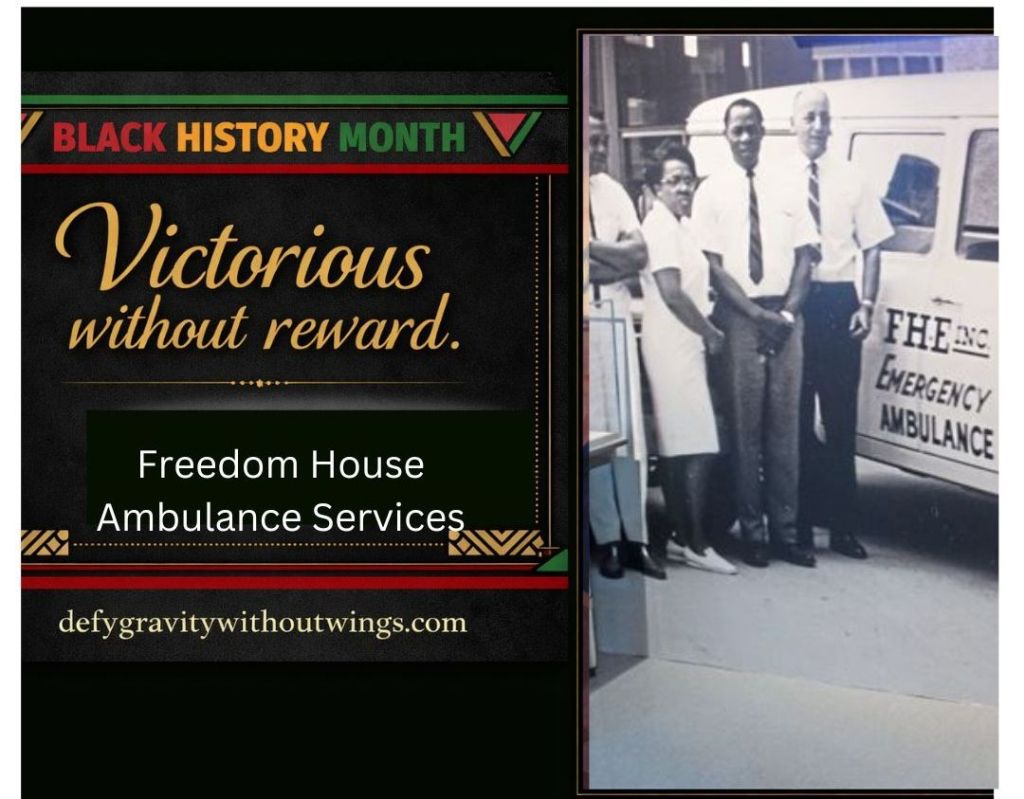
Out of the Hill District came the Freedom House Ambulance Service — one of the first professionally trained paramedic units in the United States.
Under the medical vision of Peter Safar, a pioneer of CPR and modern resuscitation, and through the clinical leadership of Nancy Caroline, Freedom House became more than an experiment.
Nancy Caroline did not observe from a distance.
She wrote curriculum.
She rode in the ambulances.
She trained the men personally.
She demanded mastery.
She helped build one of the nation’s first structured paramedic training programs and later authored Emergency Care in the Streets, a foundational EMS textbook used across the country and internationally.
The standards were not lowered for the Hill District.
They were raised.
The men recruited into Freedom House were largely unemployed Black residents. Some were Vietnam veterans. Many had been labeled “untrainable.”
They became among the first paramedics in America.
Among the early paramedics were:
John Moon
Mitchell Brown
Timothy McCall
Wesley Lee
Walter Brown
Dennis Williams
And others whose names history is still restoring.
They mastered advanced cardiac life support, airway management, trauma stabilization, and mobile intensive care techniques. They responded to thousands of calls. Their survival rates were strong. Their professionalism undeniable.
They were not ambulance drivers.
They were architects of modern emergency medicine.
In 1975, the City of Pittsburgh dissolved Freedom House and created a new municipal EMS system.
The training model remained.
The protocols remained.
The infrastructure remained.
The leadership did not.
The new city EMS became predominantly white.
The Black paramedics who had proven the model were no longer centered in the system they built.
Their experiment became policy.
Their innovation became ordinance.
Their presence became history.
Public memory credited institutions.
The Hill District remembered who carried the stretchers.
Several Freedom House members continued careers in emergency medicine and public service. Others carried the quiet distinction of having transformed pre-hospital care long before the country was ready to credit them.
Modern EMS systems and structured 911 response protocols carry their fingerprints.
They were not a pilot program.
They were a foundation.
“The stone the builders rejected has become the cornerstone.” — Psalm 118:22
BREADCRUMB
Sometimes the rejected become the infrastructure.
We see you, Freedom House:
John Moon.
Mitchell Brown.
Timothy McCall.
Wesley Lee.
Walter Brown.
Dennis Williams.
And the others whose names deserve light.
You brought intensive care into neglected streets. You professionalized emergency response in America.
You turned crisis into curriculum.
Bread Crumbs — for those coming after us.
Victorious without reward.
Still here.

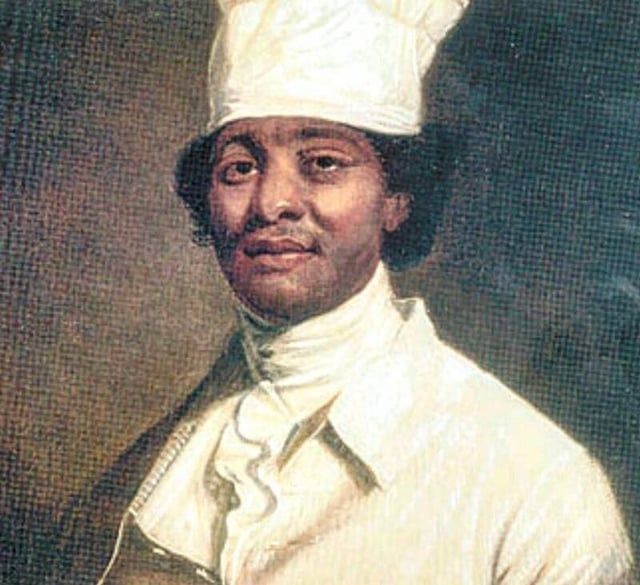
James Hemings shaped a nation’s palate while the nation refused to speak his name.
Born enslaved in the 18th century, James Hemings lived and worked at Monticello under Thomas Jefferson.
He was trained as a chef in France, mastering techniques most Americans had never seen or tasted. He learned sauces, pastries, ice creams, and refined methods that transformed how food was prepared and served.
When he returned to America, those techniques came with him.
They became American.
Macaroni and cheese.
Refined sauces.
Elegant plating.
Desserts meant to be lingered over.
These weren’t trends.
They were foundations.
And James Hemings was the hands behind them.
James Hemings cooked at the highest tables — yet he did not own himself.
He was expected to create beauty while living without freedom.
To refine taste while enduring injustice.
To elevate others while remaining invisible.
He was also the older brother of Sally Hemings.
Both siblings lived under the same roof at Monticello.
Both were bound to the same man.
Both carried different burdens of the same system.
James navigated his captivity through skill, restraint, and intellect.
And still — he negotiated his freedom.
He didn’t storm the kitchen.
He didn’t burn it down.
He bargained carefully, strategically, and bravely — securing his release in exchange for training his replacement, his brother, Peter
Freedom came late.
Recognition never really came at all.
He died young. Just two months after securing his freedom.
His influence lived on without attribution.
He was victorious without reward.
James Hemings reminds us that culture is often shaped by people whose names history forgets — but whose work it cannot erase.
“Give us this day our daily bread.” — Matthew 6:11
Bread is sustenance.
Bread is culture.
Bread is memory.
What we eat carries history — whether we name it or not.
James Hemings fed a nation that did not know his name.
If you have ever poured skill into work that bore someone else’s signature,
created beauty in a place that did not fully see you,
shaped something lasting without receiving credit,
or learned excellence under pressure and restraint,
James Hemings stands with you.
God sees the hands that prepare nourishment — not just for bodies, but for culture itself.
We see you, James.
We honor the way you changed the taste.
Bread Crumbs — for those coming after us.
Victorious without reward. Still here.
Love, Chelle

Historical Context & Image Note:
This reflection draws from documented Monticello and Hemings family records; no verified historical photograph of James Hemings exists, so a respectful illustration is used in place of a photographic image.
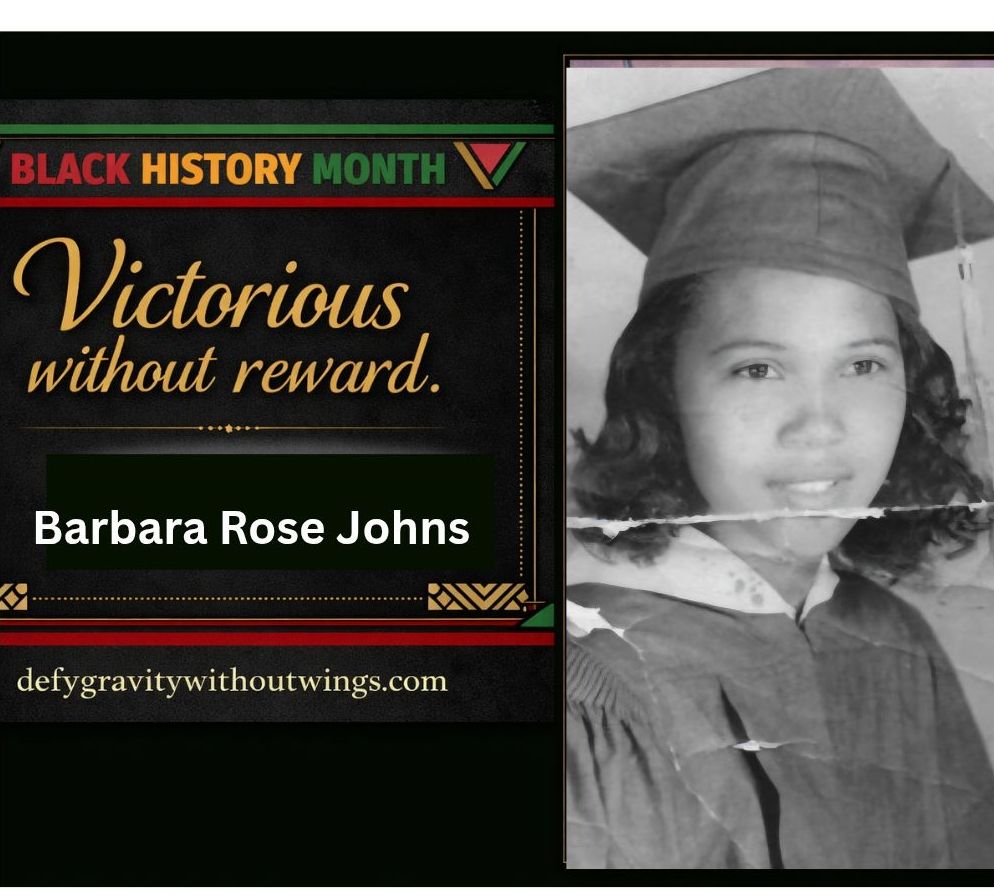
Barbara Johns was fifteen years old when she decided that waiting politely for justice was no longer an option.
In 1951, in Prince Edward County, Virginia, Barbara was a student at Robert Russa Moton High School — a segregated Black school with no gym, no cafeteria, overcrowded classrooms, and tar-paper shacks used as makeshift buildings. Meanwhile, white students nearby learned in brick schools with resources and space.
Barbara saw it.
Barbara lived it.
And Barbara refused to accept it.
Without permission from adults, administrators, or movement leaders, she organized a student strike. She convinced her classmates to walk out, not knowing if anyone would listen — only knowing that staying silent was no longer an option.
Adults were furious.
Leaders were nervous.
Teachers were afraid they would lose their jobs.
Barbara’s name was almost removed from the complaint.
But the case moved forward anyway.
Her courage became part of Davis v. County School Board of Prince Edward County, one of the five cases folded into Brown v. Board of Education.
History changed.
And Barbara Johns?
She received death threats.
She had to leave her hometown.
She lived the rest of her life quietly.
Her name was rarely spoken when Brown was celebrated.
She was victorious without reward.
Barbara Johns teaches us something uncomfortable and holy:
Sometimes the people who force history to move are the ones most quickly pushed out of the picture.
She was young.
She was female.
She was uncompromising.
And she was inconvenient.
“Let no one despise you for your youth.” — 1 Timothy 4:12
Barbara didn’t wait to be older.
She didn’t wait to be chosen.
She didn’t wait to be safe.
She acted — and the system scrambled to catch up.
If you have ever been told you were too young to understand, spoken truth that made adults uncomfortable, sparked change and then watched others take credit, or paid a personal cost for doing the right thing early — Barbara Johns stands with you.
She reminds us that courage does not require credentials — only conviction.
She lit the match.
The world tells the story without her name.
But God remembers.
We see you, Barbara.
We tell it right.
Bread Crumbs — for those coming after us.
Victorious without reward. Still here.
Love, Chelle

Robert Smalls was born enslaved in South Carolina, in a world where freedom was forbidden and intelligence was dangerous.
But Robert learned the waterways.
He learned the tides.
He learned the rhythms of ships and schedules and signals.
And when the moment came, he used what he knew.
In 1862, Robert Smalls did something no one thought possible. He commandeered a Confederate ship, the CSS Planter, disguised himself in the captain’s uniform, navigated past enemy forts using the correct signals — and delivered himself, his family, and others to freedom.
He did not fire a single shot.
He trusted knowledge.
He trusted timing.
And he trusted that God had already made a way through the water.
In my own family, there are those who make a “not quite” substantiated claim to Robert Smalls — simply because his last name appears in our family line.
I don’t have records to prove it or disprove it.
I don’t make the claim as fact. But who can deny greatness.
However, the instinct matters.
Because sometimes what we are really claiming is not blood —
but admiration.
Not lineage —
but legacy.
Robert Smalls didn’t stop with freedom.
He went on to serve in the U.S. Navy, help recruit Black soldiers, become a U.S. Congressman, and fight for education, voting rights, and dignity for formerly enslaved people.
And still — he faced resistance.
He was pushed aside.
His leadership was minimized.
His voice was not always welcomed in the halls he helped open.
He was victorious without reward in more ways than one.
More than a century after his courage changed the course of history, the nation finally spoke his name aloud.
In 2023, the U.S. Navy commissioned a ship in his honor — the USS Robert Smalls.
It did not restore what had been denied.
It did not erase the years of resistance he faced.
It did not repay the cost of standing firm in a country slow to remember.
But it did stand as a quiet admission.
The Navy knew who led that ship long before history said it plainly.
And eventually, even delayed recognition had to follow truth.
Robert Smalls teaches us that God often prepares people long before the moment arrives.
“I will make a way in the wilderness and rivers in the desert.” — Isaiah 43:19
Robert didn’t create the river.
He learned it.
He didn’t invent the escape.
He recognized the opening.
Faith sometimes looks like courage.
Sometimes it looks like preparation.
And sometimes it looks like steering calmly through danger because you know where the water leads.
For the One Reading This Today
If you have ever:
prepared quietly for something no one else saw coming
felt drawn to a story because it felt familiar in your spirit
honored someone not because they were yours — but because they were right
trusted God to guide you through impossible terrain
Robert Smalls stands with you.
You don’t have to claim someone as family to carry their courage forward.
Legacy travels deeper than blood.
We see you, Robert.
We honor the way you led others through.
Bread Crumbs — for those coming after us.
Victorious without reward. Still here.
Love, Chelle

Claudette Colvin, who died recently on January 13, 2026, was one of the last remaining living catalysts of the Montgomery Bus Boycott.
This must be said plainly:
Nine months before Rosa Parks,
a fifteen-year-old girl named Claudette Colvin refused to give up her seat on a segregated Montgomery bus.
Nine months before the cameras.
Nine months before the speeches.
Nine months before it was considered “safe.”
She was early — and she was right.
When police dragged her off the bus and arrested her, Claudette did not yet know she would be asked to step back from public view. But she would be.
Not because her courage was insufficient —
but because the movement decided she was not the face America would accept.
She was:
– a poor Black girl
– from a working-class family
– and soon after, pregnant
– struggling emotionally after trauma and arrest
Movement leaders made a strategic decision.
They chose respectability.
They chose optics.
And Claudette was quietly sidelined.
Yet her courage did not disappear.
She became one of the plaintiffs in Browder v. Gayle — the federal court case that ended bus segregation in Montgomery. The law changed because of the stand she took first, even though her name was not lifted alongside the victory.
She was victorious without reward.
Claudette Colvin teaches us a truth history often resists:
Being first does not mean being credited.
Being right does not mean being chosen.
And being faithful does not guarantee being celebrated.
A poor Black girl,
a pregnant teenager,
a traumatized child —
said no to injustice nine months before the nation was ready to listen.
That is not a footnote.
That is a foundation.
“For God chose what the world considers foolish to shame the wise.” — 1 Corinthians 1:27
If you have ever stood up too early,
told the truth before it was popular,
been asked to step aside so the story could be cleaner,
or watched others be celebrated for a door you opened,
hear this clearly:
Your timing was not wrong.
Your courage was not wasted.
And your obedience still counts.
Claudette Colvin stood first.
History followed later.
We see you, Claudette.
We tell it right now.
We honor you fully.
Bread Crumbs — for those coming after us.
Victorious without reward. Still here.
Love, Chelle

As I write this, Tibetan monks are walking the East Coast on a pilgrimage for peace. Step by step. Mile by mile. No microphones. No arguments. Just feet on pavement and the quiet conviction that peace is still worth walking toward.
When I shared a simple prayer online — yes, let peace come — another believer replied,
“What’s the point? The Bible says the bad things must happen.”
It stopped me for a moment.
Yes, Scripture tells us the world will groan. It speaks honestly about deception, division, and heartbreak. The Bible doesn’t deny the mess we’re living in.
But it also never tells us to stop praying.
It never tells us to stop loving.
And it never tells us to stop showing up.
Through the prophet Isaiah, God gives us a picture that still steadies me:
“How beautiful on the mountains are the feet of those who bring good news, who proclaim peace.” (Isaiah 52:7)
Isaiah praises feet — not arguments, not timelines, not predictions.
Peace, in Scripture, is not passive.
It walks.
Somewhere along the way, religion replaced relationship and politics fractured fellowship. Both young and old are left confused — unsure what to believe or whether prayer still matters.
Here’s what I still believe:
Hope is not denial.
Hope is obedience.
Jesus never told us to love only when it fixes everything. He told us to love because that is who we are — even while we wait, even while the world aches.
So when someone asks, “What’s the point?”
This is my quiet answer:
Love still matters.
Prayer still matters.
Peace is never pointless.
Waiting for Jesus does not mean standing still.
It means walking faithfully — even now.
And if monks can walk for peace knowing the world is broken,
surely we can still pray for it.
Yes, Lord.
Let peace come.
Love, Chelle

Pink polka‑dotted elephants.
That’s what I call the thoughts that show up uninvited — loud, ridiculous, and determined to distract you from what is right, true, and good.
Scripture tells us to think on things that are lovely.
Pure.
Worthy.
Aligned with God’s Word.
It reminds us that God has a plan for our good and our welfare — not our harm.
But tonight, after my usual bedtime routine of potions, pills, injections, and all the other expensive stuff designed to keep me breathing…
along came that stupid elephant in the room.
No — I wasn’t high off anything. 😂
That elephant showed up because someone had casually asked earlier, “Are you afraid of dying young?”
I didn’t answer them.
Apparently, however, some inquiring devils wanted a response.
I tried.
I really did.
I quoted scripture after scripture in my head:
“Jesus bore my sickness and carried my diseases.
By His stripes I am healed.
I shall live and not die and declare the works of the Lord.”
But the little imp was determined.
Sleep was cancelled.
So I finally answered — not the human who asked, but the thought itself.
No.
I am not afraid of dying young.
What I am afraid of…
are people who will watch me grow old,
yet insist I live like I’m dying.
They mean well. I know that.
But do they really need to remind me how bad I look every time they see me?
Yes, I know what the doctors said.
But I also know what Jesus died for.
My symptoms are just that — symptoms.
Not verdicts.
Not identity.
Not destiny.
They are lying vanities compared to what I already know to be true.
Whether healing manifests in a way that satisfies you is not my responsibility — or God’s.
Could you please just rejoice in the hope and testimony I am aiming for?
And no — I am not putting down my microphone.
I’m pretty sure my head won’t explode while hitting a high note.
And yes, I laugh because it’s funny you don’t know me well enough to realize I have zero intention of laying myself away and quietly accepting anything.
So listen up, pink polka‑dotted elephants in the room —
beware.
The Overcomer has arrived.
You may not always be able to ignore the silly thoughts the enemy sends.
But remember this: he already knows he has lost.
(Big dummy.)
All he can do now is try to trick you into focusing on lies and nonsense.
The only way he wins
is if you let your imagination run in his direction.
So address those contradicting thoughts with what you know to be true about God’s Word.
Think thoughts of healing.
Prosperity.
Love.
Dreams.
And the good things God desires for you — a life more abundant.
And as for the elephants?
Enough already.
Back to hell’s zoo they go.
For good this time.
Seven years later, I can read these words with tears and gratitude.
I am a breast cancer survivor.
The elephants didn’t win.
Fear didn’t get the final word.
And God proved — again — that truth, when held onto long enough, becomes testimony.
Completion with scars turned sacred.
Love, Chelle
Catalog Note:
This post is archived for future inclusion in the book project Whistle While He Works.
Originally written years earlier and revisited at the seven‑year survivor mark.