
Fannie Lou Hamer did not come to the movement polished, protected, or prepared.
She came poor.
She came uneducated by the world’s standards.
She came with a body already worn down by hard labor and injustice.
And still — she came.
Born in rural Mississippi in 1917, the youngest of twenty children, Fannie Lou Hamer spent her life working land she did not own, under a system designed to keep her dependent, invisible, and quiet. She began picking cotton as a child. Not for character. For survival.
When she attempted to register to vote in 1962 — after attending a voter education meeting — she failed the literacy test that was never meant to be passed. For that attempt alone, she was fired from the plantation where she had lived and worked for nearly two decades. Her family was later threatened at gunpoint for her decision to try again.
All for trying to do what should have been ordinary.
In 1963, while jailed in Winona, Mississippi, law enforcement ordered inmates to beat her. She was left with permanent injuries, chronic pain, and internal damage that followed her for the rest of her life.
She was not famous when she began.
She was not invited.
She was not protected.
But she was awake.
She helped form the Mississippi Freedom Democratic Party because the state’s official party was all white — and called America to account for segregation hiding inside democracy itself. At the 1964 Democratic National Convention, she testified on national television about voter suppression and racial violence so plainly that the President of the United States attempted to interrupt the broadcast.
It didn’t work.
“I’m sick and tired of being sick and tired.”
Those words didn’t come from anger alone.
They came from truth-telling — the kind that costs something.
She refused token representation. She rejected symbolic seats. She demanded full dignity, not crumbs dressed up as compromise.
And when the nation listened, it did not immediately change.
She was heard, but not always heeded.
She was visible, but rarely protected.
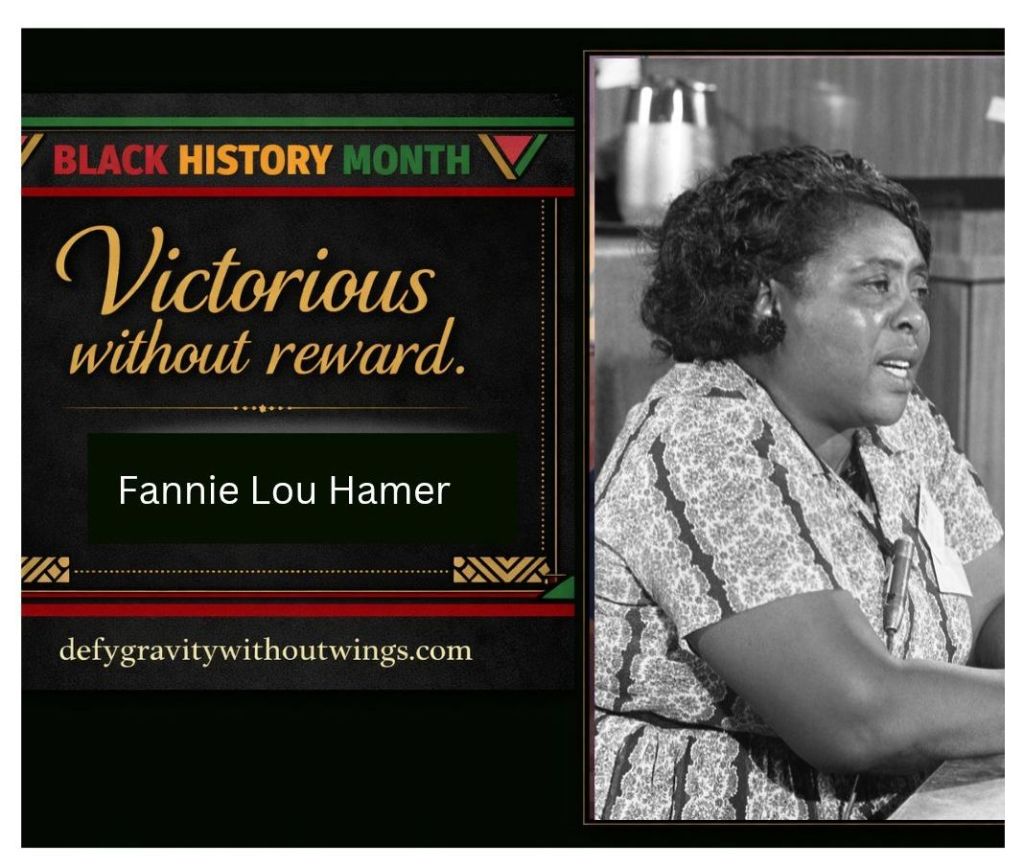
She was victorious without reward.
Still, she kept going — organizing, feeding families, helping build Freedom Farms so people could eat, vote, and live with dignity. Her fight was never only about ballots. It was about daily bread.
“Let justice roll down like waters, and righteousness like a mighty stream.” — Amos 5:24
She didn’t control the stream.
She didn’t shape the river.
She stood in it anyway.
Faith sometimes looks like prayer.
Sometimes it looks like protest.
And sometimes it looks like telling the truth even when your body is already tired.
If you have ever spoken up and paid a price,
felt worn down by doing the right thing,
told the truth without being spared the consequences,
or wondered if faithfulness was worth the cost —
Fannie Lou Hamer stands with you.
She reminds us that God often chooses voices the world underestimates — and uses them to shake foundations.
We see you, Fannie.
We honor your truth.
Bread Crumbs — for those coming after us.
Victorious without reward. Still here.
Love, Chelle

 defygravitywithoutwings.com