Image

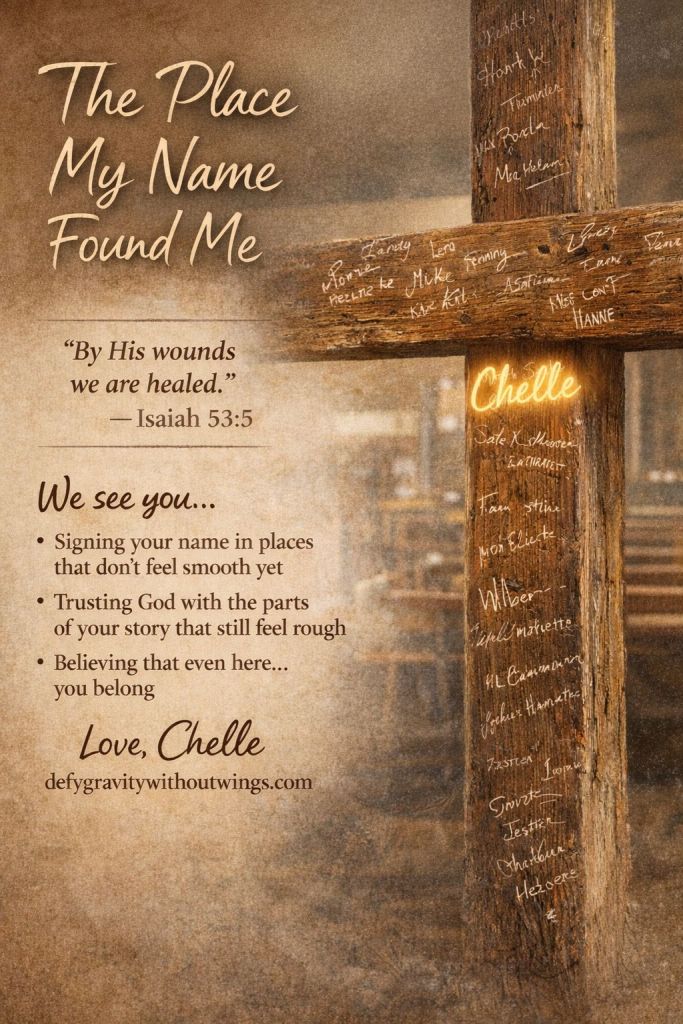
The Place My Name Found Me

I went forward like everyone else.

Not rushed. Not hesitant. Just… carried.

I was visiting the early service at my son’s church,  when the  Pastor called us to come sign our names on the wooden cross that had been standing since last week’s Easter service. A simple act. A physical way to mark what God had already done.

But nothing about it felt simple.

Tears started before I ever stepped out.

I watched the seniors go first
Slow steps
Steady hands
Lives the world sometimes overlooks
But heaven still calls by name

I saw the former addict sign
Not as who they were
But as who God kept

I saw those once incarcerated
Writing their names like chains had finally agreed to let go

A blind man signed
A woman limping signed
And my own deaf son… signed

Lord… that alone almost took me out

Each name wasn’t just written
It was declared
Healing
Freedom
Promise
Still in progress, but already claimed

The children came excited
Unafraid of space running out
Because children always believe there’s room

And when space did get tight
The Pastor lifted the cross higher
So those who couldn’t bend could still reach

Even at the feet… there was still room

That part preached all by itself

But what stayed with me…
What lingered…
Was where my hand landed

A rough place
Scratched
Uneven
The kind of spot that, if you rubbed it the wrong way, could leave a splinter

And I paused

Because it felt like my life

Not smooth
Not polished
Not presentation-ready

But still part of the cross

And right there, in that imperfect place
I wrote my name

Careful
Intentional
Fully aware

That Jesus didn’t die for smooth stories

He died for splinters too

For the places that still catch
Still sting
Still remind you that healing isn’t always pretty

And yet…

That rough place held my name just fine

Didn’t reject me
Didn’t shift me to a better spot

It received me
As-is

And I heard it clear as day in my spirit

“You don’t need a polished place to belong here.”

So I signed

Not because I have it all together

But because the cross already made room for every part of me that doesn’t

“By His wounds we are healed.” — Isaiah 53:5

Signing your name in places that don’t feel smooth yet
Trusting God with the parts of your story that still feel rough
Believing that even here… you belong

**Love, Chelle**
defygravitywithoutwings.com

Image

Not Chained. Positioned.

It’s 1:15 a.m.
The house is quiet, but my mind isn’t.
My spirit is talking, but my thoughts keep trying to interrupt. And if I’m honest, I don’t even want to go where my mind keeps taking me.

Because yesterday… I got burned.
Not a misunderstanding.
Not a small thing I can laugh off later.
Burned.
And not the kind you can just pray off and keep it moving like nothing happened.

And the part that makes it sit heavy in my chest is this: I’m still expected to show up tomorrow like nothing happened.
Smiling. Producing. Performing.
Because apparently… healing is not on the job description.

Because responsibilities don’t pause for disappointment. Bills don’t care about betrayal. And sometimes… purpose doesn’t immediately pull you out of uncomfortable places.

So there I was… sitting in the quiet, feeling tired in a way sleep can’t fix and the thought slipped in:

“I’m chained to this situation.”


Gee… I didn’t even like how that sounded coming out of my own mouth. But just as quickly… something in my spirit pushed back.

Not loud.
Not dramatic.
Just steady:

“You’re not chained… you’re positioned.”

Whew.

Because chained means stuck. No movement. No options. No end.
But positioned? Positioned means this is not permanent… no matter how long it’s been.
Positioned means there is purpose even here.
Positioned means you’re still on your way somewhere.

So I had to correct myself. I am not chained.
I am in transition with responsibilities.
And that changes how I stand in this space.

It means I don’t burn bridges out of frustration but I also don’t build my identity in a place that hurt me.

It means I pay attention. Because what hurt me also showed me something.
How people move.
What I can and cannot depend on.
Where I need boundaries.

What happened yesterday? That wasn’t just pain. That was data. And baby… I take notes.
And data helps you move wiser.

So instead of letting my mind replay the moment or fast-forward me into feeling stuck forever, I made a decision in the quiet:

I will deal with this tomorrow. Not at 1:15 a.m. Because I am not losing sleep over something God is already handling.

Because this hour isn’t for fixing. It’s for listening. And when I listened,I heard it clearly:
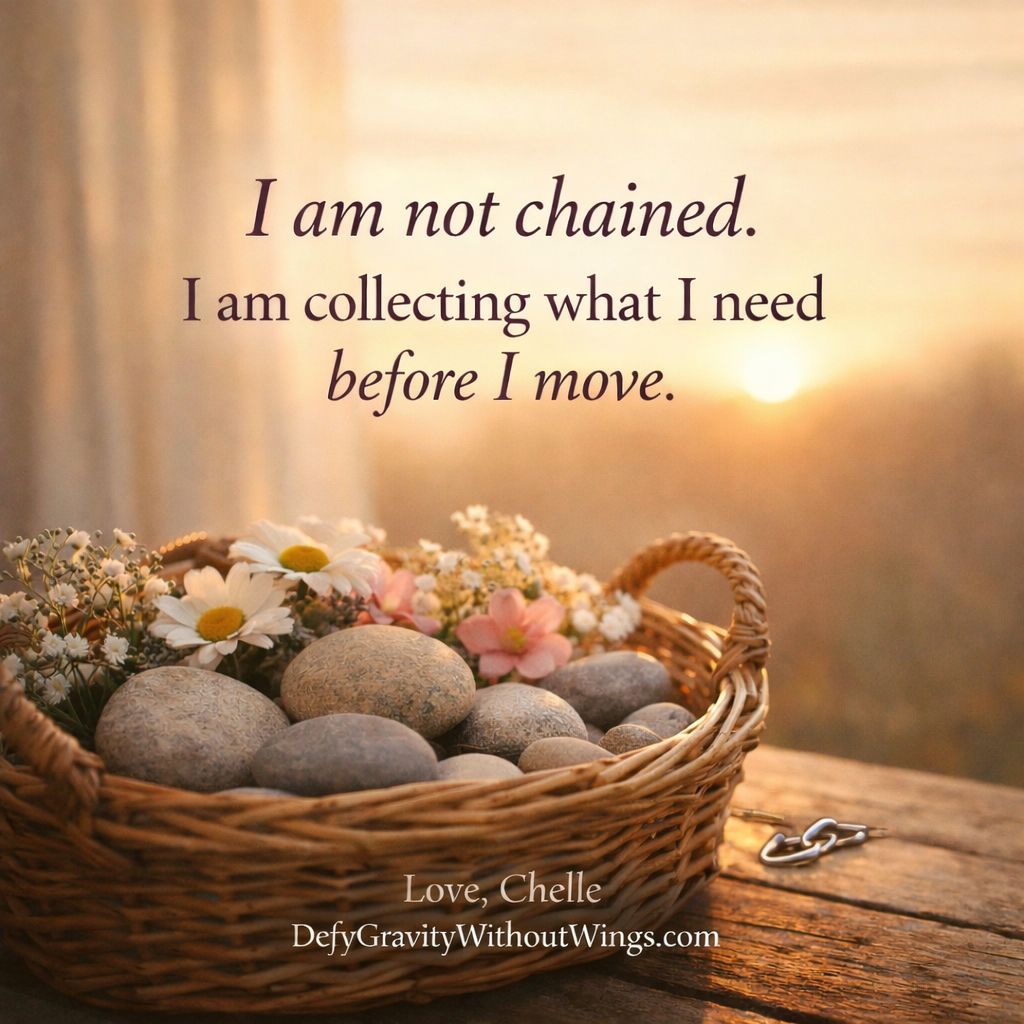
“I am not chained. I am collecting what I need before I move.”

So I’ll show up. I’ll do what needs to be done.
Not because they deserve my best… but because I do.

But I won’t shrink. I won’t forget who I am or whose child I am. And I won’t mistake a temporary season for a permanent assignment.

To be clear… just because I’m still here doesn’t mean I’m staying. Because even here,

God is still positioning me.


For I know the plans I have for you,” declares the Lord… “plans to prosper you and not to harm you, plans to give you hope and a future. – Jeremiah 29


Love,
Chelle
DefyGravityWithoutWings.com 💛

Image

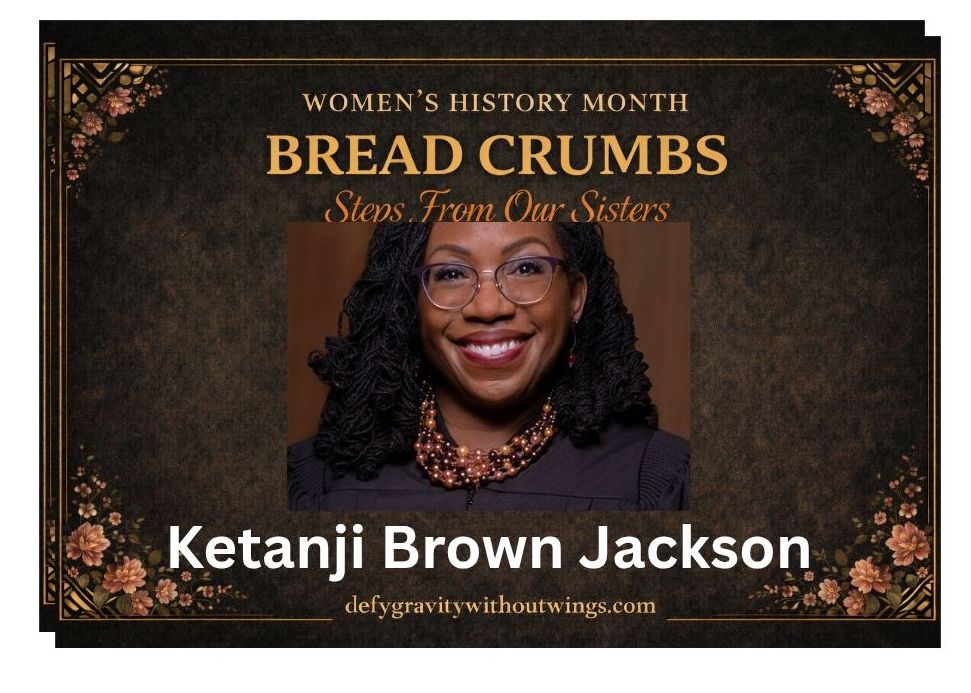
Ketanji Brown Jackson -When preparation meets history.


Some victories do not come bursting through the door.
They come with their shoes in their hand.
With grace under pressure.
With long study hours, quiet discipline, and the kind of strength that has learned how to hold itself still.


Ketanji Brown Jackson was born in Washington, D.C., in 1970 and raised in Miami.
She went to Harvard, graduating from college in 1992 and law school in 1996, serving along the way on the Harvard Law Review.
She clerked for Justice Stephen Breyer.
Worked as a public defender.
Served on the United States Sentencing Commission.
Became a federal judge in 2013.
Rose to the D.C. Circuit in 2021.


Nothing about her path says sudden.
Everything about it says prepared.
And maybe that is what makes this kind of history so holy.
Because on April 7, 2022, when the Senate confirmed her by a 53 to 47 vote, and on June 30, 2022, when she was sworn in as the 104th Associate Justice of the Supreme Court of the United States, becoming the first Black woman ever to serve there, it was not the beginning of her worth.
It was the public naming of what had already been true.
Brilliant.
Capable.
Measured.
Ready.


She became the first former federal public defender to sit on that Court.
Only the sixth woman in its history.


A Black woman in a seat this nation took far too long to imagine her in, though women like her have always been here carrying wisdom, justice, memory, and backbone in places that rarely gave them the microphone.


So no, her presence does not just say look what happened.
It says look what endured.
Look what kept going.
Look what kept studying.
Look what kept showing up polished and prepared while carrying the weight of being doubted before speaking.
For every door that opened late
For every gift that had to prove itself twice
For every girl taught to be excellent and careful at the same time
Her presence speaks.
Not just I made it.
But women like her have always been here.


Have I not commanded you? Be strong and courageous. Do not be frightened, and do not be dismayed, for the Lord your God is with you wherever you go.
Joshua 1:9


And maybe that is the part I love most.
Not just that she made it to the room
but that God walked her all the way there.

Steps From Our Sisters
Honoring the Women Who Marched Before Us
Curated by
Michelle Gillison-Robinson
DefyGravityWithoutWings.com

Image

Unshakable

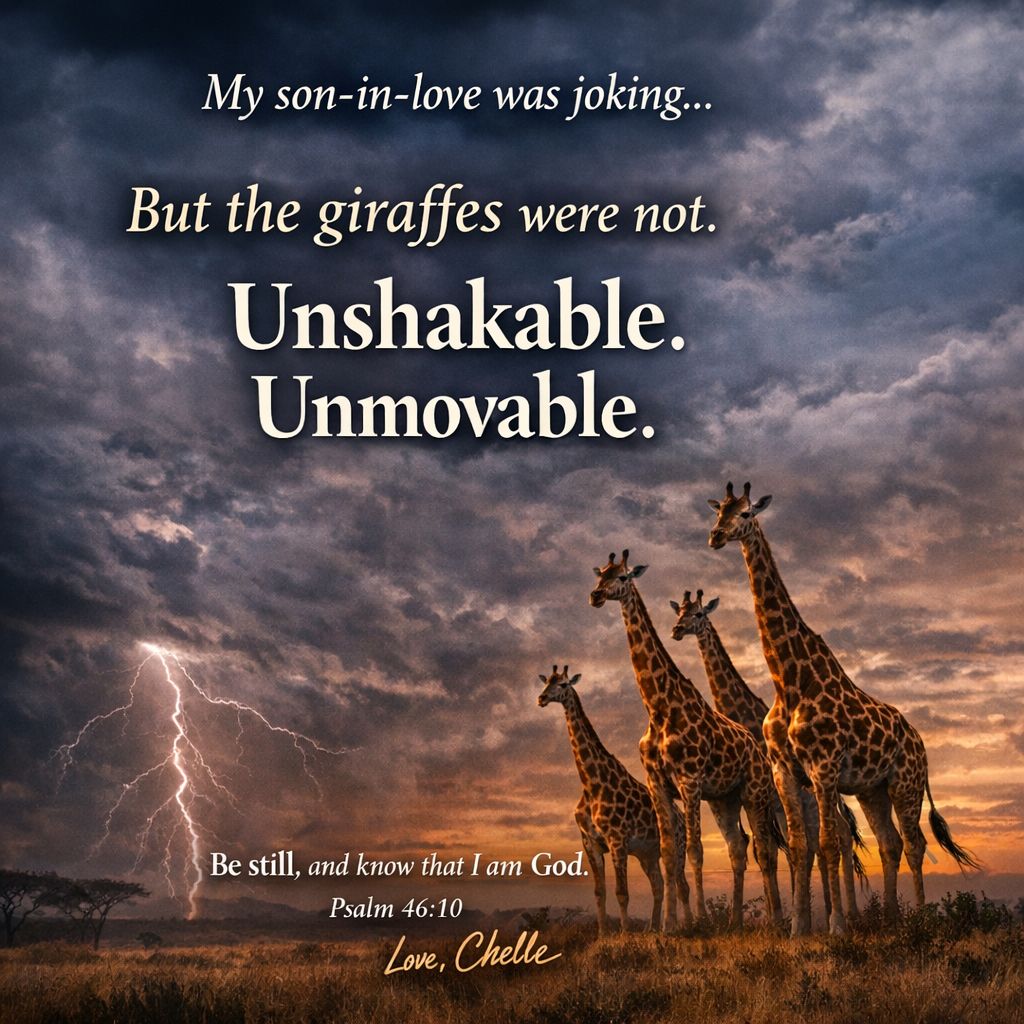
My son-in-love, Kamau, posted that he was booking a flight to Africa. There was a storm coming, he said, and somebody needed to build shelters for the giraffes.

He displayed a picture like it was urgent.
Dark sky. Lightning splitting it wide open.
Giraffes standing tall in the open plain.

He might have been joking (hard to tell with him.) Because that is Kamau.  Compassion wrapped in comedy. Protection tucked inside a punchline. A heart that sees danger and immediately asks, Who needs covering?
I love that about him. ( Don’t tell him I said that.)

But when I looked closer at the picture,
those giraffes were not panicking. They were not lowering themselves to the ground.
They were not scattering. They were standing.

Unshakable. Unmovable.
Storm pressing in. Mortal danger possible.
And yet their necks were lifted.
Their legs planted.
Their bodies steady in the wind.

It made me think of Psalm 91:
“He who dwells in the secret place of the Most High shall abide under the shadow of the Almighty. Under His feathers you will find refuge.”

Those giraffes looked uncovered. But they were not unprotected. They looked exposed.
But they were not outside of shadow. Psalm 91 does not promise the absence of storms. It promises covering in the middle of them.

And then Psalm 46:10 settles it:
“Be still, and know that I am God.”


Not be frantic. Not be consumed. Not be undone. Be still. Still like you trust the One who commands the sky. Still like you believe the storm does not get the final word. Still like your roots run deeper than what threatens you.

We are living in days where thunder travels across oceans. International conflict crackles like lightning. Voices rise. Fear spreads.

But maybe faith looks like a giraffe in a storm.
Not dramatic. Not reckless. Just anchored.
Unshakable. Unmovable.

And I smiled again. Because my son-in-love thought he was just telling a joke. Instead… he helped me write a sermon about faith standing firm in adversity.

He is going to be so embarrassed when he reads this. Make sure you tease him for me.

Love, Chelle
DefyGravityWithoutWings.com

Image

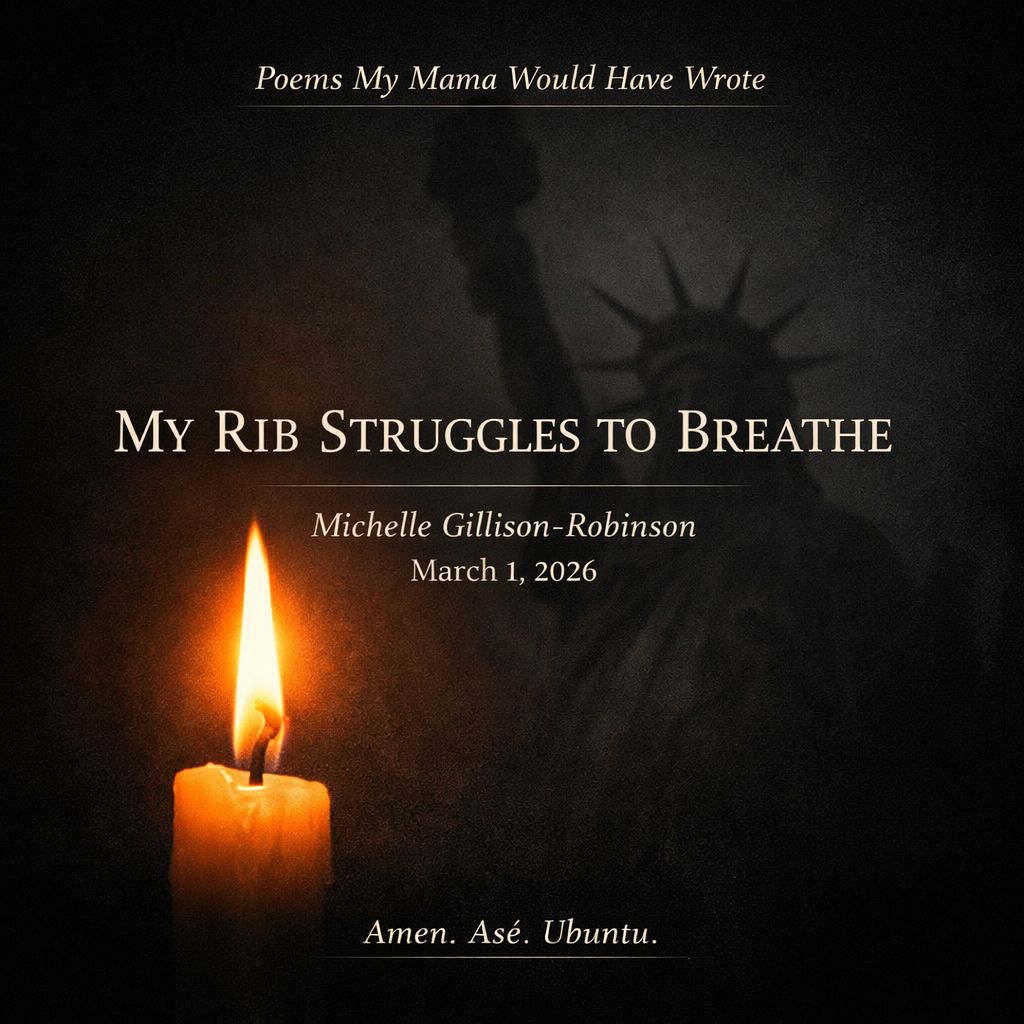
My Rib Struggles To Breathe

March 1, 2026

God of dirt under fingernails, of headlines and heartbeats, of babies born into chaos
and mamas who don’t sleep.
Lord hear our prayer
Sit with us in sackcloth and ash.

Hear the Latina scream for her familia.
Hear the Black mama beat her chest
from the weight of knees and crushed souls
Hear the confused person of no color
whisper, “Am I next?”

See my father’s shadow.
The brown father working double shifts
with documents that feel like paper shields.
The Black father teaching his son
how to survive a traffic stop.
The father from somewhere else
trying to sound less foreign
so his children sound more safe.

The one who has never been taught how to weep, but learns that privileged skin
offers no protection.

Watch how they swallow fear so their families can eat.
Watch how they stand tall while history presses down.
Do not turn Your face from the trembling.

Is Abraham’s argument still valid?
Is there still one worth saving?
If there are fifty…
If there are forty…
If there are ten…
Will mercy outrun destruction?

Because we be something else.
We invent vaccines and vendettas.
We cure disease and cultivate grudges.
We build greenhouses and graveyards
in the same generation.

We scream “save the babies” while demanding their mothers bleed in parking lots outside buildings bearing neon  crosses and snakes on stakes.

And if that little bundle of hope
takes breath….. we ration mercy.
We starve truth. We feed them fear.
We hand them a system and call it destiny.

Forgive us for mistaking loud for strong,
revenge for justice,
power for wisdom,
money for mattering.

Slow the hands hovering over buttons.
Cool the tongues that set nations on fire.
Remind the mighty that bleeding does not discriminate.

When leaders puff up,
deflate egos with a firm hand.
When citizens rage-scroll at 3:33 a.m.,
tuck them back into cradles of mercy.

Teach us that being right is not the same thing as being righteous.

And teach us this, Lord –
That Holy is set apart, not divided asunder.

Set apart does not mean split down the middle.
It does not mean camps or corners
or color-coded salvation.

Holy is not red. Holy is not blue. Holy is not loud.

Holy is careful. Holy is weighty.
Holy is handled like heirloom glass passed from trembling hands.

Do not let us carve You up to fit our arguments.
Do not let us drape Your name over fear and call it faith.

If we must be set apart, let it be in compassion.
If we must be different, let it be in mercy.
Separate us from cruelty.
Separate us from arrogance.
Separate us from the need to win
at the cost of one another.

But do not divide us beyond repair.
Remind us that what is sacred is never meant to be torn.

Lord Hear Our Prayer

For the refugee in the cold,
the soldier on watch,
the child learning history from a textbook that left something out —
Cover them.

Guard democracy like a fragile seedling in late frost.
Guard dignity like Grandma’s good china.
Guard hope like a porch light left on for whoever comes home late.

When we start thinking the sky is falling,
Whisper,
“Dead and dormant are not the same thing.”

Let wars stall. Let hatred get tired. Let truth outlive the loud.

And if we must walk through fire, let it burn off what is false and leave what is faithful.

While presidents posture and pundits perform
Let ordinary people sleep.
Let Nama rest. Let grandchildren dream of gardens instead of sirens.

My bladed pen is hot. It does not drip ink.
It draws blood from silence. It refuses anesthesia. I tire  of gentle prayers that never name the wound.

If my words burn, let them cauterize.
If they cut, let them carve truth
from marble lies.

Out of all the people in this great big world,
please hear me. Please know my voice.
Hear me when I pray.
For I will not whisper  when my rib struggles to breathe.

Amen.  Ameen. Aṣẹ̀ Olódùmarè. Selah. Shanti. Alafia. Tathāstu. Ubuntu

from Poems My Mama Would Have Wrote ( If She Had Been Allowed”
Althea’s Daughter: Michelle Gillison-Robinson

Image

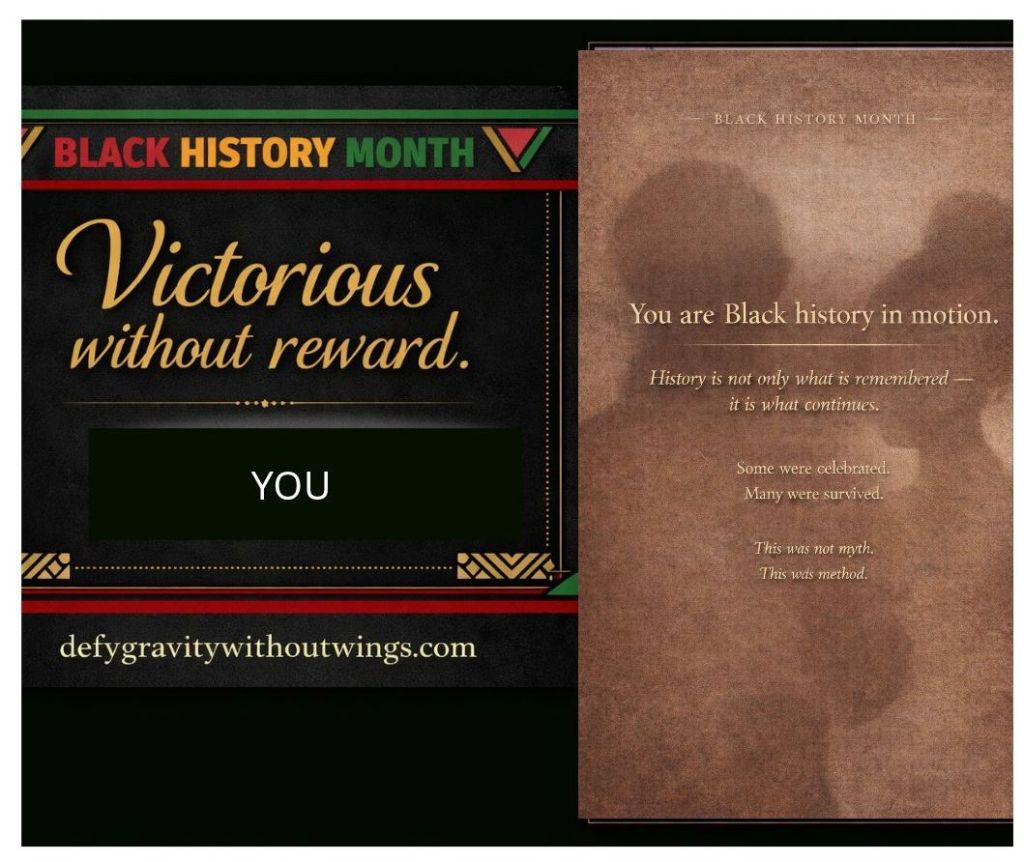
You Are Black History

Black history does not live only in textbooks, timelines, or framed portraits. It lives in you.


It lives in the prayers your grandmother whispered that no one recorded. It lives in the courage it took for your parents and grandparents to keep going when quitting would have been easier.

It lives in the way you show up to work, to church, to community, to family — even when the reward is unclear.


Black history is not only something that happened. It is something that is still happening.


It is made every time you choose dignity over bitterness. Every time you carry joy in a system that profits from your exhaustion. Every time you tell the truth — even quietly. Every time you endure, love, build, teach, heal, or believe anyway.


Some names were written down. Many were not.
Some stories were celebrated. Many were survived.
But history is not only what is remembered — it is what continues.


You stand on the shoulders of those who were victorious without reward. Those who served faithfully without applause. Those who planted seeds they would never live to see bloom.


Their courage flows through you.


And we have always known how to leave something behind.


Breadcrumbs on the ground when the path was uncertain. Hushpuppies tossed not as waste, but as wisdom — a way to distract danger long enough to keep moving. Cornrows braided tight to the scalp, not only as beauty or tradition, but as memory — paths etched into hair, holding maps to water, to safety, to freedom.


What could not be written down was carried. What could not be spoken aloud was encoded. What could not be protected by law was protected by love, community, and God.


This was not myth. This was method.
A people learning how to survive systems designed to erase them — by remembering anyway.


If you are still leaving breadcrumbs for those coming behind you… still marking the way quietly… still choosing faith, dignity, and care when no one is watching…
You are doing what has always been done.


You are part of a holy lineage of guidance and endurance. A living echo of the God who makes a way where none seems visible and leads His people forward, step by step.


“Let us not become weary in doing good, for at the proper time we will reap a harvest if we do not give up.”
— Galatians 6:9
“Your word is a lamp to my feet and a light to my path.”
— Psalm 119:105


If you are still standing, still hoping, still loving, still reaching for God and for one another — you are Black history in motion.
Not just because of where you came from, but because of how you choose to live.


We see you. We honor you. You matter.
Love, Chelle

Image

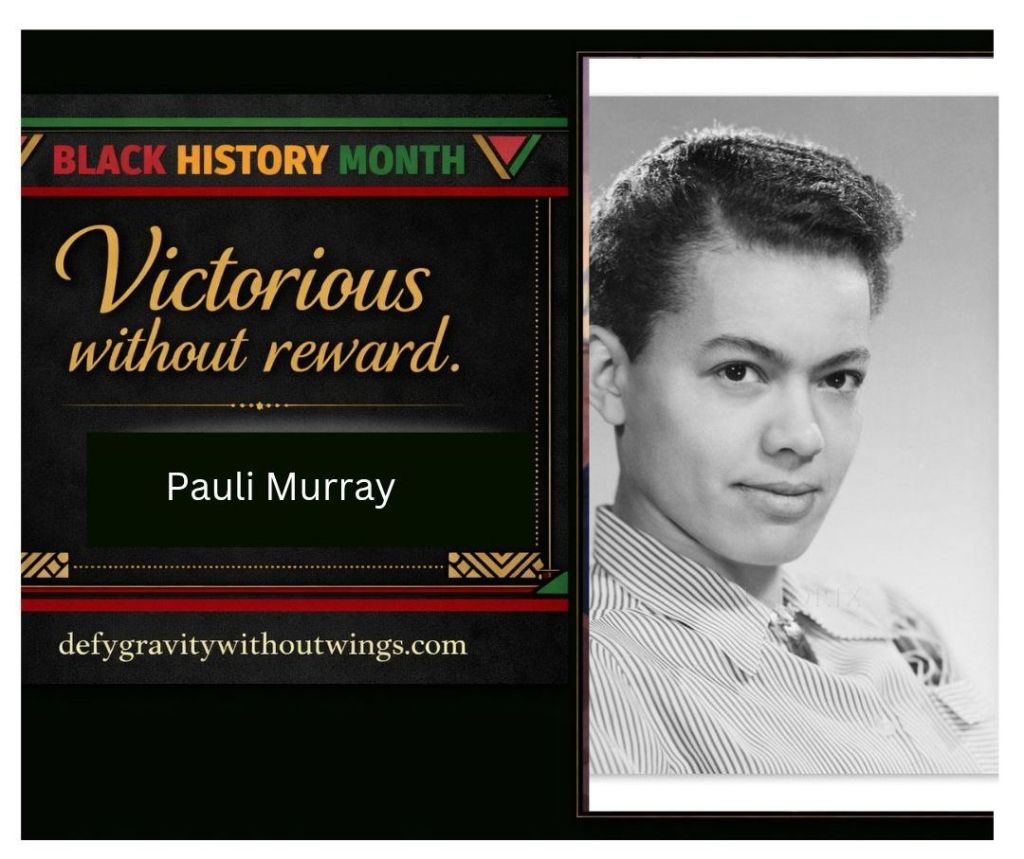
Pauli Murray – She Was The Blueprint

Before the Supreme Court corrected segregation, before women stood firmly in constitutional protection, before pulpits widened for Black women Pauli Murray had already written the argument.

At Howard University School of Law in the 1940s, she challenged the foundation of “separate but equal.” While others argued for better facilities, Murray insisted segregation itself violated the Equal Protection Clause of the Fourteenth Amendment.
Her professors thought it too bold.

Years later, that reasoning formed the backbone of Brown v. Board of Education. Thurgood Marshall reportedly called her earlier research “the Bible” of the civil rights movement. She was not the headline.
She was the framework.

In 1965, she co-authored a groundbreaking paper arguing that the Fourteenth Amendment prohibited discrimination based on sex. When Ruth Bader Ginsburg later argued landmark gender equality cases, she cited Murray’s work directly.
Again — blueprint.

In 1966, she helped co-found the National Organization for Women, shaping modern women’s advocacy.

And in 1940, long before Rosa Parks became a household name, Murray was arrested for refusing to move to the back of a segregated bus. Her resistance was deliberate and strategic.

Then came the church.
In 1977, she became the first Black woman ordained as an Episcopal priest. The ceremony took place in the same chapel where her grandmother, born into slavery, had once been baptized. The descendant of the enslaved stood at the altar as clergy.

History does not always move through loud voices. Sometimes it moves through disciplined minds and stubborn faith.

Murray battled depression. She navigated belonging in spaces slow to affirm her. She lived at intersections the world had not yet learned to name. But she did not step away.
She studied. She wrote. She organized. She stayed.

And because she stayed, the law shifted.
Because she wrote, others argued and won.
Because she persisted, doors opened wider than they had ever been before.

Prophetic work is not always applause.
Sometimes it is architecture.

Isaiah 1:17
“Learn to do right; seek justice. Defend the oppressed.”


CARRY THIS WITH YOU
You may not be the headline.
But you might be the hinge.
Build anyway.
Stay steady.
History often rests on frameworks laid by those who refuse to quit.

BREADCRUMB
Sometimes the victory is not in the spotlight but in the structure. Sometimes the reward is not applause but impact. Write the argument. Lay the foundation. Stay in the room.


SALUTE
We honor Pauli Murray — legal architect, movement strategist, priest, and prophet.
We salute the mind that shaped arguments before the nation was ready to hear them.
We salute the courage that resisted before resistance was popular. We salute the faith that answered a call even when institutions hesitated.

Your blueprint stands.
Your work endures.
Your name is not a footnote.

Bread Crumbs — for those coming after us.
Victorious without reward. Still here.

Image

Horace And Rose: A Civil Rights Love Story

( Condensed Excerpt)

Horace & Rose Gillison — A Civil Rights Love Story

For Black History Month, I want to honor two people whose legacy shaped not only my family, but the city of Richmond itself: Rev. Horace Gillison and Rose Gillison, my great-uncle and great-aunt. Their civil rights work did not always make headlines—but it changed systems.


Before they ever met, they came from very different worlds. Horace was a Virginia country boy with barely a sixth-grade formal education, big ideas, and—by most accounts—a big mouth. Others saw his limited schooling and dismissed him. Horace saw no limits at all. He believed doors were meant to be opened, systems challenged, and no one was qualified to tell him what could not be done.


Rose was polished and poised, barely grown, hailing from North Carolina before family loss dictated a move to Virginia to live with cousins. Where others saw Horace as rough around the edges, Rose became—for him—a beautiful princess of a challenge. And Horace loved a challenge.


Rose maintained a bail fund solely for Horace’s protests and sit-ins, understanding that resistance required preparation as much as courage. Horace challenged Richmond institutions like Thalhimers and Miller & Rhoads, demanding they hire college-educated Black women on their sales floors. He later took great joy in seeing that pressure bear fruit when I secured my first professional job in their credit offices—proof that justice delayed is not justice denied.


He rattled newspapers by insisting they run his ads—with his beautiful Black skin in all its glory—or face legal action. He was also arrested for earning a pilot’s license in Virginia and flying a plane to Culpeper so his mother could experience his joy of flight.

He was arrested again for attempting to sell a house to a Black family in the then all white neighborhood I now live in. He was rumored to have taken black families to house showings in rented limousines.

When Firestone Tire—a place where Black customers could barely purchase goods, let alone work—hired him as their first Black salesman, Horace did not simply succeed. He excelled.

Together, Horace and Rose ran soup kitchens, Christian charities, wig shops, and a modeling school that taught Black women poise, job readiness, and confidence—quietly fueling economic growth in local Black families. Rose’s porcelain beauty and charm made her the perfect choice to become one of the first Black spokespersons for Carnation Milk during the war. Horace ministered churches and broke corporate barriers as the first Black member of the Richfood board.

Their love story was just as intentional as their activism.

They met at a birthday party—for Horace’s then girlfriend. Upon seeing Rose, Horace declared, “That’s the woman I will marry.”

Rose did not make it easy. Before accepting his proposal, she handed him a list: get a good job, secure transportation, build a house. Each time Horace returned with a checkmark, she added another requirement—a lesson she later passed down to the women in our family: know your worth and make him work for it.

When Horace finally had enough, he arrived with friends, a new dress, and a pair of nylons—nearly impossible to find at the time—and dragged her to the courthouse.

They would reach their fiftieth wedding anniversary before Rose declared they finally had what she considered a proper wedding. Loving attended by 4 generations of the Gillison family

Though they never had biological children, Horace and Rose adopted two, fostered many more, and opened their lives wide enough to shape generations. Their influence rippled through the Gillison family and beyond—teaching love without limitation, legacy without bloodlines, and the quiet truth that family is often chosen, cultivated, and sustained by intention.

Lives, I believed patterned straight from the Bible;
“Learn to do good; seek justice, correct oppression.” — Isaiah 1:17
“Let justice roll down like waters, and righteousness like a mighty stream.” — Amos 5:24
“Two are better than one… because they have a good reward for their labor.” — Ecclesiastes 4:9


Horace learned to do good and refused to wait for permission. Rose ensured that righteousness had structure and love behind it. Together, they made justice move.


BREADCRUMB
Justice does not roll on its own.
Someone has to push.
Someone has to prepare.
Someone has to stand side by side when the system pushes back.


Legacy does not always look like applause.
Sometimes it looks like a bail fund.
Sometimes it looks like insisting your image run in full color.
Sometimes it looks like flying anyway.


SALUTE
We see you, Rev. Horace Gillison and Rose Gillison — for seeking justice, correcting oppression, and laboring together so the stream would keep moving and building an extended family that walks in your shoes while still standing on your shoulders.

Bread Crumbs — for those coming after us.
Victorious without reward. Still here.


This is a condensed excerpt from the forthcoming work,

Horace and Rose: A Civil Rights Love Story.

Love,
Chelle
defygravitywithoutwings.com
Image

Garrett Morgan — The Man Who Built What Was Missing

He was born in 1877 in Paris, Kentucky, the son of formerly enslaved parents. His formal education ended early, but his learning did not. As a young man, he moved north and eventually settled in Cleveland, Ohio, where he worked as a sewing machine repairman. Watching machines fail and fixing them taught him how systems worked and how they could be improved.

Now here’s something you may not know.

Before the safety hood and the traffic signal, Garrett Morgan developed an early chemical hair refining cream that loosened curl patterns and funded his manufacturing company. The discovery reportedly began while he was working with sewing machine lubricants and noticed how a chemical solution altered fabric fibers. Curious and observant, he experimented further — first testing a diluted version on a dog’s hair before refining it for human use. The results were dramatic enough to build a thriving business. It became part of a broader wave of Black innovation in the early 20th century that included pioneering women entrepreneurs in the beauty industry.

His more recognized contributions came from witnessing people placed in danger without protection.

He ivented a safety hood in 1912, an early form of the modern gas mask  and demonstrated its effectiveness during the 1916 Lake Erie tunnel explosion, helping rescue trapped workers.  His safety hood influenced firefighter equipment and later military safety gear .


Most notably, he invented an improved traffic signal in 1923 after witnessing a severe automobile accident. He added a caution phase between stop and go, reducing collisions. He then sold the traffic signal patent to General Electric.


Sadly, he faced racial barriers when marketing inventions and sometimes was forced to use white actors for demonstrations.

Garrett Morgan did not invent for applause. 
He invented because danger was preventable and someone had to act.  He built solutions so essential they became invisible 

SCRIPTURE THREAD

“Discretion will protect you, and understanding will guard you.” — Proverbs 2:11 

Garrett Morgan’s wisdom became protection. His understanding became guardrails long before the world learned to credit him.

CARRY THIS WITH YOU

What risk have you noticed that others have learned to tolerate? Morgan reminds us that calling does not always arrive as a dream. It often arrives as a problem you refuse to ignore.

BREADCRUMB

Sometimes the work God gives you is not to be seen, but to quietly make the way safer.

SALUTE

We see you, Garrett Morgan — for building protection where none existed. 

Bread Crumbs — for those coming after us. 
Victorious without reward. Still here.

Image

Bill “Bojangles” Robinson — The Man Who Danced Forward

Born in 1878 in Richmond’s Jackson Ward, Bill “Bojangles” Robinson did not inherit ease. He inherited survival.

Orphaned young, he found rhythm before he found security. Instead of letting the world bend his back, he stood straight and tapped anyway.

He did not shuffle.

He clarified tap. Clean lines. Upright posture. Dignity in every strike of the shoe.

He
• Redefined tap dancing
• Became one of the highest-paid entertainers of his era
• Performed with excellence on segregated stages without lowering himself
• Created the legendary stair dance
• Gave generously back to Richmond

And when the city would not install a traffic light in Jackson Ward to protect Black children crossing the street, he did not argue.

He reached into his own pocket. He paid for the light. Not for praise. For protection.

Today his bronze statue stands in Jackson Ward beneath that light, shoes mid step, forever guarding the intersection.

On screen with Shirley Temple, he smiled.
Off screen, he built safety.

And Scripture whispers underneath his steps:

“Seest thou a man diligent in his business? he shall stand before kings; he shall not stand before mean men.”
— Proverbs 22:29

He stood before kings.
But he made sure children could cross safely at home.

From Jackson Ward to Broadway lights, he proved something we still hold close:

You can climb the stairs without bowing.
And you can light the street when the city will not.

And somewhere in Jackson Ward, if you listen close enough, you can still hear the stairs answering his shoes.

May we be the kind of people who do not just climb them, but leave the light on behind us.


BREADCRUMB
Sometimes progress dances—and still changes the street.


We see you, Bill “Bojangles” Robinson — for dancing forward and making the way safer behind you.


Bread Crumbs — for those coming after us.
Victorious without reward. Still here.