Image

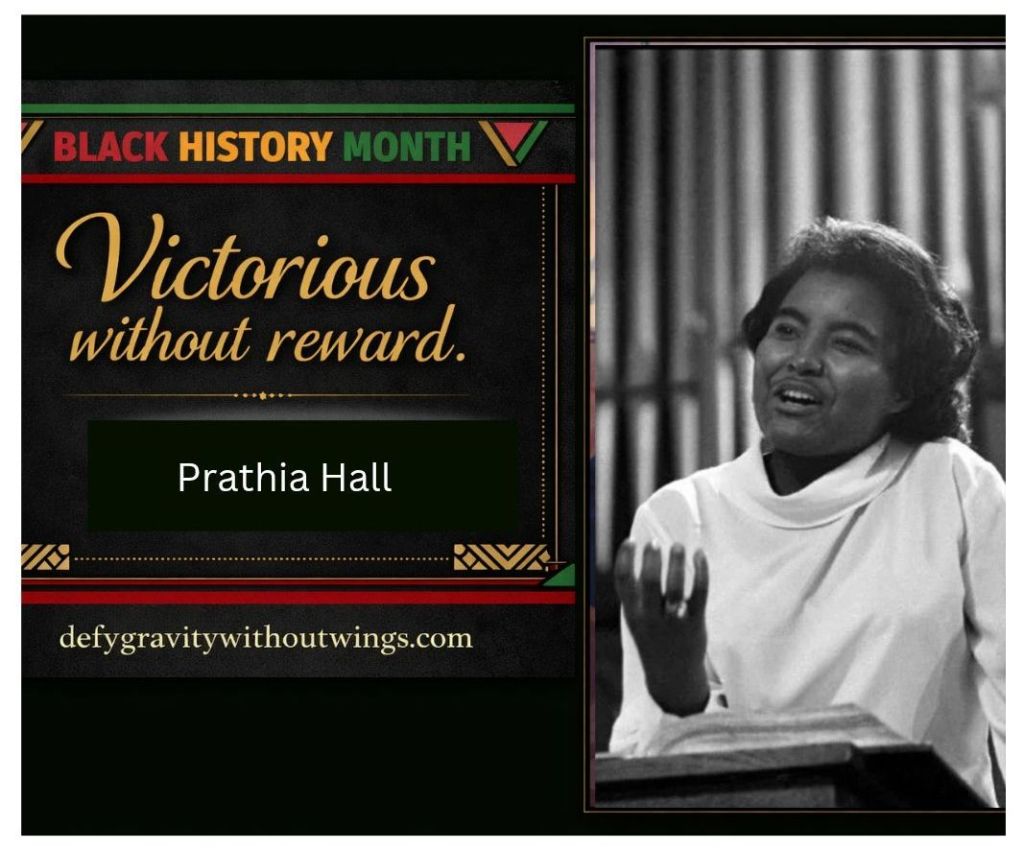
Prathia Hall — The Woman Who Put the Dream in the Air

Prathia Hall was a preacher—and I don’t mean honorary, invited-once-a-year preacher. I mean called, trained, Scripture-handling, fire-in-her-bones preacher. That alone put her at odds with the world she was born into.
She came up in the middle of the Civil Rights Movement, not watching it on television, but working it. Organizing. Marching. Preaching. Sitting in mass meetings where faith wasn’t decoration—it was fuel.


And Prathia knew words mattered.
She preached with rhythm and Scripture braided together. Not shouting just to shout. Not performing. She preached like someone who believed God was actually listening—and that people were, too.


One night, after a church had been bombed, Prathia stood in the rubble and began to pray out loud. And as she prayed, she kept saying a phrase again and again:
“I have a dream…”
Not as a speech.
As a prayer.


That cadence—the hope, the structure, the repetition—later showed up on a much bigger stage through Dr. King. History remembers the microphone. It often forgets the woman who helped tune the sound.


Prathia Hall kept preaching anyway.
She worked with the Student Nonviolent Coordinating Committee (SNCC), helped train young leaders, and taught theology that didn’t separate heaven from justice. She believed faith was supposed to interrupt oppression, not soothe it.
She didn’t chase credit.
She chased truth.

“So then faith comes by hearing, and hearing by the word of God.” — Romans 10:17


SIT WITH THIS
Who taught you how to speak hope before the world was ready to hear it? And where might God be asking you to keep saying the thing—even if someone else gets the credit later?


BREADCRUMB
Some words don’t echo right away.
They wait—until the world is ready to hear them.

We see you, Prathia Hall — for preaching freedom into the air before it had a stage.


Bread Crumbs — for those coming after us.
Victorious without reward. Still here.


Image

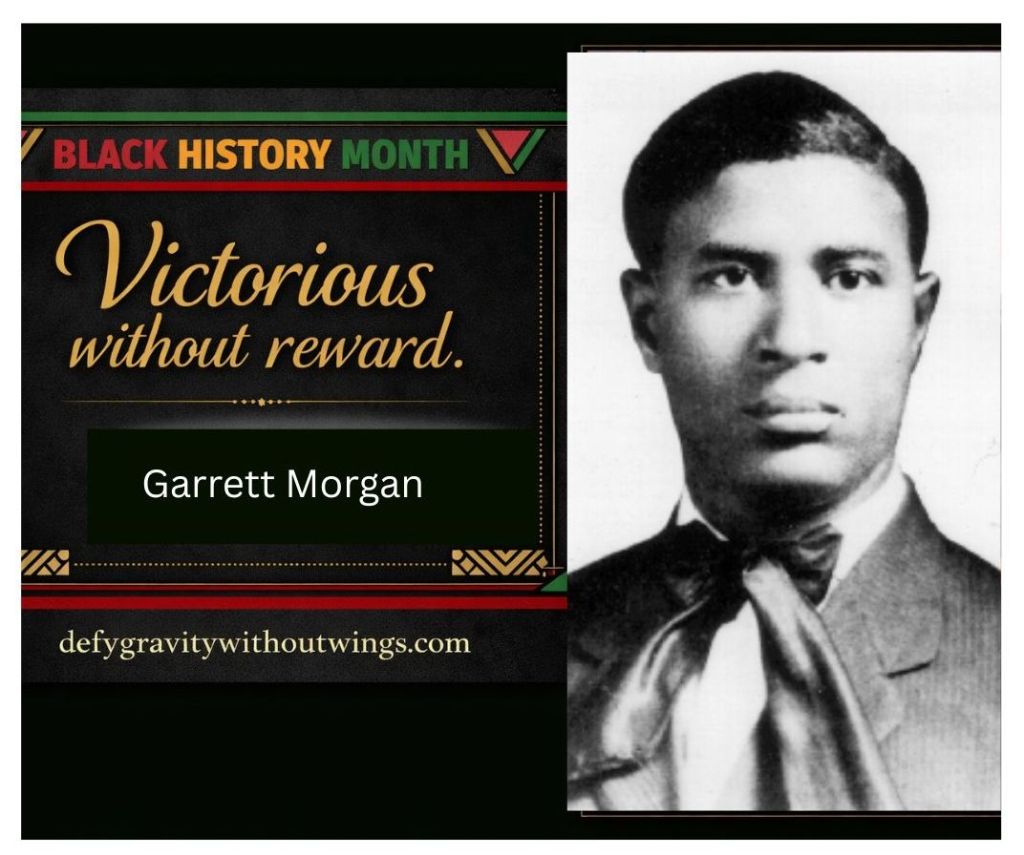
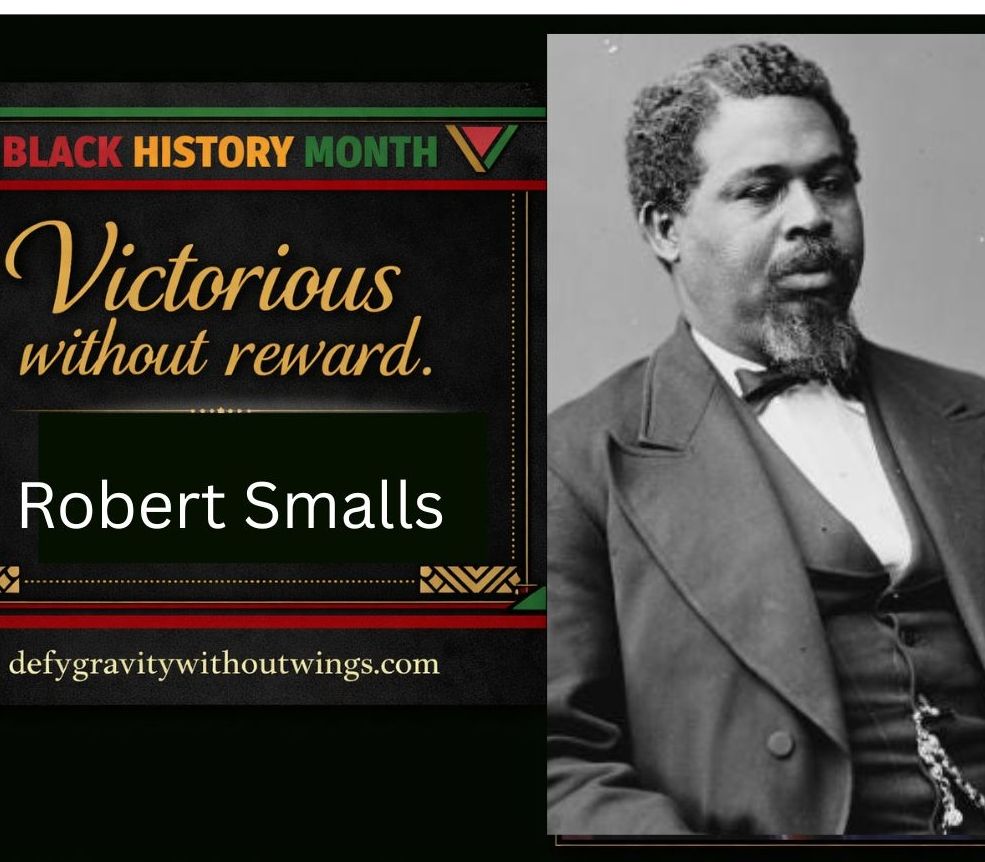
Robert Smalls: He Knew the Way Through

Robert Smalls was born enslaved in South Carolina, in a world where freedom was forbidden and intelligence was dangerous.


But Robert learned the waterways.
He learned the tides.
He learned the rhythms of ships and schedules and signals.
And when the moment came, he used what he knew.


In 1862, Robert Smalls did something no one thought possible. He commandeered a Confederate ship, the CSS Planter, disguised himself in the captain’s uniform, navigated past enemy forts using the correct signals — and delivered himself, his family, and others to freedom.


He did not fire a single shot.
He trusted knowledge.
He trusted timing.
And he trusted that God had already made a way through the water.


In my own family, there are those who make a “not quite”  substantiated claim to Robert Smalls — simply because his last name appears in our family line.
I don’t have records to prove it or disprove it.
I don’t make the claim as fact. But who can deny greatness.


However, the instinct matters.
Because sometimes what we are really claiming is not blood —
but admiration.
Not lineage —
but legacy.


Robert Smalls didn’t stop with freedom.
He went on to serve in the U.S. Navy, help recruit Black soldiers, become a U.S. Congressman, and fight for education, voting rights, and dignity for formerly enslaved people.


And still — he faced resistance.
He was pushed aside.
His leadership was minimized.
His voice was not always welcomed in the halls he helped open.


He was victorious without reward in more ways than one.


More than a century after his courage changed the course of history, the nation finally spoke his name aloud.
In 2023, the U.S. Navy commissioned a ship in his honor — the USS Robert Smalls.


It did not restore what had been denied.
It did not erase the years of resistance he faced.
It did not repay the cost of standing firm in a country slow to remember.
But it did stand as a quiet admission.
The Navy knew who led that ship long before history said it plainly.


And eventually, even delayed recognition had to follow truth.


Robert Smalls teaches us that God often prepares people long before the moment arrives.
“I will make a way in the wilderness and rivers in the desert.” — Isaiah 43:19


Robert didn’t create the river.
He learned it.
He didn’t invent the escape.
He recognized the opening.


Faith sometimes looks like courage.
Sometimes it looks like preparation.


And sometimes it looks like steering calmly through danger because you know where the water leads.

For the One Reading This Today

If you have ever:

prepared quietly for something no one else saw coming

felt drawn to a story because it felt familiar in your spirit

honored someone not because they were yours — but because they were right

trusted God to guide you through impossible terrain

Robert Smalls stands with you.


You don’t have to claim someone as family to carry their courage forward.
Legacy travels deeper than blood.


We see you, Robert.
We honor the way you led others through.


Bread Crumbs — for those coming after us.
Victorious without reward. Still here.


Love, Chelle

Image

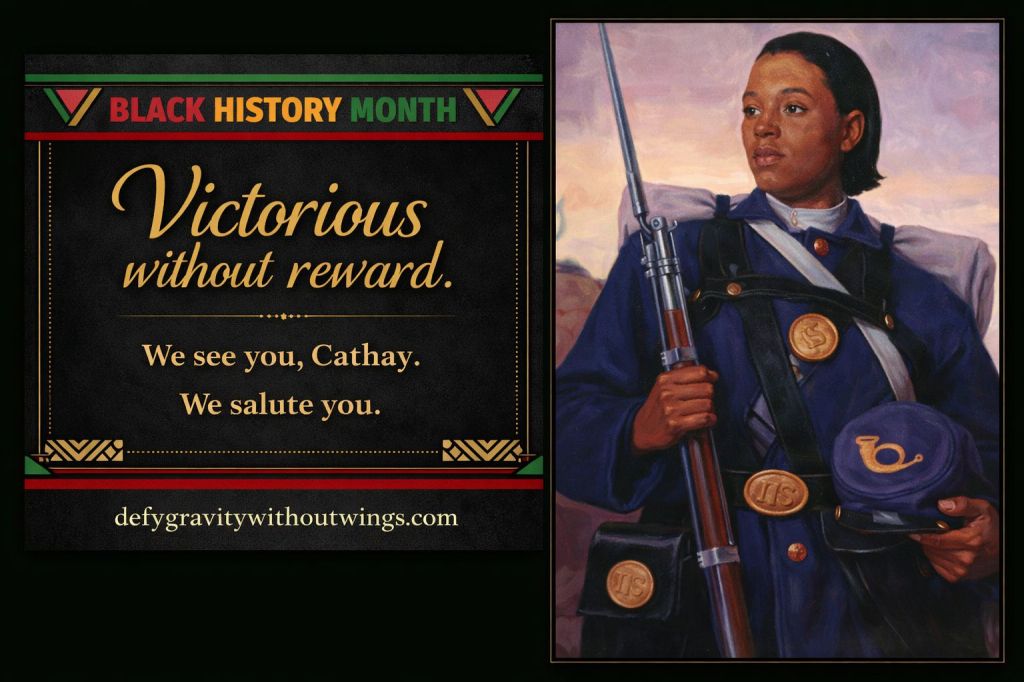
Cathay Williams: Known By God. Hidden By History

Cathay Williams is one of my favorite Black history figures — not because she is well known, but because she is not.


I was first introduced to her by my nephew, Remmie, during one of the hardest seasons of my life — while I was going through breast cancer. He told me her story and then said something that stopped me cold.


He said I reminded him of her.


Like Cathay, I hid some of the pain I was really going through — not out of denial, but out of love.
Not because the fight wasn’t real, but because I wanted to encourage others who were fighting too.


Cathay Williams was born enslaved in Missouri around 1844. During the Civil War, she followed the Union Army as a cook and laundress. But when the war ended and the Army opened its ranks to Black men only, Cathay did something unthinkable.


She cut her hair,

wrapped her body,

changed her name to William Cathay

— and enlisted.


For nearly two years, she served as a soldier in the 38th U.S. Infantry, one of the original Buffalo Soldier regiments. She marched. She guarded. She endured brutal conditions — all while hiding her identity in a world that would not make space for who she truly was.


Eventually, illness exposed what society refused to imagine:
a Black woman had carried a rifle, worn the uniform, and served her country faithfully.


She was discharged — not for lack of courage, but for daring to exist outside the rules.


Cathay Williams lived a life where survival required disguise.
Not because she lacked strength — but because the world lacked vision.


There are seasons when God calls people to serve before the world is ready to name them correctly.
Cathay was known as William by the Army.
But she was known fully by God.
“The Lord does not see as mortals see; they look on the outward appearance, but the Lord looks on the heart.” — 1 Samuel 16:7


History overlooked her.
The Army dismissed her.
But heaven recorded her obedience.
Some call her story deception.
Others call it desperation.


But I call it courage under constraint.


And here is the part history often whispers instead of says out loud:
Cathay Williams never received military honors.
She never received a pension.
In 1891, after her health had been permanently damaged by her service, she applied for a military disability pension. It was denied. She died poor and largely forgotten.


She was victorious without reward.


Cathay Williams did everything she was asked to do — and more.
She served faithfully.
She endured quietly.
She finished her assignment.


Her story reminds us that victory and recognition are not the same thing.
“Well done” does not always come from the systems we serve — but it is always recorded by God.
She didn’t fight for history.
She fought through it.
And God did not waste a single step she took.


She did not live to see her story told.
But her life still speaks.


And for those who have ever given their strength, their hope, or their encouragement without guarantee of return:
You may be unrewarded by the world —
but you are not unseen by God.


We see you, Cathay.
We salute you.


Love, Chelle

About the History in Bread Crumbs
Bread Crumbs reflections are grounded in documented historical records, including archives from the U.S. National Archives, Library of Congress, court records, contemporaneous newspapers, and first-person accounts. Spiritual reflections and personal connections are clearly marked as such and are offered with respect for the historical record.

.

Image

Porch Prayers & Weather-Wise Faith

On days like these, my mother would stand on the porch and ask for a Bermuda High to come down and turn the snow and ice away.


In the thick, sticky heat of summer, she’d pray for a Canadian Low to sweep through and cool the air.


She didn’t call it meteorology.
She called it faith.
And more often than not, the weather shifted.


When I got older, some of my friends picked up the same habit. We didn’t have robes or titles—just house shoes, coffee cups, and enough sense to know the porch was close enough to heaven for our prayers to travel. We called ourselves the Porch-Praying Sisters.


We prayed about the weather, yes—but also about children, marriages, money, bodies that wouldn’t cooperate, and news reports that made our stomachs knot. We spoke our requests into the open air like God might just be passing by and decide to stop and listen.


Today, we’re in the middle of a Virginia ice storm.
Freezing temperatures.
Sleet tapping the windows.
The quiet, low-grade anxiety of Will we lose power? humming beneath everything else.


And maybe that’s what storms still do best.
They set the altar.


They slow us down, pull us inward, strip away noise and options until all that’s left is warmth, breath, and the remembering that we are not in control—but we are not alone either.

“When you pass through the waters, I will be with you… when you walk through the fire, you will not be burned.” (Isaiah 43:2)


Over the years, we drifted. Life scattered us. Jobs, moves, losses, disagreements, silence. That happens.
But in this current environment—
with ice on the ground, tension in the air, and uncertainty pressing in—
I find myself praying again.
Not polished prayers.
Porch prayers.


The kind that believe faith doesn’t have to be loud to be effective. The kind that remember Jesus said even “faith as small as a mustard seed” can speak to what feels immovable and tell it to move. (Matthew 17:20)


Maybe the weather won’t always change.
Maybe the power will flicker.
Maybe the storm will linger longer than we’d like.
But when a storm sets the altar,
something always moves.
And sometimes…
that something is us.


— Love,  Chelle

Image

Snowmaggedon Has Entered the Chat

Well… here we are.


My favorite weather man is forecasting the first official Snowmaggedon of the season: six to twelve inches of snow, up to an inch of ice layered on top, and—because chaos loves company—the delightful possibility of losing power. Naturally planned for a post-work weekend, because rest is apparently negotiable.
I’ve done my preps.
Grandma’s provision list? Checked.
Every extra blanket in the house washed, folded, and staged like we’re auditioning for Little House on the Prairie: Dominion Energy Edition.
Candles. Tea lights. Batteries. Flashlights. The full “we will survive this living room” starter kit.
I’ve been digging through storage bins to find the reflective cover for my greenhouse, determined to protect my plant babies outside. Because if the lights flicker and the world goes quiet, somebody still needs to be covered. We will endure together—warm-ish, faithful, and protected.
This isn’t panic prepping.
This is inheritance.
This is what happens when you’re raised by women who trusted God and kept extra blankets. Women who understood that peace doesn’t come from pretending storms don’t happen—it comes from knowing you’re sheltered when they do.
“He will cover you with His feathers, and under His wings you will find refuge.” — Psalm 91:4
That verse feels different when you’re pulling covers over tender things.
When you’re choosing care over chaos.
When you’re preparing not out of fear, but out of love.
And when the work is done—when the candles are set and the covers are pulled tight—there’s permission to rest.
“In peace I will lie down and sleep, for You alone, Lord, make me dwell in safety.” — Psalm 4:8
Now, the only thing I’m not prepared for is being snowed in with young people who have never experienced boredom—or a power outage—as a character-building event. Back in my day we stared at walls and survived…
But even then… provision has already been made.
And that, right there, is peace—with a little sass and a lot of covering.
Love,
Chelle

Image

Jesus Took A Break (And So Can You)


I noticed it, and it wouldn’t let me go.

Jesus took a break.

Not because He was lazy.
Not because the need was gone.
Not because the work was finished.

But because He knew when to pour Himself out —
and when to be filled again by the Father.

He stepped away while people still needed Him.
He withdrew while expectations still waited.
He rested even though the world would have gladly kept pulling.

“But Jesus often withdrew to lonely places and prayed.”
— Luke 5:16

(Jesus withdrew to quiet places.
I withdraw to the couch and pretend I’m just “thinking.”)

Last night my body kept waking me up like it was tapping my shoulder saying,
Hey. We’re done pretending.

Every hour on the hour.
No deep rest. No drifting off.

Thoughts of what I needed to do today were keeping me awake, while those same thoughts were making me tired.


But, yet, there was a quiet insistence that something holy was being ignored.

(Jesus rested.
I call it a “strategic pause,” because the word nap feels too optimistic.)

Here is the truth tired women rarely hear out loud:

Rest is not quitting.
Pausing is not disobedience.
Taking a break is not a lack of faith.

Sometimes it is the most faithful thing you can do.

Jesus didn’t withdraw because He didn’t care.
He withdrew because He did — because love that lasts must return to its Source.

(Jesus took a break.
I took one too once — accidentally, in the driveway, with the car still running.)

Today I will not apologize for being tired.
I will not spiritualize exhaustion.
I will not confuse availability with holiness.

I will follow Jesus —
even if that means following Him somewhere quiet.

And if all I manage today is showing up gently,
that will be enough.

Because Jesus took a break.
And somehow… that sets me free. 

So if you can’t find me today, I am on the couch with Jesus. Wake Him and ask permission to wake me.

Love, Chelle

Footstep Notes:
Luke 5:16; Mark 1:35; Matthew 14:23

Image

Practice the Presence That Protects the Promise


A reflection of Psalm 91

There are days when the world feels too loud for jokes.


The headlines carry war, division, fear, and the slow erosion of freedoms we once assumed were permanent. The ground feels less steady. The future feels less certain.

And the little clown in me—the one who usually believes laughter can soften almost anything—finds herself mourning.


Not because hope is gone.
But because peace matters too much to pretend this doesn’t hurt.


Psalm 91 doesn’t ask us to deny danger. It invites us to dwell.
“Whoever dwells in the shelter of the Most High will rest in the shadow of the Almighty.” (Psalm 91:1)


Protection, here, is not earned.
It is not performed.
It is not proven by volume, certainty, or strength.
It is positional.
To dwell is to stay.
To remain.
To practice presence when the world feels unrecognizable.


This is protection without performance.
Not faith that shouts.
Not hope that rushes to fix.
Not peace that pretends everything is fine.
Just presence—steady, near, covering.


The promise of Psalm 91 is not that trouble will disappear, but that God does not. The shadow does not move. The refuge does not close. The shelter does not require us to be unafraid—only willing to come close.


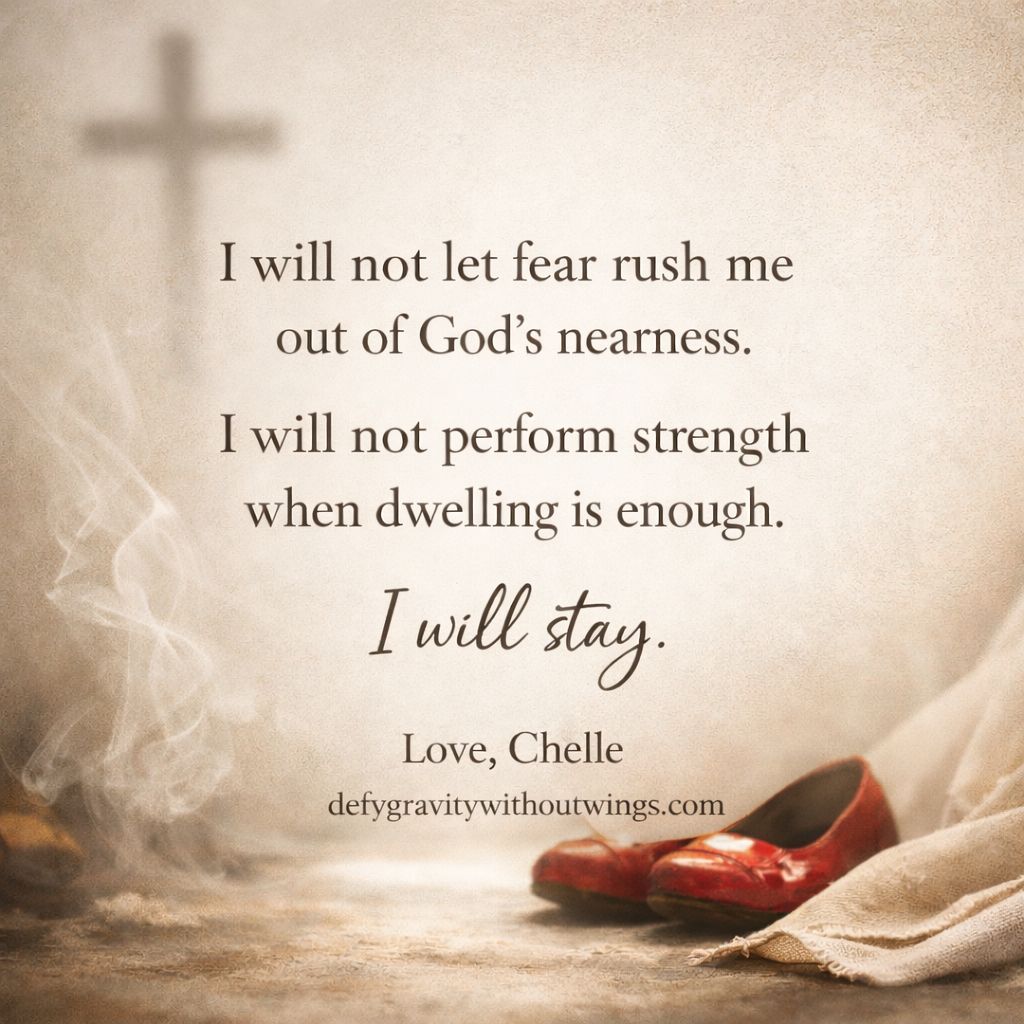
So today, the clown in me removes her red shoes.
She sits on holy ground—
trusting the same God who once said, “Stay.”
Trusting that what marks the door also guards the dwelling.
She mourns for peace honestly.
And still—quietly—she dwells in hope.


Today’s practice is simple:
not fixing, not proving, not performing—
just dwelling in His Presence.

—-
God of refuge and nearness,
When the world feels unstable and peace feels fragile, help me to dwell rather than strive. Teach me to trust Your presence more than my ability to understand what is happening around me.
Let Your covering be enough today.
Amen.


With Love And A Multitude Of Prayers,
Chelle

Image

Before Coffee,  Before Control

This wasn’t a quiet, reflective night moment.
This was a stressed 3 a.m. morning, when sleep clocks out early and your brain clocks in loud — with opinions.

I wasn’t trying to hear from God.
I was trying to finish a work  email before coffee, which already tells you I was operating without full emotional supervision.

I kept shortening it.
Not because I didn’t know what I wanted to say — but because I know my boss. I know there may still be a meeting. I know she’ll ultimately direct and take charge. So I trimmed. Simplified. Took out the pre-explaining and the imaginary rebuttals. I said what needed to be said and stopped trying to manage the outcome.

And somewhere between rereading sentences and realizing I was too tired to argue with myself, it landed:

This is exactly how we treat God.

We make plans — good ones — and then we hover.
We explain too much.
We brace for redirection.
We add footnotes to obedience.

Not because we don’t trust Him —
but because we really like being on the steering committee.

Meanwhile, God has already given us the playback in His Word.

He’s already shown us how authority works.
How obedience works.
How trust works.

We do our part.
We speak honestly.
We move wisely.
And then we let go — preferably before caffeine convinces us we should take over.

“In their hearts humans plan their course, but the Lord establishes their steps.” – Proverbs 16:9

Not might.
Not if He agrees.
He does.

This morning reminded me that obedience isn’t about directing God — it’s about participating with Him. Doing what’s mine to do without trying to edit the ending.

I don’t need to manage God the way I manage emails.
I don’t need to anticipate His response.
And I definitely don’t need to rewrite His plan before coffee.

Sometimes the most faithful thing we can do is hit send, make the coffee, and trust God with the meeting that follows.

Prayer
Lord, help me do my part without trying to control Yours. Teach me to trust You with the outcome, even before the coffee kicks in.
Order my steps, steady my heart, and remind me that You’re already ahead of me.
Amen.

Love, Chelle