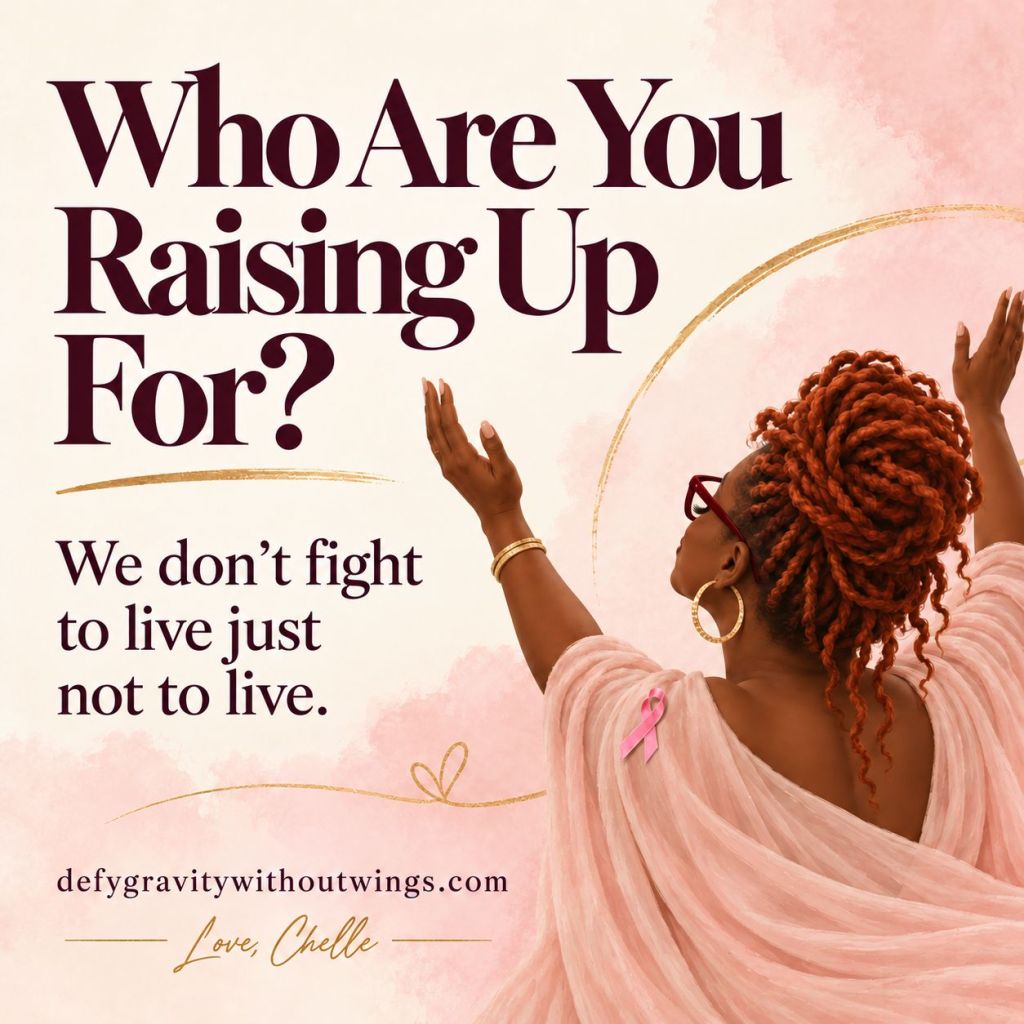
I had the opportunity to share at a Breast Cancer Awareness event this weekend. Instead of standing behind the podium, I sat down among the women.
We talked about facts and figures. I shared some of my own journey. I emphasized that it is a disease that comes to steal the caregivers from families.
And then we talked about a woman named Tabitha.
You may know her as Dorcas.
In Acts 9:36–42, we meet a woman known for doing good and helping those in need. When she became sick and died, the disciples sent for Peter. When he arrived, the widows stood around him crying and showing him the clothing Dorcas had made.
That part stayed with me.
They had something in their hands that spoke of the care she had given them. Garments she had spent time making. The poor she cared for. Evidence that she had noticed their needs and done something about them.
Scripture doesn’t tell us that Dorcas neglected herself. But those women showing Peter how she had cared for them made me think about how many of us spend our lives caring for everybody else.
We know who needs a meal. Who needs a ride. Who needs prayer. Who needs somebody to listen. We can remember everybody’s appointments, preferences, problems, and prescriptions.
Meanwhile, our own needs keep getting moved to the bottom of the list.
And sometimes we don’t even make the list.
Lord, help us.
I know something about being busy, being needed, and trying to keep everything moving. I also know what it feels like when a diagnosis interrupts all of that.
Before my diagnosis, I was dealing with my ailing father, my youngest son needing a kidney transplant, and the tragic loss of my third-youngest grandson. There was so much happening. So much grief. So many needs.
I kept rescheduling my annual exams. I would get to me later.
Until “later” became three missed annual exams.
I share that with tenderness toward the woman I was then. She was carrying a lot. But somewhere in caring for everybody else and trying to make it through, my own care kept getting pushed back.
On October 10, 2018, I received my breast cancer biopsy results.
The tumor could not be felt during my self-exams. My gynecologist hadn’t felt it either. That is part of why you will keep hearing me talk about getting those smash-a-grams.
Yes, I said smash-a-grams. Y’all know me. We can talk about something serious and still leave a little room to laugh.
Eight years later, I am grateful to be here. And I am still learning what it means to care for the woman who made it through.
Because surviving does not automatically teach us to stop putting ourselves last.
Sometimes we get just enough strength back to pick up every responsibility we had before. Everybody is relieved that we are doing better, and before long, we are cooking, carrying, fixing, answering, and showing up again.
Somewhere in all of that, we can disappear from our own story.
This is the thought I brought to those women—and the one I am bringing home to myself:
We have not been raised up just to create the same habit again. We don’t fight to live just not to live.
In Dorcas’s story, Peter prayed, told her to get up, and gave her his hand to help her stand. The woman whose hands had done so much for others received a helping hand herself.
I love that.
And I mentioned something else while we were together: we are often guilted into performance by the Proverbs 31 woman.
We hear about everything she did. She worked. She provided. She managed her household. She cared for the poor. And somehow, we turn her life into a checklist we are supposed to finish before bedtime.
But hold on a minute.
**She had handmaidens.**
Go back and read Proverbs 31:15. That woman had help.
Meanwhile, we are trying to be the woman, the handmaidens, the transportation department, and the kitchen staff—and feeling guilty because we need a nap.
Lord, help us again.
We can honor her diligence and remember the help that was part of her household. Accepting help does not make us less faithful, less loving, or less capable.
**We do not have to do everything by ourselves to be women of worth.**
There is room in our lives to receive care. To let somebody bring the meal. To say we are tired before we are completely worn out. To keep our appointments. To ask for help without delivering a whole speech explaining why we deserve it.
There is room to enjoy the life we have, too.
To laugh. To rest. To plant something. To dream about something that has nothing to do with somebody else’s needs.
So, who are you raising up for?
I have people I love. People I want to see grow. Moments I want to be present for. I have more songs, more stories, and more living I hope to do.
**And I need to be on that list, too.**
I also hold close the memory of those we have lost. Their love was no smaller. Their faith was no less. My gratitude for being here carries room for their names and their stories.
As I consider the life in front of me, I want to be more intentional about how I live it.
I can love people and let them love me back. I can serve and still rest. I can have faith while my knees knock, and I can let somebody hold my hand until they settle.
I sat among those women to share a message, but I needed to hear it, too.
We spend so much time making sure everybody else has what they need.
**Let’s make sure we are included in our own story.**
Love,
Chelle