Sometimes change begins with something small enough to hold in your hand.
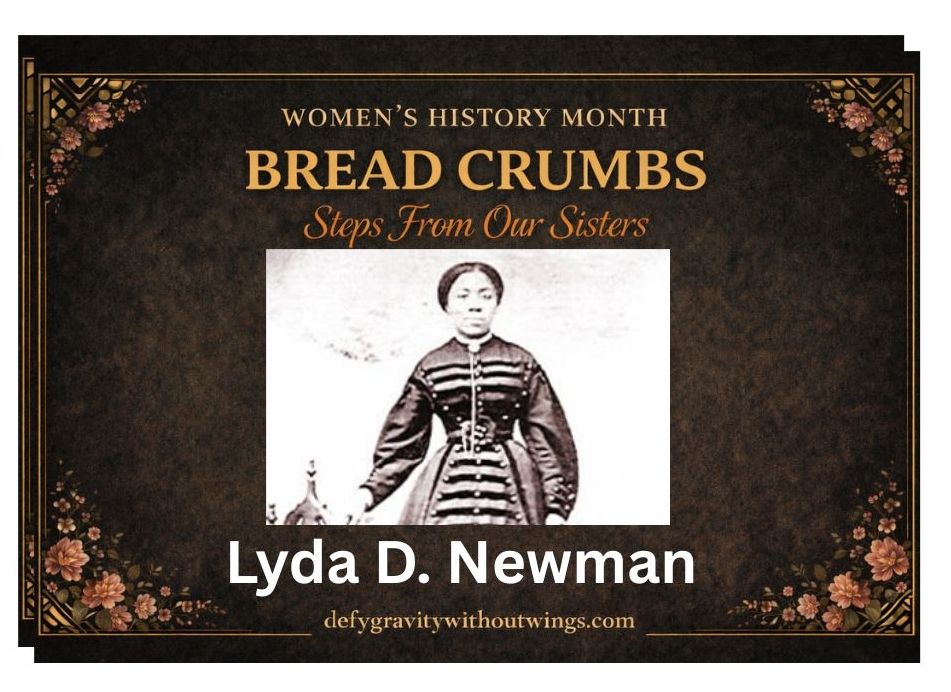
Lyda D. Newman was an inventor and hairdresser living in New York City at the end of the nineteenth century. In 1898 she patented an improved design for the hairbrush, creating a tool that was easier to clean and more effective for everyday use.
It was a practical invention, something millions of people would eventually use without thinking twice.
But Lyda Newman’s story does not stop in the bathroom mirror.
She was also deeply involved in the growing movement for women’s suffrage. At a time when women were still fighting for the basic right to vote, Newman worked with suffrage organizers in New York to help register women voters and mobilize communities.
For women like Newman, the fight for the ballot was not only about politics.
It was about dignity.
There is a verse in Proverbs that says, “Speak up for those who cannot speak for themselves.”
Lyda Newman did exactly that.
Through organizing and advocacy, she helped open the door for women to participate in the democratic process. Her work joined thousands of other women who marched, organized, and demanded that their voices be counted.
The tools she invented made daily life easier.
But the work she did for suffrage helped shape the future of a nation.
Sometimes the quiet hands that improve everyday life are the same hands helping move history forward.
Bread Crumbs
Not every act of courage looks dramatic.
Sometimes courage looks like organizing neighbors, registering voters, and refusing to believe your voice does not matter.
Lyda Newman reminds us that progress is built by ordinary people who decide their voice belongs in the conversation.
Sometimes the change God places in our hands is meant to help others find their voice too.
Steps From Our Sisters Honoring the Women Who Marched Before Us
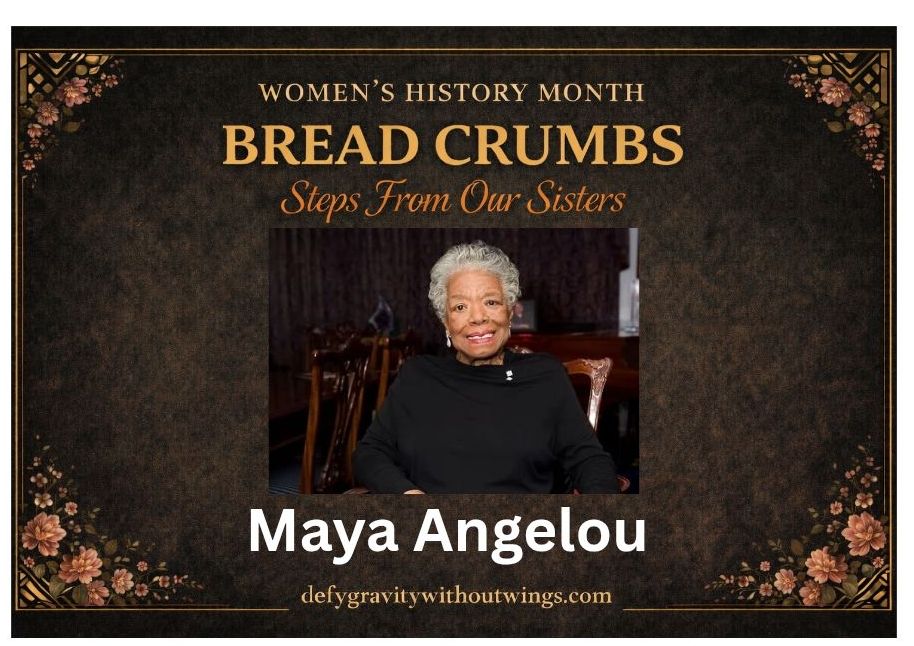
She carried many lives before the world called her a poet. Maya Angelou was born in St. Louis, April 4, 1928 as Marguerite Annie Johnson. The name Maya was derived from her brother Bailey who just could not pronounce her name and would call her “My Sister” . It morphed into Maya which stuck. Angelou came from her first husband, Enistasios Angelos, a Greek sailor. She adapted the surname slightly to Angelou when she began performing as a dancer and singer so it would sound more lyrical on stage.
She was raised in the segregated South where dignity was often denied but never fully destroyed. Her childhood held both silence and survival, experiences that would later shape the voice the world came to know. She refused to stay one thing. Angelou worked as a streetcar conductor, dancer, singer, journalist, and organizer long before the world recognized her literary voice. Her life moved through many stages, but each experience added depth to the perspective she would later bring to her writing. Her voice extended beyond stages and books. During the Civil Rights Movement she worked alongside Martin Luther King Jr. and Malcolm X, helping organize, write, and advocate for justice. In 1964, after years living and working in Africa, Angelou returned to the United States at the invitation of Malcolm X to help him build a new civil rights organization focused on global Black unity. Before that work could fully take shape, Malcolm X was assassinated. The loss shook her deeply, but Angelou continued writing, speaking, and advocating for dignity and equality. Only a few years later the movement suffered another devastating loss when Dr. King was assassinated on April 4, Angelou’s own birthday. Still she wrote. In 1969, I Know Why the Caged Bird Sings gave voice to stories the world rarely allowed Black women to tell out loud. Stories of trauma, identity, and the quiet power of rising again. Her words did not whisper. They lifted. As she once wrote: “Still I rise.” Three simple words that carried generations. But the voice the world came to love was not always easy for her to use. As a young girl Maya Angelou endured a violent assault. When she spoke the truth about what had happened, the man responsible was later killed. In her young mind she believed her words had caused it. So she stopped speaking. For years she lived in silence, afraid that her voice carried too much power. It was a teacher, Mrs. Bertha Flowers, who slowly led her back to language through books, poetry, and the music of words. The voice that would one day move a nation had to be reclaimed first. In 1993 she stood at the inauguration of President Bill Clinton and read On the Pulse of Morning, becoming only the second poet in American history to deliver a poem at a presidential inauguration. But her greatest legacy was simpler. She gave language to survival. Her life echoes a truth older than any poem: “We are hard pressed on every side, but not crushed; perplexed, but not in despair.” — 2 Corinthians 4:8
I once saw Maya Angelou in concert. In a packed 1000 plus seat theater she sang “God Sent a Rainbow” without a microphone. The room fell completely silent as her voice carried to every corner. It felt as if the walls themselves were listening. In that moment I understood something about courage. Voices like Maya Angelou’s do more than speak. They remind us that we are not meant to stay silent either. Somewhere in our own lives there is a truth waiting to be spoken, a kindness waiting to be offered, a step waiting to be taken. And that is how Bread Crumbs are made. Poet. Witness. Voice for generations. We see you, Maya Angelou — for giving language to survival and wings to truth. Bread Crumbs — from those still marching forward. Steps From Our Sisters. Still here. What step might be waiting for you?




 defygravitywithoutwings.com