Image

When The Role Changes But The Purpose Remains


Yesterday, I did something that is not unusual for me when I get tired of adulting. I went to see a children’s movie.

Some people head to a spa. Some go shopping. Some book a weekend getaway. I apparently seek spiritual counseling from animated characters.

After a frustrating day at work and life, I exited being grown and didn’t  even stop for a grandchild so i wouldn’t look weird in the theater without a kid. 

I wasn’t looking for a life lesson. I was simply tired and in need of a break from the responsibilities and pressures of everyday life. I walked into the theater looking for a distraction. I walked out with a devotional.

As the story unfolded, I found myself drawn to Sheriff Jessie. Without spoiling Pixar’s story, Jessie finds herself wrestling with a question many of us eventually face: What happens when the role you’ve always known no longer defines your future?

At first glance, it sounds like a children’s movie question. It isn’t. It is a life question.

For years, Jessie understood who she was through a specific role and purpose. Then circumstances changed, and she had to decide whether she would cling to the identity she had always known or embrace the purpose that was still unfolding.

As I sat there with my popcorn, I realized I wasn’t really thinking about Jessie anymore. I was thinking about me.

Most of us spend years introducing ourselves by our roles. We are mothers, fathers, wives, husbands, employees, caregivers, ministers, leaders, providers, and problem-solvers. Those roles matter. They are gifts from God and assignments for a season.

But what happens when a season changes?
What happens when the children grow up?
What happens when retirement appears on the horizon? What happens when a ministry shifts? What happens when a relationship changes?

What happens when the title you’ve carried for years no longer fits as comfortably as it once did?

Too often, we mistake the role for the purpose. The role is simply the container. The purpose is what God placed inside it.

Moses was a prince before he was a shepherd. He was a shepherd before he was a deliverer.

Peter was a fisherman before he became a disciple.

Esther was an orphan before she became a queen.

Paul was a Pharisee before he became an apostle.

The roles changed. The purpose remained.

As I watched Jessie struggle with letting go of who she thought she was, I began to wonder how many of us are fighting the same battle. Sometimes God asks us to release an identity that has become too small for where He is leading us.

Not because the old role was bad. Not because the old season was a failure. But because the role was never meant to be permanent.

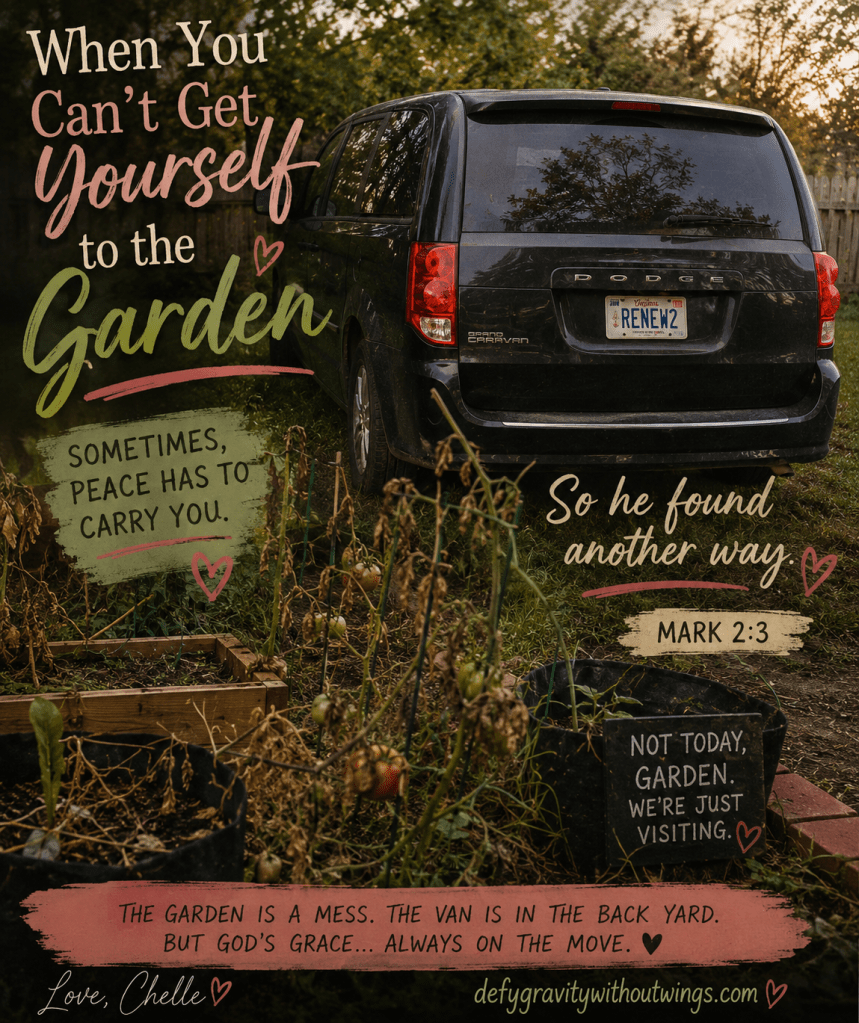
Recently, my garden has been preaching the same sermon. My potato plants are dying back. The leaves are yellowing. The vines are flopping. To an untrained eye, it looks like something is dying.

And it is.

But underneath the soil, something beautiful has been growing all along. The purpose was never the leaves. The leaves were evidence of the process. The harvest was hidden beneath the surface.

Yesterday morning, I found myself sad because some of the joy I usually feel in the garden seemed harder to find. Life had been busy. Responsibilities had piled up. Grief, work, caregiving, deadlines, and adulting had all been taking up more space than I wanted them to.

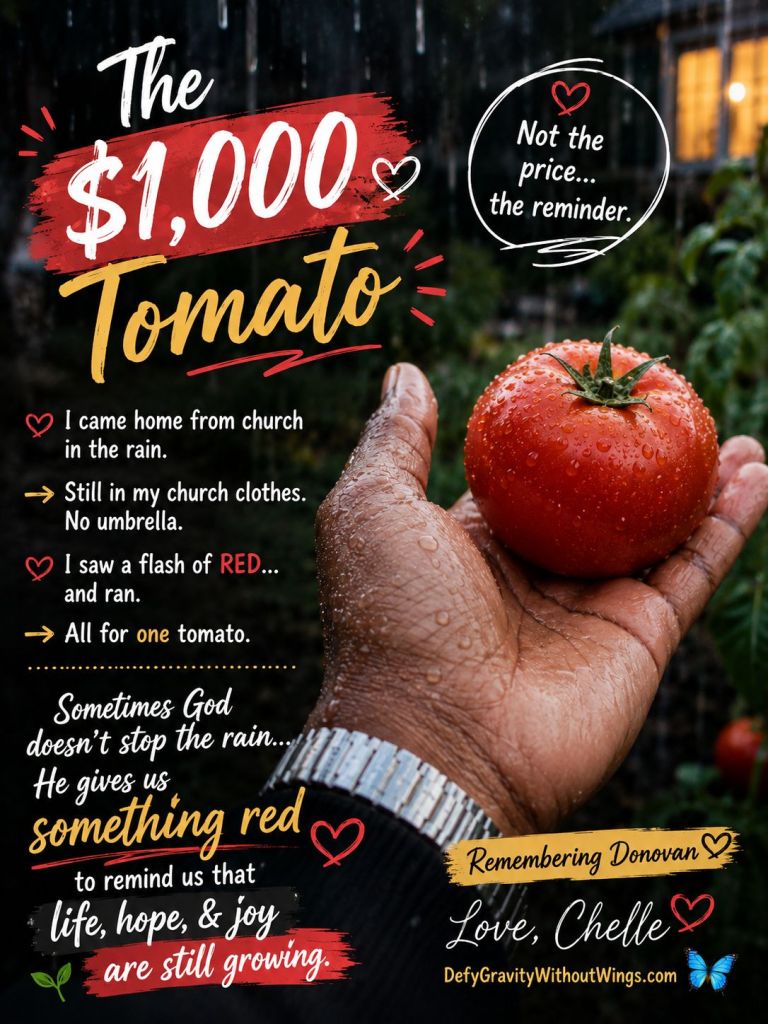
Then it rained.

While I sat in a movie theater watching Sheriff Jessie wrestle with purpose, the sky was watering my garden.

God has a way of doing that. He reminds us that not everything depends on us. Sometimes while we are busy worrying about the leaves, He is tending the harvest.

Perhaps you are standing in a season where the leaves are changing. A role may be ending. A chapter may be closing. A title may be shifting. If so, do not be afraid.

When God changes the role, He has not abandoned the purpose. What He planted in you is still there. What He called you to be is still there. What He spoke over your life is still there.

The role may change.

The purpose remains.

Love, Chelle

Pray with me:

Father, help me recognize the difference between my role and my purpose. When You call me into a new season, give me the courage to release what is familiar and trust what You are growing beneath the surface. Remind me that my value is not found in a title, an assignment, or the expectations of others, but in being Your child. When the leaves begin to change, help me trust the harvest You have been preparing all along. In Jesus’ name, Amen.

Image

What Does God Forget?

Recently, I’ve been watching a few Nigerian dramas, and I’ve noticed a phrase that seems to appear whenever a character is struggling.

Someone will eventually look at the person facing hardship and say, “Maybe God has forgotten you.”

Every time I hear it, something inside me pushes back.

Not because I don’t understand the pain behind the statement. I do.

Most of us have lived through seasons when prayers seemed unanswered, doors stayed closed, healing took longer than expected, and hope felt delayed. In those moments, it is easy to wonder if God has overlooked us.

David certainly felt that way.

“How long, O Lord? Will You forget me forever?” (Psalm 13:1)

The remarkable thing about Scripture is that it doesn’t hide these questions. It records them honestly. God’s people have always wrestled with disappointment, delay, and uncertainty.

But feelings and facts are not always the same thing.

When Israel feared they had been abandoned, God answered with one of the most tender promises in Scripture:

“Can a woman forget her nursing child, and not have compassion on the son of her womb? Surely they may forget, yet I will not forget you. See, I have inscribed you on the palms of My hands.” (Isaiah 49:15-16)

God does not lose track of His children.

He remembered Noah in the flood.

He remembered Hannah in her barrenness.

He remembered Rachel in her grief.

He remembered Israel in captivity.

And He remembers you.

What is easy to miss is that God saw them long before the answer arrived.

He saw Hannah before Samuel was born.

He saw Joseph before the palace and before the prison doors opened.

He saw David before the throne while he was still tending sheep in obscurity.

He saw Martha and Mary before Lazarus walked out of the tomb.

He saw Noah while the rain was still falling.

In every case, there was a season when heaven seemed quiet, circumstances appeared unchanged, and no visible evidence suggested that God was moving.

Yet silence was not absence.

Delay was not neglect.

And quiet was not proof that God had forgotten them.

The same God who saw them before the answer came sees you now.

He sees the prayer you are still praying.

He sees the promise you are still waiting for.

He sees the tears no one else notices.

He sees the faith it takes to trust Him when nothing appears to be changing.

Just because you cannot yet see the answer does not mean God has stopped watching over the situation.

Sometimes people point to verses where God invites His people to remind Him of His promises and ask, “If God never forgets, why does He tell us to put Him in remembrance?”

“Put Me in remembrance; let us contend together…” (Isaiah 43:26)

I don’t believe God asks for reminders because He misplaced the promise.

I believe He invites us to remind Him because we are the ones who forget.

When we rehearse His Word, pray His promises, and declare what He has spoken, our faith is strengthened. Our hearts are anchored. Our perspective is corrected.

The reminder is not for His memory.

The reminder is for our confidence.

Which brings me to a question that stopped me in my tracks:

If God remembers His covenant, remembers His promises, remembers His people, remembers mercy, and remembers our tears, what does God forget?

According to Scripture, there is one thing He repeatedly promises not to remember.

Forgiven sin.

“I, even I, am He who blots out your transgressions for My own sake; and I will not remember your sins.” (Isaiah 43:25)

“Their sins and lawless deeds I will remember no more.” (Hebrews 10:17)

“You will cast all our sins into the depths of the sea.” (Micah 7:19)

God does not forget because He is absent-minded. He chooses not to hold confessed and forgiven sin against us. Through the finished work of Jesus Christ, what has been covered by grace is no longer counted against us.

Think about the beauty of that.

The God who remembers every promise has chosen to forget every forgiven failure.

The God who remembers your name, your prayers, your tears, and your purpose chooses not to remember the sins you have surrendered to Him.

So the next time hardship lingers and the enemy whispers, “Maybe God has forgotten you,” answer with the truth.

God has not forgotten where you live.

He has not forgotten what He promised.

He has not forgotten your prayers.

He has not forgotten your tears.

He has not forgotten your name.

The only thing God has promised to forget is the sin you’ve placed under the blood of Jesus.

And that is something worth remembering.

Love, Chelle

defygravitywithoutwings.com

Image

Pocket Visions and Cleaning Supplies


This morning, I woke up and couldn’t find my glasses.

Now, for those of us who have reached a certain age and prescription strength, this is not a minor inconvenience. This is a full-scale emergency.

I looked on the nightstand.
I looked under the bed.
I looked in the bathroom.
I looked in places where glasses have never been a day in their lives.

Nothing.

So I sent a message to the Gillison Girls group chat:

*”Uggh. I must have been sleepwalking again. Can’t find my glasses anywhere. And no, they are not on my face.”*

My Aunt Katy, immediately responded:
*”Did you find them? True essay—walking by faith, not by sight.”*

Everybody laughed.

Then my older sister Melody came in for the finish:
*”Or when you’re walking around with your vision in your pocket.”*

Because, yes. That’s exactly where the glasses were.

In my pants pocket.

The same pants I had apparently laid out during some mysterious middle-of-the-night adventure.

To make matters stranger, the shoes were positioned. The clothes were arranged. From all available evidence, Sleepwalking Chelle was preparing to go somewhere.

I just have no idea where.

The whole thing was funny until I realized there was a sermon hiding in the middle of the jokes.

How many times have we told God we couldn’t see?
Couldn’t see the answer.
Couldn’t see the next step.
Couldn’t see how things were going to work out.
Couldn’t see the purpose.
Couldn’t see the miracle.

And all the while, we’ve been carrying the very vision we thought we lost. Maybe not the whole picture. Maybe not every detail.

But enough. Enough light for the next step. Enough wisdom for today’s decision. Enough faith for today’s burden. Enough grace for today’s journey.

Sometimes we’re searching the whole house for something God has already placed in our pocket.

We ask Him for vision when He’s already given us purpose.We ask Him for direction when He’s already shown us the next step. We ask Him for confirmation when He’s already spoken.

The glasses weren’t lost.I just didn’t know where to look. Maybe that’s true of some of the things we’re praying about too.

And then there’s the part I can’t stop laughing about. Apparently, in the middle of the night, I was getting ready to go somewhere.The clothes say so. The shoes say so. The glasses in the pocket say so.

I may not remember the journey, but there was evidence of preparation.

That’ll preach.

Because sometimes God is preparing us for places we can’t yet see.

We don’t know where we’re going. We don’t understand what’s happening. We can’t remember how we got here.

But there are signs everywhere that He is getting us ready. Ready for healing. Ready for ministry. Ready for change. Ready for a blessing. Ready for the next chapter.

So if you can’t see clearly today, don’t panic. Check your pockets.

You may be carrying more vision than you think.

Oh and before I forget,  after I found my glasses in my pocket I found a duster cover in the pajama shirt I was wearing.

Wherever I was planning to go, I was apparently determined to see it clearly and dust it first.

With Love And Laughter
Chelle

defygravitywithoutwings.com

Image

The Potatoes I Didn’t Believe In


I almost gave up on them.

Not because they died, but because they didn’t seem to be doing anything.

Day after day I walked past those grow bags, peeking into the soil, looking for evidence that my effort had mattered. I watered. I waited. I worried. Then I worried some more. Nothing. At least nothing I could see.

I remember standing over those bags convinced I had failed them. The gardening experts had plenty to say. Use seed potatoes. Use certified potatoes. Use organic potatoes. Use the right potatoes. Meanwhile, I was standing in the grocery store buying potatoes the same way I’ve bought them all my life—to cook, to eat, to turn into fried potatoes on a Saturday morning. I didn’t know their pedigree. I didn’t know their variety. I didn’t know whether they had the proper credentials for success.

I just planted what I had.

Then one morning, after weeks of wondering, I looked a little harder and found a tiny green shoot. Just one. Not a harvest. Not a miracle. Just enough evidence to keep me from giving up.

Soon there was another shoot. Then another. Before long, the bags were overflowing with green vines spilling over the edges. The plants that once seemed dead now looked determined to take over the backyard. My husband and I laughed about it because I honestly don’t know what kind of potatoes I planted. I never paid attention to potato varieties. I bought them because they were on sale, brought them home, cooked them, and ate them. Yet there they were, growing anyway.

The more I thought about it, the more I realized this wasn’t really about potatoes.

We pray for miracles, but we often expect God to use certified methods. We look for the right people, the right circumstances, the right timing, the right credentials, and the right opportunities. Yet over and over again, God chooses ordinary things. A shepherd’s staff. A boy’s lunch. A widow’s oil. A handful of grocery-store potatoes.

The lesson wasn’t really about gardening. The lesson was about trust.

Sometimes God is growing something long before we see it. Sometimes what looks dormant is simply developing underground. Sometimes the miracle isn’t cancelled; it’s just hidden beneath the surface.

But the funny thing about potato gardening is that the story doesn’t end with all that beautiful green growth.

In fact, after the vines have stretched, the leaves have multiplied, and you’ve finally convinced yourself you’ve succeeded, the plants begin to die back.

The leaves yellow. The stems droop. The lush green growth that once made you so proud starts to fade. If you don’t know better, you’ll think you’ve lost everything. After all that waiting, all that watering, all that hoping, it can feel like the story is ending in disappointment.

But experienced gardeners know something different.

Of which I am not—at least not yet.

I’m still the woman who planted grocery-store potatoes without knowing what kind they were. I’m still the gardener who stood over those bags convinced I had failed. Yet even I am beginning to learn that the dying back isn’t the end of the story. It’s the signal that the harvest is near.

The plant is not giving up. It is finishing its assignment.

All season long, the energy that showed up above ground has been quietly producing something beneath the soil. When the visible growth begins to decline, it often means the hidden work is complete. The harvest was forming long before anyone could see it.

It reminds me of Galatians 6:9:

“Let us not become weary in doing good, for at the proper time we will reap a harvest if we do not give up.”

The funny thing is that the harvest often begins forming long before we can see it. God is working beneath the surface while we are still looking for evidence above ground.

Isn’t that true in life sometimes?

We celebrate the seasons of visible growth. The opportunities, the promotions, the breakthroughs, the answered prayers we can point to and photograph. Yet there are other seasons when something appears to be fading, changing, or coming to an end. A role shifts. A season closes. A body grows tired. A prayer is answered differently than we expected.

What if every ending isn’t a failure?

What if some things have simply completed their work and are making room for a harvest we cannot yet see?

Sometimes what looks like dying is actually ripening.

Maybe that’s why I love these potato bags so much. They have been preaching a sermon all spring. First they taught me that dead and dormant are not the same thing. Soon they will teach me that decline and defeat are not the same thing either.

I planted what I had.

God grew what He wanted.

And somewhere beneath those leaves, where I cannot yet see, a harvest is forming.

Maybe that’s true in more places than my garden.

Love,
Chelle

defygravitywithoutwings.com


Image

A Release of Miracles


There is a particular kind of grief that comes when someone you love is still here, but you are watching them grow weary from the battle.
It is not the sharp grief of a single loss. It is a quieter grief. A slower one.
It is loving, hoping, helping, praying, adjusting, advocating, and wondering how much more their body can endure.


As I sat in church today, my thoughts drifted to my younger sister Cheryl. After years of strokes, limitations, therapies, setbacks, and victories that most people never see, she is tired. Not tired of life. Not tired of love. Tired of a body that no longer cooperates with the plans she once had for it.


As one of her sisters and amongst an army of caregivers, it is a difficult thing to watch.
When someone you love is hurting, every part of you wants to fix it. You want to pray the right prayer. Find the right doctor. Discover the right treatment. Speak the right words.
You want the miracle. I wanted to witness the miracle.  I had declared it would be a big one with a testimony  that we would be jealous of.


But somewhere along the journey, many caregivers find themselves praying a different prayer. 
“Lord, Your will be done.”

I heard painfully, repeatedly and with soul crushing tears to release my expectations and my need to “see it my way.”
Not because I  have stopped believing.
Because I have learned to trust.


One of the hardest lessons of faith is accepting that what we hope a miracle looks like may be different from what God has planned.


We pray for complete healing.
God may provide strength for one more day.
We pray for the storm to stop.
God may provide peace in the middle of it.
We pray for the mountain to move.
God may teach us how to climb.
None of those answers mean God failed.
They simply mean God sees a bigger picture than we do.


That can be frustrating for people like me. I like answers. I like solutions. I like seeing how all the pieces fit together. But faith does not require me to understand God’s plan.


Faith requires me to trust the One who does.
There is a freedom that comes when we stop trying to second-guess God.
We are not called to be His advisors.
We are not called to explain His timing.
We are not called to understand every twist and turn of the journey.
We are called to trust Him.


Even Jesus prayed, “Not my will, but Yours be done.”
If the Son of God could surrender His preferred outcome to the Father, perhaps I can surrender mine too.


That does not mean I stop praying for Cheryl.
It does not mean I stop believing for miracles.
It simply means I place both the prayer and the outcome in God’s hands.
For years, I have watched Cheryl fight battles she never asked for. I have watched her endure things that would have broken many people. Through it all, I have learned something about love.
Love is not always fixing.
Sometimes love is showing up.
Sometimes love is sitting quietly.
Sometimes love is holding a hand.
Sometimes love is trusting God when you cannot trace what He is doing.


Today, my prayer is simple.
Lord, hold Cheryl close.
Strengthen her where she is weak.
Comfort her where she is weary.
Remind her she is loved.
And help me trust You with the parts of this story that belong only to You.
Because the greatest miracle is not always getting the outcome we wanted.
Sometimes the greatest miracle is discovering that God is still trustworthy when the outcome looks different than we imagined.
“Trust in the Lord with all your heart and lean not on your own understanding.”
Proverbs 3:5
This is especially for you if you are loving someone through a battle you cannot fight for them. We see the weight you carry, the prayers you whisper, and the tears you hide. Most of all, God sees you. 💜
Love Chelle
Defygravitywithoutwings.com

Image

They Grow While You’re Gone


It’s 5:30 a.m.
I’m sipping my coffee, staring out the window into the darkness… somehow convinced I can see trouble in my garden from 100 feet away.

Don’t judge me… but I really considered stepping out there in my robe in 35 degrees to go check on my plant babies.

And somewhere between that first sip and the silence… I caught myself.

This isn’t about seeds.

This is about how easily my mind will grab hold of something—anything—and worry it to death.

Work stress that doesn’t clock out when I do.
Money questions that don’t always have quick answers.
A newborn I just prayed over in the hospital,
with whispers of concern about her ability to thrive.
Friends walking through the slow, sacred heartbreak of losing their parents…
and me carrying pieces of that with them.

All real things. All things that matter. All things experienced before.
And yet…

Look how quickly my heart starts hovering over them, like it’s my job to make sure everything turns out alright. Like if I think about it enough, check it enough, replay it enough…

I can help God along.

But I can’t.

Because even when I am doing the work of God, it is still God who is working.
I am not the outcome.
I am not the fixer.
I am not the one holding it all together.

I am just… hands in the soil.
Faithful to plant.
Faithful to water.
Faithful to show up.

But the growing?
The healing?
The sustaining?

That was never mine.

And if I’m not careful, I will let the weight of what I care about pull me out of the very places God is calling me to be present.

Sitting here with my coffee, trying to manage what He already has in His hands…
while He’s already prepared a seat for me somewhere else today.

There is a time to plant.
A time to water.
And then… a time to trust.
Not anxious trust.
Not hovering trust.
Real trust.

The kind that finishes the coffee,
gets dressed, and walks into the day
without carrying what God never assigned me to hold.

So I’m going where I’m supposed to be.
And I’m leaving the garden…
and everything it represents…
right where it is.

Because what God has already taken responsibility for does not need my worry added to it.

Even the good things don’t get to compete
with obedience.

“To everything there is a season, and a time to every purpose under the heaven.”
— Ecclesiastes 3:1

Love, Chelle

DefyGravityWithoutWings.com

Image

The Woman Who Brushed the Way Forward Lyda D. Newman


(c. 1885 – after 1930)

Sometimes change begins with something small enough to hold in your hand.

Lyda D. Newman was an inventor and hairdresser living in New York City at the end of the nineteenth century. In 1898 she patented an improved design for the hairbrush, creating a tool that was easier to clean and more effective for everyday use.

It was a practical invention, something millions of people would eventually use without thinking twice.

But Lyda Newman’s story does not stop in the bathroom mirror.

She was also deeply involved in the growing movement for women’s suffrage. At a time when women were still fighting for the basic right to vote, Newman worked with suffrage organizers in New York to help register women voters and mobilize communities.

For women like Newman, the fight for the ballot was not only about politics.

It was about dignity.

There is a verse in Proverbs that says, “Speak up for those who cannot speak for themselves.”

Lyda Newman did exactly that.

Through organizing and advocacy, she helped open the door for women to participate in the democratic process. Her work joined thousands of other women who marched, organized, and demanded that their voices be counted.

The tools she invented made daily life easier.

But the work she did for suffrage helped shape the future of a nation.

Sometimes the quiet hands that improve everyday life
are the same hands helping move history forward.

Bread Crumbs

Not every act of courage looks dramatic.

Sometimes courage looks like organizing neighbors, registering voters, and refusing to believe your voice does not matter.

Lyda Newman reminds us that progress is built by ordinary people who decide their voice belongs in the conversation.

Sometimes the change God places in our hands
is meant to help others find their voice too.

Steps From Our Sisters
Honoring the Women Who Marched Before Us

Image

Unshakable

My son-in-love, Kamau, posted that he was booking a flight to Africa. There was a storm coming, he said, and somebody needed to build shelters for the giraffes.

He displayed a picture like it was urgent.
Dark sky. Lightning splitting it wide open.
Giraffes standing tall in the open plain.

He might have been joking (hard to tell with him.) Because that is Kamau.  Compassion wrapped in comedy. Protection tucked inside a punchline. A heart that sees danger and immediately asks, Who needs covering?
I love that about him. ( Don’t tell him I said that.)

But when I looked closer at the picture,
those giraffes were not panicking. They were not lowering themselves to the ground.
They were not scattering. They were standing.

Unshakable. Unmovable.
Storm pressing in. Mortal danger possible.
And yet their necks were lifted.
Their legs planted.
Their bodies steady in the wind.

It made me think of Psalm 91:
“He who dwells in the secret place of the Most High shall abide under the shadow of the Almighty. Under His feathers you will find refuge.”

Those giraffes looked uncovered. But they were not unprotected. They looked exposed.
But they were not outside of shadow. Psalm 91 does not promise the absence of storms. It promises covering in the middle of them.

And then Psalm 46:10 settles it:
“Be still, and know that I am God.”


Not be frantic. Not be consumed. Not be undone. Be still. Still like you trust the One who commands the sky. Still like you believe the storm does not get the final word. Still like your roots run deeper than what threatens you.

We are living in days where thunder travels across oceans. International conflict crackles like lightning. Voices rise. Fear spreads.

But maybe faith looks like a giraffe in a storm.
Not dramatic. Not reckless. Just anchored.
Unshakable. Unmovable.

And I smiled again. Because my son-in-love thought he was just telling a joke. Instead… he helped me write a sermon about faith standing firm in adversity.

He is going to be so embarrassed when he reads this. Make sure you tease him for me.

Love, Chelle
DefyGravityWithoutWings.com

Image

Claudette Colvin: Nine Months Before History Was Ready


Claudette Colvin, who died recently on January 13, 2026, was one of the last remaining living catalysts of the Montgomery Bus Boycott.


This must be said plainly:
Nine months before Rosa Parks,
a fifteen-year-old girl named Claudette Colvin refused to give up her seat on a segregated Montgomery bus.
Nine months before the cameras.
Nine months before the speeches.
Nine months before it was considered “safe.”
She was early — and she was right.


When police dragged her off the bus and arrested her, Claudette did not yet know she would be asked to step back from public view. But she would be.


Not because her courage was insufficient —
but because the movement decided she was not the face America would accept.
She was:
– a poor Black girl
– from a working-class family
– and soon after, pregnant
– struggling emotionally after trauma and arrest


Movement leaders made a strategic decision.
They chose respectability.
They chose optics.
And Claudette was quietly sidelined.
Yet her courage did not disappear.


She became one of the plaintiffs in Browder v. Gayle — the federal court case that ended bus segregation in Montgomery. The law changed because of the stand she took first, even though her name was not lifted alongside the victory.
She was victorious without reward.


Claudette Colvin teaches us a truth history often resists:
Being first does not mean being credited.
Being right does not mean being chosen.
And being faithful does not guarantee being celebrated.
A poor Black girl,
a pregnant teenager,
a traumatized child —
said no to injustice nine months before the nation was ready to listen.


That is not a footnote.
That is a foundation.
“For God chose what the world considers foolish to shame the wise.” — 1 Corinthians 1:27


If you have ever stood up too early,
told the truth before it was popular,
been asked to step aside so the story could be cleaner,
or watched others be celebrated for a door you opened,
hear this clearly:
Your timing was not wrong.
Your courage was not wasted.
And your obedience still counts.


Claudette Colvin stood first.
History followed later.
We see you, Claudette.
We tell it right now.
We honor you fully.


Bread Crumbs — for those coming after us.
Victorious without reward. Still here.


Love, Chelle

Image

Reframing The Heart

Somewhere along the way, many of us learned a quiet lie —
not from God, but from human interpretation.

We learned it from what was modeled, praised, or rewarded.
From homes, churches, systems, and relationships that mistook endurance for faithfulness and exhaustion for virtue.


Most people were doing the best they could with what they knew — but they were still human.
And without realizing it, we carried those lessons into our understanding of God.

I know this because I have done it myself.

I confused being loved with doing to be loved.
I mixed up belief with performance.
And I carried that misunderstanding into my faith and called it obedience.

But that is not God’s heart.

God does not delight in depletion.
He delights in wholeness.

Jesus did not invite people to follow Him so they could replace Him.
He did not ask them to become saviors, fixers, or endless wells.
He asked them to come — as they were — and to unlearn what fear had taught them about love.

Scripture never praises burnout.
It praises obedience rooted in love, not fear.
It honors service that flows from being seen — not from trying to be noticed.

When Jesus said, “Come to Me, all who are weary and burdened, and I will give you rest,”
He was not offering a reward for those who gave the most.
He was correcting what people had been taught about God.

If your kindness comes from feeling unseen,
if your faith feels like constant output,
if your love has slowly turned into self-erasure —
that may be something you learned, but it is not something God requires.

God does not need you emptied to be faithful.
He desires you rooted, restored, and whole.

Being needed is not the same as being loved.
And God’s love has never required you to disappear.

God, help me separate Your voice from the voices that shaped me.
Heal what I learned in survival mode.
Teach me Your heart — not a human version of it.

Love, Chelle
DefyGravityWithoutWings.com