
I went to see a local production of “Langston Is My Man”, a musical that told the story of Langston Hughes through his life and poetry. I was tickled pink to see his poetry come to life onstage. My Grandma Alice could recite his work for hours, and she drilled those poems into my head. All these years later, there I sat, listening to that cast and remembering her voice.
I was especially thankful to be in that audience. Those tickets weren’t in my budget, and somebody gifted them to me that very morning. That night, I had a seat at a sold-out performance.
That ensemble took us from laughter to tears, and the energy they brought to that stage was something to see. But with all that singing, poetry, and dancing going on, the man I keep thinking about never said a word in the scene that moved me most.
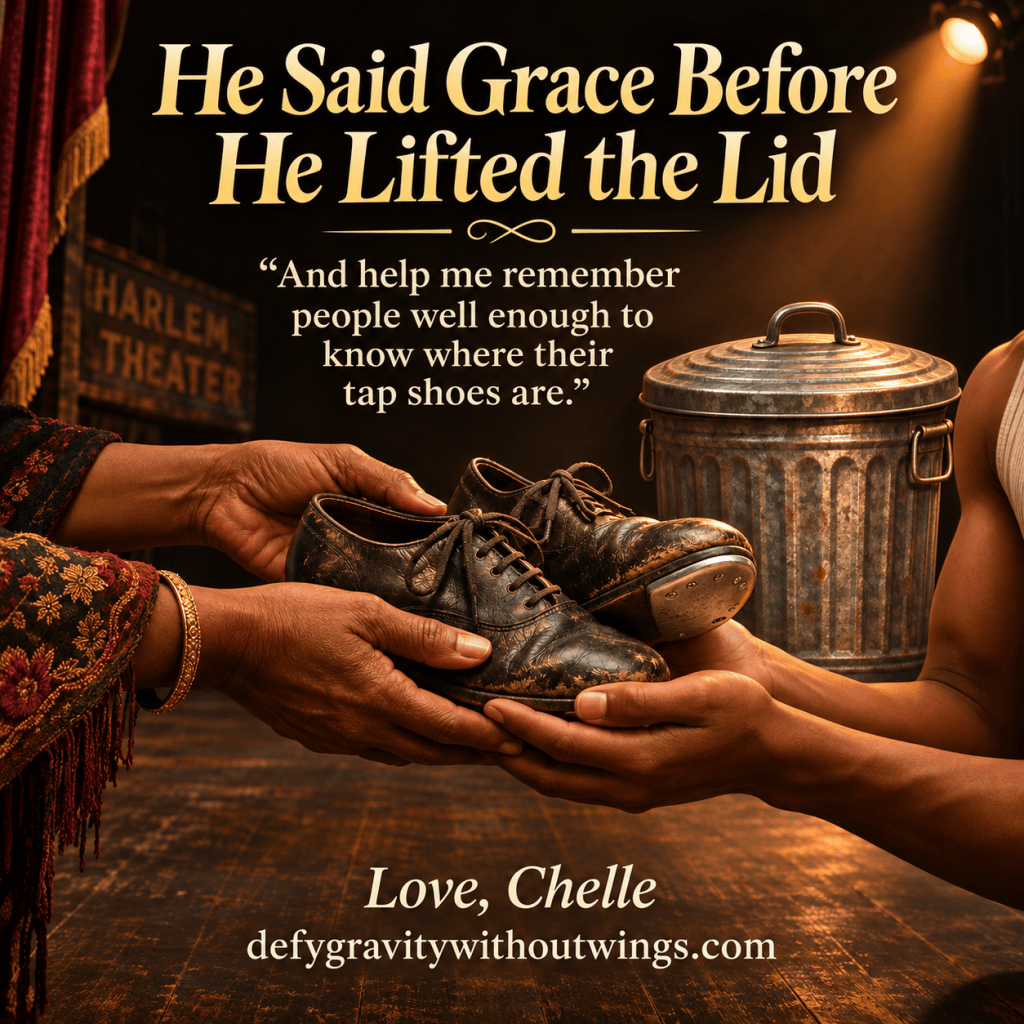
He was a promising young dancer. By the end of the Harlem Renaissance, life had dealt him a hard hand. He was homeless, surviving on whatever somebody else had thrown away. And when he came to a trash can looking for something to eat, that young man stopped and said grace.
Before he lifted the lid.
Now, I know how to say grace over a plate. I can see the ham, the potato salad, and the roll I probably could’ve done without. I know exactly what I’m thanking God for. But that young man had no idea what was under that lid. He was hungry enough to look and still had enough hope to pause and give thanks for what he might find.
I’m still sitting with that. Especially this close to Thanksgiving, when so much of my thinking has been about what I’m going to put on the table. His prayer made me think about the person who has to wait until we clear ours.
Then came the second thing that got me. Other people walked away. An old friend came back with something that belonged to him. His tap shoes.
There’s something about being known long enough for somebody to remember what shoes were yours. That friend could see the condition he was in. She could also remember what that young man could do with his feet. And there, in the middle of a life the dancer could hardly have imagined for himself, she put a piece of his own story back in his hands.
I keep thinking about what it took for that gesture to mean anything. She had to remember. She had to care enough to come back. And she had to believe that what the dancer had laid down still belonged to him. I wonder who in my life could use that kind of remembering from me. And who will remember me if I need them.
In John 21, after Peter had denied knowing Jesus, Jesus met him over breakfast. I love that breakfast was part of it. A hungry person deserves to eat. And after they ate, Jesus gave Peter work to do again. Peter had good reason to wonder what was left for him after the way things had gone. Jesus could still see a future for him. (John 21:9–17)
The production closed with Hughes’s question about a dream deferred in Harlem and the mother’s words to her son about a life that “ain’t been no crystal stair.” By then, I was still back at that trash can. Still thinking about those shoes. I don’t know what the dancer’s next steps would cost him. I just know that when he was ready to try, he had his shoes.
Maybe that’s my prayer this Thanksgiving.
Lord, give me eyes to see who’s hungry when I have enough to share. And help me remember people well enough to know where their tap shoes are.
Love, Chelle






Leave a Reply