Image

$5 in My Pocket… Lemons at My Door

I didn’t need a miracle with flashing lights. I didn’t need a breakthrough big enough for everybody else to recognize. Honestly, I just needed my mind to slow down. Because lately, it’s been doing that thing—running numbers, replaying conversations, trying to solve tomorrow before today even finishes. Not because anything is completely falling apart, but because enough has shifted that my spirit knows to pay attention. And if I’m honest, I was thinking a little too much.

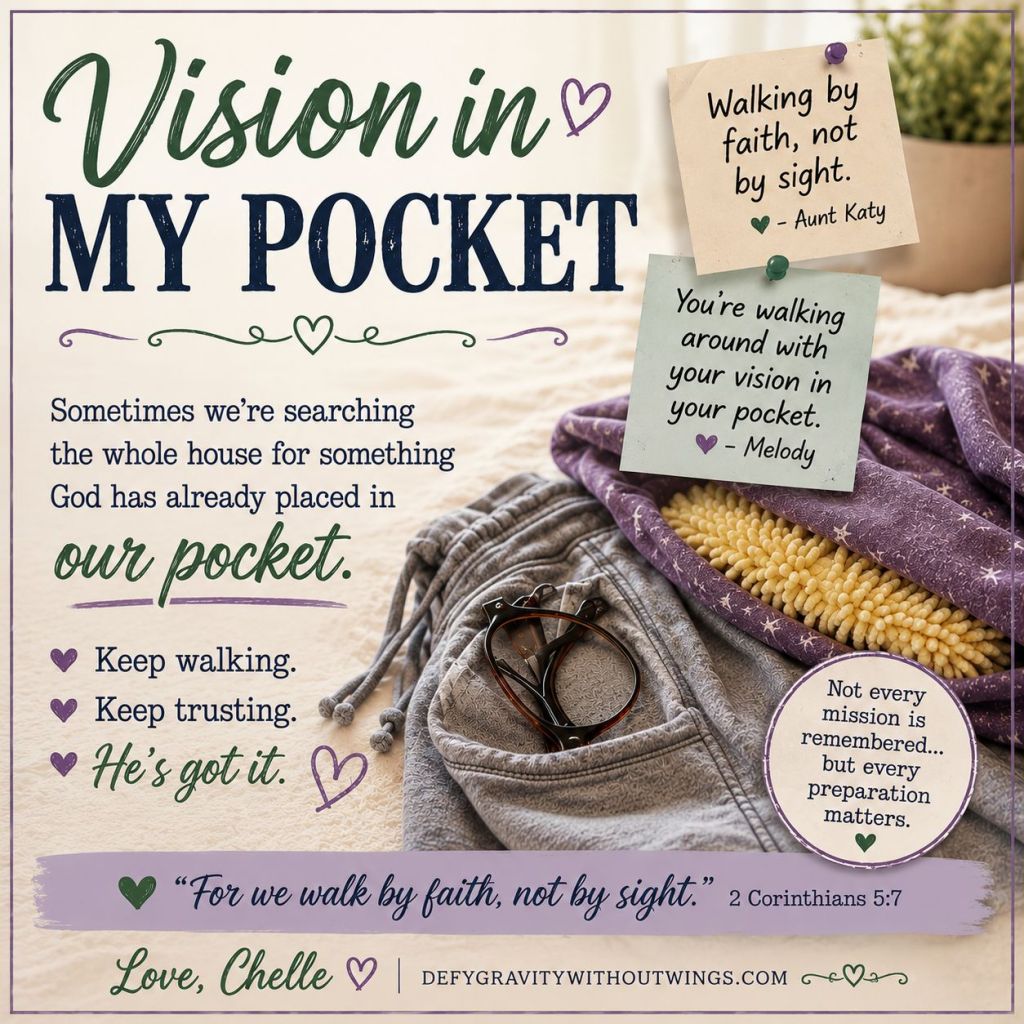
So I tried to interrupt myself. Not with prayer this time. Not with a deep scripture study. Just something simple. I had seen a sermon about decluttering—move five things in five minutes. Nothing deep. Nothing dramatic. Just… move something. So I did. One thing, then another. By the time I got to the fifth thing, I reached into the pocket of a dress I hadn’t worn in at least a year—and there it was. Five dollars.

Now let’s be clear. Five dollars is not going to change anybody’s financial situation, but it changed my moment. Because it made me smile. And in a season where your mind is trying to run ahead of you, sometimes a smile is the interruption you didn’t know you needed. I didn’t think much more about it. I just tucked the moment away and kept moving.

On the way to church, I started going through my wallet. Receipts everywhere. Old ones, faded ones, the kind you keep just in case but never actually need. So I started sorting through them, one by one, making sure there wasn’t anything important I needed to hold on to. And that’s when I saw it—another five dollars. Then another. And then another. Three crisp five-dollar bills sitting where receipts should have been.

Now wait, because this is where my spirit leaned in—not my logic, my spirit. Because four five-dollar bills is still just twenty dollars, and twenty dollars, in the grand scheme of real-life responsibilities, is not fixing anything major. But something in me knew this wasn’t about fixing. This was about finding. God wasn’t solving my situation in that moment; He was steadying my heart in it. He was saying, without saying a word, “You don’t have to carry this the way you are carrying it.” And I sat there in that car, holding those little bills like they were something bigger than money, because they were. They were peace. All magnified by the number 5 being the number of grace denoting God’s unmerited favor

Church was good. I smiled through it—not because everything was handled, but because I felt handled. And when I got home, I thought the moment was over.

I got home, and there it was—a simple bag at my door. Inside were lemons. Not one or two, but five bags—bright, yellow, beautiful lemons. Thirty of them. I stood there looking at them like, “Okay Lord… now this feels personal.” Because you’ve heard the saying, “When life gives you lemons, make lemonade,” but this didn’t feel like life. Life gives lemons with pressure. Life gives lemons and expects you to figure it out. This felt like God.

And while I was trying to figure out what to do with so many lemons, I started giving them away. Nobody knew I had them. Nobody asked for them. I just… started gifting. If you showed up at the door, you left with some. LOL.  And somewhere in that simple act, it settled in my spirit that maybe everything God places in your hands isn’t meant to stay there. Some things show up not just as provision, but as permission—to bless, to share, to lighten someone else’s day without needing a reason or an announcement.

Because He didn’t wait until I had everything figured out. He met me while I was trying not to spiral, while I was moving five small things, while I was clearing out what I didn’t need, while I was doing the little bit I could control. He didn’t flood me with answers. He didn’t overwhelm me with provision. He didn’t drop a solution big enough to remove every question. He just… found me.

He found me in a dress pocket I forgot about, in a wallet I almost ignored, in a moment where I chose not to overthink. And then He made me laugh, because who sends somebody thirty lemons unless they are trying to say something?

“Your Father knows what you need before you ask Him.” — Matthew 6:8

So no, it wasn’t about twenty dollars, and it wasn’t about lemons. It was about being reminded that I am not navigating this season by myself. That even when my thoughts start running ahead of me, God is already present where I’m trying to get to. And sometimes, He doesn’t calm your life all at once. He just leaves little confirmations along the way so your soul can rest while you walk it out.

So if your mind has been busy lately, if you’ve been trying not to worry but still feeling it creep in, if you’re doing the best you can with what’s in front of you—pay attention to the small things, the found things, the unexpected things, the things that make you smile before you can explain them. Because God doesn’t always show up loud. Sometimes, He shows up in fives.

Gently reminded that God meets you in the middle, not just at the outcome.

Love,
Chelle
DefyGravityWithoutWings.com

Image

BUT GOD SAID NO

Early this morning, before the day had a chance to get loud, my phone lit up with a simple question:


“Can I get 10 minutes of your time?”

After more than 40 years apart, God had already reconnected us… and this morning, He gave us the time to remember why.

But God doesn’t measure time the way we do. Ten minutes turned into an hour and a half. Tears. Laughter. Testimony. We weren’t catching up. We were bearing witness.

She told me about losing her husband. How the grief felt like it might finish what life had already taken.

Then she said it… “But God said no.”

She told me about her  rare illness. The kind where doctors speak carefully, and silence says more than words.
And again “But God said no.”

Every story she told had a place where it could have ended. Every chapter carried the weight of finality. But it didn’t end there. Because God kept interrupting what should have been the last line.

And somewhere in the middle of her testimony, I felt my own rise up quietly. Moments I don’t always name. Situations that could have taken me out in ways nobody else would have understood.

And if I’m honest… Some of those moments didn’t look like mercy at first. But I’m still here.

So even there, I say it: But God said no.

No to the thing that tried to take me out.
No to grief settling in as permanent.
No to despair having the final word.
No.

Psalm 118:17
“I shall not die, but live, and declare the works of the Lord.”

That’s what this morning was. Declaring. Not polished. Not practiced. Just two women, after decades apart, brought back together by grace… reminding each other that what should have taken us out didn’t get permission.

Sometimes the most powerful testimony is also the simplest. “It should have ended me…but God said no.”

And if you’re reading this from the middle of something that feels like an ending, hold on.
The same God who interrupted ours is still writing yours.

Love, Chelle ( And Lisa)
defygravitywithoutwings.com

Image

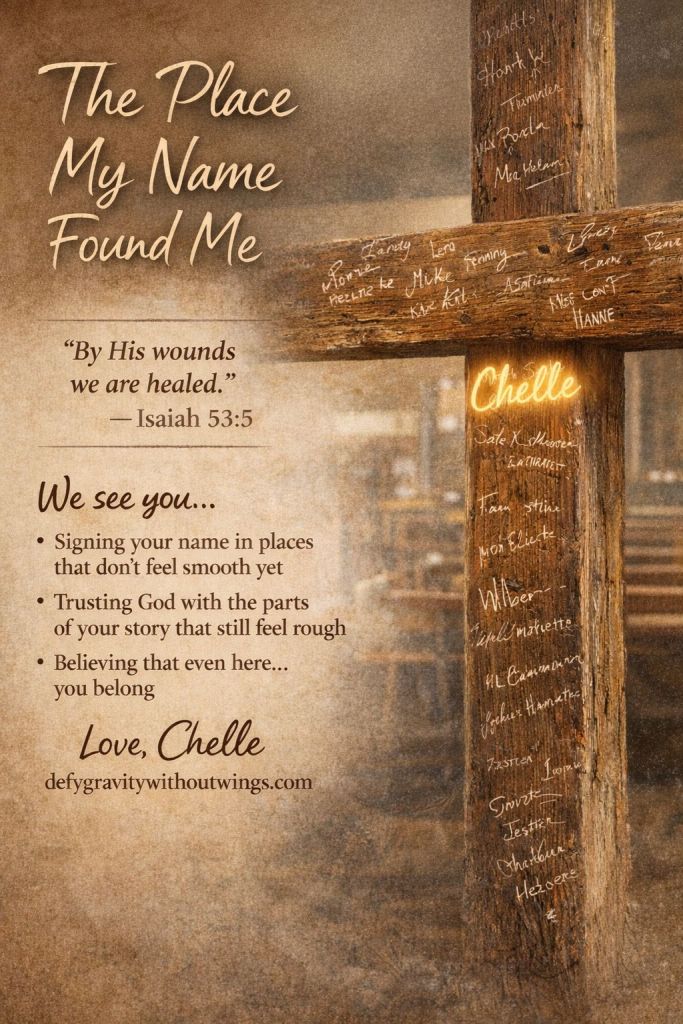
The Place My Name Found Me

I went forward like everyone else.

Not rushed. Not hesitant. Just… carried.

I was visiting the early service at my son’s church,  when the  Pastor called us to come sign our names on the wooden cross that had been standing since last week’s Easter service. A simple act. A physical way to mark what God had already done.

But nothing about it felt simple.

Tears started before I ever stepped out.

I watched the seniors go first
Slow steps
Steady hands
Lives the world sometimes overlooks
But heaven still calls by name

I saw the former addict sign
Not as who they were
But as who God kept

I saw those once incarcerated
Writing their names like chains had finally agreed to let go

A blind man signed
A woman limping signed
And my own deaf son… signed

Lord… that alone almost took me out

Each name wasn’t just written
It was declared
Healing
Freedom
Promise
Still in progress, but already claimed

The children came excited
Unafraid of space running out
Because children always believe there’s room

And when space did get tight
The Pastor lifted the cross higher
So those who couldn’t bend could still reach

Even at the feet… there was still room

That part preached all by itself

But what stayed with me…
What lingered…
Was where my hand landed

A rough place
Scratched
Uneven
The kind of spot that, if you rubbed it the wrong way, could leave a splinter

And I paused

Because it felt like my life

Not smooth
Not polished
Not presentation-ready

But still part of the cross

And right there, in that imperfect place
I wrote my name

Careful
Intentional
Fully aware

That Jesus didn’t die for smooth stories

He died for splinters too

For the places that still catch
Still sting
Still remind you that healing isn’t always pretty

And yet…

That rough place held my name just fine

Didn’t reject me
Didn’t shift me to a better spot

It received me
As-is

And I heard it clear as day in my spirit

“You don’t need a polished place to belong here.”

So I signed

Not because I have it all together

But because the cross already made room for every part of me that doesn’t

“By His wounds we are healed.” — Isaiah 53:5

Signing your name in places that don’t feel smooth yet
Trusting God with the parts of your story that still feel rough
Believing that even here… you belong

**Love, Chelle**
defygravitywithoutwings.com

Image

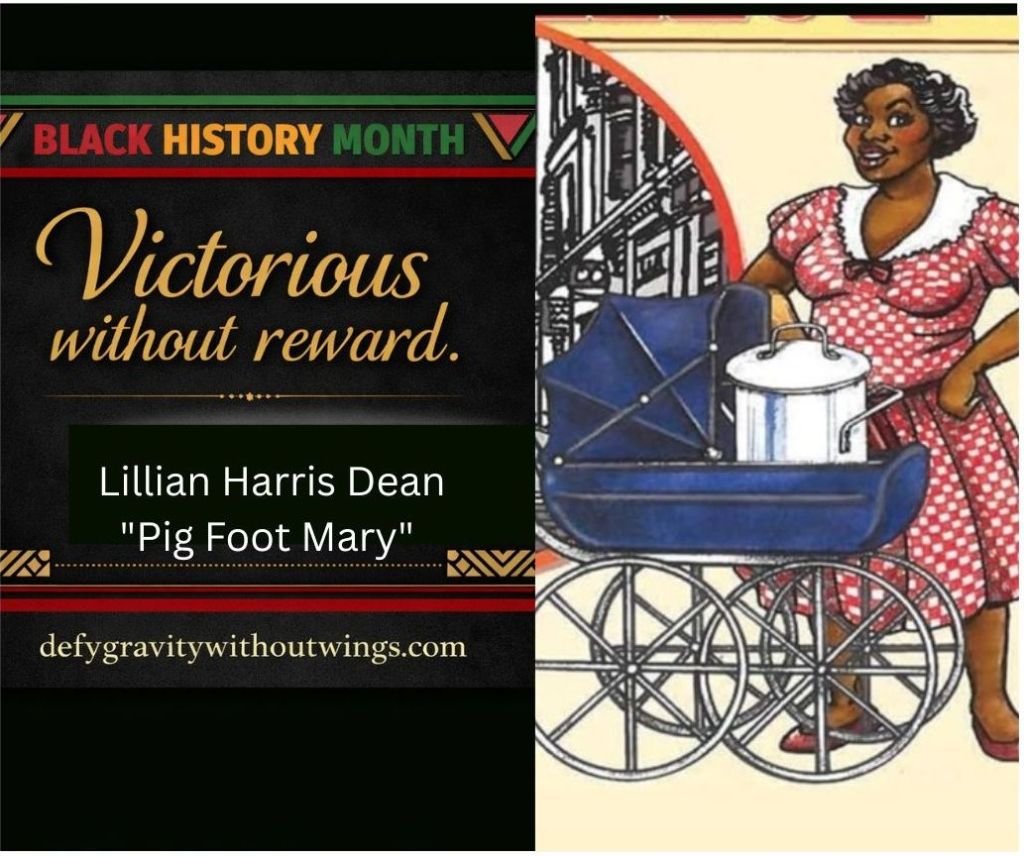
Pig Foot Mary: The Woman Who Pushed Her Future Down the Street


Before food trucks.  Before catering contracts.
Before pop-up kitchens. There was a formerly enslaved Black woman  pushing a baby carriage filled with pickled pig’s feet.

Her name was Lillian Harris Dean. History remembers her as Pig Foot Mary. And what some would have called scraps, she called strategy.

Born in Mississippi around 1870. She migrated north during the Great Migration era. She was reported a woman of large stature (striking fear in even some men).

THE BABY CARRIAGE BEGINNING

After emancipation, economic opportunity for Black women was painfully narrow. Formal loans were not available. Property ownership was rare. Protection under the law was inconsistent at best.

So Mary did what resilient women have always done. She looked at what she had.
She cooked pig’s feet — inexpensive cuts that working people could afford — and loaded them into a baby carriage. That’s  right no baby, just a baby carriage purchased with two of the five dollars she arrived with and a tin pot she brought with her.

Then she walked the streets of Washington, D.C., selling directly to laborers, porters, and government workers who had migrated from the South but desperate for a taste of home cooking lacking in the industrial north.

No storefront. No investors. No safety net.
Just legs, grit, and a carriage. That carriage gave her mobility. Mobility gave her customers. Customers gave her capital.
Capital gave her options. Consistency built reputation. Reputation built revenue.

From those early street sales, though unable to read, she negotiated contracts with suppliers, opened restaurants, operated boarding houses, acquired property, and became one of the wealthiest Black women in New York City  during her time. She later married a prominent black lawyer she had hired to keep her financial empire safe.

Later in life, she faced legal troubles that interrupted her business, a common vulnerability for Black entrepreneurs in that era. When her power and influence started to invade beyond the black community and into  white upper Manhattan,  a racist court system convicted her of running a disorderly house.    After her release from prison, she retired to California.

She did not inherit influence. She built it.
She did not wait for approval. She moved.

Pig Foot Mary represents a pattern we see over and over in Black history:
Innovation born from restriction.
Mobility created from limitation.
Enterprise rising from overlooked ingredients.

She took something humble and made it sustaining.

“She considers a field and buys it; out of her earnings she plants a vineyard.” — Proverbs 31:16

Mary did not own fields at first. She owned a route. But the principle is the same.
Use what you have. Work what you have.
Move what you have.

CARRY THIS WITH YOU
You may be waiting for a storefront when all you have is a carriage. Push anyway.

You may be waiting for funding when all you have is a recipe. Cook anyway.

You may be waiting for someone to validate the vision. Walk anyway.

BREADCRUMB

Sometimes the business plan is wrapped in something people underestimate. And sometimes the thing you’re pushing… is actually pushing you into destiny.

We see you, Lillian Harris Dean for turning a baby carriage into a business model. We see you for feeding working hands and building wealth from what others discarded.

Bread Crumbs — for those coming after us.
Victorious without reward. Still here.

Image

The Hymn Before the Headline

Before it was debated,
Before it was dissected on timelines and talk shows, it was a hymn.

Originally titled
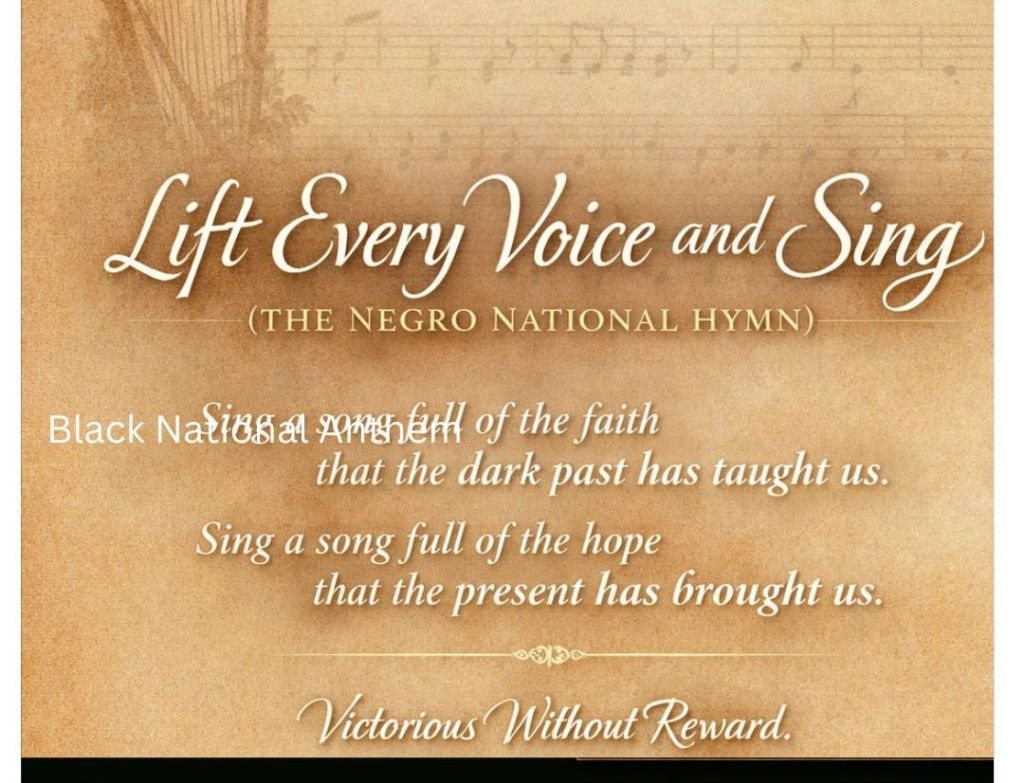
Lift Every Voice and Sing (The Negro National Hymn)

Hymn.

Not rebellion.  Not replacement.


Hymn.

Written in 1900 by James Weldon Johnson, and set to music by his brother John Rosamond Johnson, it was first sung by Black schoolchildren who were barely a generation removed from bondage.

And still they sang.

Psalm 98 says, “Sing unto the Lord a new song.”

Our ancestors did.

They sang through Jim Crow.
They sang through separate water fountains.
They sang when hoses knocked bodies down and dogs were turned loose.
They sang when grief had no courtroom relief.

This hymn was not written to divide a nation.
It was written to steady a people.

When it shows up on a Super Bowl stage,
that is not intrusion.
That is history breathing.

A hymn is not about replacing anything.
It is about remembering.

Black History Month is not about exclusion.
It is about acknowledgment.

And acknowledgment is not an attack.
It is truth standing upright.

So when we lift every voice,
we are not asking permission.

We are honoring inheritance.

Sing a song full of the faith that the dark past has taught us.
Sing a song full of the hope that the present has brought us.

Some songs survive because they are catchy.
This one survived because it carried us.

To the children who first sang it.
To the elders who kept it in the pews.
To every voice that trembled but did not stop

Bread Crumbs — for those coming after us.
Victorious without reward. Still here..

Image

LEWIS LATIMER: HE MADE THE LIGHT

Black history is not only about who struck the match.
It is also about who made sure the light did not go out.
Lewis Howard Latimer understood that.
Born in 1848 to parents who had escaped enslavement, he taught himself to read, draw, and engineer in a world that did not expect brilliance from him—and was not structured to reward it.
History remembers the spark.
Latimer worked on the endurance.
In 1884, he joined the Edison Electric Light Company as a draftsman.
He was not hired to be the face of innovation.
He was brought in to make the work hold.
While others are credited with inventing the light bulb, Lewis Latimer improved it.
He developed a carbon filament that made electric light durable, affordable, and practical—light that could last in ordinary homes, not just demonstrations.
Without his work, the light would have remained fragile.
Exclusive.
Unreliable.
And the light was not his only contribution.
Latimer also:
– drafted critical technical drawings for early telephone technology
– designed an evaporative air-conditioning system
– improved safety and sanitation systems for railroad cars
– trained others, documented processes, and quietly strengthened industries that carried other people’s names
Important work.
Essential work.
Weight-bearing work.


Lewis Latimer lived long enough to see the world changed by the light he helped sustain.
He died in 1928—not wealthy, not widely celebrated—but respected by those who understood the work.
His legacy lived on in homes lit safely, cities made brighter, systems made usable.
If you have ever been the one who made something work instead of making it visible—
If you have refined what others rushed through—
If you have strengthened what others started—
If you have stayed faithful long after the applause moved on—
This story stands with you.
“Let your light so shine before others…” — Matthew 5:16


Lewis Latimer did not create the first light.
He made sure it endured.
Some people are called to begin things.
Others are called to make them last.
This, too, is history.
This, too, is weight-bearing work.


Lewis Latimer stands with you.
God sees the work that makes light reliable — not just remarkable.


We see you, Lewis.
We honor the way you made the light last.


Bread Crumbs — for those coming after us.
Victorious without reward. Still here.

Image

James Hemings: He Changed the Taste

James Hemings shaped a nation’s palate while the nation refused to speak his name.


Born enslaved in the 18th century, James Hemings lived and worked at Monticello under Thomas Jefferson.

He was trained as a chef in France, mastering techniques most Americans had never seen or tasted. He learned sauces, pastries, ice creams, and refined methods that transformed how food was prepared and served.


When he returned to America, those techniques came with him.
They became American.
Macaroni and cheese.
Refined sauces.
Elegant plating.
Desserts meant to be lingered over.
These weren’t trends.
They were foundations.
And James Hemings was the hands behind them.


James Hemings cooked at the highest tables — yet he did not own himself.
He was expected to create beauty while living without freedom.
To refine taste while enduring injustice.
To elevate others while remaining invisible.


He was also the older brother of Sally Hemings.
Both siblings lived under the same roof at Monticello.
Both were bound to the same man.
Both carried different burdens of the same system.
James navigated his captivity through skill, restraint, and intellect.
And still — he negotiated his freedom.


He didn’t storm the kitchen.
He didn’t burn it down.
He bargained carefully, strategically, and bravely — securing his release in exchange for training his replacement, his brother, Peter


Freedom came late.
Recognition never really came at all.
He died young. Just two months after securing his freedom.
His influence lived on without attribution.
He was victorious without reward.


James Hemings reminds us that culture is often shaped by people whose names history forgets — but whose work it cannot erase.


“Give us this day our daily bread.” — Matthew 6:11
Bread is sustenance.
Bread is culture.
Bread is memory.


What we eat carries history — whether we name it or not.
James Hemings fed a nation that did not know his name.


If you have ever poured skill into work that bore someone else’s signature,
created beauty in a place that did not fully see you,
shaped something lasting without receiving credit,
or learned excellence under pressure and restraint,
James Hemings stands with you.


God sees the hands that prepare nourishment — not just for bodies, but for culture itself.


We see you, James.
We honor the way you changed the taste.


Bread Crumbs — for those coming after us.
Victorious without reward. Still here.


Love, Chelle

Historical Context & Image Note:
This reflection draws from documented Monticello and Hemings family records; no verified historical photograph of James Hemings exists, so a respectful illustration is used in place of a photographic image.

Image

Robert Smalls: He Knew the Way Through

Robert Smalls was born enslaved in South Carolina, in a world where freedom was forbidden and intelligence was dangerous.


But Robert learned the waterways.
He learned the tides.
He learned the rhythms of ships and schedules and signals.
And when the moment came, he used what he knew.


In 1862, Robert Smalls did something no one thought possible. He commandeered a Confederate ship, the CSS Planter, disguised himself in the captain’s uniform, navigated past enemy forts using the correct signals — and delivered himself, his family, and others to freedom.


He did not fire a single shot.
He trusted knowledge.
He trusted timing.
And he trusted that God had already made a way through the water.


In my own family, there are those who make a “not quite”  substantiated claim to Robert Smalls — simply because his last name appears in our family line.
I don’t have records to prove it or disprove it.
I don’t make the claim as fact. But who can deny greatness.


However, the instinct matters.
Because sometimes what we are really claiming is not blood —
but admiration.
Not lineage —
but legacy.


Robert Smalls didn’t stop with freedom.
He went on to serve in the U.S. Navy, help recruit Black soldiers, become a U.S. Congressman, and fight for education, voting rights, and dignity for formerly enslaved people.


And still — he faced resistance.
He was pushed aside.
His leadership was minimized.
His voice was not always welcomed in the halls he helped open.


He was victorious without reward in more ways than one.


More than a century after his courage changed the course of history, the nation finally spoke his name aloud.
In 2023, the U.S. Navy commissioned a ship in his honor — the USS Robert Smalls.


It did not restore what had been denied.
It did not erase the years of resistance he faced.
It did not repay the cost of standing firm in a country slow to remember.
But it did stand as a quiet admission.
The Navy knew who led that ship long before history said it plainly.


And eventually, even delayed recognition had to follow truth.


Robert Smalls teaches us that God often prepares people long before the moment arrives.
“I will make a way in the wilderness and rivers in the desert.” — Isaiah 43:19


Robert didn’t create the river.
He learned it.
He didn’t invent the escape.
He recognized the opening.


Faith sometimes looks like courage.
Sometimes it looks like preparation.


And sometimes it looks like steering calmly through danger because you know where the water leads.

For the One Reading This Today

If you have ever:

prepared quietly for something no one else saw coming

felt drawn to a story because it felt familiar in your spirit

honored someone not because they were yours — but because they were right

trusted God to guide you through impossible terrain

Robert Smalls stands with you.


You don’t have to claim someone as family to carry their courage forward.
Legacy travels deeper than blood.


We see you, Robert.
We honor the way you led others through.


Bread Crumbs — for those coming after us.
Victorious without reward. Still here.


Love, Chelle

Image

My Survivor Song Knows My Name.

I was listening to one of my favorite songs—“He Knows My Name”—and my emotions spilled out before I could stop them.
It happens like that sometimes.
After a rough moment.
After allowing myself—again—to be hurt by someone who never really took the time to know me.
Not my heart.
Not my story.
Not the way I learned to survive.


I didn’t even realize how much I was carrying until that song started playing.
And suddenly, there it was—grief, relief, truth—all at once.


Because here’s the greatest thing about God:
He knows my name.
And not just my name—He knows my nickname too.
The one spoken by people who love me.
The one I only answer to when I feel safe.


He knows me with the mask—the strong one, the capable one, the superhero version that keeps showing up.


And He knows me without it—the tired, tender, still-hoping version I don’t always let the world see.


The real me.
Not the performance.
Not the usefulness.
Not the resilience résumé.


This song reminds me that I don’t confuse God.
I don’t disappoint Him by being human.
I don’t have to explain myself into being worthy of love.
It’s my Survivor Song because it tells the truth I forget when I’m hurting:
I am already known.
Already named.
Already held.
And when I rest in His arms, I don’t need armor.
I don’t need a script.
I don’t need to be brave for one more minute.
I am safe.


With and without the mask.
With and without the cape.
Somewhere along the way, I learned to confuse being needed with being known.
But God never made that mistake.


So today, if you’re feeling unseen—
if you’re nursing the quiet ache of being misunderstood—
let the reminder rise up like a song in your chest.
You are known by name.
You are held without pretending.
You are safe in His arms.
And sometimes… surviving looks like letting yourself be known—first by God, and then by yourself.
“I have called you by name; you are Mine.” — Isaiah 43:1


Love, Chelle


Image

Reframing The Heart

Somewhere along the way, many of us learned a quiet lie —
not from God, but from human interpretation.

We learned it from what was modeled, praised, or rewarded.
From homes, churches, systems, and relationships that mistook endurance for faithfulness and exhaustion for virtue.


Most people were doing the best they could with what they knew — but they were still human.
And without realizing it, we carried those lessons into our understanding of God.

I know this because I have done it myself.

I confused being loved with doing to be loved.
I mixed up belief with performance.
And I carried that misunderstanding into my faith and called it obedience.

But that is not God’s heart.

God does not delight in depletion.
He delights in wholeness.

Jesus did not invite people to follow Him so they could replace Him.
He did not ask them to become saviors, fixers, or endless wells.
He asked them to come — as they were — and to unlearn what fear had taught them about love.

Scripture never praises burnout.
It praises obedience rooted in love, not fear.
It honors service that flows from being seen — not from trying to be noticed.

When Jesus said, “Come to Me, all who are weary and burdened, and I will give you rest,”
He was not offering a reward for those who gave the most.
He was correcting what people had been taught about God.

If your kindness comes from feeling unseen,
if your faith feels like constant output,
if your love has slowly turned into self-erasure —
that may be something you learned, but it is not something God requires.

God does not need you emptied to be faithful.
He desires you rooted, restored, and whole.

Being needed is not the same as being loved.
And God’s love has never required you to disappear.

God, help me separate Your voice from the voices that shaped me.
Heal what I learned in survival mode.
Teach me Your heart — not a human version of it.

Love, Chelle
DefyGravityWithoutWings.com