Image

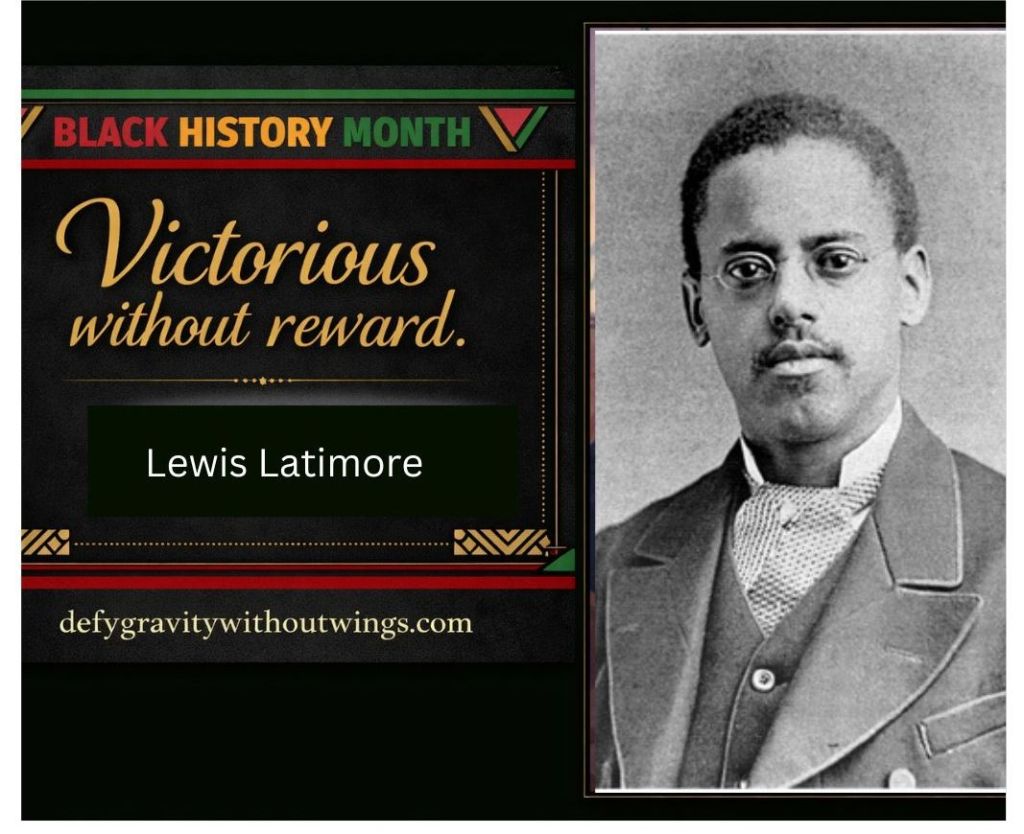
Charles Hamilton Houston: He Built the Road

Charles Hamilton Houston believed something radical for his time:

That the law — when disciplined, prepared, and forced to tell the truth — could be used to dismantle injustice.

He was not a march leader.
He was not a headline.
He was a builder.

Born in 1895, Houston became a lawyer and educator who saw segregation not just as wrong, but as structural. He believed it had to be taken apart piece by piece, case by case, classroom by classroom.

So he did the slow work.

As a professor at Howard University School of Law, Houston trained a generation of Black lawyers to be precise, relentless, and morally clear. Among them was a young man named Thurgood Marshall.

Houston taught his students that excellence was not optional — because lives depended on it.

“A lawyer is either a social engineer or a parasite on society.”

Houston chose to be a social engineer.

Long before Brown v. Board of Education reached the Supreme Court, Charles Hamilton Houston was already laying the groundwork.

He challenged unequal pay for Black teachers.
He dismantled segregation in graduate and professional schools.
He forced courts to confront the lie of “separate but equal.”

Case by case, brick by brick, he weakened the foundation of legalized segregation.

Others would stand in front of the nation when the walls finally fell.

Houston would not.

His health deteriorated under the strain of the work.
He died young.
And when history celebrated the victory, his name was often missing from the story.

He was victorious without reward.

Charles Hamilton Houston reminds us that some people are called to prepare the way, not walk through the door themselves.

“Prepare the way of the Lord; make straight paths for Him.” — Isaiah 40:3

Houston prepared paths others would walk — paths that led to justice, dignity, and opportunity for generations he would never meet.

If you have ever done work that made someone else visible,
labored behind the scenes while others stood at the microphone,
poured yourself into something you knew you might not live to see finished,
or believed faithfulness mattered more than credit,

Charles Hamilton Houston stands with you.

He built the road.
Others crossed it.

And God saw every stone he laid.

We see you, Charles.
We honor the work you did quietly.

Bread Crumbs — for those coming after us.
Victorious without reward. Still here.
Love, Chelle

Image

Susie King Taylor: She Served Anyway


Susie King Taylor was born enslaved in Georgia in 1848, in a world where teaching Black people to read was a crime and Black women’s labor was expected but never honored.


From a young age, Susie learned to read and write in secret. She was taught quietly, moving from place to place so no one would notice. Knowledge, for her, was not just education—it was resistance.


When the Civil War came, Susie did not wait to be invited into history.


She followed Union troops, and at just fourteen years old, she began teaching formerly enslaved soldiers and children how to read. She became the first Black woman known to openly teach formerly enslaved people in a Union camp.


She did not stop there.
Susie served as a teacher, a nurse, a laundress, and a caregiver to wounded Black soldiers. She worked in field hospitals. She tended infections. She cleaned wounds. She buried the dead. She did the work that kept soldiers alive long enough to keep fighting.


She did this without rank.
Without formal pay.
Without protection.
Without promise of recognition.
And when the war ended, the men she served alongside received pensions.
Susie did not.


Her body carried the cost of years of labor and exposure. Her hands had held dying boys. Her back bore the weight of war. Yet the government decided her service did not count.
She was victorious without reward.


In 1902, Susie King Taylor published Reminiscences of My Life in Camp with the 33rd United States Colored Troops—one of the only Civil War memoirs written by a Black woman.

She wrote because she knew that if she did not tell the story, it would be told wrong—or not at all.


She documented unequal treatment, exhaustion, racism within the Union Army, and the quiet strength required to keep serving anyway.


Recognition did not follow.
She died poor.
Her contributions remained footnotes.
Her name was largely absent from textbooks.


And yet, without women like Susie King Taylor, the war would not have been survivable for Black soldiers.


Susie King Taylor teaches us that some people do the work because it needs doing, not because they expect to be thanked.
She was not disguised like Cathay Williams.
She was not sidelined like Claudette Colvin.
She was fully visible—and still denied.


“Whatever you do, work at it with all your heart, as working for the Lord, not for human masters.” — Colossians 3:23


If you have ever done essential work no one wanted to name, given care without credentials, served faithfully while others were promoted, or known your contribution mattered even when systems said it didn’t—Susie King Taylor stands with you.
She served anyway.
History followed later.


We see you, Susie.
We honor you now.


Bread Crumbs — for those coming after us.
Victorious without reward. Still here.
Love, Chelle

Image

Claudette Colvin: Nine Months Before History Was Ready


Claudette Colvin, who died recently on January 13, 2026, was one of the last remaining living catalysts of the Montgomery Bus Boycott.


This must be said plainly:
Nine months before Rosa Parks,
a fifteen-year-old girl named Claudette Colvin refused to give up her seat on a segregated Montgomery bus.
Nine months before the cameras.
Nine months before the speeches.
Nine months before it was considered “safe.”
She was early — and she was right.


When police dragged her off the bus and arrested her, Claudette did not yet know she would be asked to step back from public view. But she would be.


Not because her courage was insufficient —
but because the movement decided she was not the face America would accept.
She was:
– a poor Black girl
– from a working-class family
– and soon after, pregnant
– struggling emotionally after trauma and arrest


Movement leaders made a strategic decision.
They chose respectability.
They chose optics.
And Claudette was quietly sidelined.
Yet her courage did not disappear.


She became one of the plaintiffs in Browder v. Gayle — the federal court case that ended bus segregation in Montgomery. The law changed because of the stand she took first, even though her name was not lifted alongside the victory.
She was victorious without reward.


Claudette Colvin teaches us a truth history often resists:
Being first does not mean being credited.
Being right does not mean being chosen.
And being faithful does not guarantee being celebrated.
A poor Black girl,
a pregnant teenager,
a traumatized child —
said no to injustice nine months before the nation was ready to listen.


That is not a footnote.
That is a foundation.
“For God chose what the world considers foolish to shame the wise.” — 1 Corinthians 1:27


If you have ever stood up too early,
told the truth before it was popular,
been asked to step aside so the story could be cleaner,
or watched others be celebrated for a door you opened,
hear this clearly:
Your timing was not wrong.
Your courage was not wasted.
And your obedience still counts.


Claudette Colvin stood first.
History followed later.
We see you, Claudette.
We tell it right now.
We honor you fully.


Bread Crumbs — for those coming after us.
Victorious without reward. Still here.


Love, Chelle

Image

Cathay Williams: Known By God. Hidden By History

Cathay Williams is one of my favorite Black history figures — not because she is well known, but because she is not.


I was first introduced to her by my nephew, Remmie, during one of the hardest seasons of my life — while I was going through breast cancer. He told me her story and then said something that stopped me cold.


He said I reminded him of her.


Like Cathay, I hid some of the pain I was really going through — not out of denial, but out of love.
Not because the fight wasn’t real, but because I wanted to encourage others who were fighting too.


Cathay Williams was born enslaved in Missouri around 1844. During the Civil War, she followed the Union Army as a cook and laundress. But when the war ended and the Army opened its ranks to Black men only, Cathay did something unthinkable.


She cut her hair,

wrapped her body,

changed her name to William Cathay

— and enlisted.


For nearly two years, she served as a soldier in the 38th U.S. Infantry, one of the original Buffalo Soldier regiments. She marched. She guarded. She endured brutal conditions — all while hiding her identity in a world that would not make space for who she truly was.


Eventually, illness exposed what society refused to imagine:
a Black woman had carried a rifle, worn the uniform, and served her country faithfully.


She was discharged — not for lack of courage, but for daring to exist outside the rules.


Cathay Williams lived a life where survival required disguise.
Not because she lacked strength — but because the world lacked vision.


There are seasons when God calls people to serve before the world is ready to name them correctly.
Cathay was known as William by the Army.
But she was known fully by God.
“The Lord does not see as mortals see; they look on the outward appearance, but the Lord looks on the heart.” — 1 Samuel 16:7


History overlooked her.
The Army dismissed her.
But heaven recorded her obedience.
Some call her story deception.
Others call it desperation.


But I call it courage under constraint.


And here is the part history often whispers instead of says out loud:
Cathay Williams never received military honors.
She never received a pension.
In 1891, after her health had been permanently damaged by her service, she applied for a military disability pension. It was denied. She died poor and largely forgotten.


She was victorious without reward.


Cathay Williams did everything she was asked to do — and more.
She served faithfully.
She endured quietly.
She finished her assignment.


Her story reminds us that victory and recognition are not the same thing.
“Well done” does not always come from the systems we serve — but it is always recorded by God.
She didn’t fight for history.
She fought through it.
And God did not waste a single step she took.


She did not live to see her story told.
But her life still speaks.


And for those who have ever given their strength, their hope, or their encouragement without guarantee of return:
You may be unrewarded by the world —
but you are not unseen by God.


We see you, Cathay.
We salute you.


Love, Chelle

About the History in Bread Crumbs
Bread Crumbs reflections are grounded in documented historical records, including archives from the U.S. National Archives, Library of Congress, court records, contemporaneous newspapers, and first-person accounts. Spiritual reflections and personal connections are clearly marked as such and are offered with respect for the historical record.

.

Image

My Survivor Song Knows My Name.

I was listening to one of my favorite songs—“He Knows My Name”—and my emotions spilled out before I could stop them.
It happens like that sometimes.
After a rough moment.
After allowing myself—again—to be hurt by someone who never really took the time to know me.
Not my heart.
Not my story.
Not the way I learned to survive.


I didn’t even realize how much I was carrying until that song started playing.
And suddenly, there it was—grief, relief, truth—all at once.


Because here’s the greatest thing about God:
He knows my name.
And not just my name—He knows my nickname too.
The one spoken by people who love me.
The one I only answer to when I feel safe.


He knows me with the mask—the strong one, the capable one, the superhero version that keeps showing up.


And He knows me without it—the tired, tender, still-hoping version I don’t always let the world see.


The real me.
Not the performance.
Not the usefulness.
Not the resilience résumé.


This song reminds me that I don’t confuse God.
I don’t disappoint Him by being human.
I don’t have to explain myself into being worthy of love.
It’s my Survivor Song because it tells the truth I forget when I’m hurting:
I am already known.
Already named.
Already held.
And when I rest in His arms, I don’t need armor.
I don’t need a script.
I don’t need to be brave for one more minute.
I am safe.


With and without the mask.
With and without the cape.
Somewhere along the way, I learned to confuse being needed with being known.
But God never made that mistake.


So today, if you’re feeling unseen—
if you’re nursing the quiet ache of being misunderstood—
let the reminder rise up like a song in your chest.
You are known by name.
You are held without pretending.
You are safe in His arms.
And sometimes… surviving looks like letting yourself be known—first by God, and then by yourself.
“I have called you by name; you are Mine.” — Isaiah 43:1


Love, Chelle


Image

Reframing The Heart

Somewhere along the way, many of us learned a quiet lie —
not from God, but from human interpretation.

We learned it from what was modeled, praised, or rewarded.
From homes, churches, systems, and relationships that mistook endurance for faithfulness and exhaustion for virtue.


Most people were doing the best they could with what they knew — but they were still human.
And without realizing it, we carried those lessons into our understanding of God.

I know this because I have done it myself.

I confused being loved with doing to be loved.
I mixed up belief with performance.
And I carried that misunderstanding into my faith and called it obedience.

But that is not God’s heart.

God does not delight in depletion.
He delights in wholeness.

Jesus did not invite people to follow Him so they could replace Him.
He did not ask them to become saviors, fixers, or endless wells.
He asked them to come — as they were — and to unlearn what fear had taught them about love.

Scripture never praises burnout.
It praises obedience rooted in love, not fear.
It honors service that flows from being seen — not from trying to be noticed.

When Jesus said, “Come to Me, all who are weary and burdened, and I will give you rest,”
He was not offering a reward for those who gave the most.
He was correcting what people had been taught about God.

If your kindness comes from feeling unseen,
if your faith feels like constant output,
if your love has slowly turned into self-erasure —
that may be something you learned, but it is not something God requires.

God does not need you emptied to be faithful.
He desires you rooted, restored, and whole.

Being needed is not the same as being loved.
And God’s love has never required you to disappear.

God, help me separate Your voice from the voices that shaped me.
Heal what I learned in survival mode.
Teach me Your heart — not a human version of it.

Love, Chelle
DefyGravityWithoutWings.com

Image

Powder, Not Prison (and Apparently Winter Storms Have Names Now)

So here’s something I learned this week:
winter storms have names.
I was today-years-old when I found out they name winter storms the same way they name summer hurricanes. And wouldn’t you know it—the one that iced me into my house and blocked me from my greenhouse was named Fern.
Fern.
A plant name.
A green thing.
A symbol of life.
Make it make sense.
Winter Storm Fern didn’t just bring cold—she brought audacity. It was so cold one day that my front door wouldn’t even open. Not stuck—sealed. As if the house itself said, “Nope. You live here now.”
When the door finally did open the next day, I stepped outside and immediately thought,
“Oh. I was happier not knowing.”
That kind of cold doesn’t invite you out.
It humbles you back inside.
Now here we are again. More snow coming Saturday—and again on Wednesday. But this time, they’re calling for powder, not ice.
And apparently, there’s a difference.
Ice traps you.
Powder covers you.
Ice shuts doors.
Powder rests gently on what’s still alive underneath.
Some seasons don’t stop growth—they insulate it.
Under the white blanket, the soil is still breathing. Roots haven’t resigned. Seeds aren’t panicking. They know winter may come labeled and official, but it never gets the final word.
“Though the fig tree does not bud and there are no grapes on the vines… yet I will rejoice in the Lord.”
— Habakkuk 3:17–18
Faith isn’t pretending winter isn’t winter.
It’s recognizing the difference between what freezes you and what simply passes through.
Winter Storm Fern may have sealed my door for a day.
She may have iced the path to the greenhouse.
But she didn’t cancel the harvest.
Dead and dormant are not the same.
Covered and defeated are not synonyms.
Spring is not offended by powder.
And I’ve learned not to argue with doors God temporarily keeps shut.

Love, Chelle

Image

When the Tool Ate the Manuscript (and Almost My Heart)

Let me tell you what almost took me out.

For weeks—WEEKS—I have been doing the holy, unglamorous work of editing and reorganizing a soon-to-be book.
Moving chapters.
Fixing commas that think they run things.
Re-threading stories.
Listening for where God was nudging—and where I was just rambling.

This was faithful work. Quiet work.
The kind nobody claps for.

And then…
The tool I use to assist and “catch mistakes” decided to eat my manuscript.

Not nibble.
Not misplace a paragraph.
Eat it.

I have survived cancer, grief, caregiving, deadlines, and ice storms—but watching weeks of careful labor vanish off a screen?
That will make your chest tighten and your salvation flicker for a hot second.

I sat there spiraling:
Did I just lose half a book?
Am I behind now?
Did I just waste weeks of my life arguing with chapter headings?

Cue the dramatic sigh.
Cue me talking to my laptop like it had personally betrayed the family.

And then—grace, wearing sneakers—slid in sideways and whispered:

Your work is not gone.
You are not behind.
We did not lose half a book.

Because real work doesn’t live only in files.
It lives in muscle memory, lived experience, and a heart that’s been steeped in the message.

And Scripture backs this up.

“So I will restore to you the years that the swarming locust has eaten…”
— Joel 2:25

God restores years, not just results.
Restoration doesn’t always look like retrieval.
What God restores often comes back stronger.

So breathe.
Roll your shoulders.
Open a new document.

The words still know how to find you.
And the story is very much alive.

Love, Chelle
defygravitywithoutwings.com

Image

Let Peace Come (Even When the World Says “What’s the Point

As I write this, Tibetan monks are walking the East Coast on a pilgrimage for peace. Step by step. Mile by mile. No microphones. No arguments. Just feet on pavement and the quiet conviction that peace is still worth walking toward.
When I shared a simple prayer online — yes, let peace come — another believer replied,
“What’s the point? The Bible says the bad things must happen.”
It stopped me for a moment.
Yes, Scripture tells us the world will groan. It speaks honestly about deception, division, and heartbreak. The Bible doesn’t deny the mess we’re living in.
But it also never tells us to stop praying.
It never tells us to stop loving.
And it never tells us to stop showing up.
Through the prophet Isaiah, God gives us a picture that still steadies me:
“How beautiful on the mountains are the feet of those who bring good news, who proclaim peace.” (Isaiah 52:7)
Isaiah praises feet — not arguments, not timelines, not predictions.
Peace, in Scripture, is not passive.
It walks.
Somewhere along the way, religion replaced relationship and politics fractured fellowship. Both young and old are left confused — unsure what to believe or whether prayer still matters.
Here’s what I still believe:
Hope is not denial.
Hope is obedience.
Jesus never told us to love only when it fixes everything. He told us to love because that is who we are — even while we wait, even while the world aches.
So when someone asks, “What’s the point?”
This is my quiet answer:
Love still matters.
Prayer still matters.
Peace is never pointless.
Waiting for Jesus does not mean standing still.
It means walking faithfully — even now.
And if monks can walk for peace knowing the world is broken,
surely we can still pray for it.
Yes, Lord.
Let peace come.


Love, Chelle

Image

The Woman At The Table

Sometimes I miss the house in the middle of the corn fields with no indoor plumbing.
The pot-belly stove that decided when we were warm enough.
The way night fell heavy and close, and everyone settled where they could—sharing rooms, beds, blankets, breath.

I say my room, but that’s a loose word.
Privacy was a luxury we didn’t own.
Still, there was one place that felt like mine:
the narrow view through the keyhole.

Almost every night, after the fires were dampened and the house full of children finally stilled, I would watch my grandmother at her writing table. Her hands folded. Her Bible open. A pen moving slowly, deliberately.

Women of the Bible were her favorite.
Deborah. Ruth. Esther. Mary.
Women who listened closely and lived bravely.

She wrote sermons—real ones. Thoughtful. Scripturally sound. Insightful in ways people did not expect from a woman in those days. Especially a woman who cleaned other people’s houses for a living.

But it was her prayer ritual that marked me.

She prayed in whispers—not because God was quiet, but because love was.
She didn’t want to wake a house full of children.
Except, apparently, the little girl at the keyhole.

I couldn’t hear the words.
But I could see her face.

Sometimes she smiled.
Sometimes she laughed—like she and God shared a private joke.
Sometimes she cried. The kind of crying that doesn’t fall apart, just falls down.

And as I watched—hidden, still, unnoticed—I was learning.
Learning how faith looks when no one is applauding.
Learning that prayer does not need volume to have weight.
Learning that God listens closely to whispers.

When she finished praying, she always reached for the same thing.

A small plastic bread loaf.
One of those coin banks from organizations that fed “poor kids in Africa.”

She would slip a coin inside.
Sometimes a dollar.
Hard-earned. Scrubbed-for. Long-hours-standing money.

Money from a woman the world might have called poor—
but who never believed she was exempt from generosity.

I didn’t understand it then.
But I do now.

That table was a pulpit.
That whispering was power.
That plastic loaf was faith that refused to shrink.
And that keyhole?
It was my first seminary.

And that little girl at the keyhole?
She’s still watching.
Still learning how to pray without performing.
Still believing a few faithful offerings can touch a wide world.

“She opens her mouth with wisdom, and the teaching of kindness is on her tongue.” — Proverbs 31:26
“Your Father, who sees what is done in secret, will reward you.” — Matthew 6:6

Some of the strongest sermons are whispered after bedtime, preached without microphones, and learned by children watching through keyholes.

Love, Chelle