Image

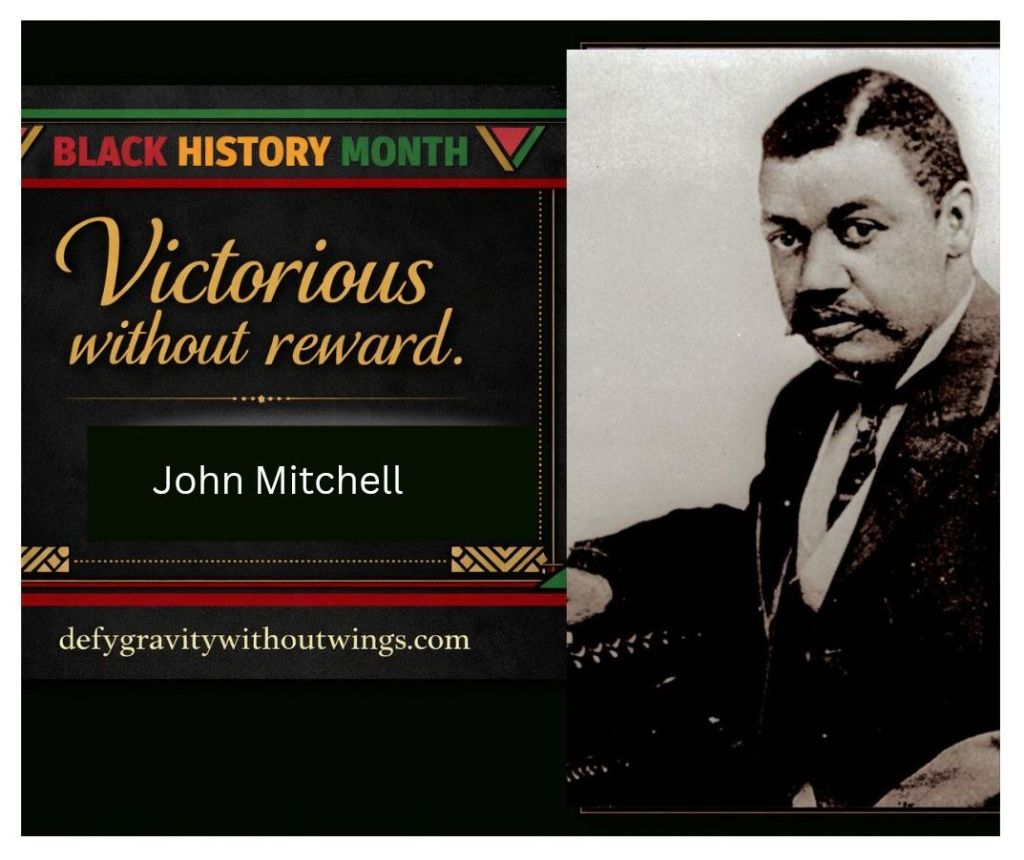
John Mitchell : The Editor Who Refused One Lane

Before panels. Before pundits. Before public relations teams.

There was a young editor in Richmond, Va. who believed ink could confront power.

John Mitchell Jr. took over the Richmond Planet at just 21 years old and turned it into one of the boldest Black newspapers in America.

He investigated lynchings when others excused them.
He printed names when silence was safer.
He challenged railroads, city officials, and mobs with documented truth.

And when threats came, he did not retreat quietly. History records that he publicly confronted intimidation and reportedly carried a pistol — because truth-telling in Virginia required readiness.

But Mitchell did not stop at journalism.

He helped lead Mechanics Savings Bank in Jackson Ward because he understood something deeper:
Information without economic power is fragile. He believed Black communities needed more than headlines.
They needed institutions.

And in 1921, he did something audacious.
He ran for governor of Virginia.
He did not win.
But the audacity mattered.

He refused one lane.
Journalism.
Banking.
Politics.
Different tools. Same mission.

The Richmond Planet ceased publication in 1938.

And just last week, the Richmond Free Press — another powerful Black Richmond institution and sister in spirit — announced its final issue.

Different centuries. Same soil.
Printing presses may rest. Witness does not.

CARRY THIS WITH YOU
Where have you limited yourself to one lane when your calling may require more? Mitchell reminds us that leadership is not about title — it is about refusal to shrink.

Speak up and judge fairly; defend the rights of the poor and needy.” — Proverbs 31:9

BREADCRUMB
Sometimes the work God gives you is not just to speak truth, but to build structure strong enough to hold it.

SALUTE
We see you, John Mitchell Jr. — for confronting power, building institutions, and daring to run.

Bread Crumbs — for those coming after us.
Victorious without reward. Still here.
Image

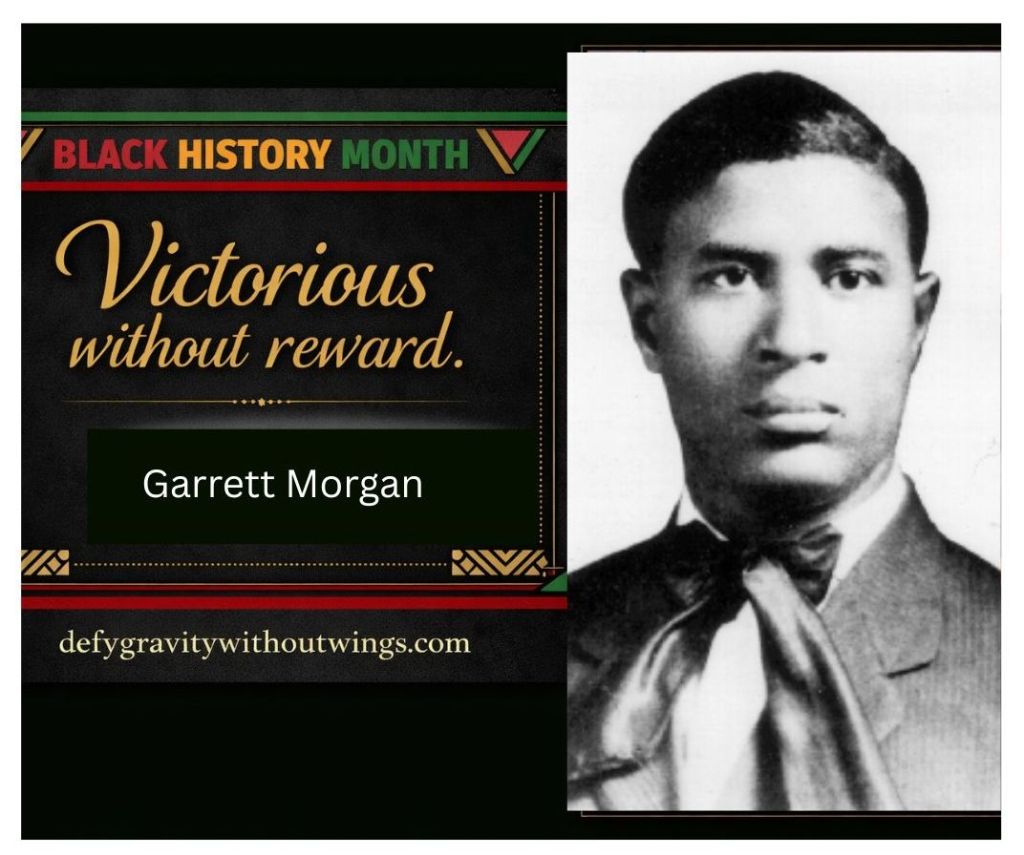
Garrett Morgan — The Man Who Built What Was Missing

He was born in 1877 in Paris, Kentucky, the son of formerly enslaved parents. His formal education ended early, but his learning did not. As a young man, he moved north and eventually settled in Cleveland, Ohio, where he worked as a sewing machine repairman. Watching machines fail and fixing them taught him how systems worked and how they could be improved.

Now here’s something you may not know.

Before the safety hood and the traffic signal, Garrett Morgan developed an early chemical hair refining cream that loosened curl patterns and funded his manufacturing company. The discovery reportedly began while he was working with sewing machine lubricants and noticed how a chemical solution altered fabric fibers. Curious and observant, he experimented further — first testing a diluted version on a dog’s hair before refining it for human use. The results were dramatic enough to build a thriving business. It became part of a broader wave of Black innovation in the early 20th century that included pioneering women entrepreneurs in the beauty industry.

His more recognized contributions came from witnessing people placed in danger without protection.

He ivented a safety hood in 1912, an early form of the modern gas mask  and demonstrated its effectiveness during the 1916 Lake Erie tunnel explosion, helping rescue trapped workers.  His safety hood influenced firefighter equipment and later military safety gear .


Most notably, he invented an improved traffic signal in 1923 after witnessing a severe automobile accident. He added a caution phase between stop and go, reducing collisions. He then sold the traffic signal patent to General Electric.


Sadly, he faced racial barriers when marketing inventions and sometimes was forced to use white actors for demonstrations.

Garrett Morgan did not invent for applause. 
He invented because danger was preventable and someone had to act.  He built solutions so essential they became invisible 

SCRIPTURE THREAD

“Discretion will protect you, and understanding will guard you.” — Proverbs 2:11 

Garrett Morgan’s wisdom became protection. His understanding became guardrails long before the world learned to credit him.

CARRY THIS WITH YOU

What risk have you noticed that others have learned to tolerate? Morgan reminds us that calling does not always arrive as a dream. It often arrives as a problem you refuse to ignore.

BREADCRUMB

Sometimes the work God gives you is not to be seen, but to quietly make the way safer.

SALUTE

We see you, Garrett Morgan — for building protection where none existed. 

Bread Crumbs — for those coming after us. 
Victorious without reward. Still here.

Image

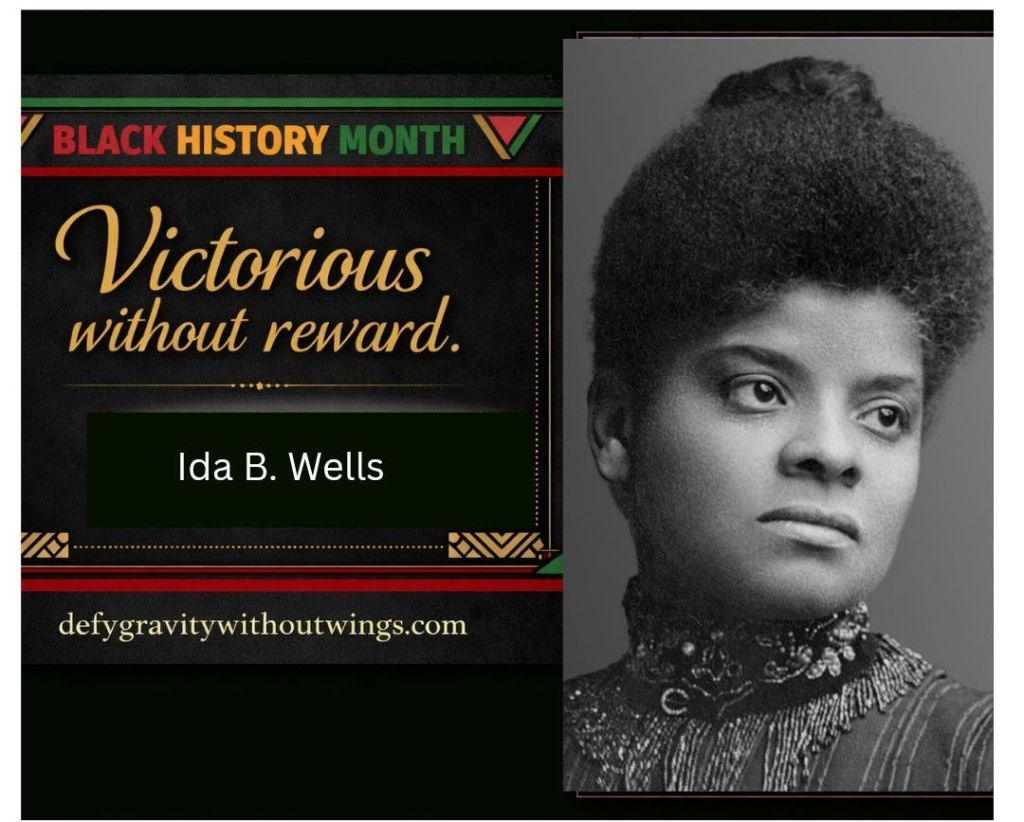
Ida B. Wells — The Truth That Refused to Behave

She  was born in 1862 in Holly Springs, Mississippi, enslaved at birth and freed as a child by the Emancipation Proclamation and the Union Army.

She grew up in the turbulent Reconstruction era — a time full of hopes for freedom, but also brutal backlash against Black citizenship and rights.

Her early life was shaped by both the reality of oppression and a family that deeply valued education. Her father served on the board of trustees at Rust College, a historically Black college, and her parents instilled in her a belief in learning and equality.

At just 16, after both parents died during a yellow fever epidemic, Ida became the head of her household—raising her siblings while working as a schoolteacher.

At 25, Ida B. Wells was already a newspaper editor and co-owner — The Memphis Free Speech   and Headlight – when a white mob destroyed her newspaper’s office in Memphis for exposing the lies behind lynching.

The true catalyst for her lifelong crusade came in 1892, when three of her close friends — Thomas Moss, Calvin McDowell, and Henry Stewart — were lynched by a white mob.

Refusing to accept the “justified crime” narratives of her time, Wells launched meticulous investigations into lynching across the South.  She documented lynchings with data and truth, sparking a global anti-lynching crusade that laid the groundwork for modern investigative reporting.

She was forced to  carry  a pistol for protection while exposing racial terror.

They burned her press.
She sharpened her pen.

Wells became a leading anti-lynching crusader, traveling across the United States and Europe to expose lynching’s brutality, publish groundbreaking pamphlets like Southern Horrors and The Red Record, and call the nation to account for its violence.

Wells also stood at the intersection of civil rights and women’s rights. After moving to Chicago and marrying attorney Ferdinand L. Barnett in 1895 — yet keeping her own name — she continued her activism by organizing
She also stood and co-founded important organizations such as the Alpha Suffrage Club (the first Black women’s suffrage group in Chicago), the Negro Fellowship League, the National Association of Colored Women, and helping shape the early movement that became the NAACP.

Wells refused to be sidelined — famously refusing to march at the back of a segregated women’s suffrage parade in Washington, D.C., instead slipping into the front ranks under the Illinois banner.

She continued writing, organizing, and speaking for justice until her death in Chicago at age 68 — and in 2020 was posthumously awarded a Pulitzer Prize for her fearless reporting that birthed many of the core practices of modern investigative journalism.


“Speak up for those who cannot speak for themselves… defend the rights of the poor and needy.” (Proverbs 31:8–9)


BEFORE YOU MOVE ON
What truth have you learned to soften so others can stay comfortable?


BREADCRUMB
Truth backed by courage and facts becomes dangerous to systems built on silence.


We see you, Ida B. Wells — for telling the truth when lies were law.
Bread Crumbs — for those coming after us.
Victorious without reward. Still here.

Image

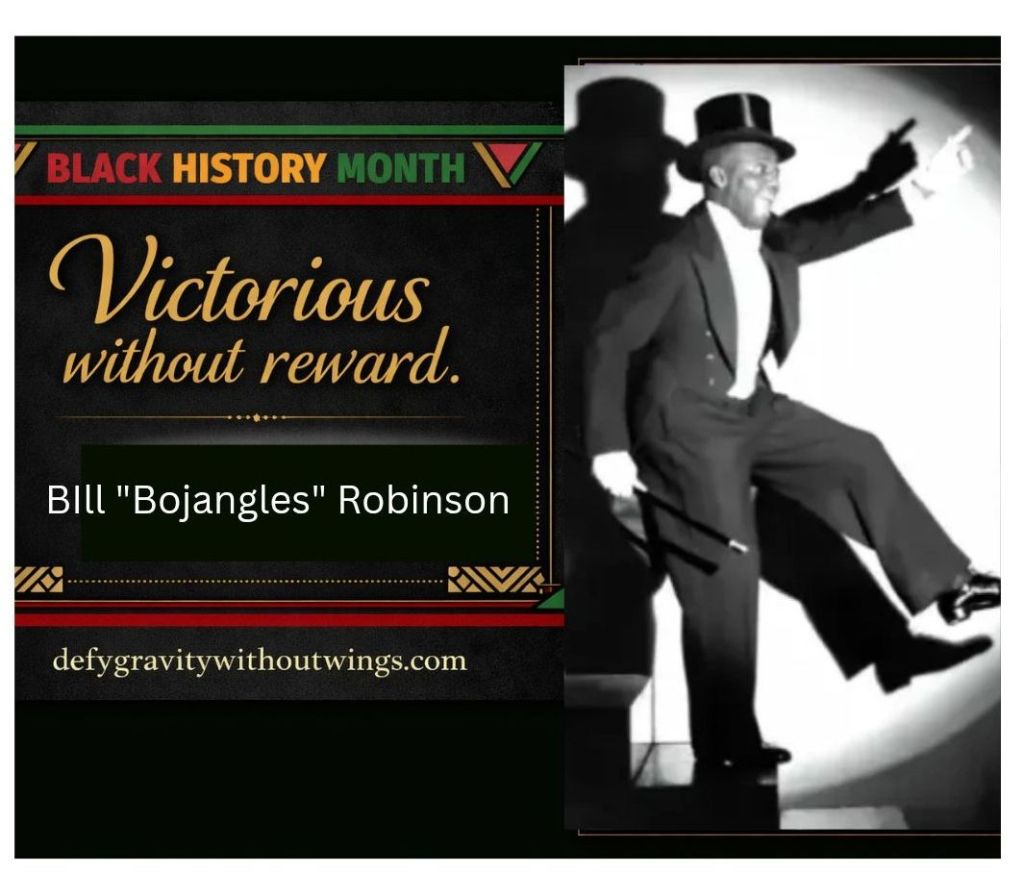
Bill “Bojangles” Robinson — The Man Who Danced Forward

Born in 1878 in Richmond’s Jackson Ward, Bill “Bojangles” Robinson did not inherit ease. He inherited survival.

Orphaned young, he found rhythm before he found security. Instead of letting the world bend his back, he stood straight and tapped anyway.

He did not shuffle.

He clarified tap. Clean lines. Upright posture. Dignity in every strike of the shoe.

He
• Redefined tap dancing
• Became one of the highest-paid entertainers of his era
• Performed with excellence on segregated stages without lowering himself
• Created the legendary stair dance
• Gave generously back to Richmond

And when the city would not install a traffic light in Jackson Ward to protect Black children crossing the street, he did not argue.

He reached into his own pocket. He paid for the light. Not for praise. For protection.

Today his bronze statue stands in Jackson Ward beneath that light, shoes mid step, forever guarding the intersection.

On screen with Shirley Temple, he smiled.
Off screen, he built safety.

And Scripture whispers underneath his steps:

“Seest thou a man diligent in his business? he shall stand before kings; he shall not stand before mean men.”
— Proverbs 22:29

He stood before kings.
But he made sure children could cross safely at home.

From Jackson Ward to Broadway lights, he proved something we still hold close:

You can climb the stairs without bowing.
And you can light the street when the city will not.

And somewhere in Jackson Ward, if you listen close enough, you can still hear the stairs answering his shoes.

May we be the kind of people who do not just climb them, but leave the light on behind us.


BREADCRUMB
Sometimes progress dances—and still changes the street.


We see you, Bill “Bojangles” Robinson — for dancing forward and making the way safer behind you.


Bread Crumbs — for those coming after us.
Victorious without reward. Still here.
Image

The Hymn Before the Headline

Before it was debated,
Before it was dissected on timelines and talk shows, it was a hymn.

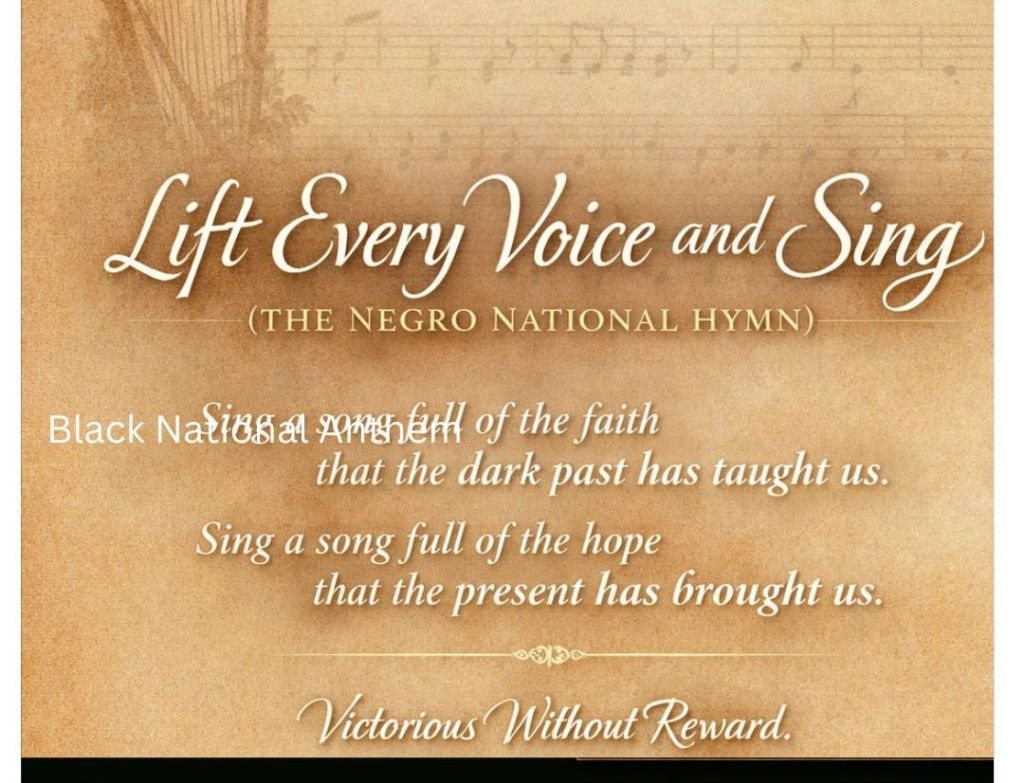
Originally titled
Lift Every Voice and Sing (The Negro National Hymn)

Hymn.

Not rebellion.  Not replacement.


Hymn.

Written in 1900 by James Weldon Johnson, and set to music by his brother John Rosamond Johnson, it was first sung by Black schoolchildren who were barely a generation removed from bondage.

And still they sang.

Psalm 98 says, “Sing unto the Lord a new song.”

Our ancestors did.

They sang through Jim Crow.
They sang through separate water fountains.
They sang when hoses knocked bodies down and dogs were turned loose.
They sang when grief had no courtroom relief.

This hymn was not written to divide a nation.
It was written to steady a people.

When it shows up on a Super Bowl stage,
that is not intrusion.
That is history breathing.

A hymn is not about replacing anything.
It is about remembering.

Black History Month is not about exclusion.
It is about acknowledgment.

And acknowledgment is not an attack.
It is truth standing upright.

So when we lift every voice,
we are not asking permission.

We are honoring inheritance.

Sing a song full of the faith that the dark past has taught us.
Sing a song full of the hope that the present has brought us.

Some songs survive because they are catchy.
This one survived because it carried us.

To the children who first sang it.
To the elders who kept it in the pews.
To every voice that trembled but did not stop

Bread Crumbs — for those coming after us.
Victorious without reward. Still here..

Image

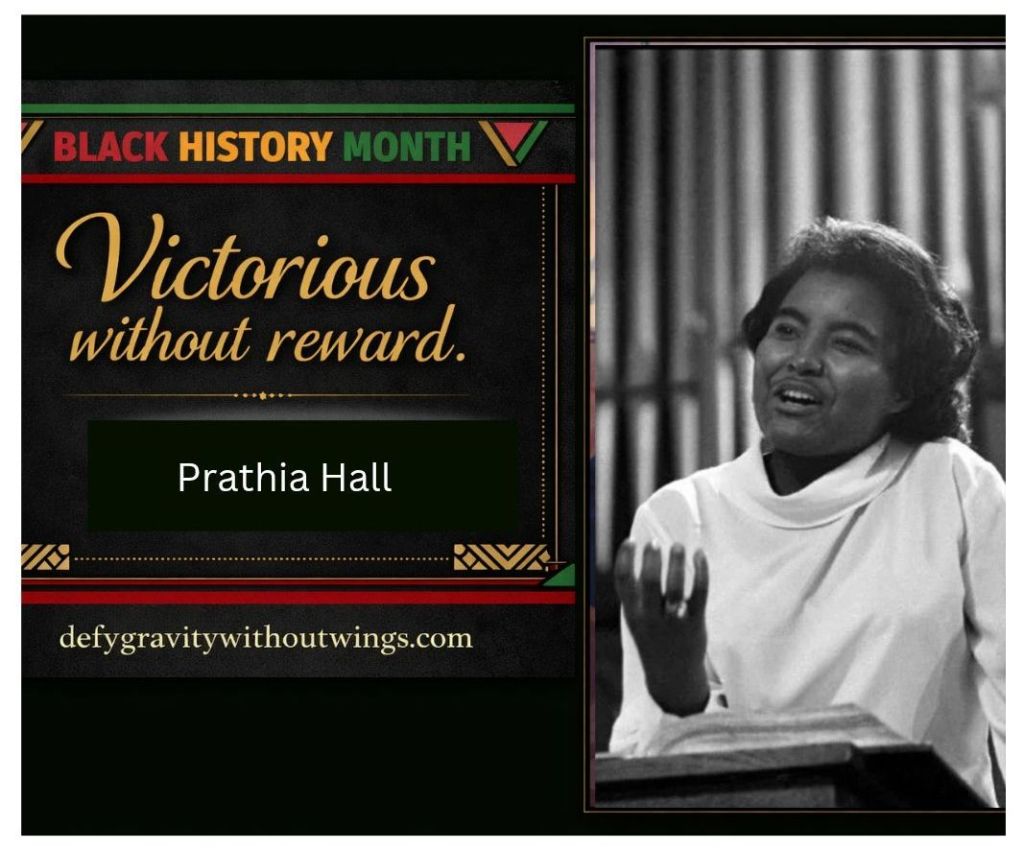
Prathia Hall — The Woman Who Put the Dream in the Air

Prathia Hall was a preacher—and I don’t mean honorary, invited-once-a-year preacher. I mean called, trained, Scripture-handling, fire-in-her-bones preacher. That alone put her at odds with the world she was born into.
She came up in the middle of the Civil Rights Movement, not watching it on television, but working it. Organizing. Marching. Preaching. Sitting in mass meetings where faith wasn’t decoration—it was fuel.


And Prathia knew words mattered.
She preached with rhythm and Scripture braided together. Not shouting just to shout. Not performing. She preached like someone who believed God was actually listening—and that people were, too.


One night, after a church had been bombed, Prathia stood in the rubble and began to pray out loud. And as she prayed, she kept saying a phrase again and again:
“I have a dream…”
Not as a speech.
As a prayer.


That cadence—the hope, the structure, the repetition—later showed up on a much bigger stage through Dr. King. History remembers the microphone. It often forgets the woman who helped tune the sound.


Prathia Hall kept preaching anyway.
She worked with the Student Nonviolent Coordinating Committee (SNCC), helped train young leaders, and taught theology that didn’t separate heaven from justice. She believed faith was supposed to interrupt oppression, not soothe it.
She didn’t chase credit.
She chased truth.

“So then faith comes by hearing, and hearing by the word of God.” — Romans 10:17


SIT WITH THIS
Who taught you how to speak hope before the world was ready to hear it? And where might God be asking you to keep saying the thing—even if someone else gets the credit later?


BREADCRUMB
Some words don’t echo right away.
They wait—until the world is ready to hear them.

We see you, Prathia Hall — for preaching freedom into the air before it had a stage.


Bread Crumbs — for those coming after us.
Victorious without reward. Still here.


Image

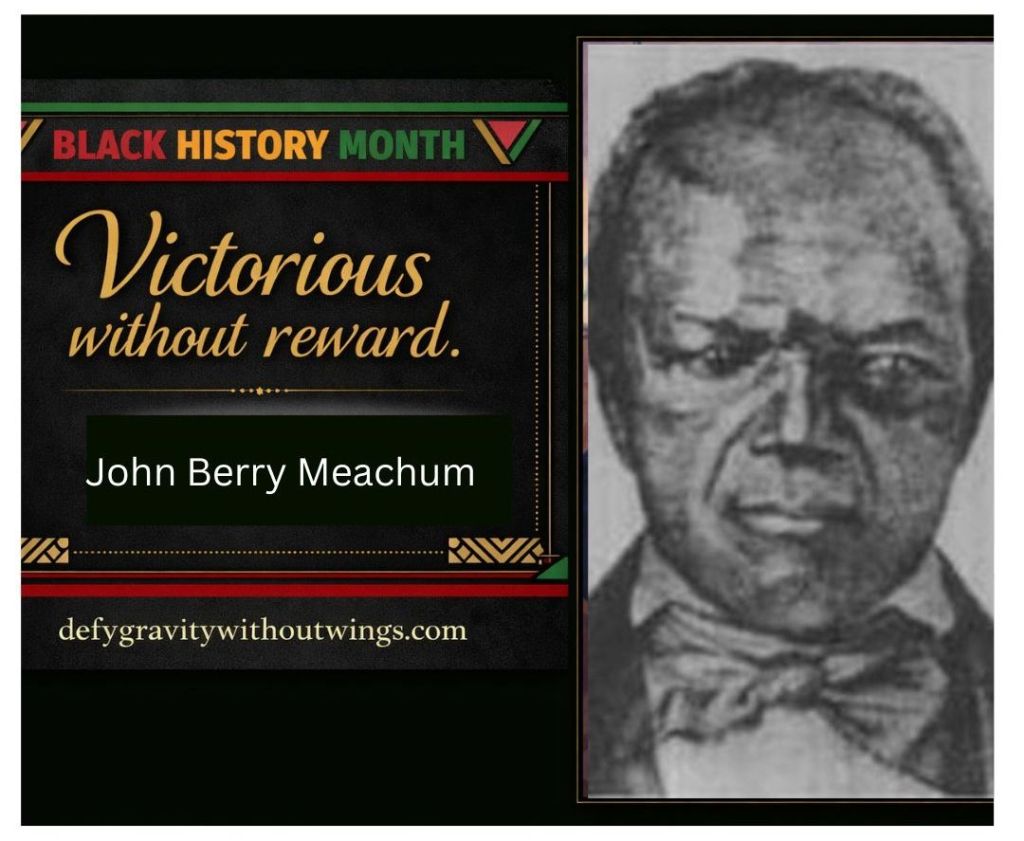
John Berry Meachum — The Man Who Took the School to the Water

John Berry Meachum was born enslaved in 1789 and eventually brought to Missouri, a slave state that worked very hard to keep Black people uneducated. Because ignorant people are easier to control.
Meachum didn’t accept that.


Through years of labor, he bought his freedom. And once free, he did what a lot of free folks might not have dared to do — he started teaching Black children to read. Not secretly. Not halfway. He opened a school.


Then Missouri passed a law that said Black people could no longer be educated.
Now here’s where John Berry Meachum shows us the difference between rebellion and holy wisdom.
He didn’t shout at lawmakers.
He didn’t beg for exceptions.
He read the law.
And he noticed something important: the law applied on land.


So Meachum bought a boat, anchored it in the Missouri River, and moved the school onto the water.
No land.
No violation.
No stopping the lessons.


Children,  enslaved and free,  climbed onto that boat and learned to read, write, and think for themselves. The school became known as the Floating Freedom School, and it floated right outside the reach of unjust power.


John Berry Meachum didn’t break the law.
He outgrew it.


He understood that sometimes obedience to God requires creativity — and that wisdom can be just as disruptive as protest.
“We must obey God rather than men.” — Acts 5:29

In 1846, he published his pamphlet “An Address to All the Colored Citizens of the United States” emphasizing education and self-respect.

His floating school survived after his death until around 1860. Continuing under the direction of one of his former students

Where have you been told “you can’t” — not because it’s wrong, but because it’s inconvenient for those in power?

John Berry Meachum reminds us that sometimes the door isn’t locked. It’s just in the wrong place.

Wisdom doesn’t always fight the system head-on.
Sometimes it floats right past it.


We see you, John Berry Meachum.  Teaching freedom when the law said no.


Bread Crumbs — for those coming after us.
Victorious without reward. Still here.

Image

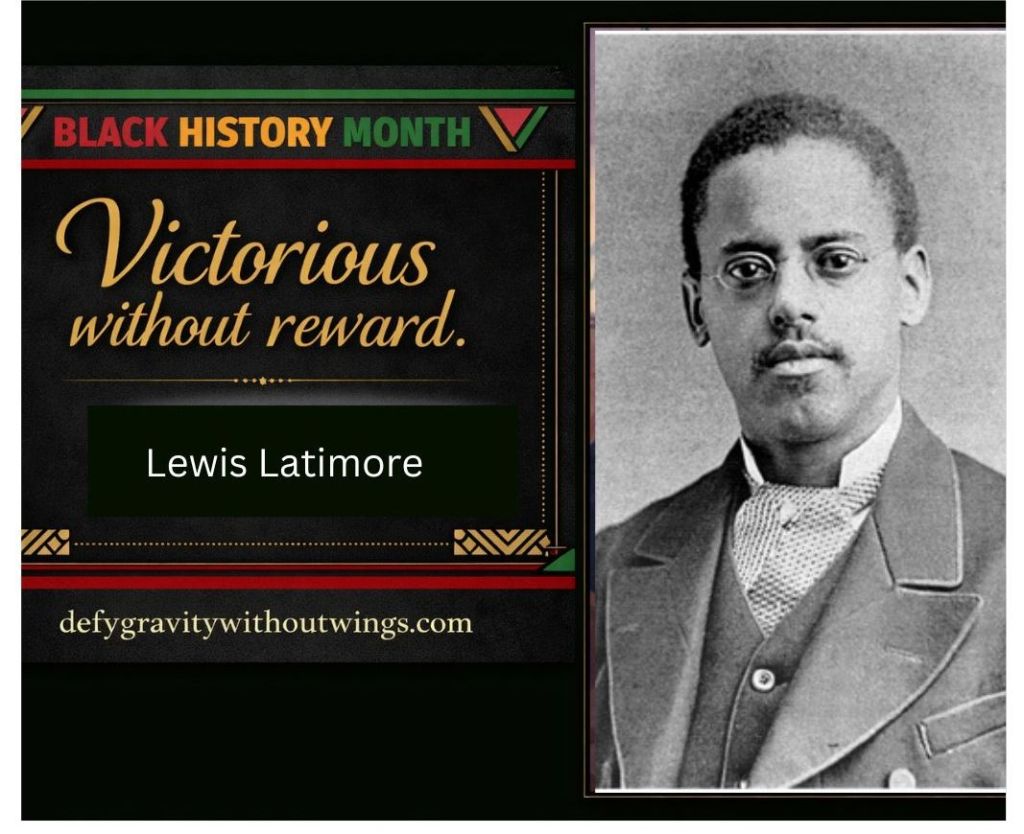
LEWIS LATIMER: HE MADE THE LIGHT

Black history is not only about who struck the match.
It is also about who made sure the light did not go out.
Lewis Howard Latimer understood that.
Born in 1848 to parents who had escaped enslavement, he taught himself to read, draw, and engineer in a world that did not expect brilliance from him—and was not structured to reward it.
History remembers the spark.
Latimer worked on the endurance.
In 1884, he joined the Edison Electric Light Company as a draftsman.
He was not hired to be the face of innovation.
He was brought in to make the work hold.
While others are credited with inventing the light bulb, Lewis Latimer improved it.
He developed a carbon filament that made electric light durable, affordable, and practical—light that could last in ordinary homes, not just demonstrations.
Without his work, the light would have remained fragile.
Exclusive.
Unreliable.
And the light was not his only contribution.
Latimer also:
– drafted critical technical drawings for early telephone technology
– designed an evaporative air-conditioning system
– improved safety and sanitation systems for railroad cars
– trained others, documented processes, and quietly strengthened industries that carried other people’s names
Important work.
Essential work.
Weight-bearing work.


Lewis Latimer lived long enough to see the world changed by the light he helped sustain.
He died in 1928—not wealthy, not widely celebrated—but respected by those who understood the work.
His legacy lived on in homes lit safely, cities made brighter, systems made usable.
If you have ever been the one who made something work instead of making it visible—
If you have refined what others rushed through—
If you have strengthened what others started—
If you have stayed faithful long after the applause moved on—
This story stands with you.
“Let your light so shine before others…” — Matthew 5:16


Lewis Latimer did not create the first light.
He made sure it endured.
Some people are called to begin things.
Others are called to make them last.
This, too, is history.
This, too, is weight-bearing work.


Lewis Latimer stands with you.
God sees the work that makes light reliable — not just remarkable.


We see you, Lewis.
We honor the way you made the light last.


Bread Crumbs — for those coming after us.
Victorious without reward. Still here.
Image

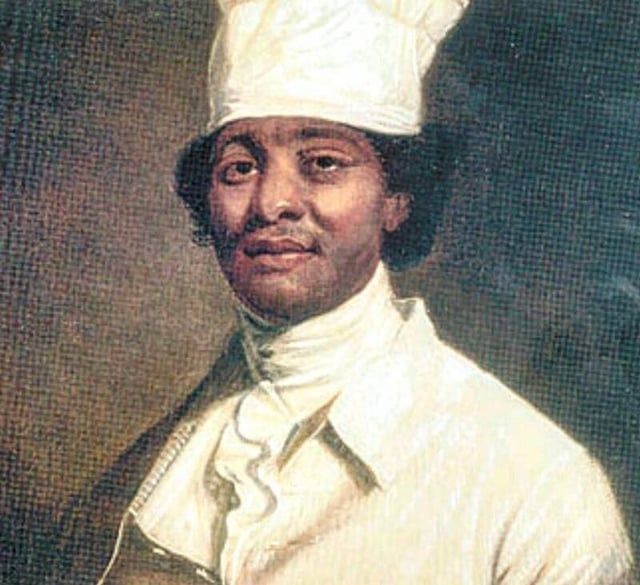
James Hemings: He Changed the Taste

James Hemings shaped a nation’s palate while the nation refused to speak his name.


Born enslaved in the 18th century, James Hemings lived and worked at Monticello under Thomas Jefferson.

He was trained as a chef in France, mastering techniques most Americans had never seen or tasted. He learned sauces, pastries, ice creams, and refined methods that transformed how food was prepared and served.


When he returned to America, those techniques came with him.
They became American.
Macaroni and cheese.
Refined sauces.
Elegant plating.
Desserts meant to be lingered over.
These weren’t trends.
They were foundations.
And James Hemings was the hands behind them.


James Hemings cooked at the highest tables — yet he did not own himself.
He was expected to create beauty while living without freedom.
To refine taste while enduring injustice.
To elevate others while remaining invisible.


He was also the older brother of Sally Hemings.
Both siblings lived under the same roof at Monticello.
Both were bound to the same man.
Both carried different burdens of the same system.
James navigated his captivity through skill, restraint, and intellect.
And still — he negotiated his freedom.


He didn’t storm the kitchen.
He didn’t burn it down.
He bargained carefully, strategically, and bravely — securing his release in exchange for training his replacement, his brother, Peter


Freedom came late.
Recognition never really came at all.
He died young. Just two months after securing his freedom.
His influence lived on without attribution.
He was victorious without reward.


James Hemings reminds us that culture is often shaped by people whose names history forgets — but whose work it cannot erase.


“Give us this day our daily bread.” — Matthew 6:11
Bread is sustenance.
Bread is culture.
Bread is memory.


What we eat carries history — whether we name it or not.
James Hemings fed a nation that did not know his name.


If you have ever poured skill into work that bore someone else’s signature,
created beauty in a place that did not fully see you,
shaped something lasting without receiving credit,
or learned excellence under pressure and restraint,
James Hemings stands with you.


God sees the hands that prepare nourishment — not just for bodies, but for culture itself.


We see you, James.
We honor the way you changed the taste.


Bread Crumbs — for those coming after us.
Victorious without reward. Still here.


Love, Chelle

Historical Context & Image Note:
This reflection draws from documented Monticello and Hemings family records; no verified historical photograph of James Hemings exists, so a respectful illustration is used in place of a photographic image.

Image

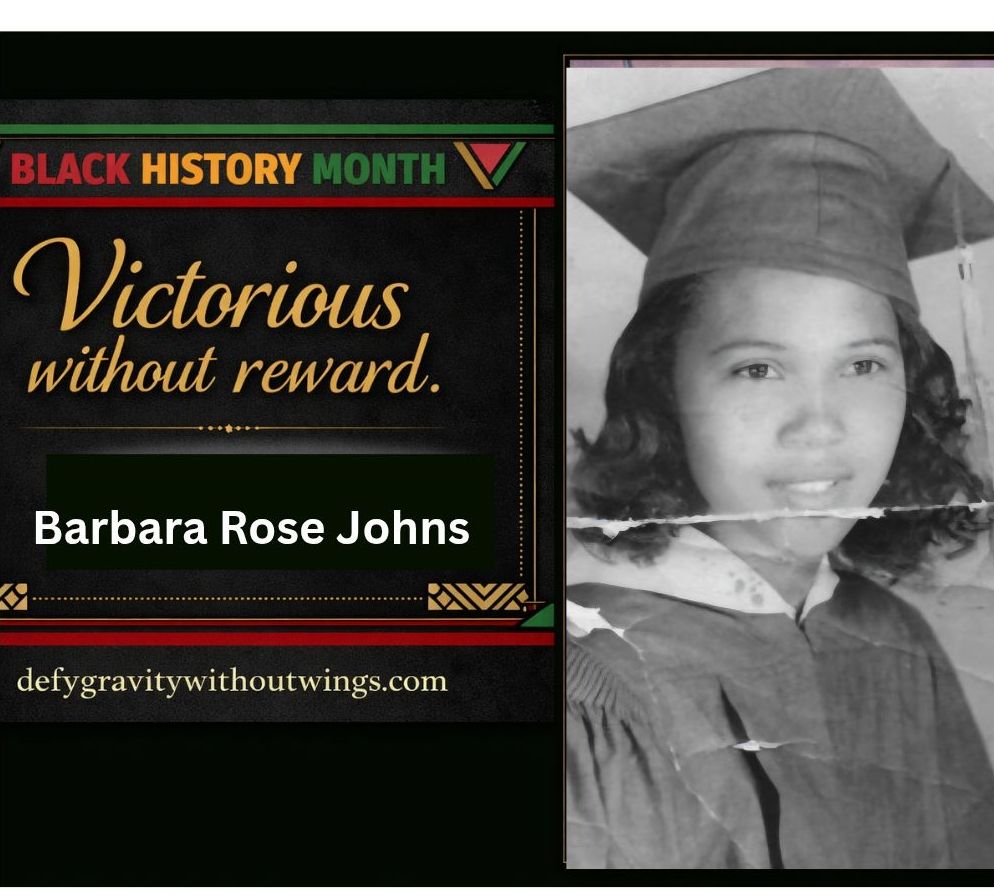
Barbara Johns: She Was Fifteen and Would Not Wait

Barbara Johns was fifteen years old when she decided that waiting politely for justice was no longer an option.


In 1951, in Prince Edward County, Virginia, Barbara was a student at Robert Russa Moton High School — a segregated Black school with no gym, no cafeteria, overcrowded classrooms, and tar-paper shacks used as makeshift buildings. Meanwhile, white students nearby learned in brick schools with resources and space.


Barbara saw it.
Barbara lived it.


And Barbara refused to accept it.


Without permission from adults, administrators, or movement leaders, she organized a student strike. She convinced her classmates to walk out, not knowing if anyone would listen — only knowing that staying silent was no longer an option.


Adults were furious.
Leaders were nervous.
Teachers were afraid they would lose their jobs.


Barbara’s name was almost removed from the complaint.
But the case moved forward anyway.
Her courage became part of Davis v. County School Board of Prince Edward County, one of the five cases folded into Brown v. Board of Education.


History changed.
And Barbara Johns?
She received death threats.
She had to leave her hometown.
She lived the rest of her life quietly.
Her name was rarely spoken when Brown was celebrated.
She was victorious without reward.


Barbara Johns teaches us something uncomfortable and holy:
Sometimes the people who force history to move are the ones most quickly pushed out of the picture.
She was young.
She was female.
She was uncompromising.
And she was inconvenient.


“Let no one despise you for your youth.” — 1 Timothy 4:12


Barbara didn’t wait to be older.
She didn’t wait to be chosen.
She didn’t wait to be safe.
She acted — and the system scrambled to catch up.


If you have ever been told you were too young to understand, spoken truth that made adults uncomfortable, sparked change and then watched others take credit, or paid a personal cost for doing the right thing early — Barbara Johns stands with you.


She reminds us that courage does not require credentials — only conviction.
She lit the match.
The world tells the story without her name.
But God remembers.


We see you, Barbara.
We tell it right.


Bread Crumbs — for those coming after us.
Victorious without reward. Still here.


Love, Chelle