Image

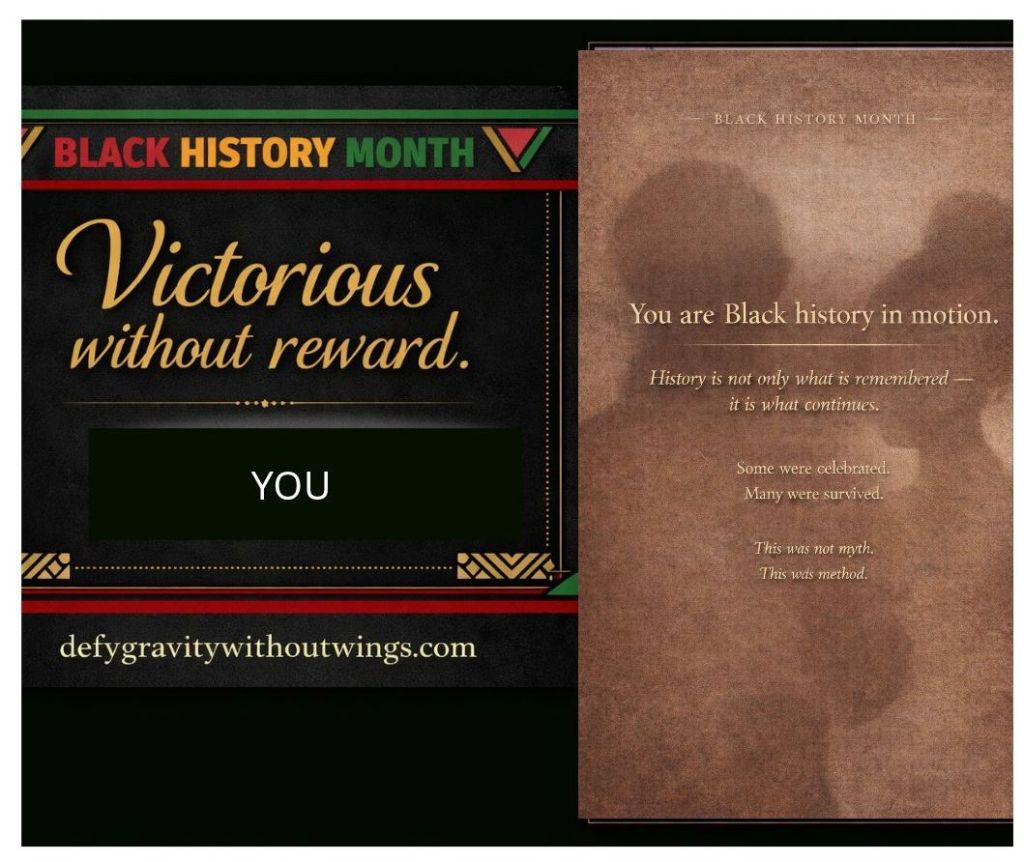
You Are Black History

Black history does not live only in textbooks, timelines, or framed portraits. It lives in you.


It lives in the prayers your grandmother whispered that no one recorded. It lives in the courage it took for your parents and grandparents to keep going when quitting would have been easier.

It lives in the way you show up to work, to church, to community, to family — even when the reward is unclear.


Black history is not only something that happened. It is something that is still happening.


It is made every time you choose dignity over bitterness. Every time you carry joy in a system that profits from your exhaustion. Every time you tell the truth — even quietly. Every time you endure, love, build, teach, heal, or believe anyway.


Some names were written down. Many were not.
Some stories were celebrated. Many were survived.
But history is not only what is remembered — it is what continues.


You stand on the shoulders of those who were victorious without reward. Those who served faithfully without applause. Those who planted seeds they would never live to see bloom.


Their courage flows through you.


And we have always known how to leave something behind.


Breadcrumbs on the ground when the path was uncertain. Hushpuppies tossed not as waste, but as wisdom — a way to distract danger long enough to keep moving. Cornrows braided tight to the scalp, not only as beauty or tradition, but as memory — paths etched into hair, holding maps to water, to safety, to freedom.


What could not be written down was carried. What could not be spoken aloud was encoded. What could not be protected by law was protected by love, community, and God.


This was not myth. This was method.
A people learning how to survive systems designed to erase them — by remembering anyway.


If you are still leaving breadcrumbs for those coming behind you… still marking the way quietly… still choosing faith, dignity, and care when no one is watching…
You are doing what has always been done.


You are part of a holy lineage of guidance and endurance. A living echo of the God who makes a way where none seems visible and leads His people forward, step by step.


“Let us not become weary in doing good, for at the proper time we will reap a harvest if we do not give up.”
— Galatians 6:9
“Your word is a lamp to my feet and a light to my path.”
— Psalm 119:105


If you are still standing, still hoping, still loving, still reaching for God and for one another — you are Black history in motion.
Not just because of where you came from, but because of how you choose to live.


We see you. We honor you. You matter.
Love, Chelle
Image

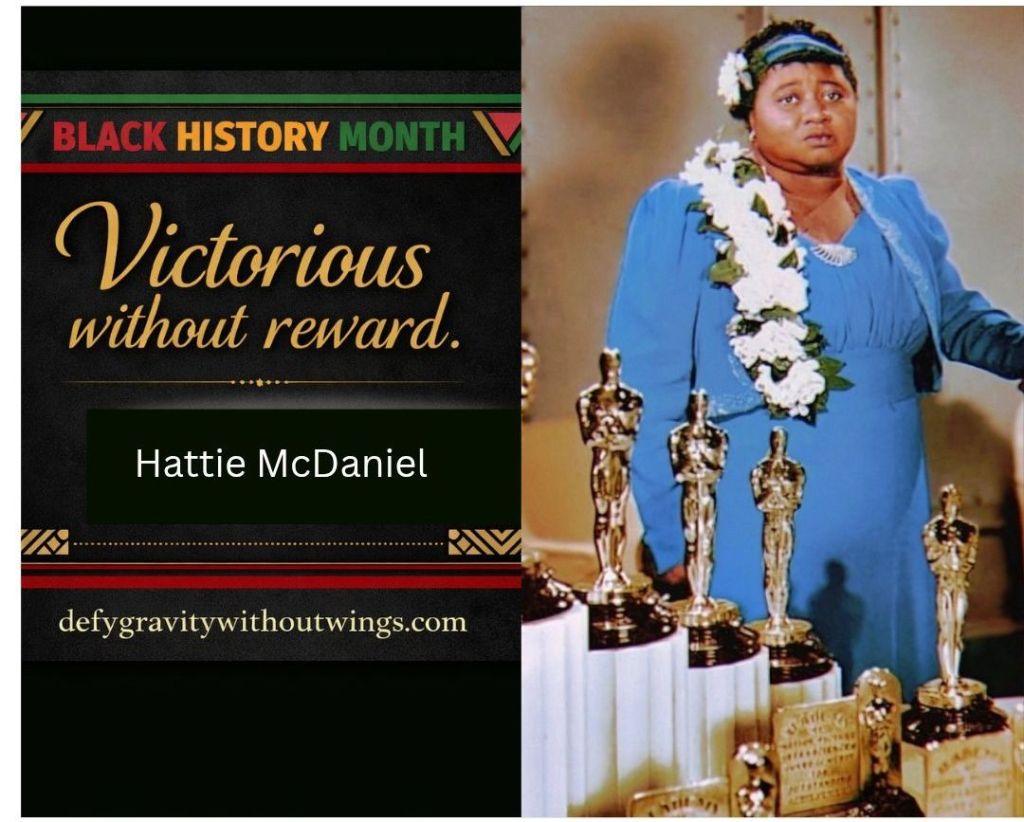
Hattie McDaniel, First In  A Segregated Room


In 1940, Hattie McDaniel became the first African American to win an Academy Award. She won Best Supporting Actress for her role as Mammy in Gone with the Wind (1939). She was also the first African American ever nominated for an Oscar. History shifted that night.


And yet, at the ceremony held at the Ambassador Hotel in Los Angeles, she was required to sit at a small segregated table against the wall, apart from her white castmates. Victory. With boundaries.


When the film premiered in Atlanta in 1939, Georgia’s Jim Crow laws barred Black cast members from attending. It is widely reported that her co-star Clark Gable objected strongly and threatened not to appear in protest. Accounts say Hattie encouraged him to attend, understanding the political climate and the fragile footing of her position in Hollywood. Public outrage from powerful allies could make headlines. But she would still have to live and work inside the system afterward. Strategy is not surrender.


MORE THAN MAMMY
Hattie McDaniel was born in Kansas to parents who had been enslaved.

She was among the first Black women to sing on American radio in the 1920s, a successful blues performer before Hollywood and recorded 16 blues sides between 1926 and 1929. She appeared in over 300 films, though many roles went uncredited. Her best known other major films are Alice AdamsIn This Our LifeSince You Went Away, and Song of the South.

She became one of the highest-paid Black entertainers of her era and later starred in the radio show Beulah, becoming one of the first Black women to headline a nationally broadcast radio program.

In 1952, she became one of the first Black women to star in a television series when Beulah moved to television.

She holds two stars on the Hollywood Walk of Fame — one for motion pictures and one for radio.


All of this was before Rosa Parks. Before Martin Luther King Jr. became a national figure. Before the Civil Rights Act.

Jim Crow was law. Black actors were largely confined to domestic or servile roles. Many within the Black community criticized those portrayals for reinforcing stereotypes.

Hattie’s response was pragmatic and pointed: “I’d rather play a maid than be one.”

Being first does not mean being free. McDaniel died of breast cancer on October 26, 1952, at age 59 in Woodland Hills, California. Her final wish to be buried in the Hollywood Cemetery was denied due to its segregation policy at the time.  Decades later, a memorial plaque was placed in her honor.

In  2006, she was honored with a US postage stamp, and in 2010, she was inducted into the Colorado Women’s Hall of Fame.

In 2006, the Academy replaced her long-missing Oscar, confiscated by IRS debt, with a replica, formally acknowledging her historic win.  The original was to have been displayed at Howard University but went missing in the 1970s

Notably, no other Black woman would win an Oscar for 50 years after Hattie. Not until Whoopie Goldberg won for Best Supporting Actress in Ghost.

Galatians 6:9

“Let us not grow weary in well doing: for in due season we shall reap, if we faint not.”


CARRY THIS WITH YOU
Sometimes the door that opens to you is imperfect. Sometimes the room is segregated.
Sometimes you are allowed in — but only to the edge.

Hattie McDaniel walked in anyway. Not because the system was fair. But because excellence inside limitation still moves history forward.


BREADCRUMB
What opportunity are you resisting because the conditions are not ideal? Being the first often means carrying contradictions so others can inherit clarity.


SALUTE
We see you, Hattie McDaniel — for becoming the first when the room was not ready, and for claiming victory in a nation that tried to seat you in the shadows.

Bread Crumbs — for those coming after us.
Victorious without reward. Still here.

Image

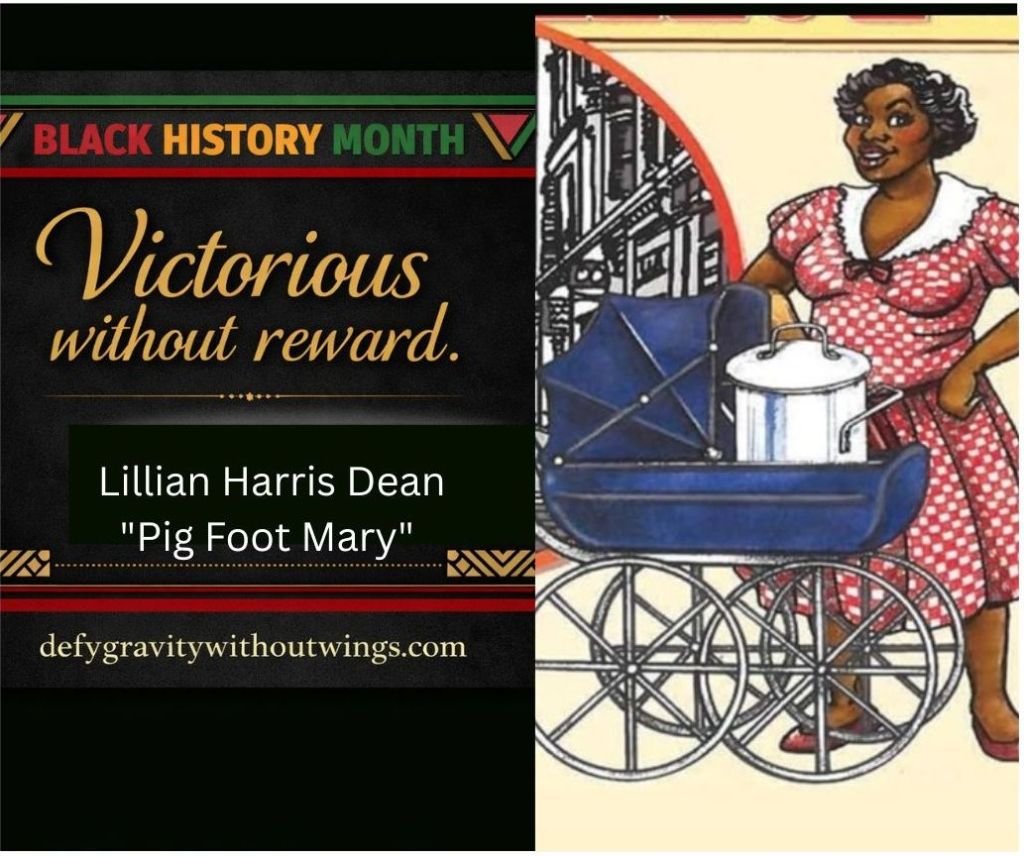
Pig Foot Mary: The Woman Who Pushed Her Future Down the Street


Before food trucks.  Before catering contracts.
Before pop-up kitchens. There was a formerly enslaved Black woman  pushing a baby carriage filled with pickled pig’s feet.

Her name was Lillian Harris Dean. History remembers her as Pig Foot Mary. And what some would have called scraps, she called strategy.

Born in Mississippi around 1870. She migrated north during the Great Migration era. She was reported a woman of large stature (striking fear in even some men).

THE BABY CARRIAGE BEGINNING

After emancipation, economic opportunity for Black women was painfully narrow. Formal loans were not available. Property ownership was rare. Protection under the law was inconsistent at best.

So Mary did what resilient women have always done. She looked at what she had.
She cooked pig’s feet — inexpensive cuts that working people could afford — and loaded them into a baby carriage. That’s  right no baby, just a baby carriage purchased with two of the five dollars she arrived with and a tin pot she brought with her.

Then she walked the streets of Washington, D.C., selling directly to laborers, porters, and government workers who had migrated from the South but desperate for a taste of home cooking lacking in the industrial north.

No storefront. No investors. No safety net.
Just legs, grit, and a carriage. That carriage gave her mobility. Mobility gave her customers. Customers gave her capital.
Capital gave her options. Consistency built reputation. Reputation built revenue.

From those early street sales, though unable to read, she negotiated contracts with suppliers, opened restaurants, operated boarding houses, acquired property, and became one of the wealthiest Black women in New York City  during her time. She later married a prominent black lawyer she had hired to keep her financial empire safe.

Later in life, she faced legal troubles that interrupted her business, a common vulnerability for Black entrepreneurs in that era. When her power and influence started to invade beyond the black community and into  white upper Manhattan,  a racist court system convicted her of running a disorderly house.    After her release from prison, she retired to California.

She did not inherit influence. She built it.
She did not wait for approval. She moved.

Pig Foot Mary represents a pattern we see over and over in Black history:
Innovation born from restriction.
Mobility created from limitation.
Enterprise rising from overlooked ingredients.

She took something humble and made it sustaining.

“She considers a field and buys it; out of her earnings she plants a vineyard.” — Proverbs 31:16

Mary did not own fields at first. She owned a route. But the principle is the same.
Use what you have. Work what you have.
Move what you have.

CARRY THIS WITH YOU
You may be waiting for a storefront when all you have is a carriage. Push anyway.

You may be waiting for funding when all you have is a recipe. Cook anyway.

You may be waiting for someone to validate the vision. Walk anyway.

BREADCRUMB

Sometimes the business plan is wrapped in something people underestimate. And sometimes the thing you’re pushing… is actually pushing you into destiny.

We see you, Lillian Harris Dean for turning a baby carriage into a business model. We see you for feeding working hands and building wealth from what others discarded.

Bread Crumbs — for those coming after us.
Victorious without reward. Still here.

Image

Henry Box Brown – He Mailed Himself To Freedom

In 1849, an enslaved man in Virginia made one of the most daring escapes in American history. His name was Henry Box Brown.

Born around 1815 in Louisa County, Virginia, Brown was enslaved by John Barret, a former mayor of Richmond. After Barret’s death, Brown was sent to Richmond and hired out to work in a tobacco warehouse. He married while enslaved. He had children.

In 1848, his wife and children were sold to a plantation in North Carolina. That loss changed everything.

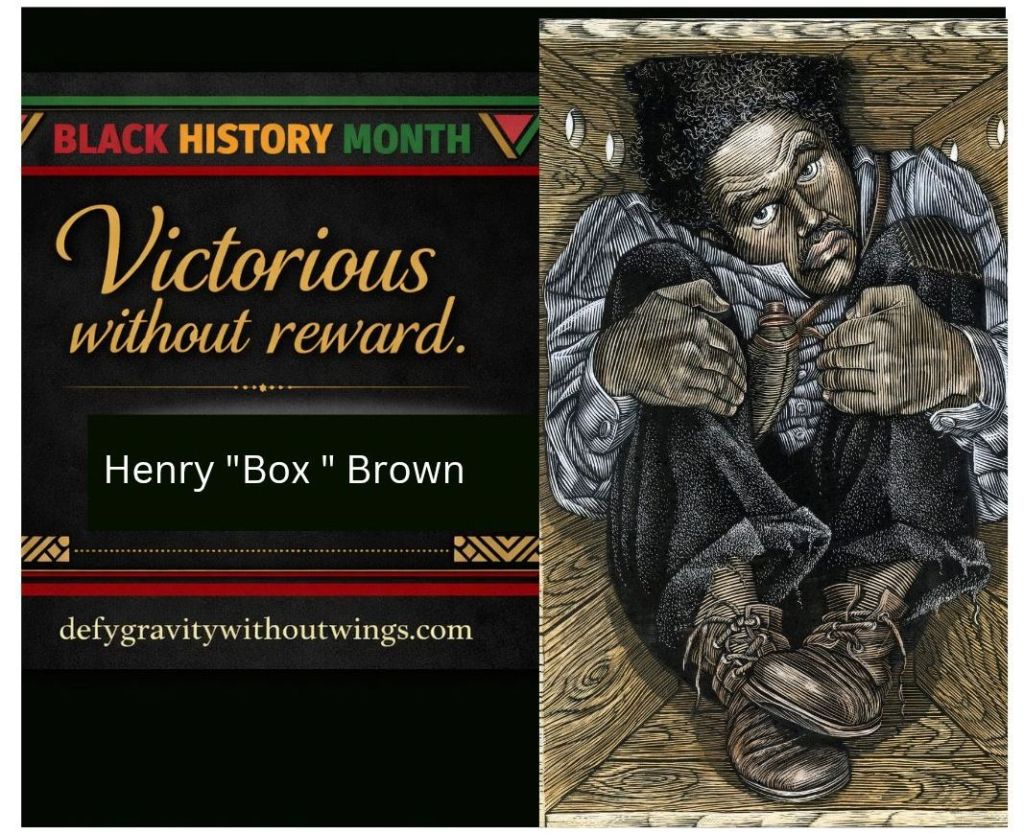
On March 23, 1849, Brown arranged an extraordinary plan with the help of free Black and white abolitionists. He had himself sealed inside a wooden crate measuring approximately three feet long, two feet wide, and two and a half feet deep. The box was labeled “Dry Goods.”

It was shipped from Richmond, Virginia, to Philadelphia, Pennsylvania, via Adams Express Company. The journey lasted 27 hours. The crate traveled by wagon, railroad, steamboat, and carriage. At times it was placed upside down. Brown later wrote that blood rushed to his head and he feared suffocation. To steady himself, he sang hymns.

When the box was opened in Philadelphia at the Anti-Slavery Office, Brown stepped out alive and reportedly greeted the astonished men in the room with calm composure.
His escape was immediate national news.

After gaining freedom, Brown became an abolitionist lecturer. He traveled throughout the Northern states, speaking about slavery and reenacting his escape by climbing into a replica box during performances.

Following the passage of the Fugitive Slave Act of 1850, which increased the risk of capture even in free states, Brown moved to England. He remained there for more than two decades, performing as a speaker, showman, and later as a magician, continuing to tell his story.

He eventually returned to the United States later in life and remained a public performer until his death, believed to have occurred in 1897.

Henry Box Brown did not wait for rescue.
He engineered it. He endured confinement to secure freedom. He turned survival into testimony. He transformed a shipping crate into a symbol of resistance.

His story remains one of the most vivid examples of self-emancipation in American history.

Psalm 18:19
“He brought me out into a spacious place; he rescued me because he delighted in me.”


CARRY THIS WITH YOU
Freedom sometimes requires courage that feels impossible. Do not underestimate what can happen when resolve meets faith.


BREADCRUMB
When systems close in, imagination becomes strategy. When doors are locked, courage builds another exit. History remembers those who refused to accept chains as final.


SALUTE
We honor Henry Box Brown, whose 27-hour journey inside a wooden crate became a permanent witness to the will to be free.
We salute the man who trusted movement over fear, faith over despair, and action over surrender.

Your box became a doorway.
Your confinement became testimony.
Your name remains a symbol of self-determined freedom.


Bread Crumbs — for those coming after us.
Victorious without reward. Still here.

Image

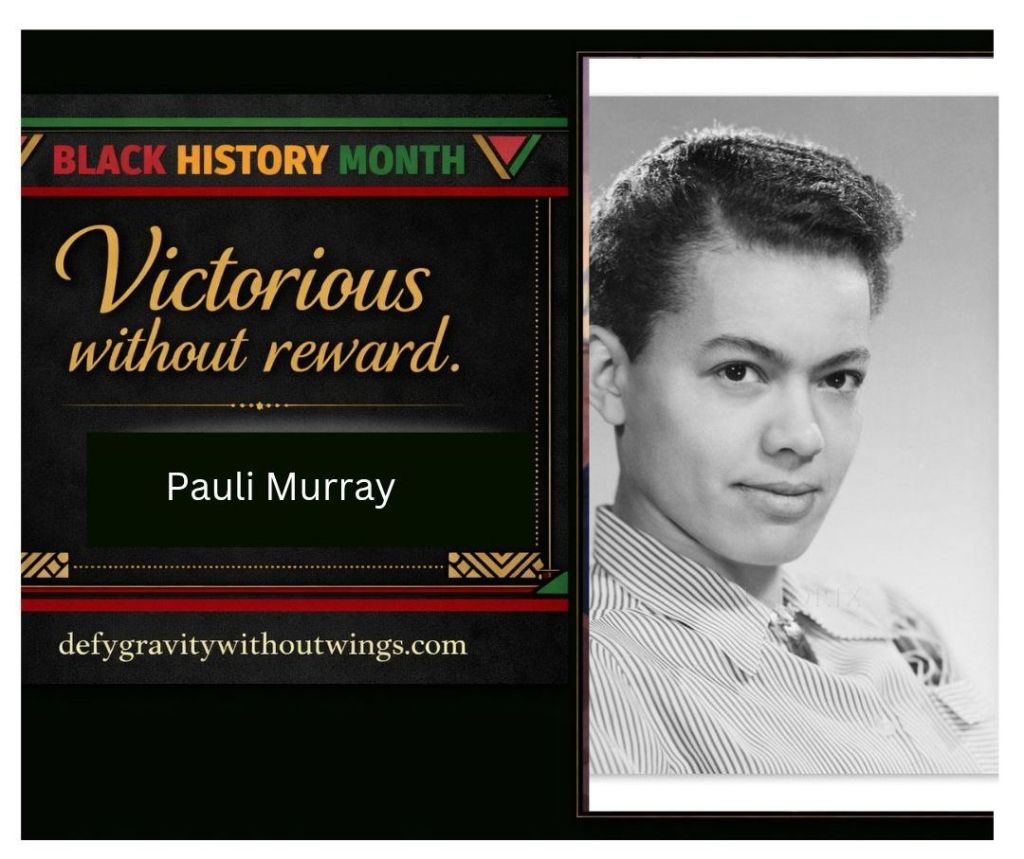
Pauli Murray – She Was The Blueprint

Before the Supreme Court corrected segregation, before women stood firmly in constitutional protection, before pulpits widened for Black women Pauli Murray had already written the argument.

At Howard University School of Law in the 1940s, she challenged the foundation of “separate but equal.” While others argued for better facilities, Murray insisted segregation itself violated the Equal Protection Clause of the Fourteenth Amendment.
Her professors thought it too bold.

Years later, that reasoning formed the backbone of Brown v. Board of Education. Thurgood Marshall reportedly called her earlier research “the Bible” of the civil rights movement. She was not the headline.
She was the framework.

In 1965, she co-authored a groundbreaking paper arguing that the Fourteenth Amendment prohibited discrimination based on sex. When Ruth Bader Ginsburg later argued landmark gender equality cases, she cited Murray’s work directly.
Again — blueprint.

In 1966, she helped co-found the National Organization for Women, shaping modern women’s advocacy.

And in 1940, long before Rosa Parks became a household name, Murray was arrested for refusing to move to the back of a segregated bus. Her resistance was deliberate and strategic.

Then came the church.
In 1977, she became the first Black woman ordained as an Episcopal priest. The ceremony took place in the same chapel where her grandmother, born into slavery, had once been baptized. The descendant of the enslaved stood at the altar as clergy.

History does not always move through loud voices. Sometimes it moves through disciplined minds and stubborn faith.

Murray battled depression. She navigated belonging in spaces slow to affirm her. She lived at intersections the world had not yet learned to name. But she did not step away.
She studied. She wrote. She organized. She stayed.

And because she stayed, the law shifted.
Because she wrote, others argued and won.
Because she persisted, doors opened wider than they had ever been before.

Prophetic work is not always applause.
Sometimes it is architecture.

Isaiah 1:17
“Learn to do right; seek justice. Defend the oppressed.”


CARRY THIS WITH YOU
You may not be the headline.
But you might be the hinge.
Build anyway.
Stay steady.
History often rests on frameworks laid by those who refuse to quit.

BREADCRUMB
Sometimes the victory is not in the spotlight but in the structure. Sometimes the reward is not applause but impact. Write the argument. Lay the foundation. Stay in the room.


SALUTE
We honor Pauli Murray — legal architect, movement strategist, priest, and prophet.
We salute the mind that shaped arguments before the nation was ready to hear them.
We salute the courage that resisted before resistance was popular. We salute the faith that answered a call even when institutions hesitated.

Your blueprint stands.
Your work endures.
Your name is not a footnote.

Bread Crumbs — for those coming after us.
Victorious without reward. Still here.

Image

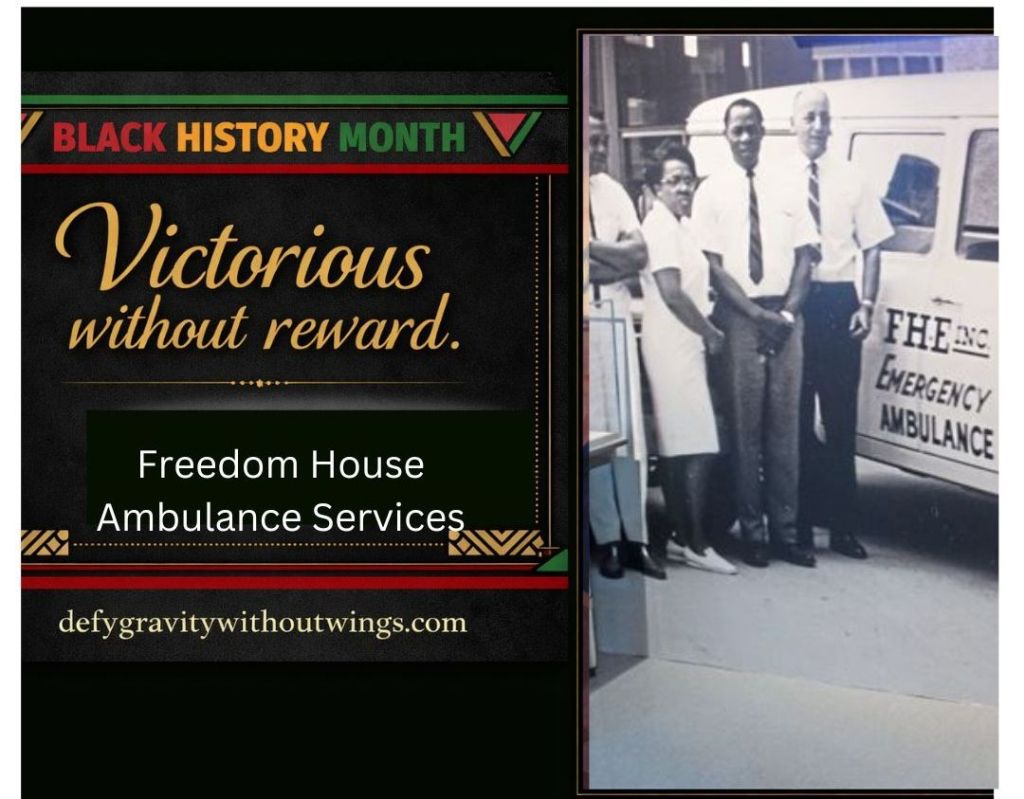
Freedom House Ambulance Service.  They Built The System

In the late 1960s, Pittsburgh’s Hill District was a historic Black neighborhood — culturally rich, economically battered.

Urban renewal had displaced families and shuttered businesses. Hospitals were distant. Emergency transport was often handled by funeral homes or police wagons with little medical training. In Black neighborhoods across America, ambulance service frequently meant delay without treatment.

People were dying not only from injury —
but from the absence of care.

In 1967, that absence met resistance.

Out of the Hill District came the Freedom House Ambulance Service — one of the first professionally trained paramedic units in the United States.

Under the medical vision of Peter Safar, a pioneer of CPR and modern resuscitation, and through the clinical leadership of Nancy Caroline, Freedom House became more than an experiment.

Nancy Caroline did not observe from a distance.
She wrote curriculum.
She rode in the ambulances.
She trained the men personally.
She demanded mastery.

She helped build one of the nation’s first structured paramedic training programs and later authored Emergency Care in the Streets, a foundational EMS textbook used across the country and internationally.

The standards were not lowered for the Hill District.
They were raised.

The men recruited into Freedom House were largely unemployed Black residents. Some were Vietnam veterans. Many had been labeled “untrainable.”

They became among the first paramedics in America.

Among the early paramedics were:

John Moon
Mitchell Brown
Timothy McCall
Wesley Lee
Walter Brown
Dennis Williams

And others whose names history is still restoring.

They mastered advanced cardiac life support, airway management, trauma stabilization, and mobile intensive care techniques. They responded to thousands of calls. Their survival rates were strong. Their professionalism undeniable.

They were not ambulance drivers.
They were architects of modern emergency medicine.

In 1975, the City of Pittsburgh dissolved Freedom House and created a new municipal EMS system.

The training model remained.
The protocols remained.
The infrastructure remained.

The leadership did not.

The new city EMS became predominantly white.
The Black paramedics who had proven the model were no longer centered in the system they built.

Their experiment became policy.
Their innovation became ordinance.
Their presence became history.

Public memory credited institutions.
The Hill District remembered who carried the stretchers.

Several Freedom House members continued careers in emergency medicine and public service. Others carried the quiet distinction of having transformed pre-hospital care long before the country was ready to credit them.

Modern EMS systems and structured 911 response protocols carry their fingerprints.

They were not a pilot program.
They were a foundation.

“The stone the builders rejected has become the cornerstone.” — Psalm 118:22


BREADCRUMB
Sometimes the rejected become the infrastructure.


We see you, Freedom House:
John Moon.
Mitchell Brown.
Timothy McCall.
Wesley Lee.
Walter Brown.
Dennis Williams.
And the others whose names deserve light.
You brought intensive care into neglected streets. You professionalized emergency response in America.


You turned crisis into curriculum.

Bread Crumbs — for those coming after us.
Victorious without reward.
Still here.

Image

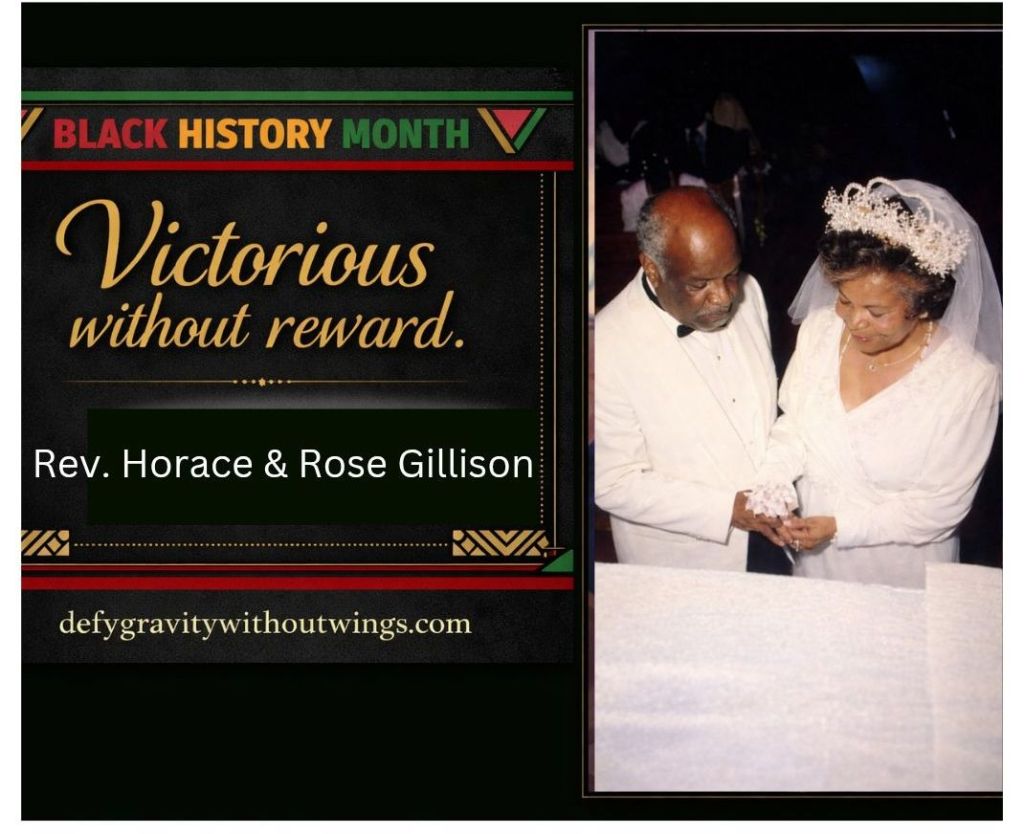
Horace And Rose: A Civil Rights Love Story

( Condensed Excerpt)

Horace & Rose Gillison — A Civil Rights Love Story

For Black History Month, I want to honor two people whose legacy shaped not only my family, but the city of Richmond itself: Rev. Horace Gillison and Rose Gillison, my great-uncle and great-aunt. Their civil rights work did not always make headlines—but it changed systems.


Before they ever met, they came from very different worlds. Horace was a Virginia country boy with barely a sixth-grade formal education, big ideas, and—by most accounts—a big mouth. Others saw his limited schooling and dismissed him. Horace saw no limits at all. He believed doors were meant to be opened, systems challenged, and no one was qualified to tell him what could not be done.


Rose was polished and poised, barely grown, hailing from North Carolina before family loss dictated a move to Virginia to live with cousins. Where others saw Horace as rough around the edges, Rose became—for him—a beautiful princess of a challenge. And Horace loved a challenge.


Rose maintained a bail fund solely for Horace’s protests and sit-ins, understanding that resistance required preparation as much as courage. Horace challenged Richmond institutions like Thalhimers and Miller & Rhoads, demanding they hire college-educated Black women on their sales floors. He later took great joy in seeing that pressure bear fruit when I secured my first professional job in their credit offices—proof that justice delayed is not justice denied.


He rattled newspapers by insisting they run his ads—with his beautiful Black skin in all its glory—or face legal action. He was also arrested for earning a pilot’s license in Virginia and flying a plane to Culpeper so his mother could experience his joy of flight.

He was arrested again for attempting to sell a house to a Black family in the then all white neighborhood I now live in. He was rumored to have taken black families to house showings in rented limousines.

When Firestone Tire—a place where Black customers could barely purchase goods, let alone work—hired him as their first Black salesman, Horace did not simply succeed. He excelled.

Together, Horace and Rose ran soup kitchens, Christian charities, wig shops, and a modeling school that taught Black women poise, job readiness, and confidence—quietly fueling economic growth in local Black families. Rose’s porcelain beauty and charm made her the perfect choice to become one of the first Black spokespersons for Carnation Milk during the war. Horace ministered churches and broke corporate barriers as the first Black member of the Richfood board.

Their love story was just as intentional as their activism.

They met at a birthday party—for Horace’s then girlfriend. Upon seeing Rose, Horace declared, “That’s the woman I will marry.”

Rose did not make it easy. Before accepting his proposal, she handed him a list: get a good job, secure transportation, build a house. Each time Horace returned with a checkmark, she added another requirement—a lesson she later passed down to the women in our family: know your worth and make him work for it.

When Horace finally had enough, he arrived with friends, a new dress, and a pair of nylons—nearly impossible to find at the time—and dragged her to the courthouse.

They would reach their fiftieth wedding anniversary before Rose declared they finally had what she considered a proper wedding. Loving attended by 4 generations of the Gillison family

Though they never had biological children, Horace and Rose adopted two, fostered many more, and opened their lives wide enough to shape generations. Their influence rippled through the Gillison family and beyond—teaching love without limitation, legacy without bloodlines, and the quiet truth that family is often chosen, cultivated, and sustained by intention.

Lives, I believed patterned straight from the Bible;
“Learn to do good; seek justice, correct oppression.” — Isaiah 1:17
“Let justice roll down like waters, and righteousness like a mighty stream.” — Amos 5:24
“Two are better than one… because they have a good reward for their labor.” — Ecclesiastes 4:9


Horace learned to do good and refused to wait for permission. Rose ensured that righteousness had structure and love behind it. Together, they made justice move.


BREADCRUMB
Justice does not roll on its own.
Someone has to push.
Someone has to prepare.
Someone has to stand side by side when the system pushes back.


Legacy does not always look like applause.
Sometimes it looks like a bail fund.
Sometimes it looks like insisting your image run in full color.
Sometimes it looks like flying anyway.


SALUTE
We see you, Rev. Horace Gillison and Rose Gillison — for seeking justice, correcting oppression, and laboring together so the stream would keep moving and building an extended family that walks in your shoes while still standing on your shoulders.

Bread Crumbs — for those coming after us.
Victorious without reward. Still here.


This is a condensed excerpt from the forthcoming work,

Horace and Rose: A Civil Rights Love Story.

Love,
Chelle
defygravitywithoutwings.com

Image

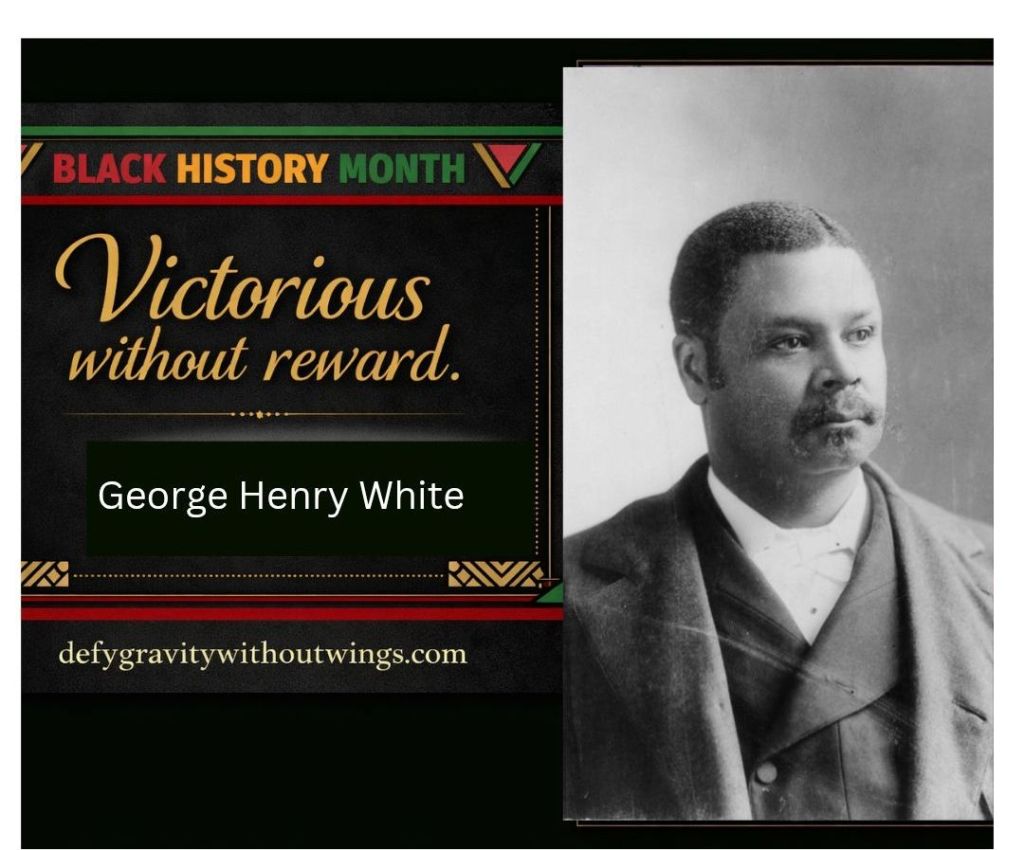
George Henry White: The Last Voice Before the Silence

George Henry White (1852–1918) was the final African American to serve in the United States Congress at the close of Reconstruction. When he left office in 1901, Black representation in Congress disappeared for nearly three decades.

Born in Bladen County, North Carolina, to a free father and a mother who had been enslaved, White came of age in the uncertain promise of Reconstruction. He attended Freedmen’s schools, graduated from Howard University in 1877, became a teacher, then a lawyer, and entered public service during a narrow window when Black political participation was still possible in the South.

Elected to the U.S. House of Representatives in 1896 and reelected in 1898, he served as the only Black member of Congress during his tenure.

While in office, he:

• Introduced the first federal anti-lynching bill in 1900
• Spoke against voter suppression and racial violence
• Defended equal protection under the law
• Warned that disenfranchisement would wound the nation itself

As Jim Crow laws tightened and Black voters were systematically removed from the ballot, White chose not to seek reelection in a system engineered to silence his people.

On January 29, 1901, he delivered his farewell address. In it he declared:

“This… is perhaps the Negroes’ temporary farewell to the American Congress; but… Phoenix-like he will rise up some day and come again.”

It was not wishful thinking. It was vision.

Twenty-eight years later, Oscar Stanton De Priest returned Black representation to Congress in 1929. Since that return, more than 160 African Americans have served in the United States Congress.

White’s prophecy stretched further still. The groundwork laid by those who endured Reconstruction and its collapse helped clear the path for Thurgood Marshall on the Supreme Court, Barack Obama in the White House, and Ketanji Brown Jackson becoming the first Black woman Justice of the United States Supreme Court.

He did not see those milestones.

But he named the future in a moment designed to erase it.

After Congress, White practiced law, helped establish the Black town of Whitesboro, New Jersey, and founded a Black-owned bank in Philadelphia.

He was the last of an era.
And the prophet of the next one.


Scripture

“Write the vision and make it plain upon tables, that he may run that readeth it.
For the vision is yet for an appointed time… though it tarry, wait for it;
because it will surely come.”
— Habakkuk 2:2–3


BREADCRUMB

Sometimes the assignment is not to hold the seat,
but to hold the prophecy.


SALUTE

We see you, George Henry White —
for legislating in hostile air,
for introducing justice when it would not pass,
for declaring return when disappearance looked certain.

You stood at the edge of erasure
and named the future anyway.

Bread Crumbs — for those coming after us.
Victorious without reward.
Still here.

Image

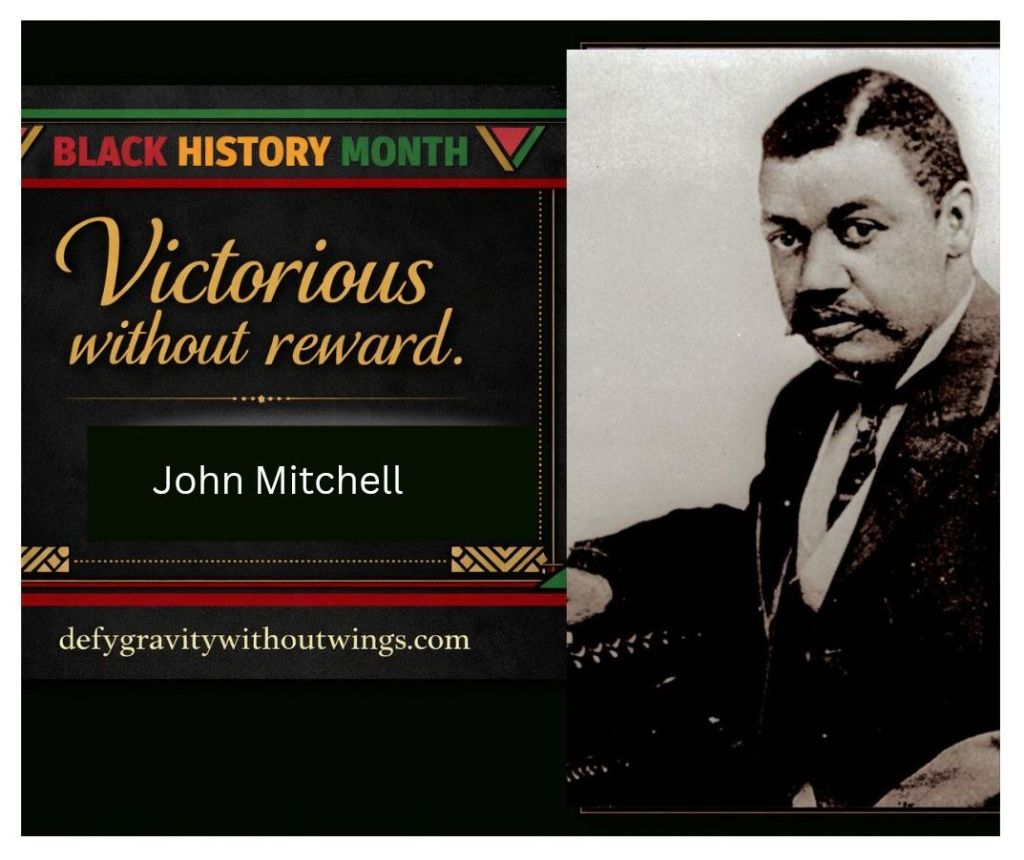
John Mitchell : The Editor Who Refused One Lane

Before panels. Before pundits. Before public relations teams.

There was a young editor in Richmond, Va. who believed ink could confront power.

John Mitchell Jr. took over the Richmond Planet at just 21 years old and turned it into one of the boldest Black newspapers in America.

He investigated lynchings when others excused them.
He printed names when silence was safer.
He challenged railroads, city officials, and mobs with documented truth.

And when threats came, he did not retreat quietly. History records that he publicly confronted intimidation and reportedly carried a pistol — because truth-telling in Virginia required readiness.

But Mitchell did not stop at journalism.

He helped lead Mechanics Savings Bank in Jackson Ward because he understood something deeper:
Information without economic power is fragile. He believed Black communities needed more than headlines.
They needed institutions.

And in 1921, he did something audacious.
He ran for governor of Virginia.
He did not win.
But the audacity mattered.

He refused one lane.
Journalism.
Banking.
Politics.
Different tools. Same mission.

The Richmond Planet ceased publication in 1938.

And just last week, the Richmond Free Press — another powerful Black Richmond institution and sister in spirit — announced its final issue.

Different centuries. Same soil.
Printing presses may rest. Witness does not.

CARRY THIS WITH YOU
Where have you limited yourself to one lane when your calling may require more? Mitchell reminds us that leadership is not about title — it is about refusal to shrink.

Speak up and judge fairly; defend the rights of the poor and needy.” — Proverbs 31:9

BREADCRUMB
Sometimes the work God gives you is not just to speak truth, but to build structure strong enough to hold it.

SALUTE
We see you, John Mitchell Jr. — for confronting power, building institutions, and daring to run.

Bread Crumbs — for those coming after us.
Victorious without reward. Still here.

Image

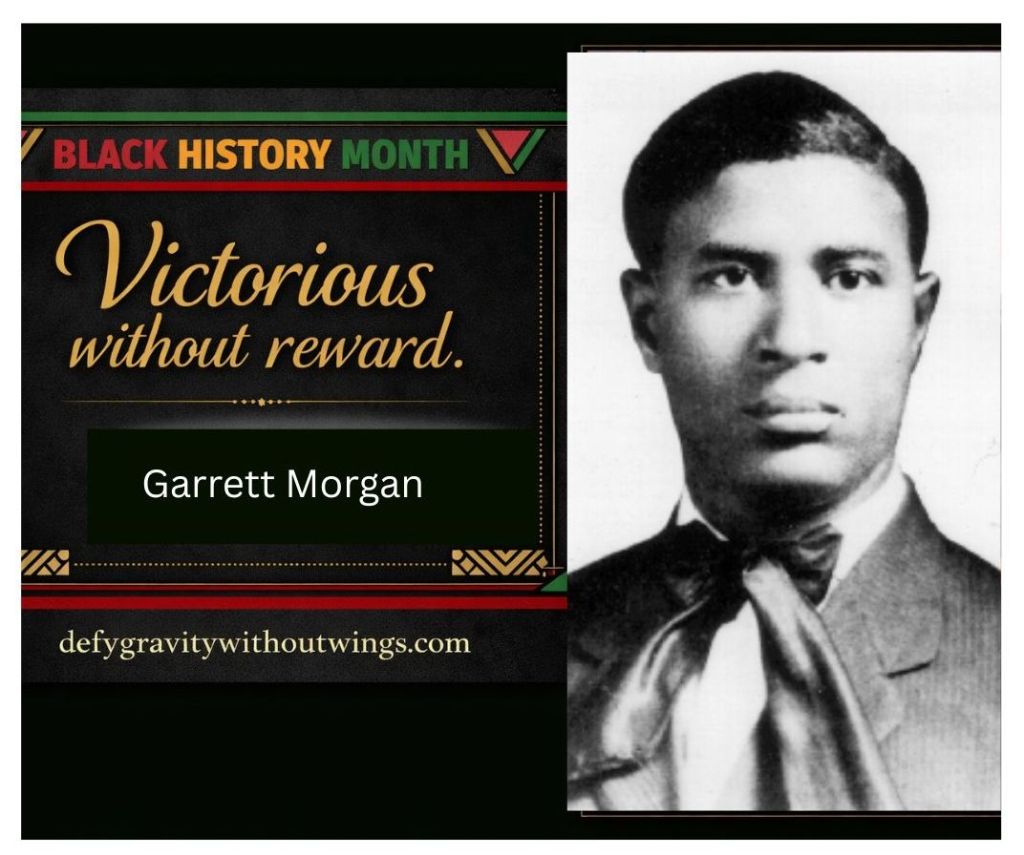
Garrett Morgan — The Man Who Built What Was Missing

He was born in 1877 in Paris, Kentucky, the son of formerly enslaved parents. His formal education ended early, but his learning did not. As a young man, he moved north and eventually settled in Cleveland, Ohio, where he worked as a sewing machine repairman. Watching machines fail and fixing them taught him how systems worked and how they could be improved.

Now here’s something you may not know.

Before the safety hood and the traffic signal, Garrett Morgan developed an early chemical hair refining cream that loosened curl patterns and funded his manufacturing company. The discovery reportedly began while he was working with sewing machine lubricants and noticed how a chemical solution altered fabric fibers. Curious and observant, he experimented further — first testing a diluted version on a dog’s hair before refining it for human use. The results were dramatic enough to build a thriving business. It became part of a broader wave of Black innovation in the early 20th century that included pioneering women entrepreneurs in the beauty industry.

His more recognized contributions came from witnessing people placed in danger without protection.

He ivented a safety hood in 1912, an early form of the modern gas mask  and demonstrated its effectiveness during the 1916 Lake Erie tunnel explosion, helping rescue trapped workers.  His safety hood influenced firefighter equipment and later military safety gear .


Most notably, he invented an improved traffic signal in 1923 after witnessing a severe automobile accident. He added a caution phase between stop and go, reducing collisions. He then sold the traffic signal patent to General Electric.


Sadly, he faced racial barriers when marketing inventions and sometimes was forced to use white actors for demonstrations.

Garrett Morgan did not invent for applause. 
He invented because danger was preventable and someone had to act.  He built solutions so essential they became invisible 

SCRIPTURE THREAD

“Discretion will protect you, and understanding will guard you.” — Proverbs 2:11 

Garrett Morgan’s wisdom became protection. His understanding became guardrails long before the world learned to credit him.

CARRY THIS WITH YOU

What risk have you noticed that others have learned to tolerate? Morgan reminds us that calling does not always arrive as a dream. It often arrives as a problem you refuse to ignore.

BREADCRUMB

Sometimes the work God gives you is not to be seen, but to quietly make the way safer.

SALUTE

We see you, Garrett Morgan — for building protection where none existed. 

Bread Crumbs — for those coming after us. 
Victorious without reward. Still here.