Image

Cathay Williams: Known By God. Hidden By History

Cathay Williams is one of my favorite Black history figures — not because she is well known, but because she is not.


I was first introduced to her by my nephew, Remmie, during one of the hardest seasons of my life — while I was going through breast cancer. He told me her story and then said something that stopped me cold.


He said I reminded him of her.


Like Cathay, I hid some of the pain I was really going through — not out of denial, but out of love.
Not because the fight wasn’t real, but because I wanted to encourage others who were fighting too.


Cathay Williams was born enslaved in Missouri around 1844. During the Civil War, she followed the Union Army as a cook and laundress. But when the war ended and the Army opened its ranks to Black men only, Cathay did something unthinkable.


She cut her hair,

wrapped her body,

changed her name to William Cathay

— and enlisted.


For nearly two years, she served as a soldier in the 38th U.S. Infantry, one of the original Buffalo Soldier regiments. She marched. She guarded. She endured brutal conditions — all while hiding her identity in a world that would not make space for who she truly was.


Eventually, illness exposed what society refused to imagine:
a Black woman had carried a rifle, worn the uniform, and served her country faithfully.


She was discharged — not for lack of courage, but for daring to exist outside the rules.


Cathay Williams lived a life where survival required disguise.
Not because she lacked strength — but because the world lacked vision.


There are seasons when God calls people to serve before the world is ready to name them correctly.
Cathay was known as William by the Army.
But she was known fully by God.
“The Lord does not see as mortals see; they look on the outward appearance, but the Lord looks on the heart.” — 1 Samuel 16:7


History overlooked her.
The Army dismissed her.
But heaven recorded her obedience.
Some call her story deception.
Others call it desperation.


But I call it courage under constraint.


And here is the part history often whispers instead of says out loud:
Cathay Williams never received military honors.
She never received a pension.
In 1891, after her health had been permanently damaged by her service, she applied for a military disability pension. It was denied. She died poor and largely forgotten.


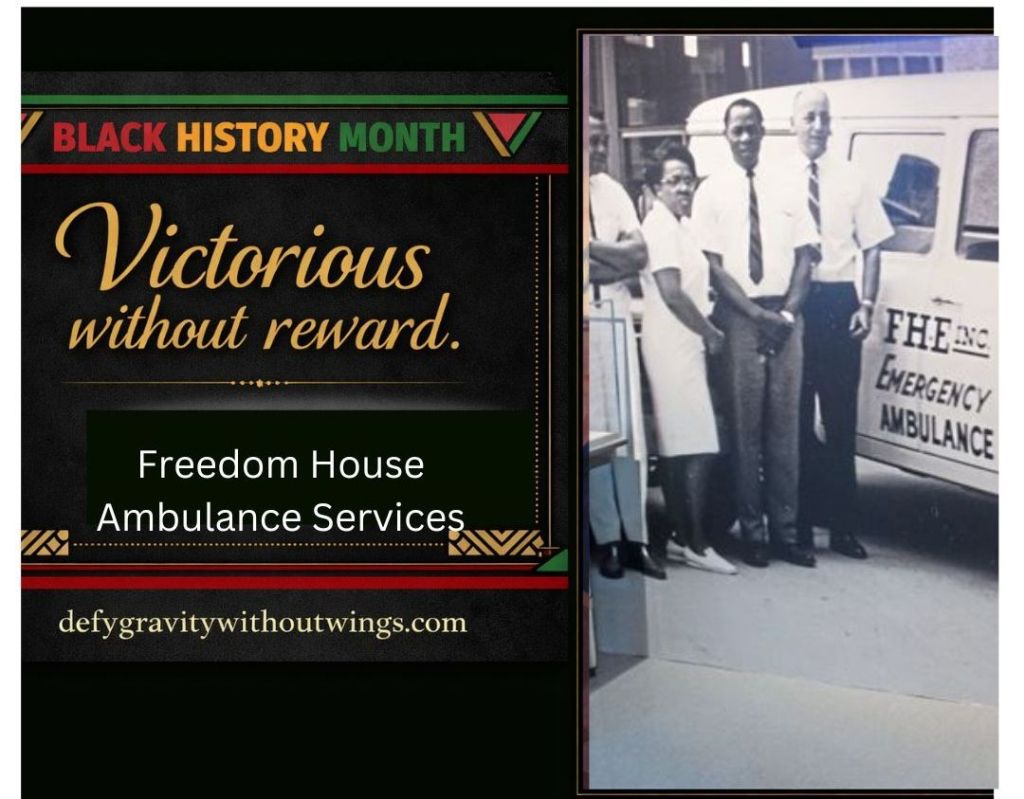
She was victorious without reward.


Cathay Williams did everything she was asked to do — and more.
She served faithfully.
She endured quietly.
She finished her assignment.


Her story reminds us that victory and recognition are not the same thing.
“Well done” does not always come from the systems we serve — but it is always recorded by God.
She didn’t fight for history.
She fought through it.
And God did not waste a single step she took.


She did not live to see her story told.
But her life still speaks.


And for those who have ever given their strength, their hope, or their encouragement without guarantee of return:
You may be unrewarded by the world —
but you are not unseen by God.


We see you, Cathay.
We salute you.


Love, Chelle

About the History in Bread Crumbs
Bread Crumbs reflections are grounded in documented historical records, including archives from the U.S. National Archives, Library of Congress, court records, contemporaneous newspapers, and first-person accounts. Spiritual reflections and personal connections are clearly marked as such and are offered with respect for the historical record.

.

Image

My Survivor Song Knows My Name.

I was listening to one of my favorite songs—“He Knows My Name”—and my emotions spilled out before I could stop them.
It happens like that sometimes.
After a rough moment.
After allowing myself—again—to be hurt by someone who never really took the time to know me.
Not my heart.
Not my story.
Not the way I learned to survive.


I didn’t even realize how much I was carrying until that song started playing.
And suddenly, there it was—grief, relief, truth—all at once.


Because here’s the greatest thing about God:
He knows my name.
And not just my name—He knows my nickname too.
The one spoken by people who love me.
The one I only answer to when I feel safe.


He knows me with the mask—the strong one, the capable one, the superhero version that keeps showing up.


And He knows me without it—the tired, tender, still-hoping version I don’t always let the world see.


The real me.
Not the performance.
Not the usefulness.
Not the resilience résumé.


This song reminds me that I don’t confuse God.
I don’t disappoint Him by being human.
I don’t have to explain myself into being worthy of love.
It’s my Survivor Song because it tells the truth I forget when I’m hurting:
I am already known.
Already named.
Already held.
And when I rest in His arms, I don’t need armor.
I don’t need a script.
I don’t need to be brave for one more minute.
I am safe.


With and without the mask.
With and without the cape.
Somewhere along the way, I learned to confuse being needed with being known.
But God never made that mistake.


So today, if you’re feeling unseen—
if you’re nursing the quiet ache of being misunderstood—
let the reminder rise up like a song in your chest.
You are known by name.
You are held without pretending.
You are safe in His arms.
And sometimes… surviving looks like letting yourself be known—first by God, and then by yourself.
“I have called you by name; you are Mine.” — Isaiah 43:1


Love, Chelle


Image

Reframing The Heart

Somewhere along the way, many of us learned a quiet lie —
not from God, but from human interpretation.

We learned it from what was modeled, praised, or rewarded.
From homes, churches, systems, and relationships that mistook endurance for faithfulness and exhaustion for virtue.


Most people were doing the best they could with what they knew — but they were still human.
And without realizing it, we carried those lessons into our understanding of God.

I know this because I have done it myself.

I confused being loved with doing to be loved.
I mixed up belief with performance.
And I carried that misunderstanding into my faith and called it obedience.

But that is not God’s heart.

God does not delight in depletion.
He delights in wholeness.

Jesus did not invite people to follow Him so they could replace Him.
He did not ask them to become saviors, fixers, or endless wells.
He asked them to come — as they were — and to unlearn what fear had taught them about love.

Scripture never praises burnout.
It praises obedience rooted in love, not fear.
It honors service that flows from being seen — not from trying to be noticed.

When Jesus said, “Come to Me, all who are weary and burdened, and I will give you rest,”
He was not offering a reward for those who gave the most.
He was correcting what people had been taught about God.

If your kindness comes from feeling unseen,
if your faith feels like constant output,
if your love has slowly turned into self-erasure —
that may be something you learned, but it is not something God requires.

God does not need you emptied to be faithful.
He desires you rooted, restored, and whole.

Being needed is not the same as being loved.
And God’s love has never required you to disappear.

God, help me separate Your voice from the voices that shaped me.
Heal what I learned in survival mode.
Teach me Your heart — not a human version of it.

Love, Chelle
DefyGravityWithoutWings.com
Image

When the Tool Ate the Manuscript (and Almost My Heart)

Let me tell you what almost took me out.

For weeks—WEEKS—I have been doing the holy, unglamorous work of editing and reorganizing a soon-to-be book.
Moving chapters.
Fixing commas that think they run things.
Re-threading stories.
Listening for where God was nudging—and where I was just rambling.

This was faithful work. Quiet work.
The kind nobody claps for.

And then…
The tool I use to assist and “catch mistakes” decided to eat my manuscript.

Not nibble.
Not misplace a paragraph.
Eat it.

I have survived cancer, grief, caregiving, deadlines, and ice storms—but watching weeks of careful labor vanish off a screen?
That will make your chest tighten and your salvation flicker for a hot second.

I sat there spiraling:
Did I just lose half a book?
Am I behind now?
Did I just waste weeks of my life arguing with chapter headings?

Cue the dramatic sigh.
Cue me talking to my laptop like it had personally betrayed the family.

And then—grace, wearing sneakers—slid in sideways and whispered:

Your work is not gone.
You are not behind.
We did not lose half a book.

Because real work doesn’t live only in files.
It lives in muscle memory, lived experience, and a heart that’s been steeped in the message.

And Scripture backs this up.

“So I will restore to you the years that the swarming locust has eaten…”
— Joel 2:25

God restores years, not just results.
Restoration doesn’t always look like retrieval.
What God restores often comes back stronger.

So breathe.
Roll your shoulders.
Open a new document.

The words still know how to find you.
And the story is very much alive.

Love, Chelle
defygravitywithoutwings.com

Image

The Woman At The Table

Sometimes I miss the house in the middle of the corn fields with no indoor plumbing.
The pot-belly stove that decided when we were warm enough.
The way night fell heavy and close, and everyone settled where they could—sharing rooms, beds, blankets, breath.

I say my room, but that’s a loose word.
Privacy was a luxury we didn’t own.
Still, there was one place that felt like mine:
the narrow view through the keyhole.

Almost every night, after the fires were dampened and the house full of children finally stilled, I would watch my grandmother at her writing table. Her hands folded. Her Bible open. A pen moving slowly, deliberately.

Women of the Bible were her favorite.
Deborah. Ruth. Esther. Mary.
Women who listened closely and lived bravely.

She wrote sermons—real ones. Thoughtful. Scripturally sound. Insightful in ways people did not expect from a woman in those days. Especially a woman who cleaned other people’s houses for a living.

But it was her prayer ritual that marked me.

She prayed in whispers—not because God was quiet, but because love was.
She didn’t want to wake a house full of children.
Except, apparently, the little girl at the keyhole.

I couldn’t hear the words.
But I could see her face.

Sometimes she smiled.
Sometimes she laughed—like she and God shared a private joke.
Sometimes she cried. The kind of crying that doesn’t fall apart, just falls down.

And as I watched—hidden, still, unnoticed—I was learning.
Learning how faith looks when no one is applauding.
Learning that prayer does not need volume to have weight.
Learning that God listens closely to whispers.

When she finished praying, she always reached for the same thing.

A small plastic bread loaf.
One of those coin banks from organizations that fed “poor kids in Africa.”

She would slip a coin inside.
Sometimes a dollar.
Hard-earned. Scrubbed-for. Long-hours-standing money.

Money from a woman the world might have called poor—
but who never believed she was exempt from generosity.

I didn’t understand it then.
But I do now.

That table was a pulpit.
That whispering was power.
That plastic loaf was faith that refused to shrink.
And that keyhole?
It was my first seminary.

And that little girl at the keyhole?
She’s still watching.
Still learning how to pray without performing.
Still believing a few faithful offerings can touch a wide world.

“She opens her mouth with wisdom, and the teaching of kindness is on her tongue.” — Proverbs 31:26
“Your Father, who sees what is done in secret, will reward you.” — Matthew 6:6

Some of the strongest sermons are whispered after bedtime, preached without microphones, and learned by children watching through keyholes.

Love, Chelle


Image

Stone Soup For A Restless World

(Inspired by the traditional folktale “Stone Soup”)
There is an old folktale—often called Stone Soup—with roots in European oral tradition, passed from voice to voice long before it ever lived on a printed page. No single author can claim it, because it belongs to the people. To grandmothers. To kitchens. To cold evenings and tired hearts.
My grandma told me this story when I was a child.
In it, strangers arrive in a village with nothing but a pot, water, and a stone. The villagers insist they have nothing to give. Nothing extra. Nothing to spare. But as the pot begins to simmer, curiosity loosens fists. A carrot appears. Then an onion. A potato. A handful of herbs. What begins as nothing becomes a feast—not because of the stone, but because everyone adds what they already had.
“All the believers were together and had everything in common.”
— Acts 2:44
What my grandmother made sure I understood wasn’t cleverness or trickery.
It was this: waste nothing, because even the smallest thing can become enough.
That lesson followed me into adulthood and straight into my freezer.
I freeze the little bits.
The half cup of vegetables left after dinner.
The last spoonful of beans.
The scraps that don’t look like a meal on their own.
And on nights like this—when the world feels heavy, when the news is loud, when unrest simmers hotter than any stove—I pull out those frozen fragments. I drop my own version of a stone into broth. I add spices. I stir. And somehow, once again, there is soup.
Scripture reminds us that when we bring what we have—no matter how small—God knows how to make it enough.
“Each of you should use whatever gift you have received to serve others.”
— 1 Peter 4:10
Nothing fancy.
Nothing wasteful.
Nothing done alone.
Wouldn’t it be lovely—
in a world so divided, so guarded, so afraid of scarcity—
if we could remember how to do this together?
Not fix everything.
Not agree on everything.
Just show up with what we have.
A carrot. A story. A pot. A willingness.
Stone Soup reminds us that abundance doesn’t start with excess.
It starts with shared heat.
With open hands.
With the quiet decision to believe that together is still possible.
Tonight, I’ll keep stirring.
And I’ll keep believing.
Love, Chelle
DefyGravityWithoutWings.com

Image

Numbers and Neighbors (and Why You May See Me Writing Quietly for a While)

Numbers and neighbors matter.
I’ve spent most of my life thinking numbers were for accountants, engineers, and people who enjoy spreadsheets far more than I ever will. But lately—especially in this season of writing—I’m learning that numbers aren’t really about math.


They’re about order.


Numbers tell you where something belongs.
They tell you what comes before and what comes after.
They keep things from floating around unfinished and untethered.


And then there are neighbors.
Neighbors are what give numbers meaning.
Nothing meaningful stands alone—not stories, not seasons, not faith, and not writing. What sits beside something shapes how it’s understood. Context matters. Timing matters. Placement matters.


Right now, my writing life looks a little different. Instead of posting every thought as soon as it forms, I’m learning to sit with them. To ask where they belong. What needs to come before. What needs to follow.
It turns out this is how a book is being built.


Isaiah reminds us:
“The Lord will guide you always… You will be like a well-watered garden.” (Isaiah 58:11)
Gardens grow by placement.
By timing.
By knowing what belongs next to what.


So if my writing shows up a little differently for a while, know this:
Nothing is disappearing.
It’s being ordered.
Numbers and neighbors matter.


Love, Chelle

Image

On The Subject Of Pink Polka-Dotted Elephants


Pink polka‑dotted elephants.
That’s what I call the thoughts that show up uninvited — loud, ridiculous, and determined to distract you from what is right, true, and good.
Scripture tells us to think on things that are lovely.
Pure.
Worthy.
Aligned with God’s Word.
It reminds us that God has a plan for our good and our welfare — not our harm.
But tonight, after my usual bedtime routine of potions, pills, injections, and all the other expensive stuff designed to keep me breathing…
along came that stupid elephant in the room.
No — I wasn’t high off anything. 😂
That elephant showed up because someone had casually asked earlier, “Are you afraid of dying young?”
I didn’t answer them.
Apparently, however, some inquiring devils wanted a response.
I tried.
I really did.
I quoted scripture after scripture in my head:
“Jesus bore my sickness and carried my diseases.
By His stripes I am healed.
I shall live and not die and declare the works of the Lord.”
But the little imp was determined.
Sleep was cancelled.
So I finally answered — not the human who asked, but the thought itself.
No.
I am not afraid of dying young.
What I am afraid of…
are people who will watch me grow old,
yet insist I live like I’m dying.
They mean well. I know that.
But do they really need to remind me how bad I look every time they see me?
Yes, I know what the doctors said.
But I also know what Jesus died for.
My symptoms are just that — symptoms.
Not verdicts.
Not identity.
Not destiny.
They are lying vanities compared to what I already know to be true.
Whether healing manifests in a way that satisfies you is not my responsibility — or God’s.
Could you please just rejoice in the hope and testimony I am aiming for?
And no — I am not putting down my microphone.
I’m pretty sure my head won’t explode while hitting a high note.
And yes, I laugh because it’s funny you don’t know me well enough to realize I have zero intention of laying myself away and quietly accepting anything.
So listen up, pink polka‑dotted elephants in the room —
beware.
The Overcomer has arrived.
You may not always be able to ignore the silly thoughts the enemy sends.
But remember this: he already knows he has lost.
(Big dummy.)
All he can do now is try to trick you into focusing on lies and nonsense.
The only way he wins
is if you let your imagination run in his direction.
So address those contradicting thoughts with what you know to be true about God’s Word.
Think thoughts of healing.
Prosperity.
Love.
Dreams.
And the good things God desires for you — a life more abundant.
And as for the elephants?
Enough already.
Back to hell’s zoo they go.
For good this time.

Seven years later, I can read these words with tears and gratitude.
I am a breast cancer survivor.
The elephants didn’t win.
Fear didn’t get the final word.
And God proved — again — that truth, when held onto long enough, becomes testimony.
Completion with scars turned sacred.

Love, Chelle


Catalog Note:
This post is archived for future inclusion in the book project Whistle While He Works.
Originally written years earlier and revisited at the seven‑year survivor mark.

Image

Grandma Didn’t Fear The Snow


Every time the forecast whispers snow, Virginia loses its mind.

Milk disappears first.
Bread follows.
Eggs become currency.
And suddenly people who haven’t cooked since 2014 are preparing for Snowmageddon: The Reckoning.

This morning, listening to the low-grade panic hum through social media, I thought of my grandma.

Her checklist never changed.

Flour.
Butter.
Sugar.
Coffee.
Milk.
Eggs.
Salt.
Tea bags.
Bacon.

That was it.

No emergency rations.
No twelve-step preparedness plan.
No frantic news watching.

Just quiet confidence.

Flour meant I can make something.
Butter and sugar meant comfort is still allowed.
Coffee meant sit down, we’re talking.
Milk meant somebody might need care.
Eggs meant breakfast feeds more than hunger.
Salt meant wisdom — because everything needs seasoning.
Tea bags meant there’s time to slow down.
And bacon?
Bacon meant joy is practical.

Grandma didn’t fear snow.
She respected it.
And if it wasn’t the first snow, she’d be outside making snow cream like it was just another blessing falling from the sky.

She lived what Scripture later put into words:
“She is clothed with strength and dignity; she can laugh at the days to come.” (Proverbs 31:25)

She knew storms came — and went.
She knew how to stretch what she had.
She knew a warm kitchen calmed cold nerves better than any headline ever could.

What strikes me most now is this:
Her list wasn’t about survival.
It was about presence.

Enough on hand to feed whoever showed up.
Enough calm to keep the house steady.
Enough wisdom not to confuse inconvenience with catastrophe.

We live in a time where every storm is framed like the end of the world.
But some of us were raised by women who understood that preparation doesn’t require panic — and peace doesn’t require abundance.

So if snow comes this week, let it snow.
Well… I’m no snow lover — even if I was born in January — but I trust the kind of wisdom that keeps coffee brewing, tea steeping, and bacon sizzling.

I’ll be thinking about grandma.
Her list.
Her calm.
And the quiet strength of knowing that love, when prepared, is never caught off guard.

Love, Chelle


Image

GOD’S UP. I MIGHT AS WELL BE TOO.

Like some kind of finely tuned timepiece, my internal alarm goes off —  clockwork faithful.
No snooze button negotiations. No grace period. Just “bing.”

And there it is… 3:00 a.m. glowing on my digital clock
(yes, I still have one — don’t judge).

I pull the comforter up like it might save me.
It does not.

My body says, up up up,
while my soul whispers, “Really, Lord? Again?”

There was a time I filled those early hours with “responsible things” —
finishing chores I ignored the night before,
paying bills that had been staring at me all day,
or letting the TV talk so I didn’t have to think.

Busy things.
Distracting things.
Things that looked productive but didn’t change me one bit.

But lately… I’m up writing.

Blog entries.
Poems.
Devotionals.

Words spilling out at a pace that tells me I’m not in charge of this schedule anymore.

And somewhere between the glow of that clock and the scratch of my pen, truth had my full attention.

I’ve moved from me cleaning house
to God housekeeping me.

Because once I’m fully awake, I go full steam —
fixing, managing, pushing, performing.
But at 3 a.m.?
I’m not impressive. I’m not polished. I’m barely caffeinated.

And that’s exactly when God starts pointing things out.

Things my soul was too tired to hear during the day,
my pen now faithfully records in the quiet.

Cleaning me.
Pruning me.
Digging around places I thought were “fine.”
Re-creating what I rushed past in daylight.

This isn’t insomnia.
This is divine interruption.

Early-morning housekeeping —
the kind where God gently rearranges what I’ve been tripping over inside
while I’m still wrapped in blankets and honesty.

And I’m reminded, softly, without accusation or demand:
“In quietness and trust is your strength.” (Isaiah 30:15)

Turns out, God doesn’t always wake us up to get more done.

Sometimes He wakes us up because He’s not finished with us yet.

Love, Chelle