
Some women do not raise their voices.
They raise the standard.
She was born in Summit, New Jersey, in 1959, and grew up in the Flanders section of Mount Olive Township, carrying both small-town roots and a wider view of the world.
After her parents’ divorce, she spent time living with her father in Colorado before returning to New Jersey and graduating from West Morris Mount Olive High School, a path that suggests early lessons in change, resilience, and finding your footing more than once.
Before she became known as an Episcopal bishop, she was shaped by an evangelical Christian upbringing, a background that helps explain the clear moral language and steady conviction people would one day hear from her in public life.
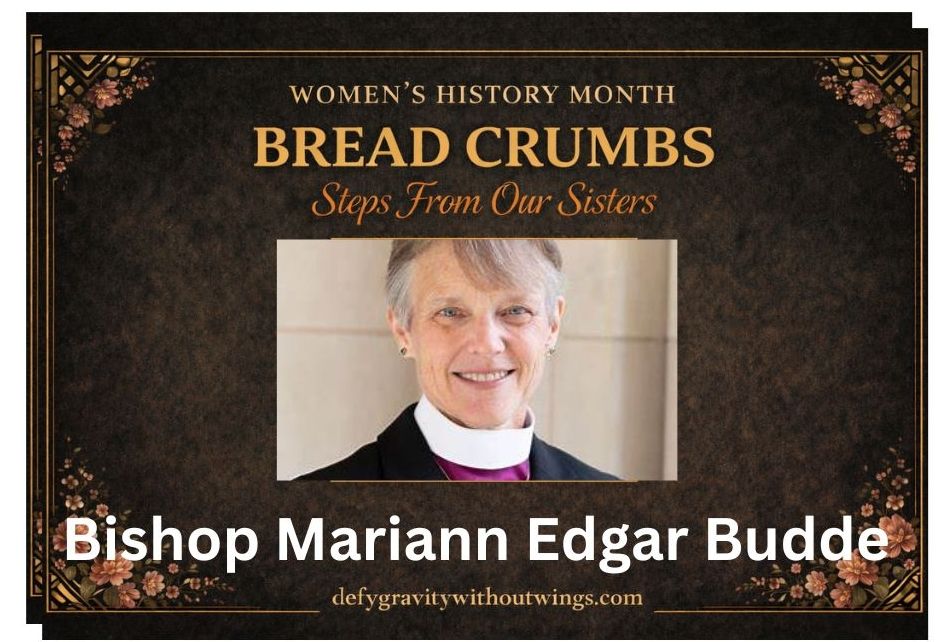
Bishop Mariann Edgar Budde became the first woman elected bishop of the Episcopal Diocese of Washington in 2011 after serving 18 years as rector of St. John’s Episcopal Church in Minneapolis.
In January 2025, during a prayer service at Washington National Cathedral attended by President Donald Trump, she spoke directly about mercy for immigrants, LGBTQ people, and others living in fear. What made the moment powerful was not volume. It was clarity. She stood in a sacred place, looked power in the face, and made room for compassion anyway.
That kind of courage belongs in Women’s History Month.
Not only the courage of women who marched with signs or shattered ceilings with applause behind them, but also the courage of women who held their ground in rooms built to intimidate. Women who spoke with steadiness when spectacle would have been easier. Women who understood that conviction does not have to be cruel to be strong.
Mariann Edgar Budde reminded the country that mercy is not frail. Mercy is not timid. Mercy is not a soft substitute for truth. Real mercy has a backbone. It knows exactly what it is doing. It steps into hard places and refuses to surrender its humanity.
She did not need rage to make history.
She did not need performance to make her point.
She did not need to wound anyone to be unforgettable.
She stood there as a woman, a leader, and a witness. Calm, clear, and unwilling to let fear have the final word.
That is how some women leave footprints.
Not by shouting over the room.
But by changing the temperature in it.
Speak up for those who cannot speak for themselves,
for the rights of all who are destitute.”
Proverbs 31:8
May we remember Bishop Mariann Edgar Budde not simply as the woman who unsettled a president, but as a woman who stood before power and still chose mercy. In a world that too often mistakes cruelty for strength, that witness matters.
We see you.
Steps From Our Sisters
Honoring the Women Who Marched Before Us
Curated by
Michelle Gillison-Robinson
DefyGravityWithoutWings.com
.




















 defygravitywithoutwings.com