Image

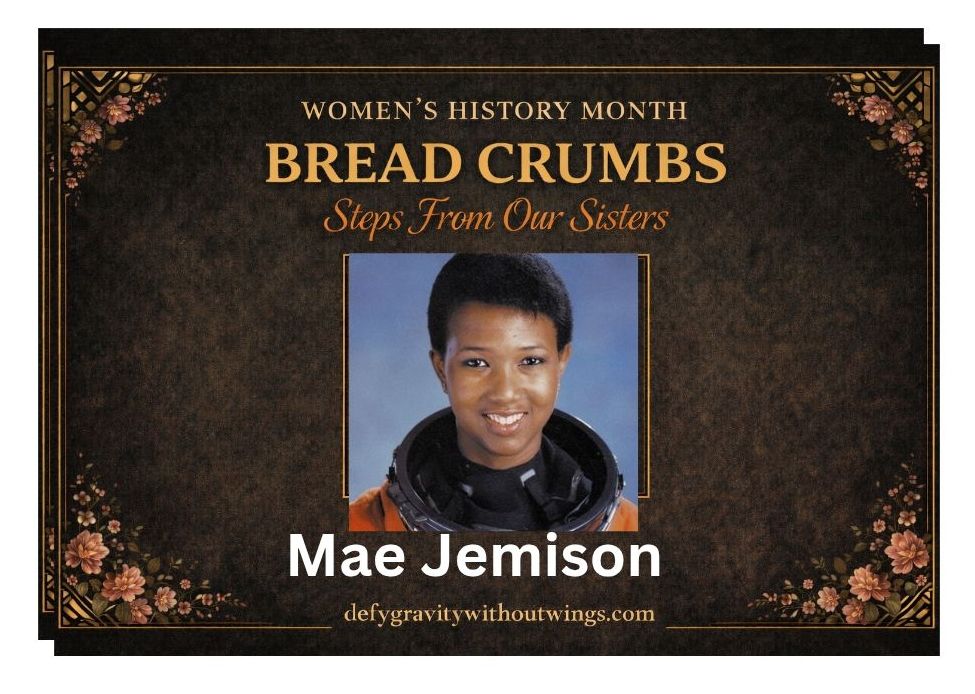
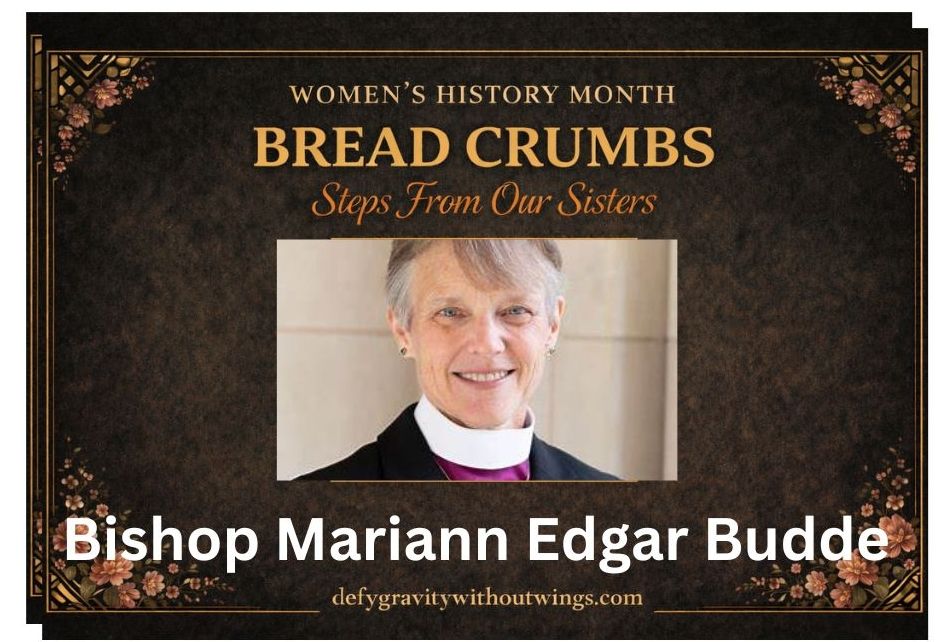
Bishop Mariann Edgar BuddeShe Brought Mercy Into a Room Built for Power

Some women do not raise their voices.
They raise the standard.

She was born in Summit, New Jersey, in 1959, and grew up in the Flanders section of Mount Olive Township, carrying both small-town roots and a wider view of the world.


After her parents’ divorce, she spent time living with her father in Colorado before returning to New Jersey and graduating from West Morris Mount Olive High School, a path that suggests early lessons in change, resilience, and finding your footing more than once.


Before she became known as an Episcopal bishop, she was shaped by an evangelical Christian upbringing, a background that helps explain the clear moral language and steady conviction people would one day hear from her in public life.

Bishop Mariann Edgar Budde became the first woman elected bishop of the Episcopal Diocese of Washington in 2011 after serving 18 years as rector of St. John’s Episcopal Church in Minneapolis.

In January 2025, during a prayer service at Washington National Cathedral attended by President Donald Trump, she spoke directly about mercy for immigrants, LGBTQ people, and others living in fear. What made the moment powerful was not volume. It was clarity. She stood in a sacred place, looked power in the face, and made room for compassion anyway.

That kind of courage belongs in Women’s History Month.

Not only the courage of women who marched with signs or shattered ceilings with applause behind them, but also the courage of women who held their ground in rooms built to intimidate. Women who spoke with steadiness when spectacle would have been easier. Women who understood that conviction does not have to be cruel to be strong.

Mariann Edgar Budde reminded the country that mercy is not frail. Mercy is not timid. Mercy is not a soft substitute for truth. Real mercy has a backbone. It knows exactly what it is doing. It steps into hard places and refuses to surrender its humanity.

She did not need rage to make history.
She did not need performance to make her point.
She did not need to wound anyone to be unforgettable.

She stood there as a woman, a leader, and a witness. Calm, clear, and unwilling to let fear have the final word.

That is how some women leave footprints.
Not by shouting over the room.
But by changing the temperature in it.

Speak up for those who cannot speak for themselves,
for the rights of all who are destitute.”
Proverbs 31:8

May we remember Bishop Mariann Edgar Budde not simply as the woman who unsettled a president, but as a woman who stood before power and still chose mercy. In a world that too often mistakes cruelty for strength, that witness matters.

We see you.

Steps From Our Sisters
Honoring the Women Who Marched Before Us

Curated by
Michelle Gillison-Robinson
DefyGravityWithoutWings.com
.

Image

Hedy Lamarr – The Beauty Who Invented The Future

(November 9, 1914 – January 19, 2000)

Sometimes the world notices the wrong thing first.

Hedy Lamarr was known throughout Hollywood as one of the most beautiful actresses of the 1940s. Her face appeared on movie posters and magazine covers, and audiences admired her elegance and glamour.

But behind the fame lived a restless and brilliant mind.

During World War II, Lamarr watched the rise of Nazi power in Europe and wanted to help the Allied cause. Working with composer George Antheil, she developed a communication system designed to guide torpedoes without enemy interference.

Their invention used a method called frequency hopping, where radio signals constantly changed channels so they could not be jammed.

At the time, the military dismissed the idea.

Years later, however, the technology behind Lamarr’s invention became the foundation for modern wireless communication. Today the same principle supports Wi-Fi, Bluetooth, and GPS systems used around the world.

There is a verse in Proverbs that reminds us, “The Lord gives wisdom; from His mouth come knowledge and understanding.”

Hedy Lamarr reminds us that wisdom often lives quietly beneath the labels the world places on us.

Sometimes the person everyone admires for one gift is carrying another gift powerful enough to shape the future.

The world may decide who you are before it knows your whole story.

Hedy Lamarr was celebrated for beauty, but her mind helped build technology that connects billions of people today.

Sometimes the gifts God gives us are not immediately recognized. But that does not make them any less powerful.

We see you, Hedy. All of you.

Steps From Our Sisters

Honoring the Women Who Marched Before Us

Curated by

Michelle Gillison-Robinson

DefyGravityWithoutWings.com
Image

Ketanji Brown Jackson -When preparation meets history.


Some victories do not come bursting through the door.
They come with their shoes in their hand.
With grace under pressure.
With long study hours, quiet discipline, and the kind of strength that has learned how to hold itself still.


Ketanji Brown Jackson was born in Washington, D.C., in 1970 and raised in Miami.
She went to Harvard, graduating from college in 1992 and law school in 1996, serving along the way on the Harvard Law Review.
She clerked for Justice Stephen Breyer.
Worked as a public defender.
Served on the United States Sentencing Commission.
Became a federal judge in 2013.
Rose to the D.C. Circuit in 2021.


Nothing about her path says sudden.
Everything about it says prepared.
And maybe that is what makes this kind of history so holy.
Because on April 7, 2022, when the Senate confirmed her by a 53 to 47 vote, and on June 30, 2022, when she was sworn in as the 104th Associate Justice of the Supreme Court of the United States, becoming the first Black woman ever to serve there, it was not the beginning of her worth.
It was the public naming of what had already been true.
Brilliant.
Capable.
Measured.
Ready.


She became the first former federal public defender to sit on that Court.
Only the sixth woman in its history.


A Black woman in a seat this nation took far too long to imagine her in, though women like her have always been here carrying wisdom, justice, memory, and backbone in places that rarely gave them the microphone.


So no, her presence does not just say look what happened.
It says look what endured.
Look what kept going.
Look what kept studying.
Look what kept showing up polished and prepared while carrying the weight of being doubted before speaking.
For every door that opened late
For every gift that had to prove itself twice
For every girl taught to be excellent and careful at the same time
Her presence speaks.
Not just I made it.
But women like her have always been here.


Have I not commanded you? Be strong and courageous. Do not be frightened, and do not be dismayed, for the Lord your God is with you wherever you go.
Joshua 1:9


And maybe that is the part I love most.
Not just that she made it to the room
but that God walked her all the way there.

Steps From Our Sisters
Honoring the Women Who Marched Before Us
Curated by
Michelle Gillison-Robinson
DefyGravityWithoutWings.com

Image

The Woman Who Helped Crack the Enemy’s Code  – Joan Clarke


(June 24, 1917 – September 4, 1996)

Sometimes the fate of nations depends on someone solving a puzzle.

During World War II, the British government gathered mathematicians, linguists, and puzzle solvers at a secret intelligence center called Bletchley Park. Their mission was to break the encrypted messages sent by Nazi Germany through the Enigma machine.

Among those brilliant minds was Joan Clarke.

Clarke had a remarkable talent for mathematics and logical reasoning. Despite her skill, she was initially placed in a clerical role because few people believed women belonged among the leading cryptanalysts.

But her brilliance soon became impossible to ignore.

Working alongside other codebreakers, including Alan Turing, Clarke helped decipher German military communications. The intelligence gathered from those messages allowed Allied forces to anticipate enemy movements and strategies.

Historians believe the success of the Bletchley Park team shortened World War II by several years and saved millions of lives.

There is a verse in Ecclesiastes that says, “Wisdom is better than weapons of war.”

Joan Clarke proved that truth in the quietest way possible.

Sometimes the mind that changes history
is sitting silently at a desk, pencil in hand.

Bread Crumbs

Not every hero stands on a battlefield.

Some sit in quiet rooms, solving problems others cannot see.

Joan Clarke reminds us that intelligence, patience, and perseverance can protect lives just as surely as strength or weapons.

Sometimes the wisdom God places in one mind
can help guide the safety of millions.

Steps From Our Sisters
Honoring the Women Who Marched Before Us

Curated by
Michelle Gillison-Robinson
DefyGravityWithoutWings.com


Image

The Doctor Who Chose to Heal the Forgotten – Rebecca Lee Crumpler


(February 8, 1831 – March 9, 1895)

Sometimes healing begins where others refuse to go.

Rebecca Lee Crumpler grew up in a time when medicine was almost entirely closed to women, and especially to African Americans. Yet she believed deeply in the power of caring for the sick and protecting the vulnerable.

In 1864 she became the first Black woman in the United States to earn a medical degree.

After the Civil War ended, Crumpler moved to Virginia, where she treated newly freed men, women, and children who had little access to medical care. The conditions were difficult, resources were scarce, and prejudice remained strong.

But she continued her work.

Crumpler believed that knowledge should serve compassion. She later wrote A Book of Medical Discourses, one of the first medical texts written by an African American physician.

There is a verse in Jeremiah that says, “Heal me, Lord, and I will be healed.”

Rebecca Lee Crumpler answered that prayer not only with faith but with skill, dedication, and love for those who had long been ignored.

Sometimes the most powerful medicine
is the courage to care.

Bread Crumbs

Service does not always appear glamorous.

Rebecca Lee Crumpler chose to practice medicine where the need was greatest and recognition was smallest.

She reminds us that compassion often requires perseverance.

Sometimes the calling God places on your life
is simply to heal what others have overlooked.

Steps From Our Sisters
Honoring the Women Who Marched Before Us

Curated by
Michelle Gillison-Robinson
DefyGravityWithoutWings.com
Image

Grace O’Malley – Pirate Queen

(c.1530 – 1603)
Sometimes history remembers kings. But occasionally the sea belongs to a queen.
Grace O’Malley, known in Ireland as Gráinne Mhaol, was born into a powerful maritime clan along Ireland’s western coast. From a young age she refused the expectations placed upon women of her time.
She learned the sea instead. Grace commanded ships, led sailors, and controlled trade routes along the rugged Irish coastline. Her fleets became legendary, and her name was spoken with both admiration and caution.
When English forces threatened her family and territory, Grace O’Malley did something almost unheard of. She sailed to England and met Queen Elizabeth I face to face.
The two women spoke as equals, negotiating the freedom of O’Malley’s son and the restoration of her lands.
There is a verse in Psalm 93 that says, “The Lord reigns… the seas have lifted up their voice.”
Grace O’Malley’s life seemed to echo that image—strong, fearless, and unafraid of powerful waters.
Sometimes courage does not wait for permission.
Sometimes it sets sail.
Strength often begins with refusing the limits others place on you.
Grace O’Malley was expected to live quietly. Instead she commanded ships and negotiated with queens.
Her story reminds us that leadership can emerge from the most unexpected places.
Sometimes the waves that try to block your path are the very waters meant to carry you forward.
Steps From Our Sisters
Honoring the Women Who Marched Before Us

Image

The Woman Who Brushed the Way Forward Lyda D. Newman


(c. 1885 – after 1930)

Sometimes change begins with something small enough to hold in your hand.

Lyda D. Newman was an inventor and hairdresser living in New York City at the end of the nineteenth century. In 1898 she patented an improved design for the hairbrush, creating a tool that was easier to clean and more effective for everyday use.

It was a practical invention, something millions of people would eventually use without thinking twice.

But Lyda Newman’s story does not stop in the bathroom mirror.

She was also deeply involved in the growing movement for women’s suffrage. At a time when women were still fighting for the basic right to vote, Newman worked with suffrage organizers in New York to help register women voters and mobilize communities.

For women like Newman, the fight for the ballot was not only about politics.

It was about dignity.

There is a verse in Proverbs that says, “Speak up for those who cannot speak for themselves.”

Lyda Newman did exactly that.

Through organizing and advocacy, she helped open the door for women to participate in the democratic process. Her work joined thousands of other women who marched, organized, and demanded that their voices be counted.

The tools she invented made daily life easier.

But the work she did for suffrage helped shape the future of a nation.

Sometimes the quiet hands that improve everyday life
are the same hands helping move history forward.

Bread Crumbs

Not every act of courage looks dramatic.

Sometimes courage looks like organizing neighbors, registering voters, and refusing to believe your voice does not matter.

Lyda Newman reminds us that progress is built by ordinary people who decide their voice belongs in the conversation.

Sometimes the change God places in our hands
is meant to help others find their voice too.

Steps From Our Sisters
Honoring the Women Who Marched Before Us

Image

My Rib Struggles To Breathe

March 1, 2026

God of dirt under fingernails, of headlines and heartbeats, of babies born into chaos
and mamas who don’t sleep.
Lord hear our prayer
Sit with us in sackcloth and ash.

Hear the Latina scream for her familia.
Hear the Black mama beat her chest
from the weight of knees and crushed souls
Hear the confused person of no color
whisper, “Am I next?”

See my father’s shadow.
The brown father working double shifts
with documents that feel like paper shields.
The Black father teaching his son
how to survive a traffic stop.
The father from somewhere else
trying to sound less foreign
so his children sound more safe.

The one who has never been taught how to weep, but learns that privileged skin
offers no protection.

Watch how they swallow fear so their families can eat.
Watch how they stand tall while history presses down.
Do not turn Your face from the trembling.

Is Abraham’s argument still valid?
Is there still one worth saving?
If there are fifty…
If there are forty…
If there are ten…
Will mercy outrun destruction?

Because we be something else.
We invent vaccines and vendettas.
We cure disease and cultivate grudges.
We build greenhouses and graveyards
in the same generation.

We scream “save the babies” while demanding their mothers bleed in parking lots outside buildings bearing neon  crosses and snakes on stakes.

And if that little bundle of hope
takes breath….. we ration mercy.
We starve truth. We feed them fear.
We hand them a system and call it destiny.

Forgive us for mistaking loud for strong,
revenge for justice,
power for wisdom,
money for mattering.

Slow the hands hovering over buttons.
Cool the tongues that set nations on fire.
Remind the mighty that bleeding does not discriminate.

When leaders puff up,
deflate egos with a firm hand.
When citizens rage-scroll at 3:33 a.m.,
tuck them back into cradles of mercy.

Teach us that being right is not the same thing as being righteous.

And teach us this, Lord –
That Holy is set apart, not divided asunder.

Set apart does not mean split down the middle.
It does not mean camps or corners
or color-coded salvation.

Holy is not red. Holy is not blue. Holy is not loud.

Holy is careful. Holy is weighty.
Holy is handled like heirloom glass passed from trembling hands.

Do not let us carve You up to fit our arguments.
Do not let us drape Your name over fear and call it faith.

If we must be set apart, let it be in compassion.
If we must be different, let it be in mercy.
Separate us from cruelty.
Separate us from arrogance.
Separate us from the need to win
at the cost of one another.

But do not divide us beyond repair.
Remind us that what is sacred is never meant to be torn.

Lord Hear Our Prayer

For the refugee in the cold,
the soldier on watch,
the child learning history from a textbook that left something out —
Cover them.

Guard democracy like a fragile seedling in late frost.
Guard dignity like Grandma’s good china.
Guard hope like a porch light left on for whoever comes home late.

When we start thinking the sky is falling,
Whisper,
“Dead and dormant are not the same thing.”

Let wars stall. Let hatred get tired. Let truth outlive the loud.

And if we must walk through fire, let it burn off what is false and leave what is faithful.

While presidents posture and pundits perform
Let ordinary people sleep.
Let Nama rest. Let grandchildren dream of gardens instead of sirens.

My bladed pen is hot. It does not drip ink.
It draws blood from silence. It refuses anesthesia. I tire  of gentle prayers that never name the wound.

If my words burn, let them cauterize.
If they cut, let them carve truth
from marble lies.

Out of all the people in this great big world,
please hear me. Please know my voice.
Hear me when I pray.
For I will not whisper  when my rib struggles to breathe.

Amen.  Ameen. Aṣẹ̀ Olódùmarè. Selah. Shanti. Alafia. Tathāstu. Ubuntu

from Poems My Mama Would Have Wrote ( If She Had Been Allowed”
Althea’s Daughter: Michelle Gillison-Robinson

Image

You Are Black History

Black history does not live only in textbooks, timelines, or framed portraits. It lives in you.


It lives in the prayers your grandmother whispered that no one recorded. It lives in the courage it took for your parents and grandparents to keep going when quitting would have been easier.

It lives in the way you show up to work, to church, to community, to family — even when the reward is unclear.


Black history is not only something that happened. It is something that is still happening.


It is made every time you choose dignity over bitterness. Every time you carry joy in a system that profits from your exhaustion. Every time you tell the truth — even quietly. Every time you endure, love, build, teach, heal, or believe anyway.


Some names were written down. Many were not.
Some stories were celebrated. Many were survived.
But history is not only what is remembered — it is what continues.


You stand on the shoulders of those who were victorious without reward. Those who served faithfully without applause. Those who planted seeds they would never live to see bloom.


Their courage flows through you.


And we have always known how to leave something behind.


Breadcrumbs on the ground when the path was uncertain. Hushpuppies tossed not as waste, but as wisdom — a way to distract danger long enough to keep moving. Cornrows braided tight to the scalp, not only as beauty or tradition, but as memory — paths etched into hair, holding maps to water, to safety, to freedom.


What could not be written down was carried. What could not be spoken aloud was encoded. What could not be protected by law was protected by love, community, and God.


This was not myth. This was method.
A people learning how to survive systems designed to erase them — by remembering anyway.


If you are still leaving breadcrumbs for those coming behind you… still marking the way quietly… still choosing faith, dignity, and care when no one is watching…
You are doing what has always been done.


You are part of a holy lineage of guidance and endurance. A living echo of the God who makes a way where none seems visible and leads His people forward, step by step.


“Let us not become weary in doing good, for at the proper time we will reap a harvest if we do not give up.”
— Galatians 6:9
“Your word is a lamp to my feet and a light to my path.”
— Psalm 119:105


If you are still standing, still hoping, still loving, still reaching for God and for one another — you are Black history in motion.
Not just because of where you came from, but because of how you choose to live.


We see you. We honor you. You matter.
Love, Chelle