Image

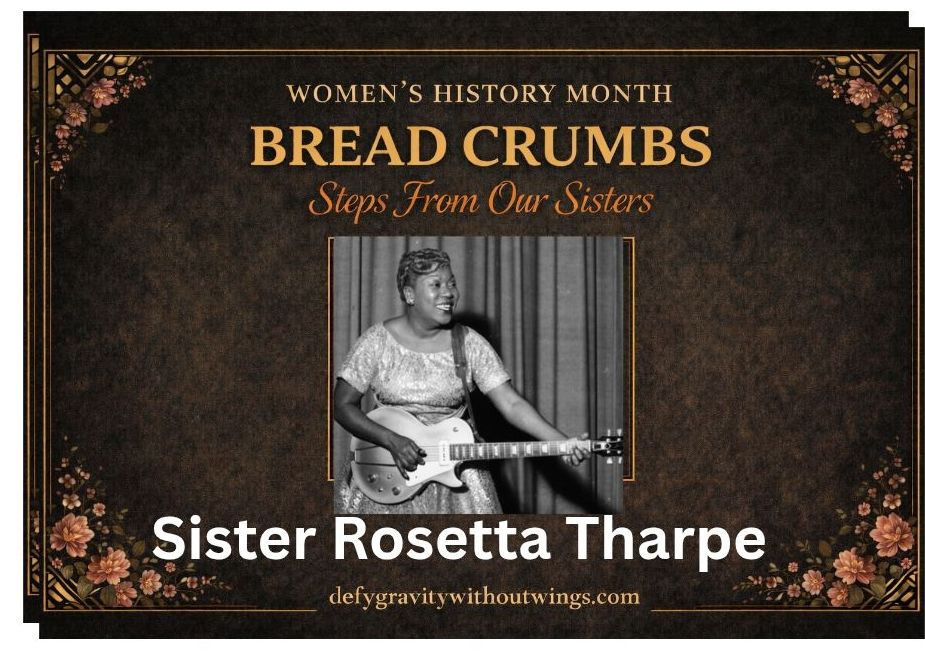
Sister Rosetta Tharpe — Godmother of Rock And Roll

Before rock & roll had a king… there was a woman with a guitar in church. Before They Called It Rock
Sister Rosetta Tharpe was born in 1915 in Cotton Plant, Arkansas. By 6 years old she was already traveling with her mother, performing in churches across the country. A little girl with a guitar and something on her life that didn’t wait for permission.
By the 1930s, she had moved to Chicago and New York, recording gospel music that didn’t sound like what people expected. Her 1938 recording of “Rock Me” carried gospel into spaces folks said it didn’t belong.
Sometimes God will let you sound different before the world catches up.
She played electric guitar. Loud. Joyful. Unapologetic. Too church for the world. Too worldly for the church. But she didn’t split herself to make others comfortable. She carried both.
By the 1940s she was touring, recording hits, and drawing crowds.
In 1951, she turned her wedding into a concert at a baseball stadium in Washington, D.C., with over 20,000 people in attendance.
She was not standing on the front lines of a march, but make no mistake, Sister Rosetta Tharpe was pushing against every line drawn around her. In a time when Black women were expected to be quiet, when stages were dominated by men, and when gospel music was supposed to stay inside church walls, she stepped forward with an electric guitar and refused to shrink. She played to integrated audiences, carried Black gospel into mainstream spaces, and stood fully in her calling without asking permission to belong. She didn’t organize protests, but every note she played disrupted something that said she should not be there.
“Do not conform to the pattern of this world, but be transformed…” — Romans 12:2
Her guitar style helped shape what became rock & roll. Artists like Chuck Berry, Little Richard, and Elvis Presley drew from that sound. But her name was not always given its place.
Because sometimes history doesn’t forget. Sometimes it just misplaces.
“For nothing is hidden that will not be revealed.” — Luke 8:17
She  later settled in Richmond, Virginia and lived in the  Barton Avenue area. No spotlight. Just legacy waiting. But Heaven Kept the Records. In March 2026, the city council of Richmond, Virginia voted to rename a portion of Barton Avenue in her honor, recognizing her contributions to music and culture.
She didn’t wait to be understood. She played anyway. And maybe what feels unseen in you is not buried — just early.
“In due season we shall reap, if we do not lose heart.” — Galatians 6:9
In her later years, Sister Rosetta Tharpe carried both the weight of her health and the quiet of a life that had already poured so much out. She passed in 1973 in Philadelphia after complications from a stroke, having lived a life that did not follow straight lines—married three times, with no children to carry her name forward in the traditional sense.
And yet, her legacy did not fade. It waited. Thirty-four years after her death, she was finally inducted into the Rock & Roll Hall of Fame, a long-overdue recognition for a sound she helped birth. Even Johnny Cash once recalled hearing her records in shops, noting how her music left an imprint before many even understood what they were hearing.
What About You? Maybe what you’ve poured out feels unseen. Maybe it feels like it didn’t matter. But what if it’s not gone just waiting what heaven records earth will eventually recognize.
Breadcrumbs From Our Sisters Who Marched Before Us.
— Love, Chelle
DefyGravityWithoutWings.com
Image

They Grow While You’re Gone


It’s 5:30 a.m.
I’m sipping my coffee, staring out the window into the darkness… somehow convinced I can see trouble in my garden from 100 feet away.

Don’t judge me… but I really considered stepping out there in my robe in 35 degrees to go check on my plant babies.

And somewhere between that first sip and the silence… I caught myself.

This isn’t about seeds.

This is about how easily my mind will grab hold of something—anything—and worry it to death.

Work stress that doesn’t clock out when I do.
Money questions that don’t always have quick answers.
A newborn I just prayed over in the hospital,
with whispers of concern about her ability to thrive.
Friends walking through the slow, sacred heartbreak of losing their parents…
and me carrying pieces of that with them.

All real things. All things that matter. All things experienced before.
And yet…

Look how quickly my heart starts hovering over them, like it’s my job to make sure everything turns out alright. Like if I think about it enough, check it enough, replay it enough…

I can help God along.

But I can’t.

Because even when I am doing the work of God, it is still God who is working.
I am not the outcome.
I am not the fixer.
I am not the one holding it all together.

I am just… hands in the soil.
Faithful to plant.
Faithful to water.
Faithful to show up.

But the growing?
The healing?
The sustaining?

That was never mine.

And if I’m not careful, I will let the weight of what I care about pull me out of the very places God is calling me to be present.

Sitting here with my coffee, trying to manage what He already has in His hands…
while He’s already prepared a seat for me somewhere else today.

There is a time to plant.
A time to water.
And then… a time to trust.
Not anxious trust.
Not hovering trust.
Real trust.

The kind that finishes the coffee,
gets dressed, and walks into the day
without carrying what God never assigned me to hold.

So I’m going where I’m supposed to be.
And I’m leaving the garden…
and everything it represents…
right where it is.

Because what God has already taken responsibility for does not need my worry added to it.

Even the good things don’t get to compete
with obedience.

“To everything there is a season, and a time to every purpose under the heaven.”
— Ecclesiastes 3:1

Love, Chelle

DefyGravityWithoutWings.com

Image

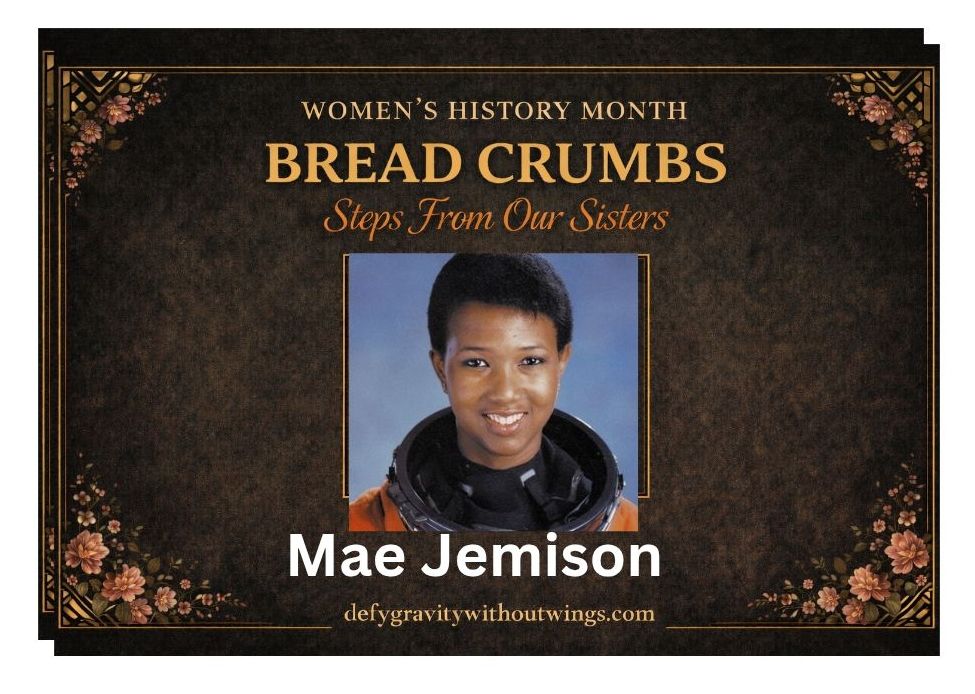
Reaching Beyond the Sky – Mae Jemison

Sometimes the dream is bigger than the sky.

Mae Jemison grew up in Chicago at a time when few girls were encouraged to pursue careers in science. But curiosity has a way of ignoring limits. From a young age, Jemison loved science, space, and the endless possibilities of the universe.

She studied chemical engineering at Stanford University and later earned her medical degree from Cornell University. Her talents stretched across science, medicine, and international humanitarian work.

But one dream remained constant. Space.

In 1987, Mae Jemison was selected by NASA to join its astronaut program. Five years later, in 1992, she made history aboard the space shuttle Endeavour, becoming the first Black woman to travel into space.

As she orbited the Earth, Jemison carried not only scientific experiments but also the hopes of countless young people who had never imagined someone who looked like them reaching the stars.

Jeremiah 29 reminds us, “For I know the plans I have for you… plans to give you hope and a future.”

Mae Jemison’s journey reminds us that sometimes the future God imagines for us stretches far beyond the horizon we can see.

She once said something beautifully simple:

“Never limit yourself because of others’ limited imagination.”

And by refusing those limits, she helped expand the dreams of generations.

Sometimes the sky is not the limit.

Sometimes it is only the beginning.

Mae Jemison looked up at the stars and believed she belonged there. And through courage, education, and determination, she proved that dreams often grow larger when we refuse to shrink them.

The path to the future begins with one person believing that the horizon can move.

Steps From Our Sisters
Honoring the Women Who Marched Before Us

Curated by
Michelle Gillison-Robinson
DefyGravityWithoutWings.com

Image

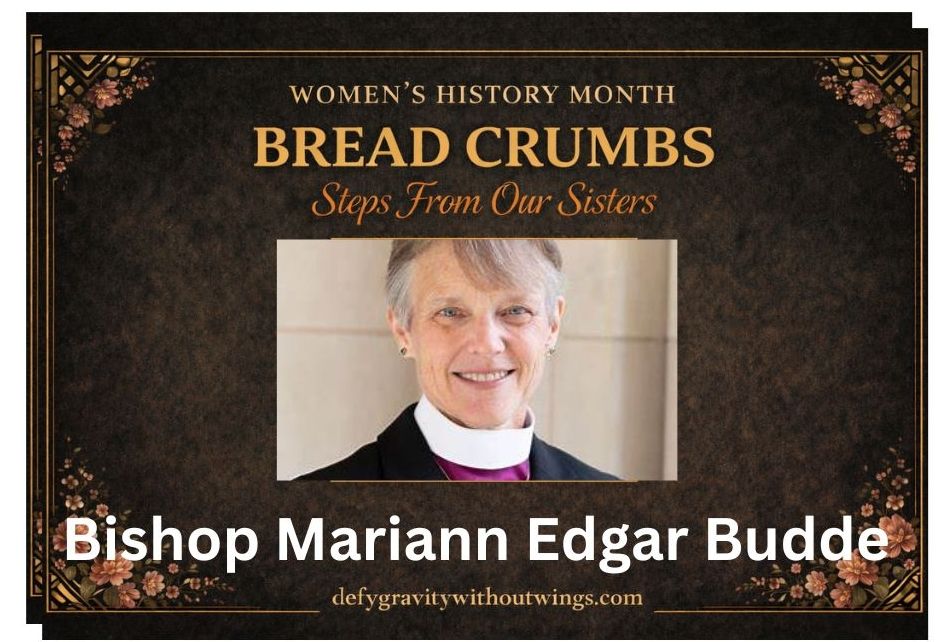
Bishop Mariann Edgar BuddeShe Brought Mercy Into a Room Built for Power

Some women do not raise their voices.
They raise the standard.

She was born in Summit, New Jersey, in 1959, and grew up in the Flanders section of Mount Olive Township, carrying both small-town roots and a wider view of the world.


After her parents’ divorce, she spent time living with her father in Colorado before returning to New Jersey and graduating from West Morris Mount Olive High School, a path that suggests early lessons in change, resilience, and finding your footing more than once.


Before she became known as an Episcopal bishop, she was shaped by an evangelical Christian upbringing, a background that helps explain the clear moral language and steady conviction people would one day hear from her in public life.

Bishop Mariann Edgar Budde became the first woman elected bishop of the Episcopal Diocese of Washington in 2011 after serving 18 years as rector of St. John’s Episcopal Church in Minneapolis.

In January 2025, during a prayer service at Washington National Cathedral attended by President Donald Trump, she spoke directly about mercy for immigrants, LGBTQ people, and others living in fear. What made the moment powerful was not volume. It was clarity. She stood in a sacred place, looked power in the face, and made room for compassion anyway.

That kind of courage belongs in Women’s History Month.

Not only the courage of women who marched with signs or shattered ceilings with applause behind them, but also the courage of women who held their ground in rooms built to intimidate. Women who spoke with steadiness when spectacle would have been easier. Women who understood that conviction does not have to be cruel to be strong.

Mariann Edgar Budde reminded the country that mercy is not frail. Mercy is not timid. Mercy is not a soft substitute for truth. Real mercy has a backbone. It knows exactly what it is doing. It steps into hard places and refuses to surrender its humanity.

She did not need rage to make history.
She did not need performance to make her point.
She did not need to wound anyone to be unforgettable.

She stood there as a woman, a leader, and a witness. Calm, clear, and unwilling to let fear have the final word.

That is how some women leave footprints.
Not by shouting over the room.
But by changing the temperature in it.

Speak up for those who cannot speak for themselves,
for the rights of all who are destitute.”
Proverbs 31:8

May we remember Bishop Mariann Edgar Budde not simply as the woman who unsettled a president, but as a woman who stood before power and still chose mercy. In a world that too often mistakes cruelty for strength, that witness matters.

We see you.

Steps From Our Sisters
Honoring the Women Who Marched Before Us

Curated by
Michelle Gillison-Robinson
DefyGravityWithoutWings.com
.

Image

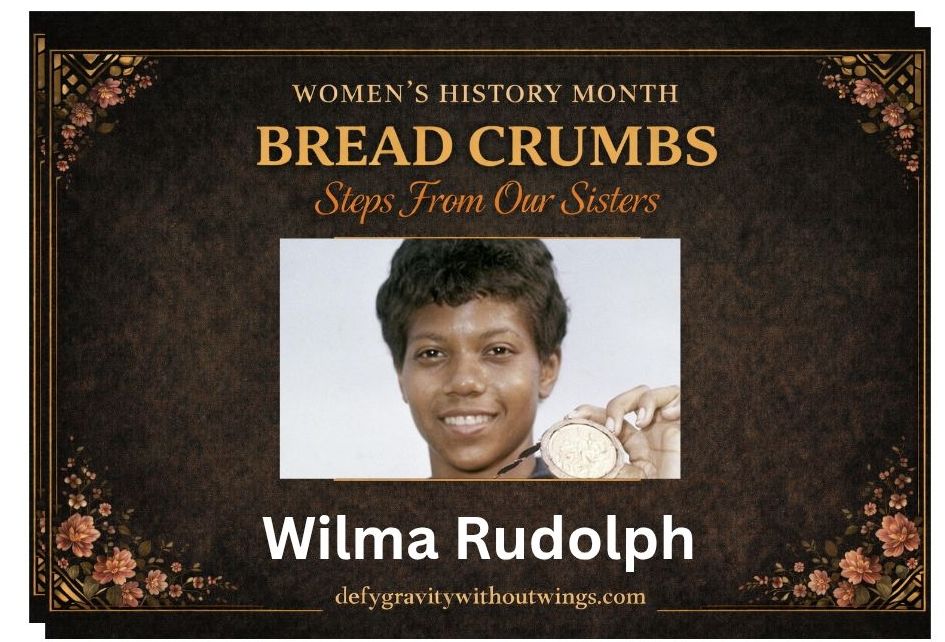
From Braces to Gold – Wilma Rudolph


(June 23, 1940 – November 12, 1994)
Sometimes history runs faster than doubt.
Wilma Rudolph was born prematurely in Tennessee and spent much of her early childhood battling illnesses, including polio. Doctors warned that she might never walk normally again.
For years she wore a leg brace.
But Rudolph’s family refused to surrender to that prediction. With determination, therapy, and relentless support from her mother, Wilma eventually began walking without assistance.
Soon she began running. And she did not stop.
There is a verse in Philippians that says, “I can do all things through Christ who strengthens me.” For Wilma Rudolph, those words would come to life in the most extraordinary way.
By the time she reached the 1960 Olympic Games in Rome, Rudolph had become one of the fastest women in the world. There she made history, winning three gold medals in track and field, becoming the first American woman to achieve that feat in a single Olympic Games.
Her victories were not only athletic triumphs. They were symbols.
At a time when segregation still divided much of America, Rudolph returned home to Tennessee and insisted that her hometown parade honoring her victory be integrated. It became the first racially integrated public celebration in Clarksville’s history.
Wilma Rudolph ran past more than competitors. She ran past expectations. And in doing so, she reminded the world that sometimes faith, courage, and persistence can carry us farther than anyone ever imagined.
Sometimes the world writes a story about what you cannot do.
Wilma Rudolph once wore a leg brace and was told she might never walk normally again. Later, she became the fastest woman in the world.
The miracle is not always that the path is easy. Sometimes the miracle is that you keep moving forward anyway.


Steps From Our Sisters
Honoring the Women Who Marched Before Us
Curated by
Michelle Gillison-Robinson
DefyGravityWithoutWings.com

Image

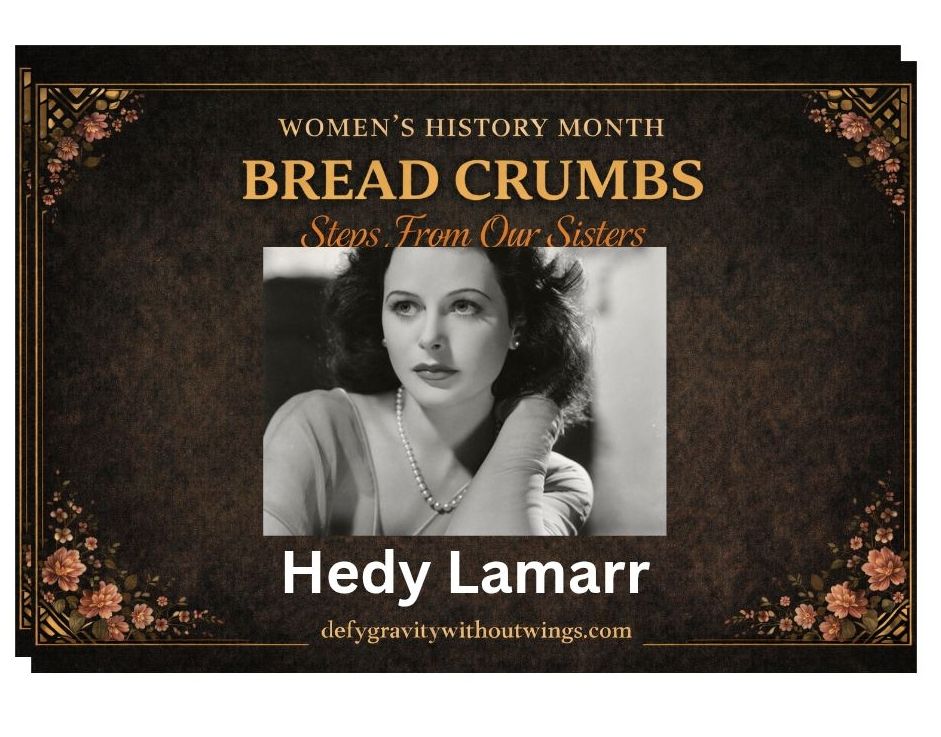
Hedy Lamarr – The Beauty Who Invented The Future

(November 9, 1914 – January 19, 2000)

Sometimes the world notices the wrong thing first.

Hedy Lamarr was known throughout Hollywood as one of the most beautiful actresses of the 1940s. Her face appeared on movie posters and magazine covers, and audiences admired her elegance and glamour.

But behind the fame lived a restless and brilliant mind.

During World War II, Lamarr watched the rise of Nazi power in Europe and wanted to help the Allied cause. Working with composer George Antheil, she developed a communication system designed to guide torpedoes without enemy interference.

Their invention used a method called frequency hopping, where radio signals constantly changed channels so they could not be jammed.

At the time, the military dismissed the idea.

Years later, however, the technology behind Lamarr’s invention became the foundation for modern wireless communication. Today the same principle supports Wi-Fi, Bluetooth, and GPS systems used around the world.

There is a verse in Proverbs that reminds us, “The Lord gives wisdom; from His mouth come knowledge and understanding.”

Hedy Lamarr reminds us that wisdom often lives quietly beneath the labels the world places on us.

Sometimes the person everyone admires for one gift is carrying another gift powerful enough to shape the future.

The world may decide who you are before it knows your whole story.

Hedy Lamarr was celebrated for beauty, but her mind helped build technology that connects billions of people today.

Sometimes the gifts God gives us are not immediately recognized. But that does not make them any less powerful.

We see you, Hedy. All of you.

Steps From Our Sisters

Honoring the Women Who Marched Before Us

Curated by

Michelle Gillison-Robinson

DefyGravityWithoutWings.com

Image

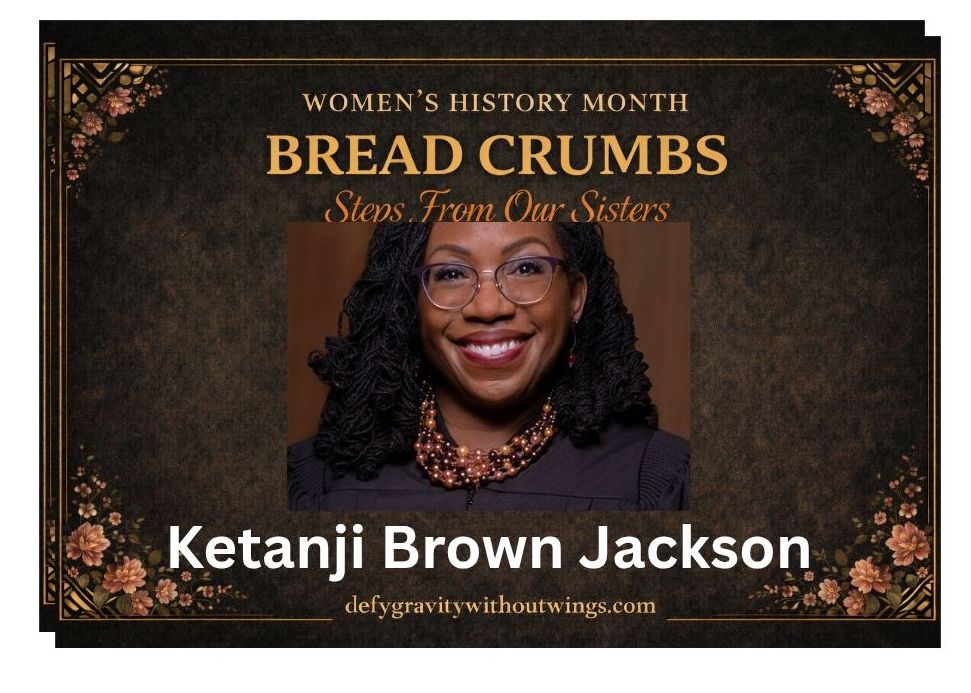
Ketanji Brown Jackson -When preparation meets history.


Some victories do not come bursting through the door.
They come with their shoes in their hand.
With grace under pressure.
With long study hours, quiet discipline, and the kind of strength that has learned how to hold itself still.


Ketanji Brown Jackson was born in Washington, D.C., in 1970 and raised in Miami.
She went to Harvard, graduating from college in 1992 and law school in 1996, serving along the way on the Harvard Law Review.
She clerked for Justice Stephen Breyer.
Worked as a public defender.
Served on the United States Sentencing Commission.
Became a federal judge in 2013.
Rose to the D.C. Circuit in 2021.


Nothing about her path says sudden.
Everything about it says prepared.
And maybe that is what makes this kind of history so holy.
Because on April 7, 2022, when the Senate confirmed her by a 53 to 47 vote, and on June 30, 2022, when she was sworn in as the 104th Associate Justice of the Supreme Court of the United States, becoming the first Black woman ever to serve there, it was not the beginning of her worth.
It was the public naming of what had already been true.
Brilliant.
Capable.
Measured.
Ready.


She became the first former federal public defender to sit on that Court.
Only the sixth woman in its history.


A Black woman in a seat this nation took far too long to imagine her in, though women like her have always been here carrying wisdom, justice, memory, and backbone in places that rarely gave them the microphone.


So no, her presence does not just say look what happened.
It says look what endured.
Look what kept going.
Look what kept studying.
Look what kept showing up polished and prepared while carrying the weight of being doubted before speaking.
For every door that opened late
For every gift that had to prove itself twice
For every girl taught to be excellent and careful at the same time
Her presence speaks.
Not just I made it.
But women like her have always been here.


Have I not commanded you? Be strong and courageous. Do not be frightened, and do not be dismayed, for the Lord your God is with you wherever you go.
Joshua 1:9


And maybe that is the part I love most.
Not just that she made it to the room
but that God walked her all the way there.

Steps From Our Sisters
Honoring the Women Who Marched Before Us
Curated by
Michelle Gillison-Robinson
DefyGravityWithoutWings.com
Image

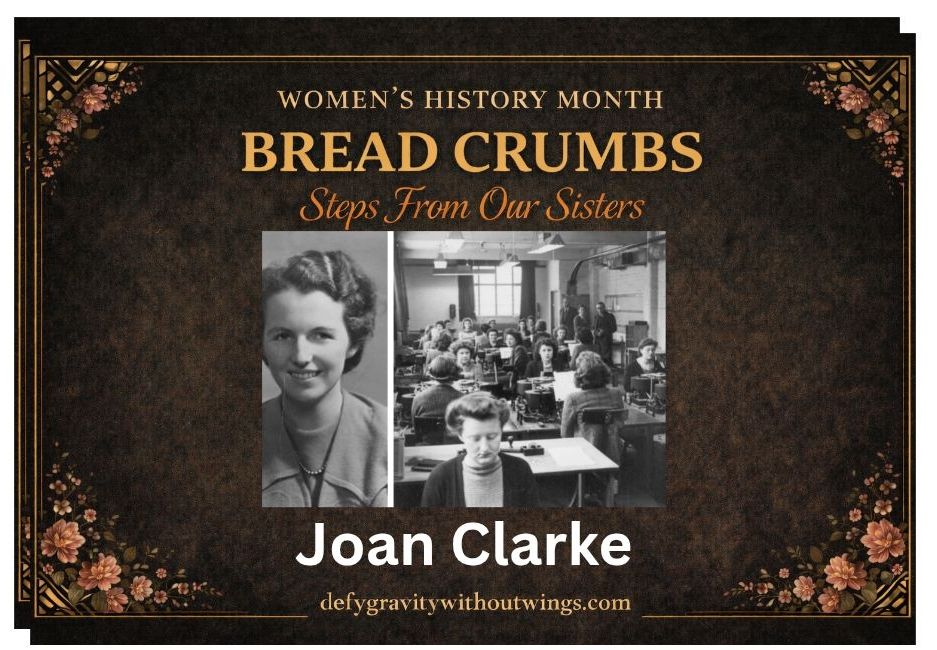
The Woman Who Helped Crack the Enemy’s Code  – Joan Clarke


(June 24, 1917 – September 4, 1996)

Sometimes the fate of nations depends on someone solving a puzzle.

During World War II, the British government gathered mathematicians, linguists, and puzzle solvers at a secret intelligence center called Bletchley Park. Their mission was to break the encrypted messages sent by Nazi Germany through the Enigma machine.

Among those brilliant minds was Joan Clarke.

Clarke had a remarkable talent for mathematics and logical reasoning. Despite her skill, she was initially placed in a clerical role because few people believed women belonged among the leading cryptanalysts.

But her brilliance soon became impossible to ignore.

Working alongside other codebreakers, including Alan Turing, Clarke helped decipher German military communications. The intelligence gathered from those messages allowed Allied forces to anticipate enemy movements and strategies.

Historians believe the success of the Bletchley Park team shortened World War II by several years and saved millions of lives.

There is a verse in Ecclesiastes that says, “Wisdom is better than weapons of war.”

Joan Clarke proved that truth in the quietest way possible.

Sometimes the mind that changes history
is sitting silently at a desk, pencil in hand.

Bread Crumbs

Not every hero stands on a battlefield.

Some sit in quiet rooms, solving problems others cannot see.

Joan Clarke reminds us that intelligence, patience, and perseverance can protect lives just as surely as strength or weapons.

Sometimes the wisdom God places in one mind
can help guide the safety of millions.

Steps From Our Sisters
Honoring the Women Who Marched Before Us

Curated by
Michelle Gillison-Robinson
DefyGravityWithoutWings.com


Image

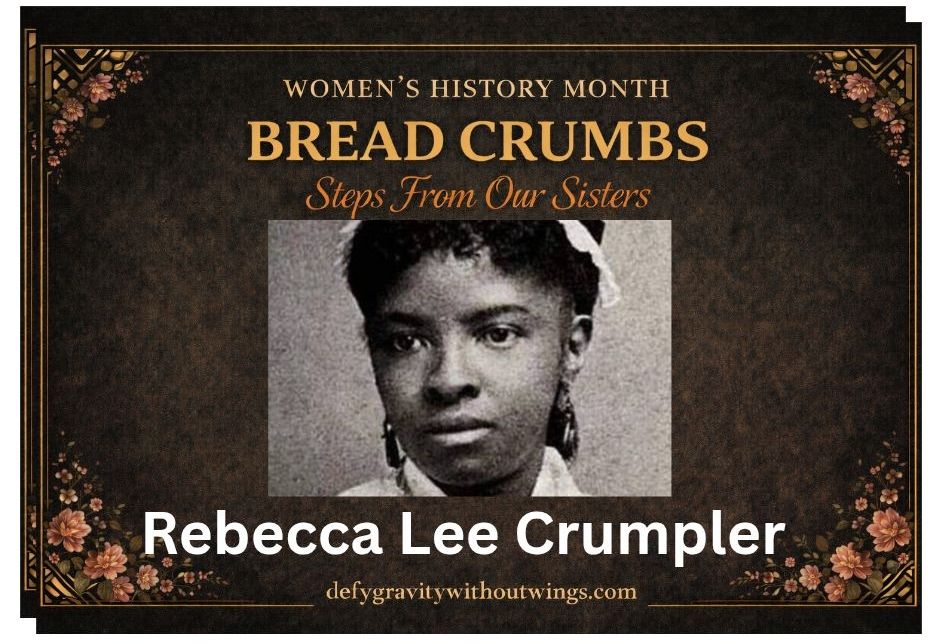
The Doctor Who Chose to Heal the Forgotten – Rebecca Lee Crumpler


(February 8, 1831 – March 9, 1895)

Sometimes healing begins where others refuse to go.

Rebecca Lee Crumpler grew up in a time when medicine was almost entirely closed to women, and especially to African Americans. Yet she believed deeply in the power of caring for the sick and protecting the vulnerable.

In 1864 she became the first Black woman in the United States to earn a medical degree.

After the Civil War ended, Crumpler moved to Virginia, where she treated newly freed men, women, and children who had little access to medical care. The conditions were difficult, resources were scarce, and prejudice remained strong.

But she continued her work.

Crumpler believed that knowledge should serve compassion. She later wrote A Book of Medical Discourses, one of the first medical texts written by an African American physician.

There is a verse in Jeremiah that says, “Heal me, Lord, and I will be healed.”

Rebecca Lee Crumpler answered that prayer not only with faith but with skill, dedication, and love for those who had long been ignored.

Sometimes the most powerful medicine
is the courage to care.

Bread Crumbs

Service does not always appear glamorous.

Rebecca Lee Crumpler chose to practice medicine where the need was greatest and recognition was smallest.

She reminds us that compassion often requires perseverance.

Sometimes the calling God places on your life
is simply to heal what others have overlooked.

Steps From Our Sisters
Honoring the Women Who Marched Before Us

Curated by
Michelle Gillison-Robinson
DefyGravityWithoutWings.com

Image

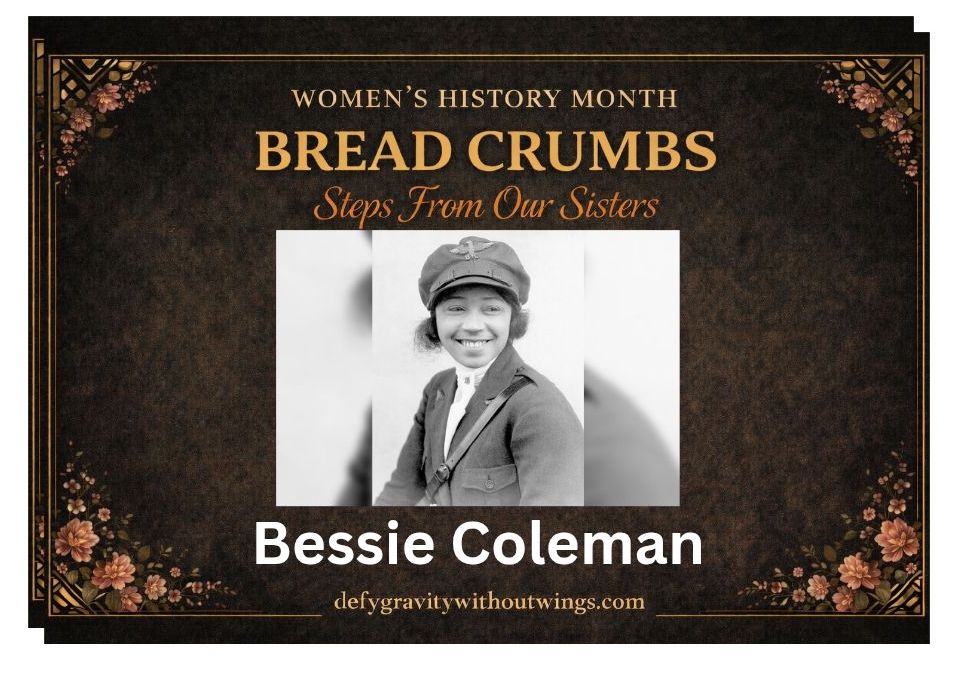
Bessie Coleman – The Woman Who Refused to Stay Grounded

(January 26, 1892 – April 30, 1926)

Sometimes the sky becomes the only place left to prove you belong.

Bessie Coleman grew up in Texas at a time when both race and gender limited opportunity. When she dreamed of becoming a pilot, every flight school in the United States refused to teach her.

She was Black.
She was a woman.

So Bessie Coleman did something extraordinary.

She learned French and traveled to France, where she earned her pilot’s license in 1921, becoming the first African American and Native American woman in the world to hold an international pilot’s license.

When she returned to the United States, crowds came to watch her fly. Coleman became a famous stunt pilot, performing breathtaking aerial tricks that left audiences amazed.

But she used her platform for something deeper.

She refused to perform at air shows that did not allow Black audiences to attend. To her, flight was not just entertainment.

It was dignity.

There is a verse in Isaiah that says, “They will soar on wings like eagles.”

Bessie Coleman lived that promise with courage and determination.

Sometimes the first person to break a barrier
must build the runway herself.


Breadcrumb
The world may close doors in front of you.

Bessie Coleman did not accept the doors that were closed.

She crossed an ocean instead.

Sometimes God places a dream in your heart that cannot grow where you started.

And sometimes the path forward begins
with the courage to leave the ground.

Steps From Our Sisters
Honoring the Women Who Marched Before Us