Image

Cathay Williams: Known By God. Hidden By History

Cathay Williams is one of my favorite Black history figures — not because she is well known, but because she is not.


I was first introduced to her by my nephew, Remmie, during one of the hardest seasons of my life — while I was going through breast cancer. He told me her story and then said something that stopped me cold.


He said I reminded him of her.


Like Cathay, I hid some of the pain I was really going through — not out of denial, but out of love.
Not because the fight wasn’t real, but because I wanted to encourage others who were fighting too.


Cathay Williams was born enslaved in Missouri around 1844. During the Civil War, she followed the Union Army as a cook and laundress. But when the war ended and the Army opened its ranks to Black men only, Cathay did something unthinkable.


She cut her hair,

wrapped her body,

changed her name to William Cathay

— and enlisted.


For nearly two years, she served as a soldier in the 38th U.S. Infantry, one of the original Buffalo Soldier regiments. She marched. She guarded. She endured brutal conditions — all while hiding her identity in a world that would not make space for who she truly was.


Eventually, illness exposed what society refused to imagine:
a Black woman had carried a rifle, worn the uniform, and served her country faithfully.


She was discharged — not for lack of courage, but for daring to exist outside the rules.


Cathay Williams lived a life where survival required disguise.
Not because she lacked strength — but because the world lacked vision.


There are seasons when God calls people to serve before the world is ready to name them correctly.
Cathay was known as William by the Army.
But she was known fully by God.
“The Lord does not see as mortals see; they look on the outward appearance, but the Lord looks on the heart.” — 1 Samuel 16:7


History overlooked her.
The Army dismissed her.
But heaven recorded her obedience.
Some call her story deception.
Others call it desperation.


But I call it courage under constraint.


And here is the part history often whispers instead of says out loud:
Cathay Williams never received military honors.
She never received a pension.
In 1891, after her health had been permanently damaged by her service, she applied for a military disability pension. It was denied. She died poor and largely forgotten.


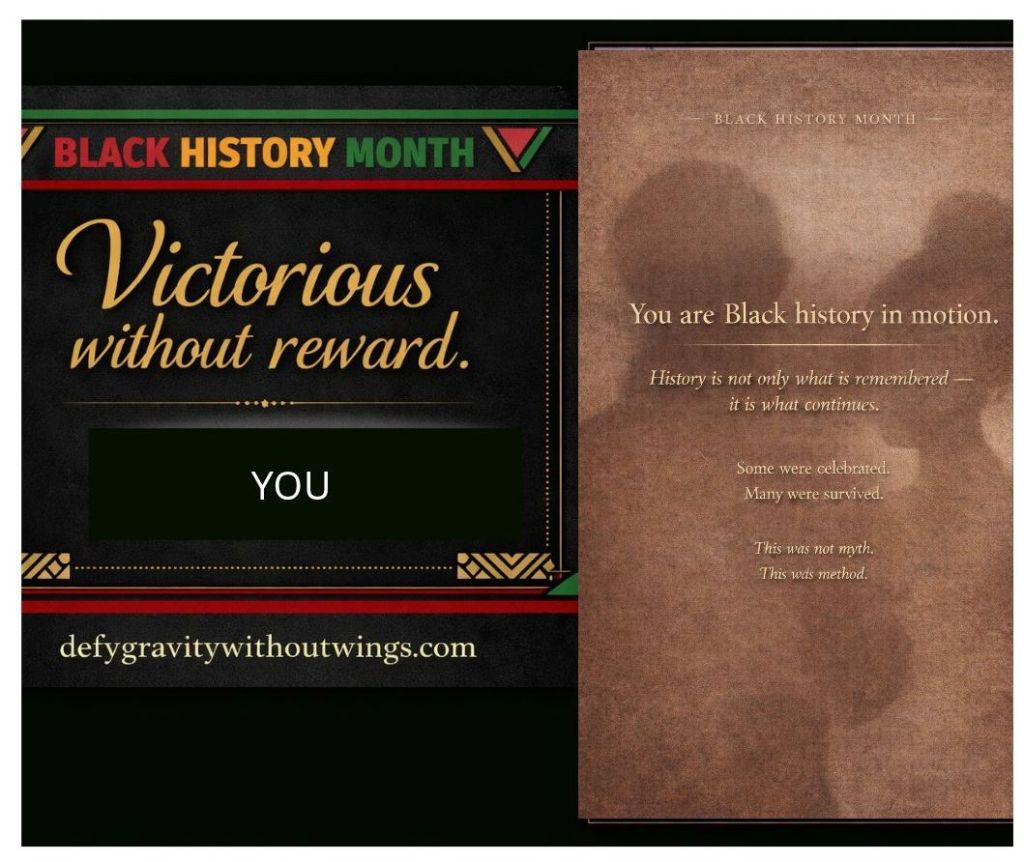
She was victorious without reward.


Cathay Williams did everything she was asked to do — and more.
She served faithfully.
She endured quietly.
She finished her assignment.


Her story reminds us that victory and recognition are not the same thing.
“Well done” does not always come from the systems we serve — but it is always recorded by God.
She didn’t fight for history.
She fought through it.
And God did not waste a single step she took.


She did not live to see her story told.
But her life still speaks.


And for those who have ever given their strength, their hope, or their encouragement without guarantee of return:
You may be unrewarded by the world —
but you are not unseen by God.


We see you, Cathay.
We salute you.


Love, Chelle

About the History in Bread Crumbs
Bread Crumbs reflections are grounded in documented historical records, including archives from the U.S. National Archives, Library of Congress, court records, contemporaneous newspapers, and first-person accounts. Spiritual reflections and personal connections are clearly marked as such and are offered with respect for the historical record.

.

Image

Stone Soup For A Restless World

(Inspired by the traditional folktale “Stone Soup”)
There is an old folktale—often called Stone Soup—with roots in European oral tradition, passed from voice to voice long before it ever lived on a printed page. No single author can claim it, because it belongs to the people. To grandmothers. To kitchens. To cold evenings and tired hearts.
My grandma told me this story when I was a child.
In it, strangers arrive in a village with nothing but a pot, water, and a stone. The villagers insist they have nothing to give. Nothing extra. Nothing to spare. But as the pot begins to simmer, curiosity loosens fists. A carrot appears. Then an onion. A potato. A handful of herbs. What begins as nothing becomes a feast—not because of the stone, but because everyone adds what they already had.
“All the believers were together and had everything in common.”
— Acts 2:44
What my grandmother made sure I understood wasn’t cleverness or trickery.
It was this: waste nothing, because even the smallest thing can become enough.
That lesson followed me into adulthood and straight into my freezer.
I freeze the little bits.
The half cup of vegetables left after dinner.
The last spoonful of beans.
The scraps that don’t look like a meal on their own.
And on nights like this—when the world feels heavy, when the news is loud, when unrest simmers hotter than any stove—I pull out those frozen fragments. I drop my own version of a stone into broth. I add spices. I stir. And somehow, once again, there is soup.
Scripture reminds us that when we bring what we have—no matter how small—God knows how to make it enough.
“Each of you should use whatever gift you have received to serve others.”
— 1 Peter 4:10
Nothing fancy.
Nothing wasteful.
Nothing done alone.
Wouldn’t it be lovely—
in a world so divided, so guarded, so afraid of scarcity—
if we could remember how to do this together?
Not fix everything.
Not agree on everything.
Just show up with what we have.
A carrot. A story. A pot. A willingness.
Stone Soup reminds us that abundance doesn’t start with excess.
It starts with shared heat.
With open hands.
With the quiet decision to believe that together is still possible.
Tonight, I’ll keep stirring.
And I’ll keep believing.
Love, Chelle
DefyGravityWithoutWings.com

Image

GOD’S UP. I MIGHT AS WELL BE TOO.

Like some kind of finely tuned timepiece, my internal alarm goes off —  clockwork faithful.
No snooze button negotiations. No grace period. Just “bing.”

And there it is… 3:00 a.m. glowing on my digital clock
(yes, I still have one — don’t judge).

I pull the comforter up like it might save me.
It does not.

My body says, up up up,
while my soul whispers, “Really, Lord? Again?”

There was a time I filled those early hours with “responsible things” —
finishing chores I ignored the night before,
paying bills that had been staring at me all day,
or letting the TV talk so I didn’t have to think.

Busy things.
Distracting things.
Things that looked productive but didn’t change me one bit.

But lately… I’m up writing.

Blog entries.
Poems.
Devotionals.

Words spilling out at a pace that tells me I’m not in charge of this schedule anymore.

And somewhere between the glow of that clock and the scratch of my pen, truth had my full attention.

I’ve moved from me cleaning house
to God housekeeping me.

Because once I’m fully awake, I go full steam —
fixing, managing, pushing, performing.
But at 3 a.m.?
I’m not impressive. I’m not polished. I’m barely caffeinated.

And that’s exactly when God starts pointing things out.

Things my soul was too tired to hear during the day,
my pen now faithfully records in the quiet.

Cleaning me.
Pruning me.
Digging around places I thought were “fine.”
Re-creating what I rushed past in daylight.

This isn’t insomnia.
This is divine interruption.

Early-morning housekeeping —
the kind where God gently rearranges what I’ve been tripping over inside
while I’m still wrapped in blankets and honesty.

And I’m reminded, softly, without accusation or demand:
“In quietness and trust is your strength.” (Isaiah 30:15)

Turns out, God doesn’t always wake us up to get more done.

Sometimes He wakes us up because He’s not finished with us yet.

Love, Chelle

Image

Unmarked Seeds And  Clearance Rack Faith

I was standing there with a handful of seeds and no idea what any of them were.
No labels. No instructions. No promises.
Just seeds.


Some were round. Some looked like dust. Some looked like… dirt pretending to be something important.

And full confession — I made the executive decision to buy them from a discount house online, which should have been my first clue that clarity was not included in the price.


Because planting unmarked seeds feels risky.
You don’t know what you’re committing to.
You don’t know how long it will take.
You don’t know what kind of care it will need — or if you just planted hope, oregano, and disappointment all in the same row.


And that is where I had to repent of my disgust with not being able to see the seeds’ vision.


God has planted a lot of unmarked seeds in me.
No timeline.
No instruction card.
No neat little packet that says “This will bloom in 90 days if watered weekly and protected from disappointment, other people’s opinions, and your own impatience.”


Just obedience.
Just trust.
Just dirt and hope.
Some seeds He plants look insignificant — almost invisible.
Some feel mislabeled by other people.
Some feel like they were handed to us without explanation at all.


And yet… seeds don’t need labels to know what they are.
They just need soil.
Light.
Time.


And a gardener who doesn’t dig them up every five minutes to check progress — which, for the record, I have learned is frowned upon in both gardening and faith.


I think that’s where I get tripped up.
I keep wanting proof before growth.
Confirmation before commitment.
Fruit before faith.


But the seed already knows what it carries — even when I don’t.


“So neither he who plants nor he who waters is anything, but only God who gives the growth.”
— 1 Corinthians 3:7


Maybe the confusion isn’t failure.
Maybe it’s faith in its earliest form.
Maybe God is saying:
Plant it anyway.
Water it anyway.
Stop interrogating the soil.
Because unmarked doesn’t mean unintentional.
And unseen doesn’t mean unimportant.
And dormant is not the same thing as dead.

Love, Chelle

Image

Third Cup of Coffee, First Lesson Of Grace

I didn’t wake up asking for a lesson.
I woke up asking a question.

When, Lord?
When will things be different?
When will healing finally arrive?

A year has passed since surgery.
By my own calendar, I decided I should be past this.
Past the restrictions.
Past the tenderness.
Past the reminders that my body has its own pace.

But today, my belly disagrees with my timeline.

If I’m being honest, it may also disagree with my choices.
Perhaps the third cup of coffee was ambitious.
Perhaps chocolate and I — though still emotionally attached — are currently not on speaking terms.
And perhaps I should have remembered the boatload of readily available internet wisdom that calmly, repeatedly explains the very misery I have managed to create for myself.

Still, I find myself asking God the same question Scripture has echoed for generations.

“How long, Lord? Will you forget me forever?” (Psalm 13)

That cry reminds me that impatience is not a lack of faith.
It is often proof that we believe God hears us well enough to answer.

What if healing is not only about what is removed,
but about what is relearned?

Without a gallbladder, my body asks for gentleness.
Without certainty, my heart does the same.

Maybe the invitation today is not to rush healing,
but to remember that restrictions are not punishment —
they are protection still at work.

And maybe God isn’t offended by my when.
Maybe He meets it with mercy.

“Because of the Lord’s great love we are not consumed,
for his compassions never fail.
They are new every morning.” (Lamentations 3:22–23)

That promise doesn’t say mercy arrives when I finally get it right —
only that it shows up faithfully, even when I don’t.

So today, I loosen my self-imposed deadlines.
I stop arguing with my body.
I release the belief that progress must look linear to be real.

I may not control the timeline,
but I can choose attentiveness over impatience.

And instead of asking, When will this be over?
I ask a better question:

Lord, how do You want to meet me here?

Because even here —
especially here —
He is present.

Love, Chelle

Image

Grossly Underqualified. Still Expecting A Harvest

I still don’t know what I’m doing.
The sweet potato in the jar in my window  can confirm it.

I stood it upright like a microphone instead of laying it down like a seed. Slips are forming anyway—which feels both rude and deeply grace-filled.

By every measurable standard, I am grossly underqualified for this harvest. I don’t garden with confidence — I garden with Google and apologies. I whisper encouragement to my plants like they’re on a faith journey too.

And yet… green keeps showing up.

Scripture says, “Do not despise these small beginnings, for the Lord rejoices to see the work begin.”
— Zechariah 4:10

Apparently, this applies to gardeners too.

The sweet potato didn’t ask for my credentials.
It didn’t wait for me to feel confident.
It just responded to warmth, light, and the fact that I didn’t give up on it.

That feels uncomfortably familiar.

God has never waited for my expertise before growing something in my care. He responds to availability, not mastery. To people who stay put long enough for growth to decide it’s safe.

I keep expecting God to say, “You’re not ready for this yet.”
Instead, He keeps saying, “Watch.”

Watch what grows when you stop over-correcting.
Watch what happens when you don’t uproot yourself every time doubt shows up.
Watch what slips free when the season is right.

Turns out God grows things even when the gardener is winging it.

I may be underqualified.
But I’m determined.
And apparently… that’s enough for a harvest.

Love, Chelle

Image

Somewhere Between The Car And The Kitchen

Disappointment doesn’t usually knock loudly.
It just keeps adding weight.


Brick by brick, we pack the backpack:
• unmet expectations
• things we thought God would do by now
• roles we keep carrying because “someone has to”
• stories we tell ourselves about who we are and what’s possible

And if I’m honest, this is the same part of me that tries to carry all the groceries in one trip.
Because clearly, asking for help would be admitting weakness…
and making two trips would be a personal failure.


So there I am — keys dangling, bags cutting off circulation, dignity questionable — determined to prove I’ve got this.
I call it independence. Heaven calls it unnecessary.


And somewhere between the car and the kitchen, I’m reminded that even Jesus sent the disciples out two by two.


Inevitably, something falls.
Or worse… something gets left in the trunk.And a couple of days later, there’s a smell. A mysterious, soul-searching smell that forces a reckoning.


Nothing humbles you faster than realizing the real burden wasn’t the bags —
it was the banana you refused to admit you dropped.


That’s how unexamined burdens work too.
What we refuse to set down eventually announces itself.
Some of the limits we feel aren’t placed by God — they’re placed by our own expectations of how we think  He should move.


We overpack faith with control.
We leave no room for surprise.
No room for grace.
No room for God to have His way — because the backpack is already full.


Jesus never asked us to be strong and burdened.
He asked us to come — and let Him carry what we were never meant to hold.


“Cast your burden on the Lord, and He will sustain you.” — Psalm 55:22


Maybe today isn’t about pushing harder.
Maybe it’s about making two trips.
Or — heaven forbid — asking for help.


Drop the bricks.
Check the trunk.
Walk  lighter.

Love, Chelle

Image

Crumbs Of Grace, My 2nd New Year.

When I think of the most important birthdays, I don’t start with cake or candles.
I start with life.


I think of the 37th birthday when  I helped deliver my grandson, Jayon — my eldest son’s first child. On that day, I didn’t just celebrate another year of my own life; I welcomed new life, new hopes, and new dreams into the world. In a way, our birthdays became twins. His arrival was proof that God was still creating, still trusting the future to fragile hands. And year after year, Jayon has never disappointed — not because he’s perfect, but because he has lived into the promise of that moment.


I think of my 50th birthday — the day I was scheduled to start chemotherapy for breast cancer. Fear tried to claim that day, but my husband gave me a birthday slumber party instead with the ladies in my crew.. Laughter showed up before dread could unpack its bags. It felt like God whispering through cupcakes and pajamas: Fight. Fight. You are not done.


On my 55th birthday, the fear shifted again. Instead of waiting anxiously for scan results, I stood on a stage wearing a crown and a “Drive 55” shirt — a playful, holy reminder to pace myself and keep going. Sometimes courage looks regal. Sometimes it looks ridiculous. Both can preach.


But my favorite birthdays are always the next one.


Whether they arrive loud and celebratory or quiet and reflective like today, they carry the same invitation. I call January 5th my second New Year — a moment to pause, look back at all that happened since last year, the good and the not-so-good. To thank God for the joys He brought us into, and for the things He delivered us out of.


“This is the day the Lord has made; let us rejoice and be glad in it.” — Psalm 118:24


Not the perfect day.
Not the painless day.
Just this one.


And today includes crumbs.
Crumbs from a Kentucky Butter Cake I made with more butter than I’m fairly certain a woman of my age should publicly admit to.

But here’s the truth: butter makes things richer. Grace does too. And neither one asks permission before doing its work.


“The steadfast love of the Lord never ceases; His mercies never come to an end; they are new every morning.” — Lamentations 3:22–23

Even on birthdays.
Especially on birthdays.


These years aren’t measured by candles alone. They’re marked by crumbs of grace — small evidences left behind that say I was fed, I was held, I was carried through

.
And if that’s what this year leaves behind — crumbs, butter, joy, survival, and gratitude — then it has been a very good year indeed.


Love, Chelle

Image

Popcorn Isn’t Dinner


I own a microwave. Nothing earth shattering in that announcement.


It lives near my fancy cooktop and mostly functions as a glorified popcorn popper and an occasional emergency coffee reheater. It’s efficient, dependable, and excellent at handling immediate needs.


But it has never fed my soul.


I grew up in a time when food took time. Things were simmered, stewed, braised, and watched. You didn’t just make dinner—you tended it.


I still carry evidence of that kind of cooking: little cuts on my fingers from dull knives, small burns from forgetting pot holders, and an instinct to hover near the stove because something important is happening here.


That’s the kind of faith formation I recognize.
Microwave food is fast. Slow cooking is faithful.


The microwave satisfies a craving. The slow pot answers a hunger.


Scripture reminds us that faith was never meant to be instant. “Let perseverance finish its work so that you may be mature and complete, not lacking anything” (James 1:4, NIV). Perseverance doesn’t microwave. It simmers. It stays. It waits for the work to be done.


We live in a world that loves microwave spirituality: – quick verses – instant breakthroughs – tidy testimonies – three easy steps and a closing prayer.


And listen—I’m not mad at the microwave. Sometimes popcorn is necessary.
But popcorn isn’t dinner.


Faith that matures—faith that holds when life burns, cuts, and bruises—comes from staying near the stove. From paying attention. From trusting the heat even when it’s uncomfortable.


Slow-cooked faith smells different. It fills the house. It draws people in before it’s finished.
And yes, it might leave a mark or two.
But those marks aren’t failures. They’re proof you stayed long enough for God to finish His work.


So if your faith feels like it’s taking longer than expected… If you’re still simmering when you wanted to be served… If you’ve got a few burns and nicks to show for the journey…
Take heart.
You’re not being microwaved.
You’re being made.

Love,Chelle

Prayer
Father, thank You for not rushing what You are forming in me. Help me stay near the heat without growing bitter, impatient, or afraid. Teach me to trust the slow work of Your hands, even when I want instant results. And when I’m tempted to settle for spiritual snacks, remind me that You are preparing something that truly satisfies.
In Jesus’ name, Amen.

Image

A Meeting Place


This may not sound like me.


I’m usually the one who finds the humor, the metaphor, the small spark of light tucked inside the ordinary. I believe in joy — deeply. I still do.

But today, joy feels quieter, and sorrow feels closer to the surface .
The world feels fractured.
Nation against nation.
Neighbor against neighbor.
Families strained.
Friendships reduced to likes, views, and fleeting affirmations.


And somewhere in the middle of all this noise, what seems to be slipping away is our sense of community — the kind where people are known, not curated. Where connection doesn’t require a platform or performance.


Yesterday, as I mourned world events ,  all of this along with a side of opinions still wrapped with faith, I was told I was hiding behind God and the Bible.


That stayed with me.


Not because it shook my faith, but because it revealed something deeper about the times we’re living in — a world so uncomfortable with lament that even sacred language is suspect when it refuses to harden into arguments or slogans.


But my faith has never been a hiding place.
It has always been a meeting place — where grief and hope are allowed to sit together without rushing one another out of the room.


Today, I find myself weeping.
Not because faith has failed, but because love is still very much alive.
“Jesus wept.” — John 11:35
He stood in the presence of grief and loss and did not rush to fix it, explain it, or weaponize it. He allowed tears to speak where words fell short. If tears were worthy of Him, they are not beneath us.
Scripture doesn’t ask us to bypass sorrow — it calls us to enter it together.
“Rejoice with those who rejoice; mourn with those who mourn.” — Romans 12:15


This isn’t a departure from who I am.
It’s a refusal to pretend.
I still believe in hope. I still believe in resurrection. I still believe God has not lost the plot. But I also believe sorrow has a place in the story — not as an ending, but as an honest chapter.


So today, I show up softer. Quieter. More tender. Trusting that God can hold my tears just as faithfully as He holds my hope.


And believing that even here — especially here — grace is present.
Love Chelle