Image

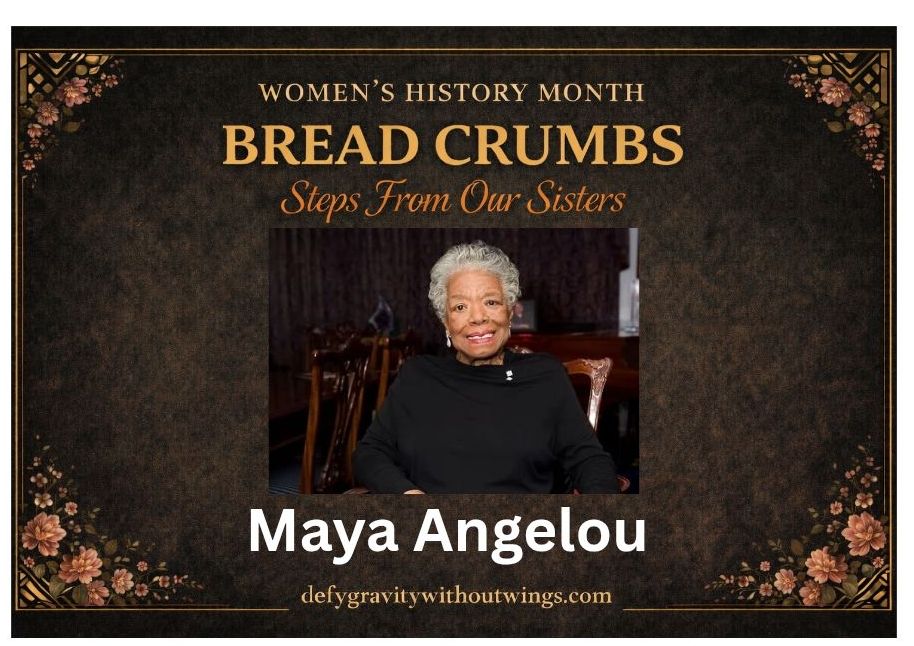
Maya Angelou: When a Voice Becomes Courage

She carried many lives before the world called her a poet.
Maya Angelou was born in St. Louis, April 4, 1928 as Marguerite Annie Johnson.   The name Maya was derived from her brother Bailey who just could not pronounce her name and would call her “My Sister” . It morphed into Maya which stuck. Angelou came from her first husband,  Enistasios Angelos, a Greek sailor. She adapted the surname slightly to Angelou when she began performing as a dancer and singer so it would sound more lyrical on stage.

She was  raised in the segregated South where dignity was often denied but never fully destroyed. Her childhood held both silence and survival, experiences that would later shape the voice the world came to know.
She refused to stay one thing. Angelou worked as a streetcar conductor, dancer, singer, journalist, and organizer long before the world recognized her literary voice. Her life moved through many stages, but each experience added depth to the perspective she would later bring to her writing.
Her voice extended beyond stages and books. During the Civil Rights Movement she worked alongside Martin Luther King Jr. and Malcolm X, helping organize, write, and advocate for justice. In 1964, after years living and working in Africa, Angelou returned to the United States at the invitation of Malcolm X to help him build a new civil rights organization focused on global Black unity.
Before that work could fully take shape, Malcolm X was assassinated.
The loss shook her deeply, but Angelou continued writing, speaking, and advocating for dignity and equality. Only a few years later the movement suffered another devastating loss when Dr. King was assassinated on April 4, Angelou’s own birthday.
Still she wrote.
In 1969, I Know Why the Caged Bird Sings gave voice to stories the world rarely allowed Black women to tell out loud. Stories of trauma, identity, and the quiet power of rising again. Her words did not whisper. They lifted.
As she once wrote: “Still I rise.” Three simple words that carried generations.
But the voice the world came to love was not always easy for her to use.
As a young girl Maya Angelou endured a violent assault. When she spoke the truth about what had happened, the man responsible was later killed. In her young mind she believed her words had caused it.
So she stopped speaking.
For years she lived in silence, afraid that her voice carried too much power. It was a teacher, Mrs. Bertha Flowers, who slowly led her back to language through books, poetry, and the music of words.
The voice that would one day move a nation had to be reclaimed first.
In 1993 she stood at the inauguration of President Bill Clinton and read On the Pulse of Morning, becoming only the second poet in American history to deliver a poem at a presidential inauguration.
But her greatest legacy was simpler.
She gave language to survival.
Her life echoes a truth older than any poem:
“We are hard pressed on every side, but not crushed; perplexed, but not in despair.” — 2 Corinthians 4:8

I once saw Maya Angelou in concert. In a packed 1000 plus  seat  theater she sang “God Sent a Rainbow” without a microphone. The room fell completely silent as her voice carried to every corner. It felt as if the walls themselves were listening.
In that moment I understood something about courage. Voices like Maya Angelou’s do more than speak. They remind us that we are not meant to stay silent either. Somewhere in our own lives there is a truth waiting to be spoken, a kindness waiting to be offered, a step waiting to be taken.
And that is how Bread Crumbs are made.
Poet. Witness. Voice for generations.
We see you, Maya Angelou — for giving language to survival and wings to truth.
Bread Crumbs — from those still marching forward.
Steps From Our Sisters. Still here.
What step might be waiting for you?
Image

Unshakable

My son-in-love, Kamau, posted that he was booking a flight to Africa. There was a storm coming, he said, and somebody needed to build shelters for the giraffes.

He displayed a picture like it was urgent.
Dark sky. Lightning splitting it wide open.
Giraffes standing tall in the open plain.

He might have been joking (hard to tell with him.) Because that is Kamau.  Compassion wrapped in comedy. Protection tucked inside a punchline. A heart that sees danger and immediately asks, Who needs covering?
I love that about him. ( Don’t tell him I said that.)

But when I looked closer at the picture,
those giraffes were not panicking. They were not lowering themselves to the ground.
They were not scattering. They were standing.

Unshakable. Unmovable.
Storm pressing in. Mortal danger possible.
And yet their necks were lifted.
Their legs planted.
Their bodies steady in the wind.

It made me think of Psalm 91:
“He who dwells in the secret place of the Most High shall abide under the shadow of the Almighty. Under His feathers you will find refuge.”

Those giraffes looked uncovered. But they were not unprotected. They looked exposed.
But they were not outside of shadow. Psalm 91 does not promise the absence of storms. It promises covering in the middle of them.

And then Psalm 46:10 settles it:
“Be still, and know that I am God.”


Not be frantic. Not be consumed. Not be undone. Be still. Still like you trust the One who commands the sky. Still like you believe the storm does not get the final word. Still like your roots run deeper than what threatens you.

We are living in days where thunder travels across oceans. International conflict crackles like lightning. Voices rise. Fear spreads.

But maybe faith looks like a giraffe in a storm.
Not dramatic. Not reckless. Just anchored.
Unshakable. Unmovable.

And I smiled again. Because my son-in-love thought he was just telling a joke. Instead… he helped me write a sermon about faith standing firm in adversity.

He is going to be so embarrassed when he reads this. Make sure you tease him for me.

Love, Chelle
DefyGravityWithoutWings.com

Image

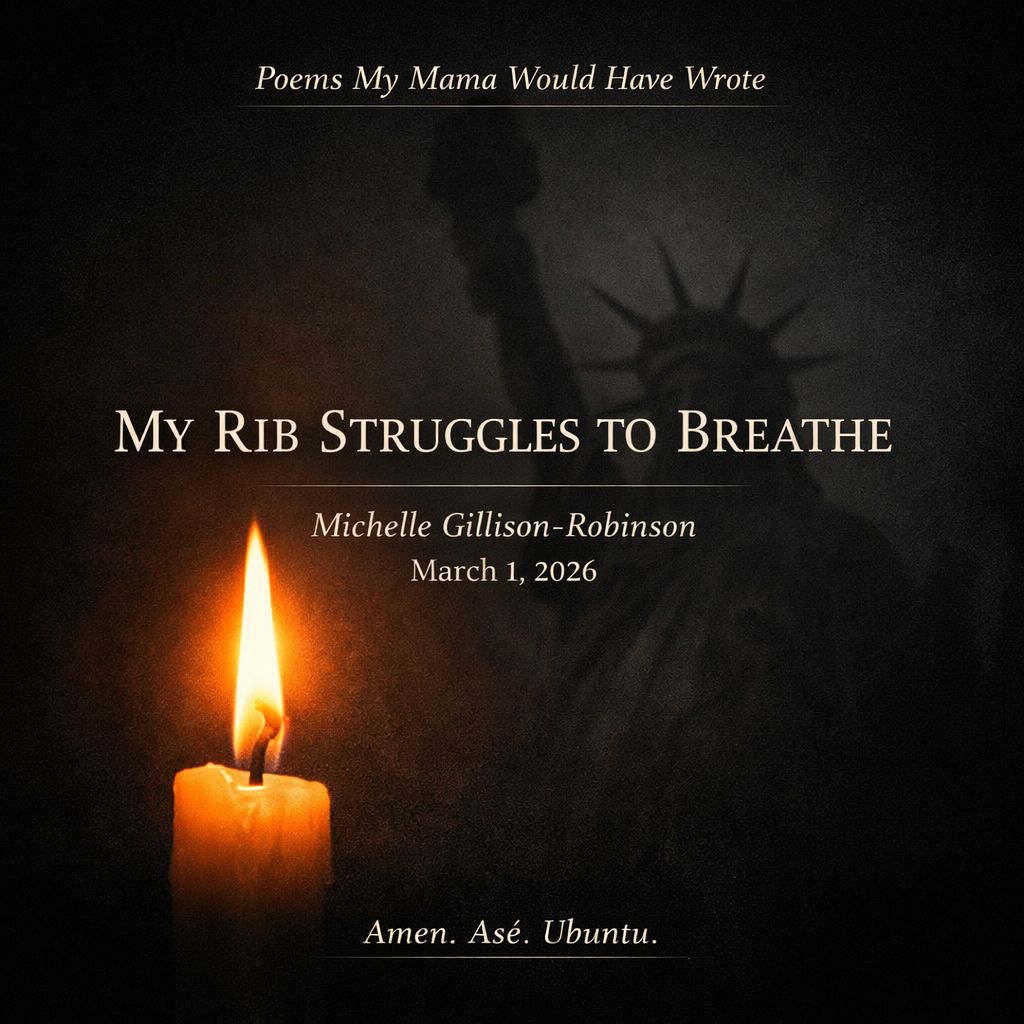
My Rib Struggles To Breathe

March 1, 2026

God of dirt under fingernails, of headlines and heartbeats, of babies born into chaos
and mamas who don’t sleep.
Lord hear our prayer
Sit with us in sackcloth and ash.

Hear the Latina scream for her familia.
Hear the Black mama beat her chest
from the weight of knees and crushed souls
Hear the confused person of no color
whisper, “Am I next?”

See my father’s shadow.
The brown father working double shifts
with documents that feel like paper shields.
The Black father teaching his son
how to survive a traffic stop.
The father from somewhere else
trying to sound less foreign
so his children sound more safe.

The one who has never been taught how to weep, but learns that privileged skin
offers no protection.

Watch how they swallow fear so their families can eat.
Watch how they stand tall while history presses down.
Do not turn Your face from the trembling.

Is Abraham’s argument still valid?
Is there still one worth saving?
If there are fifty…
If there are forty…
If there are ten…
Will mercy outrun destruction?

Because we be something else.
We invent vaccines and vendettas.
We cure disease and cultivate grudges.
We build greenhouses and graveyards
in the same generation.

We scream “save the babies” while demanding their mothers bleed in parking lots outside buildings bearing neon  crosses and snakes on stakes.

And if that little bundle of hope
takes breath….. we ration mercy.
We starve truth. We feed them fear.
We hand them a system and call it destiny.

Forgive us for mistaking loud for strong,
revenge for justice,
power for wisdom,
money for mattering.

Slow the hands hovering over buttons.
Cool the tongues that set nations on fire.
Remind the mighty that bleeding does not discriminate.

When leaders puff up,
deflate egos with a firm hand.
When citizens rage-scroll at 3:33 a.m.,
tuck them back into cradles of mercy.

Teach us that being right is not the same thing as being righteous.

And teach us this, Lord –
That Holy is set apart, not divided asunder.

Set apart does not mean split down the middle.
It does not mean camps or corners
or color-coded salvation.

Holy is not red. Holy is not blue. Holy is not loud.

Holy is careful. Holy is weighty.
Holy is handled like heirloom glass passed from trembling hands.

Do not let us carve You up to fit our arguments.
Do not let us drape Your name over fear and call it faith.

If we must be set apart, let it be in compassion.
If we must be different, let it be in mercy.
Separate us from cruelty.
Separate us from arrogance.
Separate us from the need to win
at the cost of one another.

But do not divide us beyond repair.
Remind us that what is sacred is never meant to be torn.

Lord Hear Our Prayer

For the refugee in the cold,
the soldier on watch,
the child learning history from a textbook that left something out —
Cover them.

Guard democracy like a fragile seedling in late frost.
Guard dignity like Grandma’s good china.
Guard hope like a porch light left on for whoever comes home late.

When we start thinking the sky is falling,
Whisper,
“Dead and dormant are not the same thing.”

Let wars stall. Let hatred get tired. Let truth outlive the loud.

And if we must walk through fire, let it burn off what is false and leave what is faithful.

While presidents posture and pundits perform
Let ordinary people sleep.
Let Nama rest. Let grandchildren dream of gardens instead of sirens.

My bladed pen is hot. It does not drip ink.
It draws blood from silence. It refuses anesthesia. I tire  of gentle prayers that never name the wound.

If my words burn, let them cauterize.
If they cut, let them carve truth
from marble lies.

Out of all the people in this great big world,
please hear me. Please know my voice.
Hear me when I pray.
For I will not whisper  when my rib struggles to breathe.

Amen.  Ameen. Aṣẹ̀ Olódùmarè. Selah. Shanti. Alafia. Tathāstu. Ubuntu

from Poems My Mama Would Have Wrote ( If She Had Been Allowed”
Althea’s Daughter: Michelle Gillison-Robinson

Image

You Are Black History

Black history does not live only in textbooks, timelines, or framed portraits. It lives in you.


It lives in the prayers your grandmother whispered that no one recorded. It lives in the courage it took for your parents and grandparents to keep going when quitting would have been easier.

It lives in the way you show up to work, to church, to community, to family — even when the reward is unclear.


Black history is not only something that happened. It is something that is still happening.


It is made every time you choose dignity over bitterness. Every time you carry joy in a system that profits from your exhaustion. Every time you tell the truth — even quietly. Every time you endure, love, build, teach, heal, or believe anyway.


Some names were written down. Many were not.
Some stories were celebrated. Many were survived.
But history is not only what is remembered — it is what continues.


You stand on the shoulders of those who were victorious without reward. Those who served faithfully without applause. Those who planted seeds they would never live to see bloom.


Their courage flows through you.


And we have always known how to leave something behind.


Breadcrumbs on the ground when the path was uncertain. Hushpuppies tossed not as waste, but as wisdom — a way to distract danger long enough to keep moving. Cornrows braided tight to the scalp, not only as beauty or tradition, but as memory — paths etched into hair, holding maps to water, to safety, to freedom.


What could not be written down was carried. What could not be spoken aloud was encoded. What could not be protected by law was protected by love, community, and God.


This was not myth. This was method.
A people learning how to survive systems designed to erase them — by remembering anyway.


If you are still leaving breadcrumbs for those coming behind you… still marking the way quietly… still choosing faith, dignity, and care when no one is watching…
You are doing what has always been done.


You are part of a holy lineage of guidance and endurance. A living echo of the God who makes a way where none seems visible and leads His people forward, step by step.


“Let us not become weary in doing good, for at the proper time we will reap a harvest if we do not give up.”
— Galatians 6:9
“Your word is a lamp to my feet and a light to my path.”
— Psalm 119:105


If you are still standing, still hoping, still loving, still reaching for God and for one another — you are Black history in motion.
Not just because of where you came from, but because of how you choose to live.


We see you. We honor you. You matter.
Love, Chelle

Image

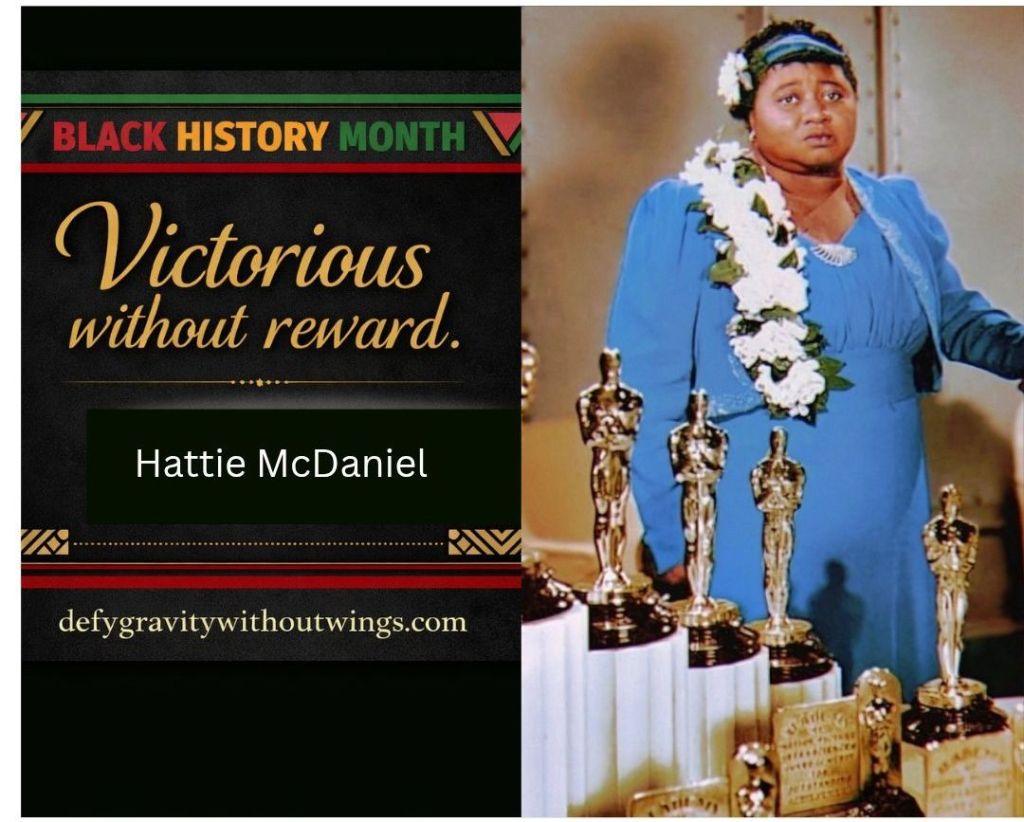
Hattie McDaniel, First In  A Segregated Room


In 1940, Hattie McDaniel became the first African American to win an Academy Award. She won Best Supporting Actress for her role as Mammy in Gone with the Wind (1939). She was also the first African American ever nominated for an Oscar. History shifted that night.


And yet, at the ceremony held at the Ambassador Hotel in Los Angeles, she was required to sit at a small segregated table against the wall, apart from her white castmates. Victory. With boundaries.


When the film premiered in Atlanta in 1939, Georgia’s Jim Crow laws barred Black cast members from attending. It is widely reported that her co-star Clark Gable objected strongly and threatened not to appear in protest. Accounts say Hattie encouraged him to attend, understanding the political climate and the fragile footing of her position in Hollywood. Public outrage from powerful allies could make headlines. But she would still have to live and work inside the system afterward. Strategy is not surrender.


MORE THAN MAMMY
Hattie McDaniel was born in Kansas to parents who had been enslaved.

She was among the first Black women to sing on American radio in the 1920s, a successful blues performer before Hollywood and recorded 16 blues sides between 1926 and 1929. She appeared in over 300 films, though many roles went uncredited. Her best known other major films are Alice AdamsIn This Our LifeSince You Went Away, and Song of the South.

She became one of the highest-paid Black entertainers of her era and later starred in the radio show Beulah, becoming one of the first Black women to headline a nationally broadcast radio program.

In 1952, she became one of the first Black women to star in a television series when Beulah moved to television.

She holds two stars on the Hollywood Walk of Fame — one for motion pictures and one for radio.


All of this was before Rosa Parks. Before Martin Luther King Jr. became a national figure. Before the Civil Rights Act.

Jim Crow was law. Black actors were largely confined to domestic or servile roles. Many within the Black community criticized those portrayals for reinforcing stereotypes.

Hattie’s response was pragmatic and pointed: “I’d rather play a maid than be one.”

Being first does not mean being free. McDaniel died of breast cancer on October 26, 1952, at age 59 in Woodland Hills, California. Her final wish to be buried in the Hollywood Cemetery was denied due to its segregation policy at the time.  Decades later, a memorial plaque was placed in her honor.

In  2006, she was honored with a US postage stamp, and in 2010, she was inducted into the Colorado Women’s Hall of Fame.

In 2006, the Academy replaced her long-missing Oscar, confiscated by IRS debt, with a replica, formally acknowledging her historic win.  The original was to have been displayed at Howard University but went missing in the 1970s

Notably, no other Black woman would win an Oscar for 50 years after Hattie. Not until Whoopie Goldberg won for Best Supporting Actress in Ghost.

Galatians 6:9

“Let us not grow weary in well doing: for in due season we shall reap, if we faint not.”


CARRY THIS WITH YOU
Sometimes the door that opens to you is imperfect. Sometimes the room is segregated.
Sometimes you are allowed in — but only to the edge.

Hattie McDaniel walked in anyway. Not because the system was fair. But because excellence inside limitation still moves history forward.


BREADCRUMB
What opportunity are you resisting because the conditions are not ideal? Being the first often means carrying contradictions so others can inherit clarity.


SALUTE
We see you, Hattie McDaniel — for becoming the first when the room was not ready, and for claiming victory in a nation that tried to seat you in the shadows.

Bread Crumbs — for those coming after us.
Victorious without reward. Still here.

Image

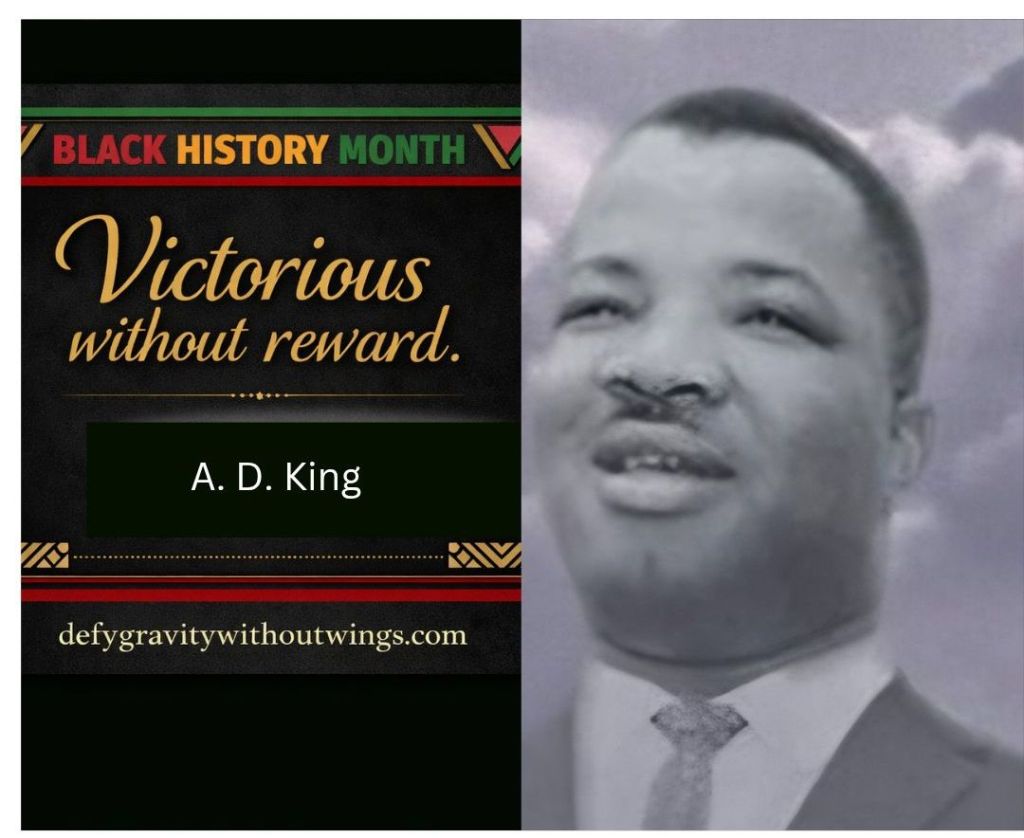
A.D. King – The Other King

Before history narrowed the movement to one name, there were two brothers.

Alfred Daniel Williams King. Born in 1930. Preacher. Organizer. Strategist. Three years younger than Martin Luther King Jr. but standing in the same danger.

When Birmingham, Alabama became ground zero in 1963, A.D. did not visit. He moved there.
Birmingham was nicknamed “Bombingham” because of the frequency of racial terror bombings. Churches. Homes. Black neighborhoods.

A.D. helped lead mass meetings and demonstrations alongside Fred Shuttlesworth and Ralph Abernathy. While Martin carried the national microphone, A.D. carried the local weight: Organizing. Stabilizing. Coordinating.
Keeping frightened communities steady.

He was arrested during the Birmingham Campaign.His home was bombed.  While Martin wrote “Letter from Birmingham Jail,” A.D. was outside holding the infrastructure together.

Movements do not survive on speeches alone.
They survive on people whose names do not trend. After Martin was assassinated in 1968, A.D. stepped further into leadership. 
One year later, in 1969, A.D. King was found drowned in his swimming pool at just 38 years old. The death was ruled accidental. But many in the community questioned how a strong adult man, familiar with his own pool, could drown under unclear circumstances.

No national day of mourning. No holiday. No monument echoing his name. History has a habit of compressing movements into a single face. But there were always second lines. Siblings. Strategists. The ones who held meetings when the cameras left.

We still do it today. We elevate one leader.
We forget the organizers. We chant one name.
We overlook the network. A.D. King represents that hidden layer.

He stood in the same fire. Faced the same threats. Carried the same calling. But the spotlight did not linger.

Micah 6:8

“He hath shewed thee, O man, what is good; and what doth the Lord require of thee, but to do justly, and to love mercy, and to walk humbly with thy God?”

CARRY THIS WITH YOU
If your work is not visible, is it still valuable? Of course it is.  If your name is not printed, is your impact erased? Of course not.

BREADCRUMB
History may narrow the headline. But heaven keeps fuller records.

We see you, A.D. King — for carrying weight without applause.

Bread Crumbs — for those coming after us.
Victorious without reward. Still here.

Image

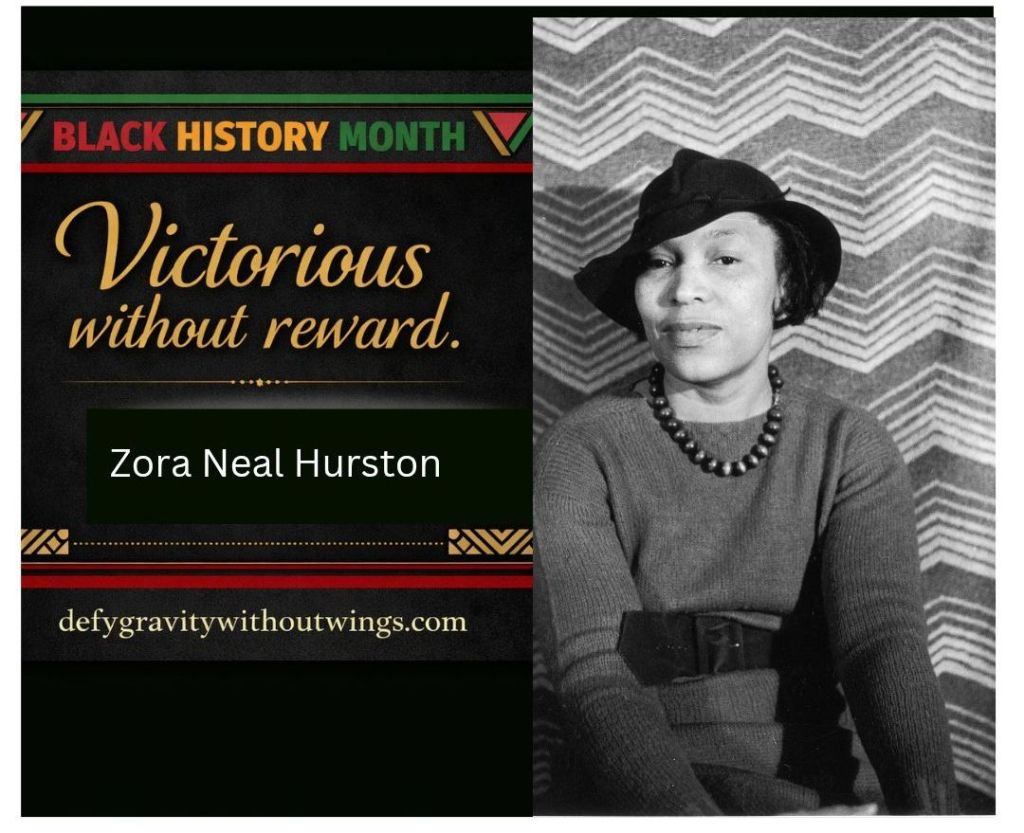
REFUSING TO BE EDITED: Zora Neale Hurston


Before the acclaim.  Before the syllabus. Before the rediscovery. 

There was a girl in Eatonville, Florida. One of the first all-Black incorporated towns in America. A place where Black men held office. Black businesses lined the streets. Black authority was ordinary. Zora did not grow up learning inferiority. She grew up witnessing Black self-governance.She later said she only felt “colored” when she left Eatonville. That foundation mattered.


Her mother told her to “jump at the sun.”
Then her mother died when Zora was thirteen.
Stability fractured. She was sent away. She worked as a maid. She fought for schooling. She even shaved years off her age to qualify for education she refused to surrender. She made her way to Howard University. Then to Barnard College — the only Black woman in her class.

Zora did not enter literature quietly. During the Great Depression, she worked under the Works Progress Administration, a federal New Deal program created to provide jobs for unemployed Americans. Through its Federal Writers’ Project, writers were paid to document American life.

Zora used that platform to travel the South collecting Black folklore. She sat on porches recording stories, sermons, songs, dialect. She preserved language as it was spoken — not polished for respectability. That was civil rights work.

She treated everyday Black life as worthy of scholarship at a time when much of the country treated it as caricature. But Zora did not always align with the popular script.

She did not write protest novels on demand.
She did not center white oppression in every paragraph. She resisted narratives that reduced Black identity to suffering alone. And when the Supreme Court decided Brown v. Board of Education in 1954 — declaring segregated public schools unconstitutional — Zora publicly criticized aspects of the ruling.

Not because she supported segregation.
But because she rejected the quiet assumption that proximity to whiteness was the only path to equality.  She believed integration should not come at the cost of Black institutional pride or self-determination. She worried that dependence on white approval could weaken Black autonomy.

That stance placed her at odds with much of the civil rights leadership of her time. Some admired her independence. Some felt she undermined the movement. Some labeled her out of step. She kept writing anyway.

Their Eyes Were Watching God centered a Black woman’s voice, love, desire, and interior life. Not as political slogan — but as full humanity.
Joy, for Zora, was not a distraction from struggle. Joy was defiance.

And then — she died in 1960, poor and largely forgotten. Buried in an unmarked grave in Florida. No parade. No national mourning.
No bestseller comeback.

Years later, her work was rediscovered. Her grave was marked. Her voice returned to classrooms and conversations. Forgotten in her time. Found again by the next.

Zora reminds us that civil rights is not only marches and lawsuits. It is also narrative. It is who defines Black life. It is the refusal to shrink complexity for acceptance. She was brilliant and sometimes difficult. Independent and sometimes misunderstood. Unapologetic when it cost her.

CARRY THIS WITH YOU
Where have you been told that success requires you to leave something of yourself behind? Zora teaches us that preserving who you are — even when misunderstood — is its own form of resistance.

BREADCRUMB
Not all revolution is loud. Some of it sounds like porch laughter, a stubborn pen, and a woman refusing to be edited by her era.

We see you, Zora Neale Hurston — for telling our stories without apology.
Bread Crumbs — for those coming after us.
Victorious without reward. Still here.

Image

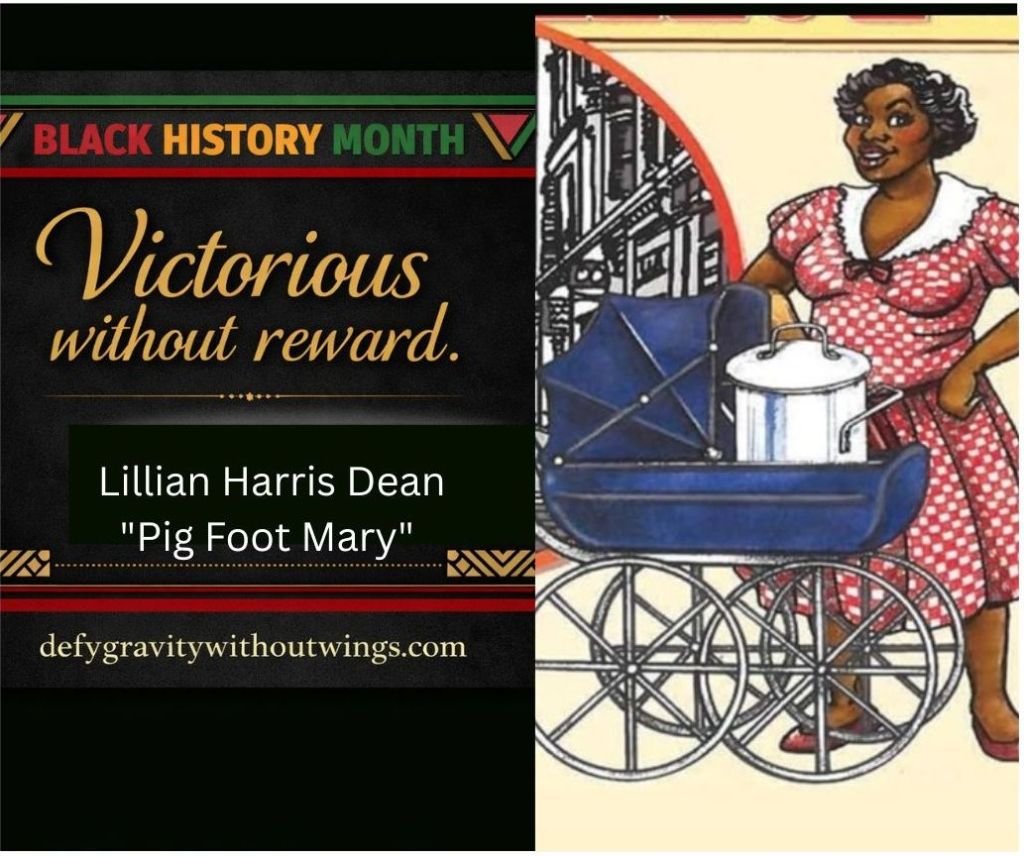
Pig Foot Mary: The Woman Who Pushed Her Future Down the Street


Before food trucks.  Before catering contracts.
Before pop-up kitchens. There was a formerly enslaved Black woman  pushing a baby carriage filled with pickled pig’s feet.

Her name was Lillian Harris Dean. History remembers her as Pig Foot Mary. And what some would have called scraps, she called strategy.

Born in Mississippi around 1870. She migrated north during the Great Migration era. She was reported a woman of large stature (striking fear in even some men).

THE BABY CARRIAGE BEGINNING

After emancipation, economic opportunity for Black women was painfully narrow. Formal loans were not available. Property ownership was rare. Protection under the law was inconsistent at best.

So Mary did what resilient women have always done. She looked at what she had.
She cooked pig’s feet — inexpensive cuts that working people could afford — and loaded them into a baby carriage. That’s  right no baby, just a baby carriage purchased with two of the five dollars she arrived with and a tin pot she brought with her.

Then she walked the streets of Washington, D.C., selling directly to laborers, porters, and government workers who had migrated from the South but desperate for a taste of home cooking lacking in the industrial north.

No storefront. No investors. No safety net.
Just legs, grit, and a carriage. That carriage gave her mobility. Mobility gave her customers. Customers gave her capital.
Capital gave her options. Consistency built reputation. Reputation built revenue.

From those early street sales, though unable to read, she negotiated contracts with suppliers, opened restaurants, operated boarding houses, acquired property, and became one of the wealthiest Black women in New York City  during her time. She later married a prominent black lawyer she had hired to keep her financial empire safe.

Later in life, she faced legal troubles that interrupted her business, a common vulnerability for Black entrepreneurs in that era. When her power and influence started to invade beyond the black community and into  white upper Manhattan,  a racist court system convicted her of running a disorderly house.    After her release from prison, she retired to California.

She did not inherit influence. She built it.
She did not wait for approval. She moved.

Pig Foot Mary represents a pattern we see over and over in Black history:
Innovation born from restriction.
Mobility created from limitation.
Enterprise rising from overlooked ingredients.

She took something humble and made it sustaining.

“She considers a field and buys it; out of her earnings she plants a vineyard.” — Proverbs 31:16

Mary did not own fields at first. She owned a route. But the principle is the same.
Use what you have. Work what you have.
Move what you have.

CARRY THIS WITH YOU
You may be waiting for a storefront when all you have is a carriage. Push anyway.

You may be waiting for funding when all you have is a recipe. Cook anyway.

You may be waiting for someone to validate the vision. Walk anyway.

BREADCRUMB

Sometimes the business plan is wrapped in something people underestimate. And sometimes the thing you’re pushing… is actually pushing you into destiny.

We see you, Lillian Harris Dean for turning a baby carriage into a business model. We see you for feeding working hands and building wealth from what others discarded.

Bread Crumbs — for those coming after us.
Victorious without reward. Still here.

Image

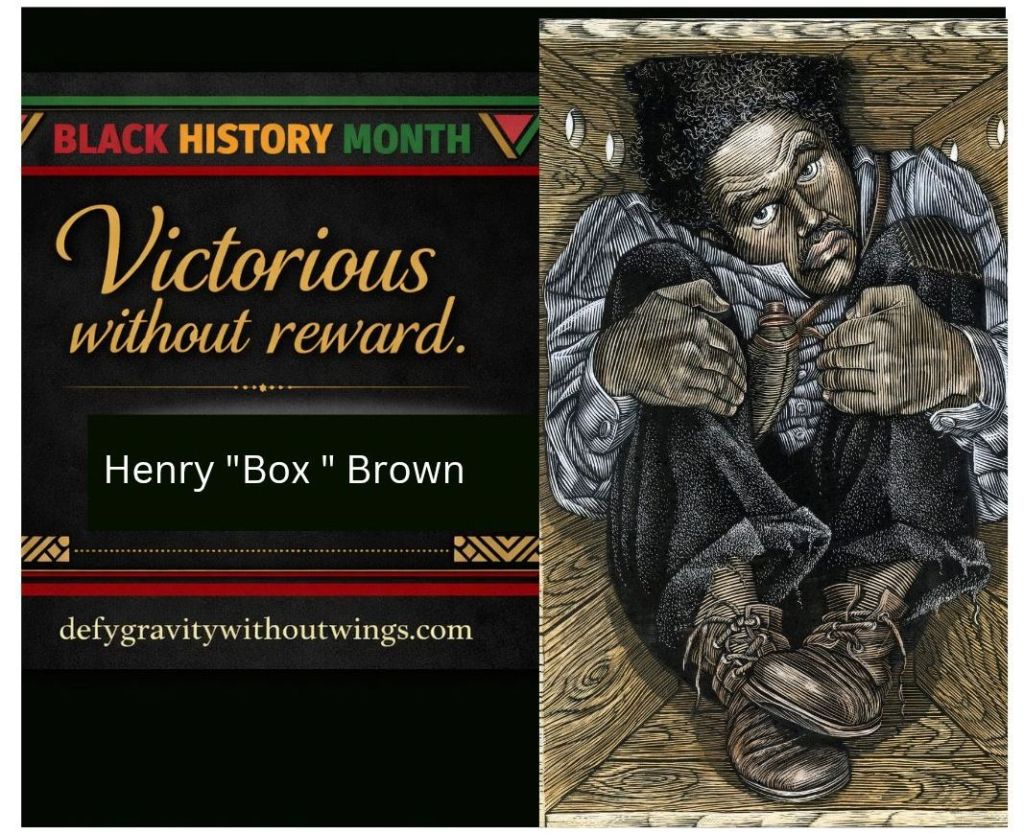
Henry Box Brown – He Mailed Himself To Freedom

In 1849, an enslaved man in Virginia made one of the most daring escapes in American history. His name was Henry Box Brown.

Born around 1815 in Louisa County, Virginia, Brown was enslaved by John Barret, a former mayor of Richmond. After Barret’s death, Brown was sent to Richmond and hired out to work in a tobacco warehouse. He married while enslaved. He had children.

In 1848, his wife and children were sold to a plantation in North Carolina. That loss changed everything.

On March 23, 1849, Brown arranged an extraordinary plan with the help of free Black and white abolitionists. He had himself sealed inside a wooden crate measuring approximately three feet long, two feet wide, and two and a half feet deep. The box was labeled “Dry Goods.”

It was shipped from Richmond, Virginia, to Philadelphia, Pennsylvania, via Adams Express Company. The journey lasted 27 hours. The crate traveled by wagon, railroad, steamboat, and carriage. At times it was placed upside down. Brown later wrote that blood rushed to his head and he feared suffocation. To steady himself, he sang hymns.

When the box was opened in Philadelphia at the Anti-Slavery Office, Brown stepped out alive and reportedly greeted the astonished men in the room with calm composure.
His escape was immediate national news.

After gaining freedom, Brown became an abolitionist lecturer. He traveled throughout the Northern states, speaking about slavery and reenacting his escape by climbing into a replica box during performances.

Following the passage of the Fugitive Slave Act of 1850, which increased the risk of capture even in free states, Brown moved to England. He remained there for more than two decades, performing as a speaker, showman, and later as a magician, continuing to tell his story.

He eventually returned to the United States later in life and remained a public performer until his death, believed to have occurred in 1897.

Henry Box Brown did not wait for rescue.
He engineered it. He endured confinement to secure freedom. He turned survival into testimony. He transformed a shipping crate into a symbol of resistance.

His story remains one of the most vivid examples of self-emancipation in American history.

Psalm 18:19
“He brought me out into a spacious place; he rescued me because he delighted in me.”


CARRY THIS WITH YOU
Freedom sometimes requires courage that feels impossible. Do not underestimate what can happen when resolve meets faith.


BREADCRUMB
When systems close in, imagination becomes strategy. When doors are locked, courage builds another exit. History remembers those who refused to accept chains as final.


SALUTE
We honor Henry Box Brown, whose 27-hour journey inside a wooden crate became a permanent witness to the will to be free.
We salute the man who trusted movement over fear, faith over despair, and action over surrender.

Your box became a doorway.
Your confinement became testimony.
Your name remains a symbol of self-determined freedom.


Bread Crumbs — for those coming after us.
Victorious without reward. Still here.

Image

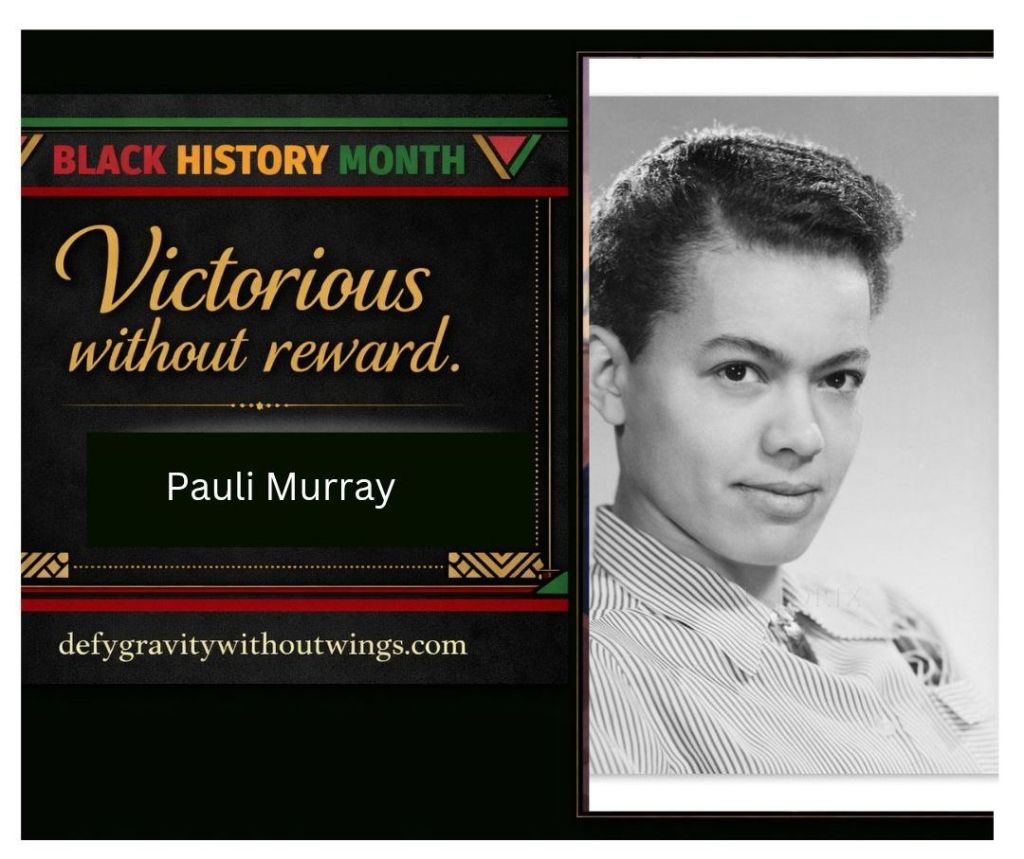
Pauli Murray – She Was The Blueprint

Before the Supreme Court corrected segregation, before women stood firmly in constitutional protection, before pulpits widened for Black women Pauli Murray had already written the argument.

At Howard University School of Law in the 1940s, she challenged the foundation of “separate but equal.” While others argued for better facilities, Murray insisted segregation itself violated the Equal Protection Clause of the Fourteenth Amendment.
Her professors thought it too bold.

Years later, that reasoning formed the backbone of Brown v. Board of Education. Thurgood Marshall reportedly called her earlier research “the Bible” of the civil rights movement. She was not the headline.
She was the framework.

In 1965, she co-authored a groundbreaking paper arguing that the Fourteenth Amendment prohibited discrimination based on sex. When Ruth Bader Ginsburg later argued landmark gender equality cases, she cited Murray’s work directly.
Again — blueprint.

In 1966, she helped co-found the National Organization for Women, shaping modern women’s advocacy.

And in 1940, long before Rosa Parks became a household name, Murray was arrested for refusing to move to the back of a segregated bus. Her resistance was deliberate and strategic.

Then came the church.
In 1977, she became the first Black woman ordained as an Episcopal priest. The ceremony took place in the same chapel where her grandmother, born into slavery, had once been baptized. The descendant of the enslaved stood at the altar as clergy.

History does not always move through loud voices. Sometimes it moves through disciplined minds and stubborn faith.

Murray battled depression. She navigated belonging in spaces slow to affirm her. She lived at intersections the world had not yet learned to name. But she did not step away.
She studied. She wrote. She organized. She stayed.

And because she stayed, the law shifted.
Because she wrote, others argued and won.
Because she persisted, doors opened wider than they had ever been before.

Prophetic work is not always applause.
Sometimes it is architecture.

Isaiah 1:17
“Learn to do right; seek justice. Defend the oppressed.”


CARRY THIS WITH YOU
You may not be the headline.
But you might be the hinge.
Build anyway.
Stay steady.
History often rests on frameworks laid by those who refuse to quit.

BREADCRUMB
Sometimes the victory is not in the spotlight but in the structure. Sometimes the reward is not applause but impact. Write the argument. Lay the foundation. Stay in the room.


SALUTE
We honor Pauli Murray — legal architect, movement strategist, priest, and prophet.
We salute the mind that shaped arguments before the nation was ready to hear them.
We salute the courage that resisted before resistance was popular. We salute the faith that answered a call even when institutions hesitated.

Your blueprint stands.
Your work endures.
Your name is not a footnote.

Bread Crumbs — for those coming after us.
Victorious without reward. Still here.