Image

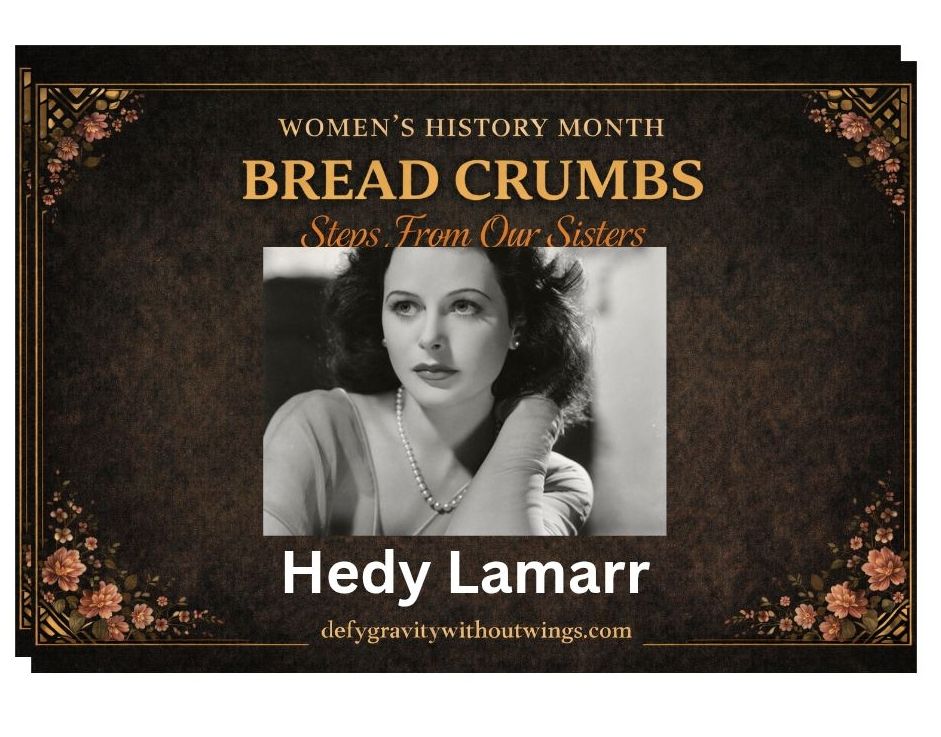
Hedy Lamarr – The Beauty Who Invented The Future

(November 9, 1914 – January 19, 2000)

Sometimes the world notices the wrong thing first.

Hedy Lamarr was known throughout Hollywood as one of the most beautiful actresses of the 1940s. Her face appeared on movie posters and magazine covers, and audiences admired her elegance and glamour.

But behind the fame lived a restless and brilliant mind.

During World War II, Lamarr watched the rise of Nazi power in Europe and wanted to help the Allied cause. Working with composer George Antheil, she developed a communication system designed to guide torpedoes without enemy interference.

Their invention used a method called frequency hopping, where radio signals constantly changed channels so they could not be jammed.

At the time, the military dismissed the idea.

Years later, however, the technology behind Lamarr’s invention became the foundation for modern wireless communication. Today the same principle supports Wi-Fi, Bluetooth, and GPS systems used around the world.

There is a verse in Proverbs that reminds us, “The Lord gives wisdom; from His mouth come knowledge and understanding.”

Hedy Lamarr reminds us that wisdom often lives quietly beneath the labels the world places on us.

Sometimes the person everyone admires for one gift is carrying another gift powerful enough to shape the future.

The world may decide who you are before it knows your whole story.

Hedy Lamarr was celebrated for beauty, but her mind helped build technology that connects billions of people today.

Sometimes the gifts God gives us are not immediately recognized. But that does not make them any less powerful.

We see you, Hedy. All of you.

Steps From Our Sisters

Honoring the Women Who Marched Before Us

Curated by

Michelle Gillison-Robinson

DefyGravityWithoutWings.com

Image

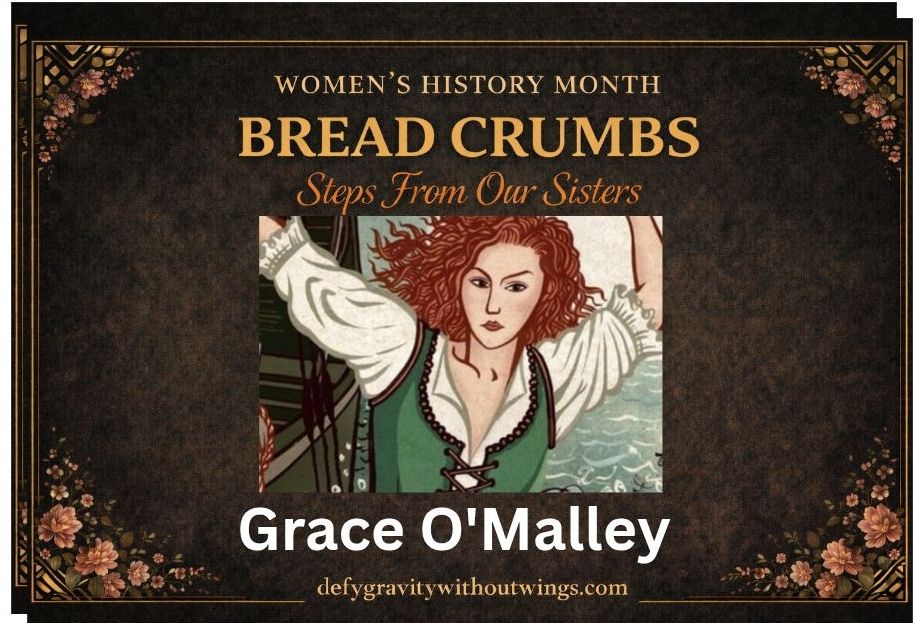
Grace O’Malley – Pirate Queen

(c.1530 – 1603)
Sometimes history remembers kings. But occasionally the sea belongs to a queen.
Grace O’Malley, known in Ireland as Gráinne Mhaol, was born into a powerful maritime clan along Ireland’s western coast. From a young age she refused the expectations placed upon women of her time.
She learned the sea instead. Grace commanded ships, led sailors, and controlled trade routes along the rugged Irish coastline. Her fleets became legendary, and her name was spoken with both admiration and caution.
When English forces threatened her family and territory, Grace O’Malley did something almost unheard of. She sailed to England and met Queen Elizabeth I face to face.
The two women spoke as equals, negotiating the freedom of O’Malley’s son and the restoration of her lands.
There is a verse in Psalm 93 that says, “The Lord reigns… the seas have lifted up their voice.”
Grace O’Malley’s life seemed to echo that image—strong, fearless, and unafraid of powerful waters.
Sometimes courage does not wait for permission.
Sometimes it sets sail.
Strength often begins with refusing the limits others place on you.
Grace O’Malley was expected to live quietly. Instead she commanded ships and negotiated with queens.
Her story reminds us that leadership can emerge from the most unexpected places.
Sometimes the waves that try to block your path are the very waters meant to carry you forward.
Steps From Our Sisters
Honoring the Women Who Marched Before Us

Image

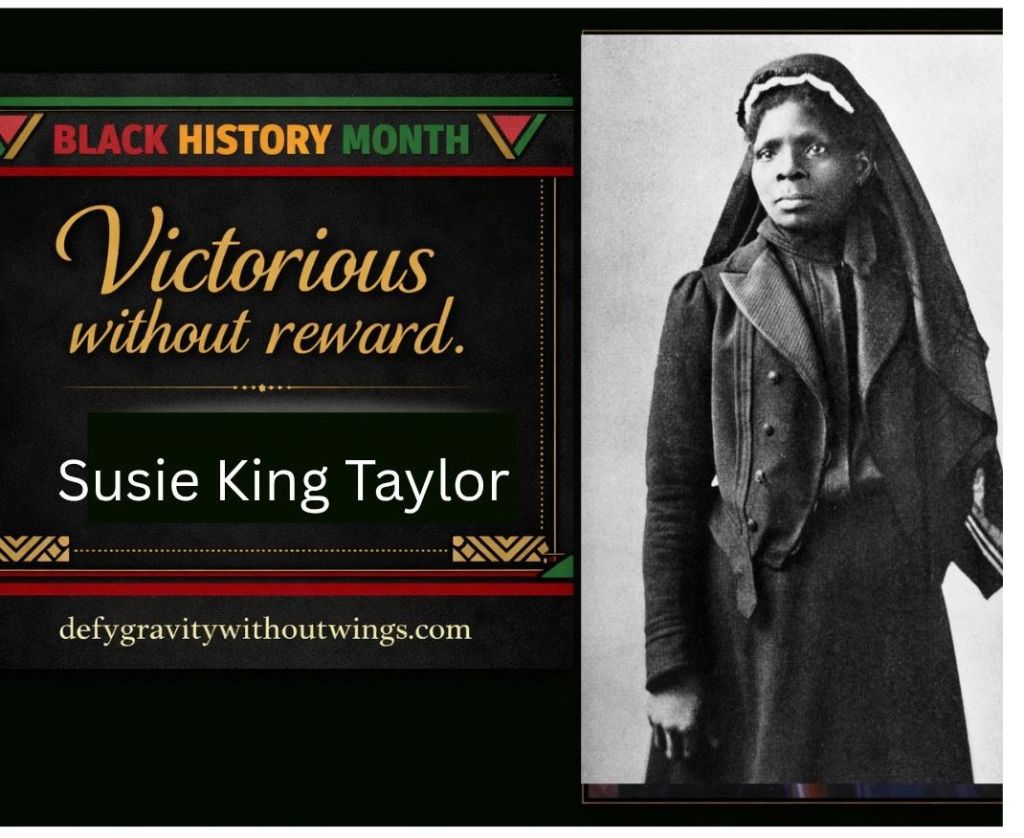
Susie King Taylor: She Served Anyway


Susie King Taylor was born enslaved in Georgia in 1848, in a world where teaching Black people to read was a crime and Black women’s labor was expected but never honored.


From a young age, Susie learned to read and write in secret. She was taught quietly, moving from place to place so no one would notice. Knowledge, for her, was not just education—it was resistance.


When the Civil War came, Susie did not wait to be invited into history.


She followed Union troops, and at just fourteen years old, she began teaching formerly enslaved soldiers and children how to read. She became the first Black woman known to openly teach formerly enslaved people in a Union camp.


She did not stop there.
Susie served as a teacher, a nurse, a laundress, and a caregiver to wounded Black soldiers. She worked in field hospitals. She tended infections. She cleaned wounds. She buried the dead. She did the work that kept soldiers alive long enough to keep fighting.


She did this without rank.
Without formal pay.
Without protection.
Without promise of recognition.
And when the war ended, the men she served alongside received pensions.
Susie did not.


Her body carried the cost of years of labor and exposure. Her hands had held dying boys. Her back bore the weight of war. Yet the government decided her service did not count.
She was victorious without reward.


In 1902, Susie King Taylor published Reminiscences of My Life in Camp with the 33rd United States Colored Troops—one of the only Civil War memoirs written by a Black woman.

She wrote because she knew that if she did not tell the story, it would be told wrong—or not at all.


She documented unequal treatment, exhaustion, racism within the Union Army, and the quiet strength required to keep serving anyway.


Recognition did not follow.
She died poor.
Her contributions remained footnotes.
Her name was largely absent from textbooks.


And yet, without women like Susie King Taylor, the war would not have been survivable for Black soldiers.


Susie King Taylor teaches us that some people do the work because it needs doing, not because they expect to be thanked.
She was not disguised like Cathay Williams.
She was not sidelined like Claudette Colvin.
She was fully visible—and still denied.


“Whatever you do, work at it with all your heart, as working for the Lord, not for human masters.” — Colossians 3:23


If you have ever done essential work no one wanted to name, given care without credentials, served faithfully while others were promoted, or known your contribution mattered even when systems said it didn’t—Susie King Taylor stands with you.
She served anyway.
History followed later.


We see you, Susie.
We honor you now.


Bread Crumbs — for those coming after us.
Victorious without reward. Still here.
Love, Chelle

Image

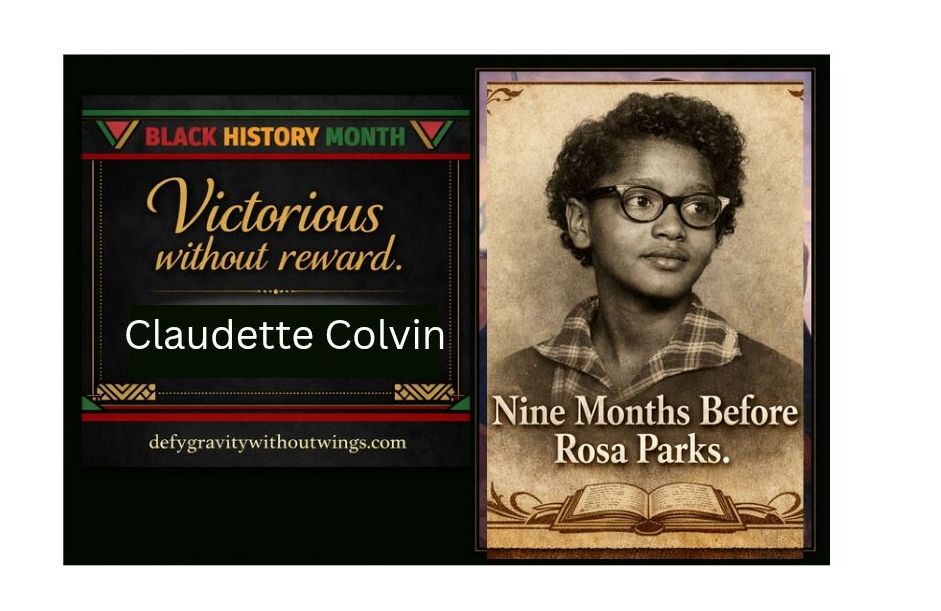
Claudette Colvin: Nine Months Before History Was Ready


Claudette Colvin, who died recently on January 13, 2026, was one of the last remaining living catalysts of the Montgomery Bus Boycott.


This must be said plainly:
Nine months before Rosa Parks,
a fifteen-year-old girl named Claudette Colvin refused to give up her seat on a segregated Montgomery bus.
Nine months before the cameras.
Nine months before the speeches.
Nine months before it was considered “safe.”
She was early — and she was right.


When police dragged her off the bus and arrested her, Claudette did not yet know she would be asked to step back from public view. But she would be.


Not because her courage was insufficient —
but because the movement decided she was not the face America would accept.
She was:
– a poor Black girl
– from a working-class family
– and soon after, pregnant
– struggling emotionally after trauma and arrest


Movement leaders made a strategic decision.
They chose respectability.
They chose optics.
And Claudette was quietly sidelined.
Yet her courage did not disappear.


She became one of the plaintiffs in Browder v. Gayle — the federal court case that ended bus segregation in Montgomery. The law changed because of the stand she took first, even though her name was not lifted alongside the victory.
She was victorious without reward.


Claudette Colvin teaches us a truth history often resists:
Being first does not mean being credited.
Being right does not mean being chosen.
And being faithful does not guarantee being celebrated.
A poor Black girl,
a pregnant teenager,
a traumatized child —
said no to injustice nine months before the nation was ready to listen.


That is not a footnote.
That is a foundation.
“For God chose what the world considers foolish to shame the wise.” — 1 Corinthians 1:27


If you have ever stood up too early,
told the truth before it was popular,
been asked to step aside so the story could be cleaner,
or watched others be celebrated for a door you opened,
hear this clearly:
Your timing was not wrong.
Your courage was not wasted.
And your obedience still counts.


Claudette Colvin stood first.
History followed later.
We see you, Claudette.
We tell it right now.
We honor you fully.


Bread Crumbs — for those coming after us.
Victorious without reward. Still here.


Love, Chelle

Image

My Survivor Song Knows My Name.

I was listening to one of my favorite songs—“He Knows My Name”—and my emotions spilled out before I could stop them.
It happens like that sometimes.
After a rough moment.
After allowing myself—again—to be hurt by someone who never really took the time to know me.
Not my heart.
Not my story.
Not the way I learned to survive.


I didn’t even realize how much I was carrying until that song started playing.
And suddenly, there it was—grief, relief, truth—all at once.


Because here’s the greatest thing about God:
He knows my name.
And not just my name—He knows my nickname too.
The one spoken by people who love me.
The one I only answer to when I feel safe.


He knows me with the mask—the strong one, the capable one, the superhero version that keeps showing up.


And He knows me without it—the tired, tender, still-hoping version I don’t always let the world see.


The real me.
Not the performance.
Not the usefulness.
Not the resilience résumé.


This song reminds me that I don’t confuse God.
I don’t disappoint Him by being human.
I don’t have to explain myself into being worthy of love.
It’s my Survivor Song because it tells the truth I forget when I’m hurting:
I am already known.
Already named.
Already held.
And when I rest in His arms, I don’t need armor.
I don’t need a script.
I don’t need to be brave for one more minute.
I am safe.


With and without the mask.
With and without the cape.
Somewhere along the way, I learned to confuse being needed with being known.
But God never made that mistake.


So today, if you’re feeling unseen—
if you’re nursing the quiet ache of being misunderstood—
let the reminder rise up like a song in your chest.
You are known by name.
You are held without pretending.
You are safe in His arms.
And sometimes… surviving looks like letting yourself be known—first by God, and then by yourself.
“I have called you by name; you are Mine.” — Isaiah 43:1


Love, Chelle


Image

Reframing The Heart

Somewhere along the way, many of us learned a quiet lie —
not from God, but from human interpretation.

We learned it from what was modeled, praised, or rewarded.
From homes, churches, systems, and relationships that mistook endurance for faithfulness and exhaustion for virtue.


Most people were doing the best they could with what they knew — but they were still human.
And without realizing it, we carried those lessons into our understanding of God.

I know this because I have done it myself.

I confused being loved with doing to be loved.
I mixed up belief with performance.
And I carried that misunderstanding into my faith and called it obedience.

But that is not God’s heart.

God does not delight in depletion.
He delights in wholeness.

Jesus did not invite people to follow Him so they could replace Him.
He did not ask them to become saviors, fixers, or endless wells.
He asked them to come — as they were — and to unlearn what fear had taught them about love.

Scripture never praises burnout.
It praises obedience rooted in love, not fear.
It honors service that flows from being seen — not from trying to be noticed.

When Jesus said, “Come to Me, all who are weary and burdened, and I will give you rest,”
He was not offering a reward for those who gave the most.
He was correcting what people had been taught about God.

If your kindness comes from feeling unseen,
if your faith feels like constant output,
if your love has slowly turned into self-erasure —
that may be something you learned, but it is not something God requires.

God does not need you emptied to be faithful.
He desires you rooted, restored, and whole.

Being needed is not the same as being loved.
And God’s love has never required you to disappear.

God, help me separate Your voice from the voices that shaped me.
Heal what I learned in survival mode.
Teach me Your heart — not a human version of it.

Love, Chelle
DefyGravityWithoutWings.com

Image

Porch Prayers & Weather-Wise Faith

On days like these, my mother would stand on the porch and ask for a Bermuda High to come down and turn the snow and ice away.


In the thick, sticky heat of summer, she’d pray for a Canadian Low to sweep through and cool the air.


She didn’t call it meteorology.
She called it faith.
And more often than not, the weather shifted.


When I got older, some of my friends picked up the same habit. We didn’t have robes or titles—just house shoes, coffee cups, and enough sense to know the porch was close enough to heaven for our prayers to travel. We called ourselves the Porch-Praying Sisters.


We prayed about the weather, yes—but also about children, marriages, money, bodies that wouldn’t cooperate, and news reports that made our stomachs knot. We spoke our requests into the open air like God might just be passing by and decide to stop and listen.


Today, we’re in the middle of a Virginia ice storm.
Freezing temperatures.
Sleet tapping the windows.
The quiet, low-grade anxiety of Will we lose power? humming beneath everything else.


And maybe that’s what storms still do best.
They set the altar.


They slow us down, pull us inward, strip away noise and options until all that’s left is warmth, breath, and the remembering that we are not in control—but we are not alone either.

“When you pass through the waters, I will be with you… when you walk through the fire, you will not be burned.” (Isaiah 43:2)


Over the years, we drifted. Life scattered us. Jobs, moves, losses, disagreements, silence. That happens.
But in this current environment—
with ice on the ground, tension in the air, and uncertainty pressing in—
I find myself praying again.
Not polished prayers.
Porch prayers.


The kind that believe faith doesn’t have to be loud to be effective. The kind that remember Jesus said even “faith as small as a mustard seed” can speak to what feels immovable and tell it to move. (Matthew 17:20)


Maybe the weather won’t always change.
Maybe the power will flicker.
Maybe the storm will linger longer than we’d like.
But when a storm sets the altar,
something always moves.
And sometimes…
that something is us.


— Love,  Chelle

Image

Before Dawn Breaks


Dear Martin,

Thank you for the courage it took
to love loudly
in a world fluent in hate.

Believing the long work could move
even when your hands were tired
from holding up the gate.

Our marching turned to sleepwalking.
Scars.
Stains.
Graves faded into parades.

Why teach us to love our crayoned brothers
when our sisters are heard passing
on streets made of rumor and rage.

We mastered resistance
only to trade it in
for the soft, comfy
quiet chairs of apathy.

Economic empowerments
became the next big sale,
freedom measured in discounts—
forgetting life ain’t free.

I wonder if you are proud us
I wonder if pride and grief
can do a sit-in
at the same table.

Laws need courage.
Platforms for voices.
Access breeds action.
Dream me not a fable.

I hope you see both things—
two things true at once
what we protected
and what we neglected.

The laws we guarded fiercely.
The people we forgot quietly.
What we defended,
then defected.

Still—
there are mornings when children march
without knowing your name
but carrying your dream
in their bones.

There are hands that reach back.
Feet that refuse silence.
Hearts that choose love—
to  let live  and to be left alone.

So if you are watching,
there are still some of us trying,
avoiding rose-colored glasses
and wide-angled scopes.

I hope you notice
some of us straining
to answer  the silence you were buried in
with shaking hands,
quiet prayers,
and stubborn hope.

Sincerely
a daughter of the dream
still learning how to keep it alive,
while  having it deemed woke.

Penned January 2026 – Michelle Gillison-Robinson

Image

GOD’S UP. I MIGHT AS WELL BE TOO.

Like some kind of finely tuned timepiece, my internal alarm goes off —  clockwork faithful.
No snooze button negotiations. No grace period. Just “bing.”

And there it is… 3:00 a.m. glowing on my digital clock
(yes, I still have one — don’t judge).

I pull the comforter up like it might save me.
It does not.

My body says, up up up,
while my soul whispers, “Really, Lord? Again?”

There was a time I filled those early hours with “responsible things” —
finishing chores I ignored the night before,
paying bills that had been staring at me all day,
or letting the TV talk so I didn’t have to think.

Busy things.
Distracting things.
Things that looked productive but didn’t change me one bit.

But lately… I’m up writing.

Blog entries.
Poems.
Devotionals.

Words spilling out at a pace that tells me I’m not in charge of this schedule anymore.

And somewhere between the glow of that clock and the scratch of my pen, truth had my full attention.

I’ve moved from me cleaning house
to God housekeeping me.

Because once I’m fully awake, I go full steam —
fixing, managing, pushing, performing.
But at 3 a.m.?
I’m not impressive. I’m not polished. I’m barely caffeinated.

And that’s exactly when God starts pointing things out.

Things my soul was too tired to hear during the day,
my pen now faithfully records in the quiet.

Cleaning me.
Pruning me.
Digging around places I thought were “fine.”
Re-creating what I rushed past in daylight.

This isn’t insomnia.
This is divine interruption.

Early-morning housekeeping —
the kind where God gently rearranges what I’ve been tripping over inside
while I’m still wrapped in blankets and honesty.

And I’m reminded, softly, without accusation or demand:
“In quietness and trust is your strength.” (Isaiah 30:15)

Turns out, God doesn’t always wake us up to get more done.

Sometimes He wakes us up because He’s not finished with us yet.

Love, Chelle

Image

Good Morning From Groot

When I went to make my coffee this morning, I noticed my Brazilian wood plant — the one I call Groot because of the ornament on him — is still growing from just one side.


He’s developing a beautiful arm branch, but only one. By all accounts, there should be two by now.


Most folks would give up on a plant like that.
But I can’t.


All my life, I’ve collected broken things — toys, dolls, records… sometimes even people. Things that seemed useless or pointless to others always found a home with me. I’d turn them into art, merge them with something else, or simply let them be what they were until their value showed itself.


This little Groot reminds me that everything has value exactly as it is, even when it doesn’t quite match the catalog pictures of society.


That one arm?
It’s raised like it’s in praise.
And the smile in the bark makes me happy.


I believe God sees our imperfections with grace and purpose — I know He’s done that for me.

My seasons of brokenness and feeling like a misfit produced music, plays, and even this writing.

Periods of pain with purpose… feeling like a fish out of water… all converted into unique brands of joy.


So if you’re feeling a little uneven today…
a little out of the mold…
a little unlike what you thought you were supposed to be…
You’re not broken.
You’re just growing differently.

Now go raise that arm!


“…everyone who is called by My name,
whom I created for My glory.” — Isaiah 43:7

Love, Chelle