Image

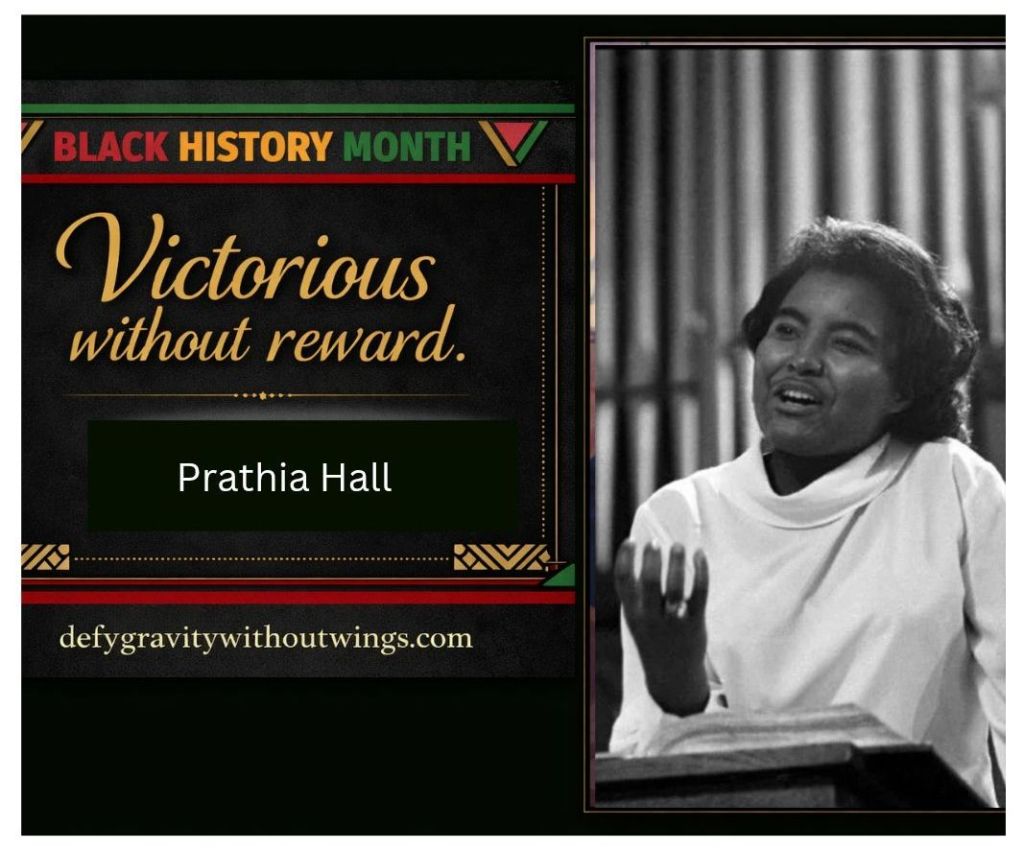
Prathia Hall — The Woman Who Put the Dream in the Air

Prathia Hall was a preacher—and I don’t mean honorary, invited-once-a-year preacher. I mean called, trained, Scripture-handling, fire-in-her-bones preacher. That alone put her at odds with the world she was born into.
She came up in the middle of the Civil Rights Movement, not watching it on television, but working it. Organizing. Marching. Preaching. Sitting in mass meetings where faith wasn’t decoration—it was fuel.


And Prathia knew words mattered.
She preached with rhythm and Scripture braided together. Not shouting just to shout. Not performing. She preached like someone who believed God was actually listening—and that people were, too.


One night, after a church had been bombed, Prathia stood in the rubble and began to pray out loud. And as she prayed, she kept saying a phrase again and again:
“I have a dream…”
Not as a speech.
As a prayer.


That cadence—the hope, the structure, the repetition—later showed up on a much bigger stage through Dr. King. History remembers the microphone. It often forgets the woman who helped tune the sound.


Prathia Hall kept preaching anyway.
She worked with the Student Nonviolent Coordinating Committee (SNCC), helped train young leaders, and taught theology that didn’t separate heaven from justice. She believed faith was supposed to interrupt oppression, not soothe it.
She didn’t chase credit.
She chased truth.

“So then faith comes by hearing, and hearing by the word of God.” — Romans 10:17


SIT WITH THIS
Who taught you how to speak hope before the world was ready to hear it? And where might God be asking you to keep saying the thing—even if someone else gets the credit later?


BREADCRUMB
Some words don’t echo right away.
They wait—until the world is ready to hear them.

We see you, Prathia Hall — for preaching freedom into the air before it had a stage.


Bread Crumbs — for those coming after us.
Victorious without reward. Still here.

Image

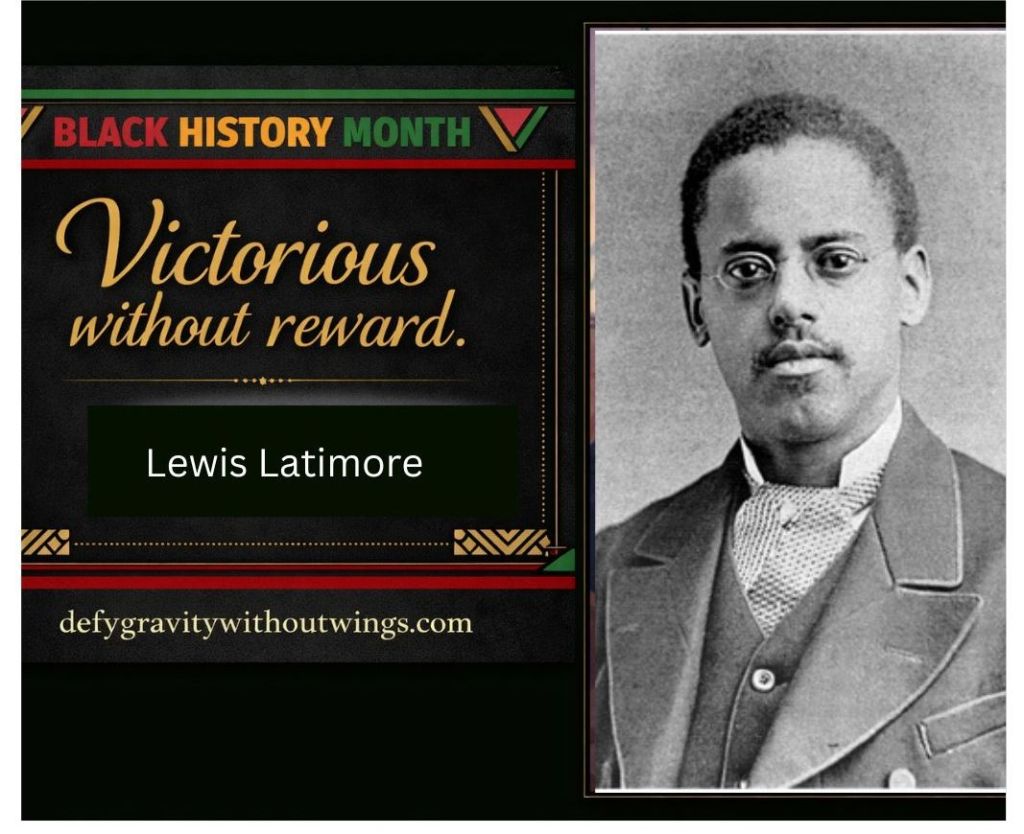
LEWIS LATIMER: HE MADE THE LIGHT

Black history is not only about who struck the match.
It is also about who made sure the light did not go out.
Lewis Howard Latimer understood that.
Born in 1848 to parents who had escaped enslavement, he taught himself to read, draw, and engineer in a world that did not expect brilliance from him—and was not structured to reward it.
History remembers the spark.
Latimer worked on the endurance.
In 1884, he joined the Edison Electric Light Company as a draftsman.
He was not hired to be the face of innovation.
He was brought in to make the work hold.
While others are credited with inventing the light bulb, Lewis Latimer improved it.
He developed a carbon filament that made electric light durable, affordable, and practical—light that could last in ordinary homes, not just demonstrations.
Without his work, the light would have remained fragile.
Exclusive.
Unreliable.
And the light was not his only contribution.
Latimer also:
– drafted critical technical drawings for early telephone technology
– designed an evaporative air-conditioning system
– improved safety and sanitation systems for railroad cars
– trained others, documented processes, and quietly strengthened industries that carried other people’s names
Important work.
Essential work.
Weight-bearing work.


Lewis Latimer lived long enough to see the world changed by the light he helped sustain.
He died in 1928—not wealthy, not widely celebrated—but respected by those who understood the work.
His legacy lived on in homes lit safely, cities made brighter, systems made usable.
If you have ever been the one who made something work instead of making it visible—
If you have refined what others rushed through—
If you have strengthened what others started—
If you have stayed faithful long after the applause moved on—
This story stands with you.
“Let your light so shine before others…” — Matthew 5:16


Lewis Latimer did not create the first light.
He made sure it endured.
Some people are called to begin things.
Others are called to make them last.
This, too, is history.
This, too, is weight-bearing work.


Lewis Latimer stands with you.
God sees the work that makes light reliable — not just remarkable.


We see you, Lewis.
We honor the way you made the light last.


Bread Crumbs — for those coming after us.
Victorious without reward. Still here.

Image

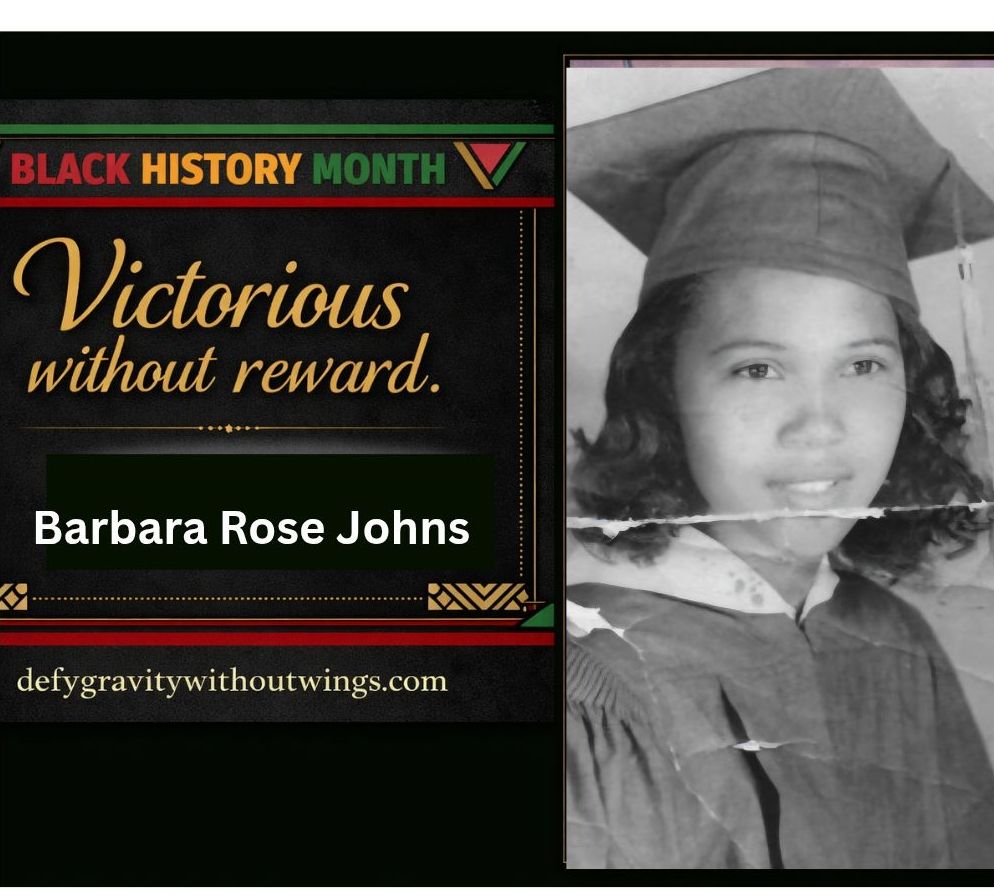
Barbara Johns: She Was Fifteen and Would Not Wait

Barbara Johns was fifteen years old when she decided that waiting politely for justice was no longer an option.


In 1951, in Prince Edward County, Virginia, Barbara was a student at Robert Russa Moton High School — a segregated Black school with no gym, no cafeteria, overcrowded classrooms, and tar-paper shacks used as makeshift buildings. Meanwhile, white students nearby learned in brick schools with resources and space.


Barbara saw it.
Barbara lived it.


And Barbara refused to accept it.


Without permission from adults, administrators, or movement leaders, she organized a student strike. She convinced her classmates to walk out, not knowing if anyone would listen — only knowing that staying silent was no longer an option.


Adults were furious.
Leaders were nervous.
Teachers were afraid they would lose their jobs.


Barbara’s name was almost removed from the complaint.
But the case moved forward anyway.
Her courage became part of Davis v. County School Board of Prince Edward County, one of the five cases folded into Brown v. Board of Education.


History changed.
And Barbara Johns?
She received death threats.
She had to leave her hometown.
She lived the rest of her life quietly.
Her name was rarely spoken when Brown was celebrated.
She was victorious without reward.


Barbara Johns teaches us something uncomfortable and holy:
Sometimes the people who force history to move are the ones most quickly pushed out of the picture.
She was young.
She was female.
She was uncompromising.
And she was inconvenient.


“Let no one despise you for your youth.” — 1 Timothy 4:12


Barbara didn’t wait to be older.
She didn’t wait to be chosen.
She didn’t wait to be safe.
She acted — and the system scrambled to catch up.


If you have ever been told you were too young to understand, spoken truth that made adults uncomfortable, sparked change and then watched others take credit, or paid a personal cost for doing the right thing early — Barbara Johns stands with you.


She reminds us that courage does not require credentials — only conviction.
She lit the match.
The world tells the story without her name.
But God remembers.


We see you, Barbara.
We tell it right.


Bread Crumbs — for those coming after us.
Victorious without reward. Still here.


Love, Chelle

Image

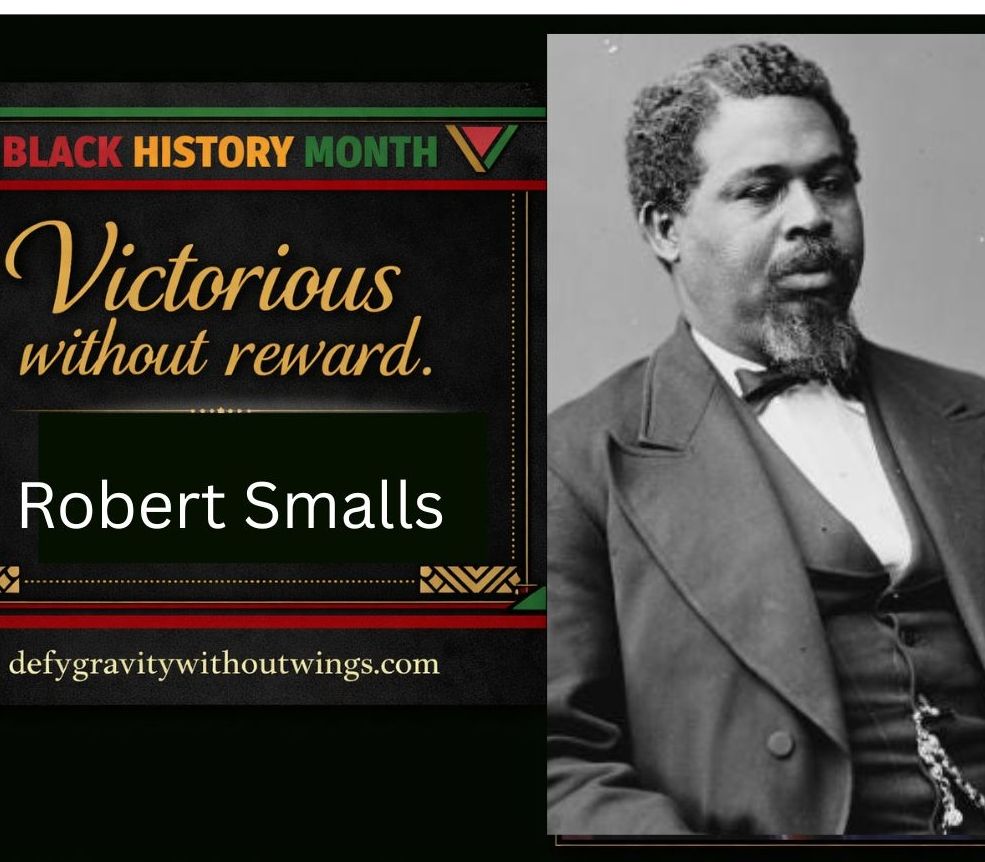
Robert Smalls: He Knew the Way Through

Robert Smalls was born enslaved in South Carolina, in a world where freedom was forbidden and intelligence was dangerous.


But Robert learned the waterways.
He learned the tides.
He learned the rhythms of ships and schedules and signals.
And when the moment came, he used what he knew.


In 1862, Robert Smalls did something no one thought possible. He commandeered a Confederate ship, the CSS Planter, disguised himself in the captain’s uniform, navigated past enemy forts using the correct signals — and delivered himself, his family, and others to freedom.


He did not fire a single shot.
He trusted knowledge.
He trusted timing.
And he trusted that God had already made a way through the water.


In my own family, there are those who make a “not quite”  substantiated claim to Robert Smalls — simply because his last name appears in our family line.
I don’t have records to prove it or disprove it.
I don’t make the claim as fact. But who can deny greatness.


However, the instinct matters.
Because sometimes what we are really claiming is not blood —
but admiration.
Not lineage —
but legacy.


Robert Smalls didn’t stop with freedom.
He went on to serve in the U.S. Navy, help recruit Black soldiers, become a U.S. Congressman, and fight for education, voting rights, and dignity for formerly enslaved people.


And still — he faced resistance.
He was pushed aside.
His leadership was minimized.
His voice was not always welcomed in the halls he helped open.


He was victorious without reward in more ways than one.


More than a century after his courage changed the course of history, the nation finally spoke his name aloud.
In 2023, the U.S. Navy commissioned a ship in his honor — the USS Robert Smalls.


It did not restore what had been denied.
It did not erase the years of resistance he faced.
It did not repay the cost of standing firm in a country slow to remember.
But it did stand as a quiet admission.
The Navy knew who led that ship long before history said it plainly.


And eventually, even delayed recognition had to follow truth.


Robert Smalls teaches us that God often prepares people long before the moment arrives.
“I will make a way in the wilderness and rivers in the desert.” — Isaiah 43:19


Robert didn’t create the river.
He learned it.
He didn’t invent the escape.
He recognized the opening.


Faith sometimes looks like courage.
Sometimes it looks like preparation.


And sometimes it looks like steering calmly through danger because you know where the water leads.

For the One Reading This Today

If you have ever:

prepared quietly for something no one else saw coming

felt drawn to a story because it felt familiar in your spirit

honored someone not because they were yours — but because they were right

trusted God to guide you through impossible terrain

Robert Smalls stands with you.


You don’t have to claim someone as family to carry their courage forward.
Legacy travels deeper than blood.


We see you, Robert.
We honor the way you led others through.


Bread Crumbs — for those coming after us.
Victorious without reward. Still here.

Love, Chelle

Image

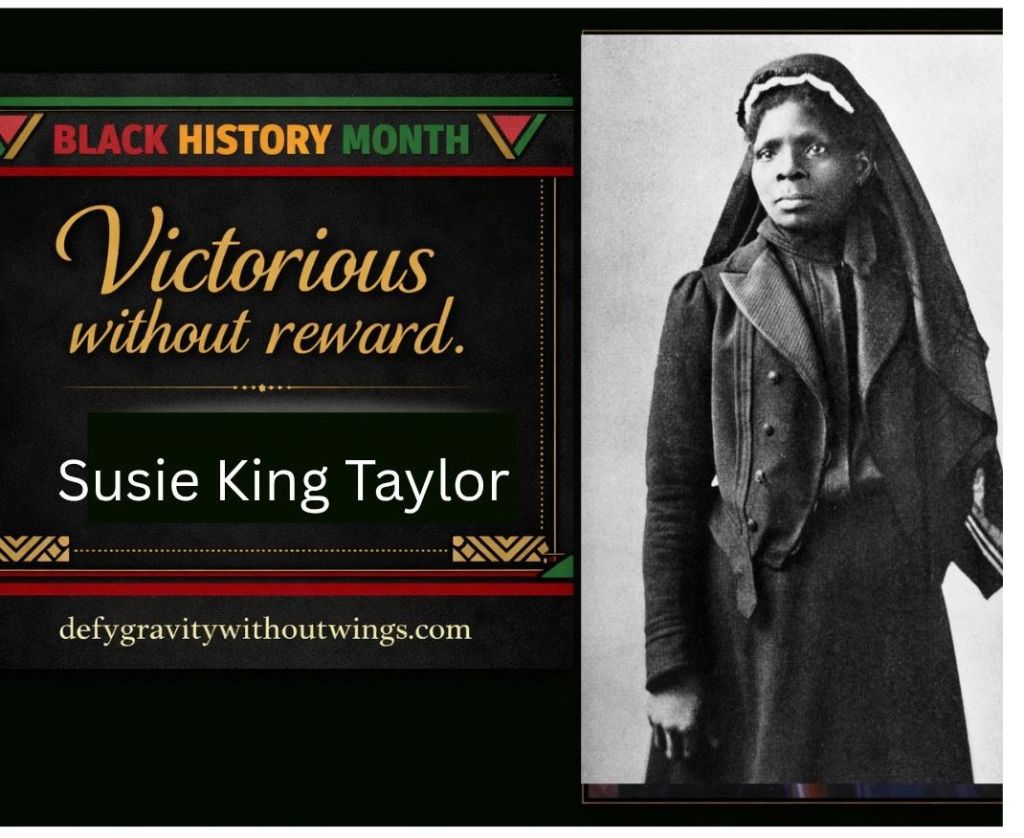
Susie King Taylor: She Served Anyway


Susie King Taylor was born enslaved in Georgia in 1848, in a world where teaching Black people to read was a crime and Black women’s labor was expected but never honored.


From a young age, Susie learned to read and write in secret. She was taught quietly, moving from place to place so no one would notice. Knowledge, for her, was not just education—it was resistance.


When the Civil War came, Susie did not wait to be invited into history.


She followed Union troops, and at just fourteen years old, she began teaching formerly enslaved soldiers and children how to read. She became the first Black woman known to openly teach formerly enslaved people in a Union camp.


She did not stop there.
Susie served as a teacher, a nurse, a laundress, and a caregiver to wounded Black soldiers. She worked in field hospitals. She tended infections. She cleaned wounds. She buried the dead. She did the work that kept soldiers alive long enough to keep fighting.


She did this without rank.
Without formal pay.
Without protection.
Without promise of recognition.
And when the war ended, the men she served alongside received pensions.
Susie did not.


Her body carried the cost of years of labor and exposure. Her hands had held dying boys. Her back bore the weight of war. Yet the government decided her service did not count.
She was victorious without reward.


In 1902, Susie King Taylor published Reminiscences of My Life in Camp with the 33rd United States Colored Troops—one of the only Civil War memoirs written by a Black woman.

She wrote because she knew that if she did not tell the story, it would be told wrong—or not at all.


She documented unequal treatment, exhaustion, racism within the Union Army, and the quiet strength required to keep serving anyway.


Recognition did not follow.
She died poor.
Her contributions remained footnotes.
Her name was largely absent from textbooks.


And yet, without women like Susie King Taylor, the war would not have been survivable for Black soldiers.


Susie King Taylor teaches us that some people do the work because it needs doing, not because they expect to be thanked.
She was not disguised like Cathay Williams.
She was not sidelined like Claudette Colvin.
She was fully visible—and still denied.


“Whatever you do, work at it with all your heart, as working for the Lord, not for human masters.” — Colossians 3:23


If you have ever done essential work no one wanted to name, given care without credentials, served faithfully while others were promoted, or known your contribution mattered even when systems said it didn’t—Susie King Taylor stands with you.
She served anyway.
History followed later.


We see you, Susie.
We honor you now.


Bread Crumbs — for those coming after us.
Victorious without reward. Still here.
Love, Chelle

Image

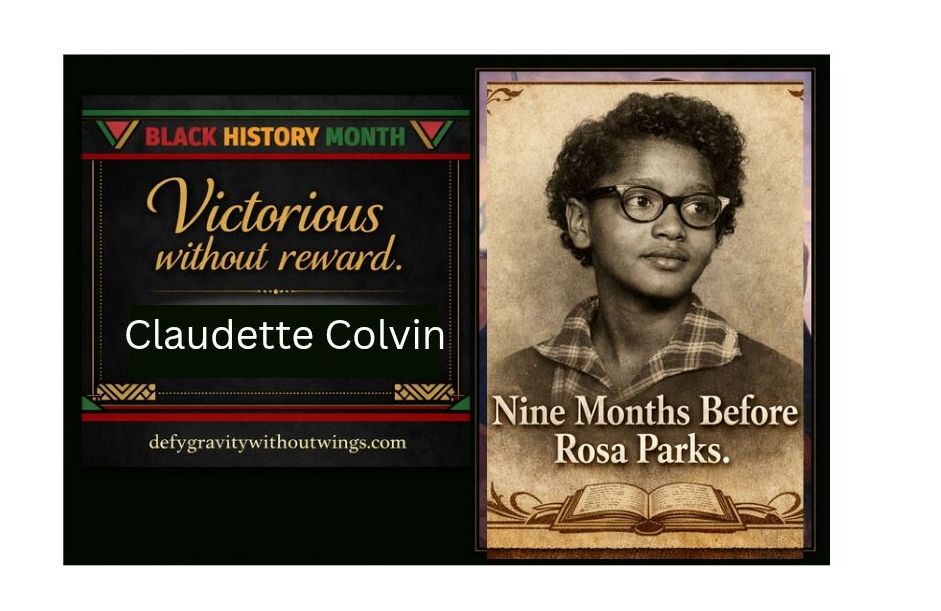
Claudette Colvin: Nine Months Before History Was Ready


Claudette Colvin, who died recently on January 13, 2026, was one of the last remaining living catalysts of the Montgomery Bus Boycott.


This must be said plainly:
Nine months before Rosa Parks,
a fifteen-year-old girl named Claudette Colvin refused to give up her seat on a segregated Montgomery bus.
Nine months before the cameras.
Nine months before the speeches.
Nine months before it was considered “safe.”
She was early — and she was right.


When police dragged her off the bus and arrested her, Claudette did not yet know she would be asked to step back from public view. But she would be.


Not because her courage was insufficient —
but because the movement decided she was not the face America would accept.
She was:
– a poor Black girl
– from a working-class family
– and soon after, pregnant
– struggling emotionally after trauma and arrest


Movement leaders made a strategic decision.
They chose respectability.
They chose optics.
And Claudette was quietly sidelined.
Yet her courage did not disappear.


She became one of the plaintiffs in Browder v. Gayle — the federal court case that ended bus segregation in Montgomery. The law changed because of the stand she took first, even though her name was not lifted alongside the victory.
She was victorious without reward.


Claudette Colvin teaches us a truth history often resists:
Being first does not mean being credited.
Being right does not mean being chosen.
And being faithful does not guarantee being celebrated.
A poor Black girl,
a pregnant teenager,
a traumatized child —
said no to injustice nine months before the nation was ready to listen.


That is not a footnote.
That is a foundation.
“For God chose what the world considers foolish to shame the wise.” — 1 Corinthians 1:27


If you have ever stood up too early,
told the truth before it was popular,
been asked to step aside so the story could be cleaner,
or watched others be celebrated for a door you opened,
hear this clearly:
Your timing was not wrong.
Your courage was not wasted.
And your obedience still counts.


Claudette Colvin stood first.
History followed later.
We see you, Claudette.
We tell it right now.
We honor you fully.


Bread Crumbs — for those coming after us.
Victorious without reward. Still here.


Love, Chelle

Image

My Survivor Song Knows My Name.

I was listening to one of my favorite songs—“He Knows My Name”—and my emotions spilled out before I could stop them.
It happens like that sometimes.
After a rough moment.
After allowing myself—again—to be hurt by someone who never really took the time to know me.
Not my heart.
Not my story.
Not the way I learned to survive.


I didn’t even realize how much I was carrying until that song started playing.
And suddenly, there it was—grief, relief, truth—all at once.


Because here’s the greatest thing about God:
He knows my name.
And not just my name—He knows my nickname too.
The one spoken by people who love me.
The one I only answer to when I feel safe.


He knows me with the mask—the strong one, the capable one, the superhero version that keeps showing up.


And He knows me without it—the tired, tender, still-hoping version I don’t always let the world see.


The real me.
Not the performance.
Not the usefulness.
Not the resilience résumé.


This song reminds me that I don’t confuse God.
I don’t disappoint Him by being human.
I don’t have to explain myself into being worthy of love.
It’s my Survivor Song because it tells the truth I forget when I’m hurting:
I am already known.
Already named.
Already held.
And when I rest in His arms, I don’t need armor.
I don’t need a script.
I don’t need to be brave for one more minute.
I am safe.


With and without the mask.
With and without the cape.
Somewhere along the way, I learned to confuse being needed with being known.
But God never made that mistake.


So today, if you’re feeling unseen—
if you’re nursing the quiet ache of being misunderstood—
let the reminder rise up like a song in your chest.
You are known by name.
You are held without pretending.
You are safe in His arms.
And sometimes… surviving looks like letting yourself be known—first by God, and then by yourself.
“I have called you by name; you are Mine.” — Isaiah 43:1


Love, Chelle


Image

Reframing The Heart

Somewhere along the way, many of us learned a quiet lie —
not from God, but from human interpretation.

We learned it from what was modeled, praised, or rewarded.
From homes, churches, systems, and relationships that mistook endurance for faithfulness and exhaustion for virtue.


Most people were doing the best they could with what they knew — but they were still human.
And without realizing it, we carried those lessons into our understanding of God.

I know this because I have done it myself.

I confused being loved with doing to be loved.
I mixed up belief with performance.
And I carried that misunderstanding into my faith and called it obedience.

But that is not God’s heart.

God does not delight in depletion.
He delights in wholeness.

Jesus did not invite people to follow Him so they could replace Him.
He did not ask them to become saviors, fixers, or endless wells.
He asked them to come — as they were — and to unlearn what fear had taught them about love.

Scripture never praises burnout.
It praises obedience rooted in love, not fear.
It honors service that flows from being seen — not from trying to be noticed.

When Jesus said, “Come to Me, all who are weary and burdened, and I will give you rest,”
He was not offering a reward for those who gave the most.
He was correcting what people had been taught about God.

If your kindness comes from feeling unseen,
if your faith feels like constant output,
if your love has slowly turned into self-erasure —
that may be something you learned, but it is not something God requires.

God does not need you emptied to be faithful.
He desires you rooted, restored, and whole.

Being needed is not the same as being loved.
And God’s love has never required you to disappear.

God, help me separate Your voice from the voices that shaped me.
Heal what I learned in survival mode.
Teach me Your heart — not a human version of it.

Love, Chelle
DefyGravityWithoutWings.com

Image

Powder, Not Prison (and Apparently Winter Storms Have Names Now)

So here’s something I learned this week:
winter storms have names.
I was today-years-old when I found out they name winter storms the same way they name summer hurricanes. And wouldn’t you know it—the one that iced me into my house and blocked me from my greenhouse was named Fern.
Fern.
A plant name.
A green thing.
A symbol of life.
Make it make sense.
Winter Storm Fern didn’t just bring cold—she brought audacity. It was so cold one day that my front door wouldn’t even open. Not stuck—sealed. As if the house itself said, “Nope. You live here now.”
When the door finally did open the next day, I stepped outside and immediately thought,
“Oh. I was happier not knowing.”
That kind of cold doesn’t invite you out.
It humbles you back inside.
Now here we are again. More snow coming Saturday—and again on Wednesday. But this time, they’re calling for powder, not ice.
And apparently, there’s a difference.
Ice traps you.
Powder covers you.
Ice shuts doors.
Powder rests gently on what’s still alive underneath.
Some seasons don’t stop growth—they insulate it.
Under the white blanket, the soil is still breathing. Roots haven’t resigned. Seeds aren’t panicking. They know winter may come labeled and official, but it never gets the final word.
“Though the fig tree does not bud and there are no grapes on the vines… yet I will rejoice in the Lord.”
— Habakkuk 3:17–18
Faith isn’t pretending winter isn’t winter.
It’s recognizing the difference between what freezes you and what simply passes through.
Winter Storm Fern may have sealed my door for a day.
She may have iced the path to the greenhouse.
But she didn’t cancel the harvest.
Dead and dormant are not the same.
Covered and defeated are not synonyms.
Spring is not offended by powder.
And I’ve learned not to argue with doors God temporarily keeps shut.

Love, Chelle

Image

When the Tool Ate the Manuscript (and Almost My Heart)

Let me tell you what almost took me out.

For weeks—WEEKS—I have been doing the holy, unglamorous work of editing and reorganizing a soon-to-be book.
Moving chapters.
Fixing commas that think they run things.
Re-threading stories.
Listening for where God was nudging—and where I was just rambling.

This was faithful work. Quiet work.
The kind nobody claps for.

And then…
The tool I use to assist and “catch mistakes” decided to eat my manuscript.

Not nibble.
Not misplace a paragraph.
Eat it.

I have survived cancer, grief, caregiving, deadlines, and ice storms—but watching weeks of careful labor vanish off a screen?
That will make your chest tighten and your salvation flicker for a hot second.

I sat there spiraling:
Did I just lose half a book?
Am I behind now?
Did I just waste weeks of my life arguing with chapter headings?

Cue the dramatic sigh.
Cue me talking to my laptop like it had personally betrayed the family.

And then—grace, wearing sneakers—slid in sideways and whispered:

Your work is not gone.
You are not behind.
We did not lose half a book.

Because real work doesn’t live only in files.
It lives in muscle memory, lived experience, and a heart that’s been steeped in the message.

And Scripture backs this up.

“So I will restore to you the years that the swarming locust has eaten…”
— Joel 2:25

God restores years, not just results.
Restoration doesn’t always look like retrieval.
What God restores often comes back stronger.

So breathe.
Roll your shoulders.
Open a new document.

The words still know how to find you.
And the story is very much alive.

Love, Chelle
defygravitywithoutwings.com