
It’s Easter weekend and if I’m honest, everything in my life isn’t lining up all neat and peaceful like the Cross might suggest.
There are still things that don’t feel right.
Still emotions that keep trying to rise up and take over the room. Still situations I could easily let steal my focus.
But I had to sit with a truth that didn’t ask me how I felt about it.
“But He was wounded for our transgressions, He was bruised for our iniquities: the chastisement of our peace was upon Him…” — Isaiah 53:5
Not will be. Was.
Which means… peace isn’t something I have to wait on. It’s already been paid for.
And somewhere between trying to figure everything out and trying to hold everything together… I realized I’ve been treating peace like it’s pending approval.
Like it’s waiting on people to act right.
Waiting on situations to settle down.
Waiting on life to cooperate.
But the cross didn’t come with conditions. It came with a receipt. Paid in full.
And if I’m honest… I’ve been holding my breath. Carrying things. Bracing myself.
Living like I’m about to be swallowed whole by everything I haven’t figured out yet.
But He didn’t just die.He got up.
“O death, where is thy sting? O grave, where is thy victory?” — 1 Corinthians 15:55
So I don’t have to live like I’m being swallowed anymore. I get to breathe the life He died to give me.
Not shallow.
Not rushed.
Not survival breathing.
Full, steady, grace-filled breath.
So today, I’m not fixing everything. I’m not forcing conversations. Not chasing resolution.
I’m receiving.
Peace in my mind.
Steadiness in my spirit.
Enough clarity for the next right step.
Because if Jesus already paid for it…
then I don’t have to earn it by exhausting myself. And maybe that’s the real freedom Easter offers. Not that everything around me changes overnight… but that I don’t have to be held hostage by it anymore.
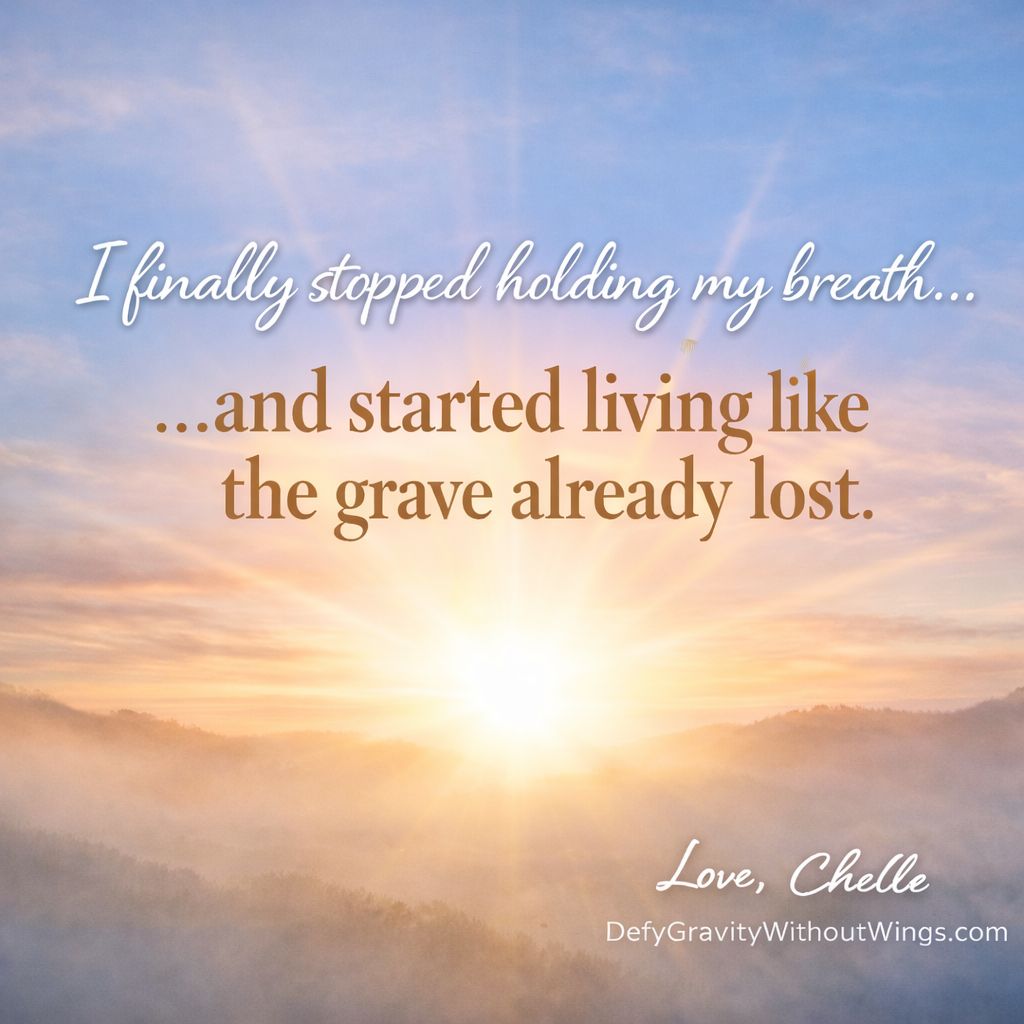
So if you see me a little quieter today. A little less reactive… a little more settled than the situation calls for…just know I finally stopped holding my breath…
…and started living like the grave already lost.
Love, Chelle
defygravitywithoutwings.com






















 defygravitywithoutwings.com